NITI Aayog MCQ Exam Proposal Revives Assessment Quality Debate
A NITI Aayog-linked recommendation backing multiple-choice exams has reignited India's debate over whether standardised testing can measure real learning without rewarding rote memorisation and coaching patterns.
Commentary & Analysis ·
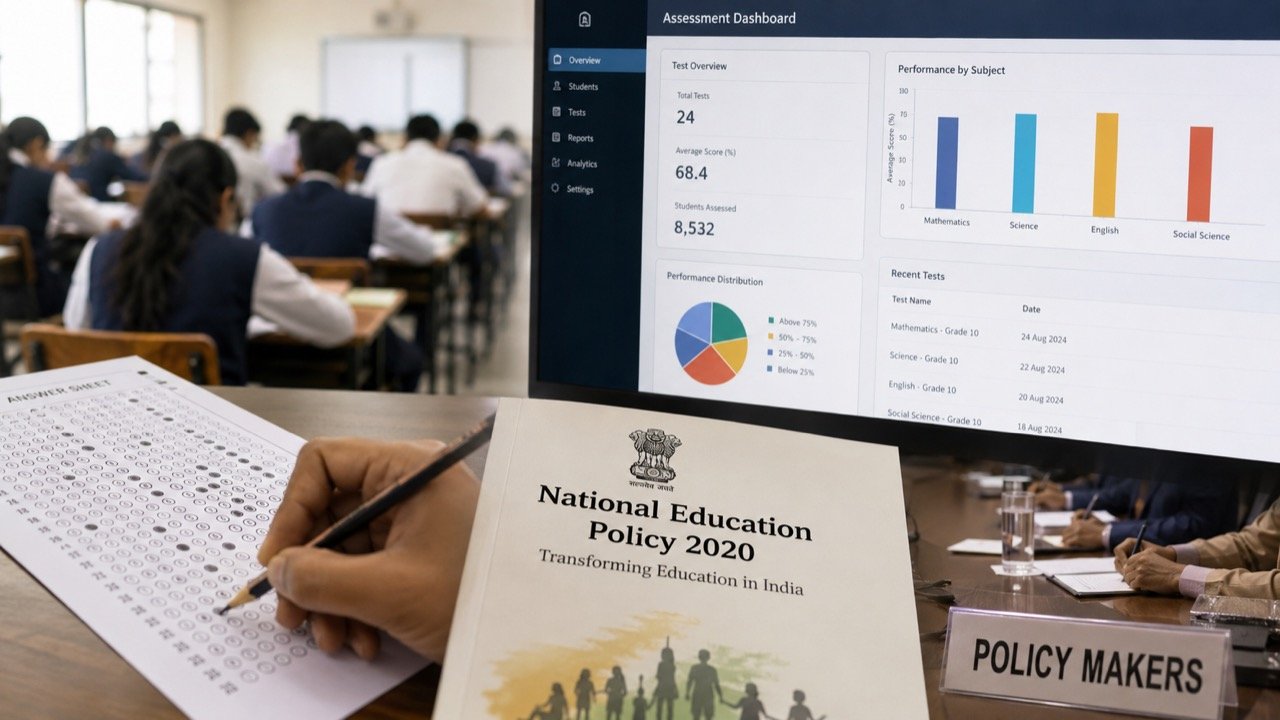
A proposal linked to NITI Aayog endorsing multiple-choice question exams has reopened one of Indian education's longest-running arguments: what should tests actually measure? Business Standard reported the recommendation as part of a broader push to improve the country's testing systems. On the surface, this reads like a technical tweak to examination formats. In substance, it touches something far larger — the machinery by which India decides who advances, who is filtered out, and what kind of learning gets rewarded along the way.
The stakes go well beyond format. Exam design shapes what students study, how teachers teach and how institutions define learning itself. A shift toward MCQs at scale would ripple through classrooms, coaching centres and recruitment pipelines alike. Any nationally significant change to assessment format is never just about the exam hall on the day; it is about the years of preparation that precede it, and the incentives that quietly reorganise around whatever the test rewards. If MCQs become the dominant currency of assessment, then classrooms, tutors, textbook publishers and coaching chains will all recalibrate toward that currency, for better or worse.
Why scale makes this proposal significant
The case for multiple-choice formats brings real advantages. MCQs can be administered and scored at enormous scale, results arrive quickly, and marking is objective — no examiner mood or handwriting bias to contend with. For a country running some of the world's largest examinations, those are not trivial gains. India's testing infrastructure has to process volumes that few other education systems in the world confront, and any format that reduces logistical strain, speeds up result declaration, and removes subjective grading variance carries genuine administrative value. Delays in result announcements and disputes over subjective marking have long been sources of friction in Indian examinations, and a format that sidesteps both is naturally attractive to policymakers looking to modernise testing systems without a wholesale redesign of infrastructure.
There is also a fairness argument embedded in the efficiency argument. Objective marking removes one axis of inconsistency that has historically disadvantaged some candidates over others — the luck of which examiner reviews a paper, on which day, in what mood. For an examination ecosystem serving lakhs or crores of candidates, uniformity of marking is not a minor procedural nicety; it is a matter of basic equity.
The case for caution
Critics counter that poorly designed MCQs test recognition rather than reasoning. The evidence cuts both ways: well-constructed items can probe application and analysis, while weak ones reward memorisation and pattern-spotting — precisely the skills India's coaching industry is built to drill. This is the crux of the debate, and it is worth sitting with rather than rushing past. A multiple-choice question is not inherently shallow; a well-written item can force a student to apply a concept to an unfamiliar scenario, eliminate plausible-but-wrong answers through reasoning, or synthesise information across a passage. But a badly written item can just as easily reduce to keyword-matching or elimination-by-familiarity, rewarding students who have simply seen more practice papers rather than those who understand the underlying material best.
That distinction matters enormously in the Indian context, where a vast and highly organised coaching industry exists specifically to reverse-engineer question patterns. Coaching centres thrive on predictability: the more a test format can be reduced to a finite set of recurring templates, the more efficiently coaching factories can drill students on those templates rather than on the subject itself. A move toward MCQs, if not paired with deliberate unpredictability and genuine reasoning demands in item design, risks handing this industry an even more tractable target than it already has.
Where the real battleground lies
That makes question quality, teacher training and safeguards against coaching-driven predictability the real battleground, not the format itself. This is the point that tends to get lost in debates that frame the issue as a binary choice between MCQs and descriptive answers. The format is a container; what determines its educational value is what goes inside it. A poorly constructed essay prompt can reward regurgitation just as easily as a poorly constructed MCQ can. Conversely, a rigorously designed MCQ bank, built by trained item-writers and subjected to statistical review, can discriminate between genuine understanding and superficial familiarity far more reliably than an under-resourced descriptive exam graded hastily by overworked evaluators.
Assessment reform, in other words, is an implementation problem as much as a design choice. A recommendation on paper becomes meaningful only when item banks, examiner capacity and review processes are funded and built. This is where policy proposals in India have historically stumbled — not at the level of stated intent, but at the level of sustained execution. Building a genuinely rigorous MCQ item bank requires ongoing investment: trained item-writers who understand both subject matter and psychometrics, statistical review of how questions actually perform across large candidate pools, periodic retirement and replacement of items that become too well-known, and independent quality audits to catch drift over time. None of this is glamorous, and none of it survives on a one-time budget allocation or a single reform announcement.
Stakeholders who will feel the shift
Any change of this kind touches several distinct constituencies, each with different stakes. Students and their families care most immediately about predictability and fairness — will the new format reward preparation and understanding, or will it simply shift the goalposts in ways that disadvantage those without access to updated coaching material? Teachers, particularly in government schools with limited resources, will need meaningful training to design and teach toward whatever format is adopted; without that training, the burden of adaptation falls disproportionately on students left to fend for themselves through private coaching. The coaching industry itself, meanwhile, has every incentive to adapt quickly to any new format, and history suggests it will do so faster than the public system can build safeguards against predictability. Recruiters and higher-education institutions further down the pipeline will also be watching, since exam formats at earlier stages shape the kind of student profile that eventually reaches them.
What to watch next
The proposal, as reported, is a recommendation rather than an implemented policy, which means the real test lies ahead in how — or whether — it is operationalised. Observers should watch for signals such as whether funding is allocated specifically for item-writing capacity and examiner training, whether any published quality audits or statistical review processes are announced alongside the format change, and whether question banks are designed with enough rotation and variety to resist being reverse-engineered by coaching centres within a few examination cycles. The presence or absence of these unglamorous mechanisms will tell observers far more about the reform's eventual impact than the headline announcement itself.
The NE Times View
India keeps litigating exam formats when the deeper deficit is question quality. A brilliant MCQ can test more reasoning than a lazy essay prompt, and a lazy MCQ can hollow out a generation's learning — so the NITI Aayog proposal is neither a cure nor a threat by itself. What would actually move outcomes is an unglamorous investment: professional item-writing, published quality audits and rotation that keeps coaching factories guessing. If the reform arrives without that machinery, it will simply hand the coaching industry a more predictable target. Policymakers should be judged on the question bank, not the buzzword. The temptation in Indian policy debates is to treat a change in exam format as the reform itself, when in fact the format is only the visible tip of a much larger, less visible system of item design, examiner training and quality control. Until that system receives the same attention as the headline proposal, claims of improved assessment quality should be treated with measured scepticism.
Key takeaways
- A NITI Aayog-linked proposal favouring MCQ exams, reported by Business Standard, has reopened debate over what India's testing systems should measure.
- MCQs offer scale, speed and objective marking — valuable given the size of India's examination systems — but risk rewarding recognition over reasoning if poorly designed.
- The coaching industry is built to exploit predictable question patterns, making item quality and rotation as important as the format itself.
- Meaningful reform depends on unglamorous, sustained investment in professional item-writing, examiner training and published quality audits.
- The proposal's real impact will be judged not by the format it endorses but by whether the supporting machinery — item banks and review processes — is actually funded and built.
You may also like to read

Rushikonda Complex PPP Plan Revives Andhra Coastal Asset Debate
Andhra Pradesh has invited private operators to run the nearly Rs 450 crore Rushikonda Building Complex in Visakhapatnam, reopening questions about tourism potential, transparency and the future of a politically contested coastal asset.

NRI Marriage Registration Proposal Enters Madhya Pradesh UCC Debate
A BJP submission to Madhya Pradesh's Uniform Civil Code committee proposes registering NRI marriages within a week and linking them to passports, aiming to curb abandonment in cross-border unions.
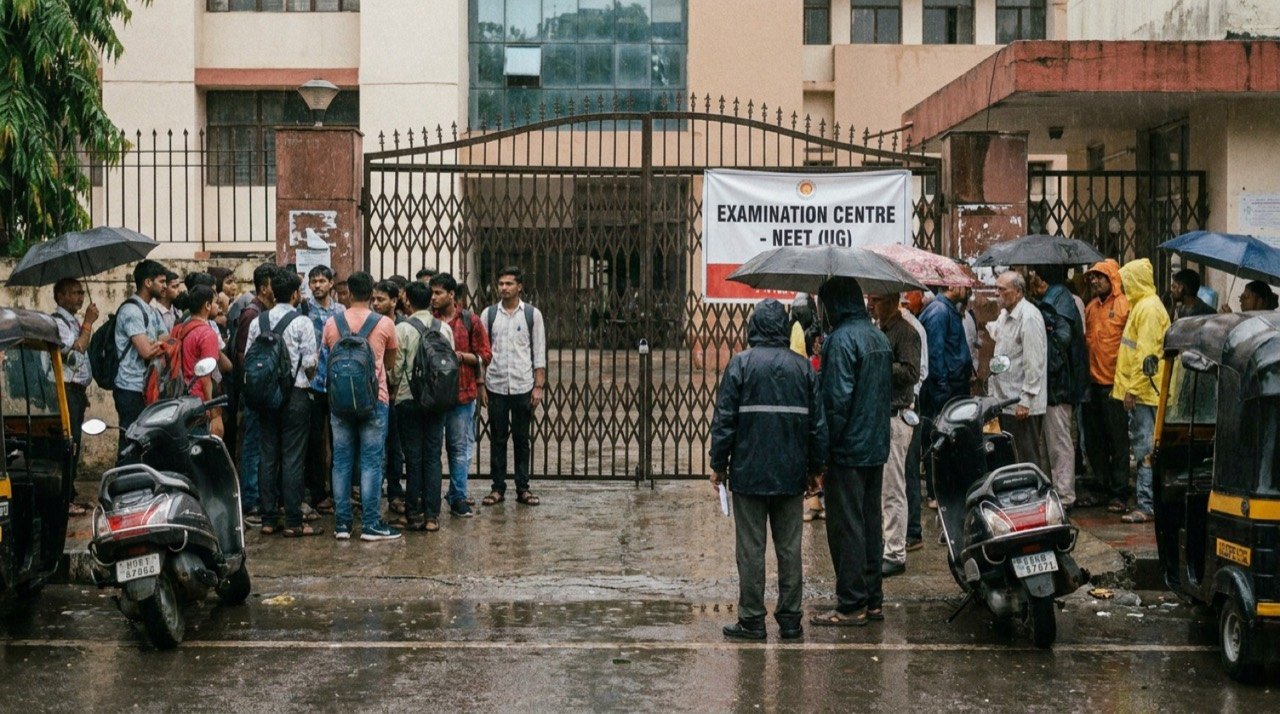
NEET Re-Test Gate Closures Revive Debate Over Exam Fairness
Students turned away minutes late at the NEET re-test have reignited a hard question for India's high-stakes exams: how should rigid rules and uniform deadlines accommodate real-life disruption?
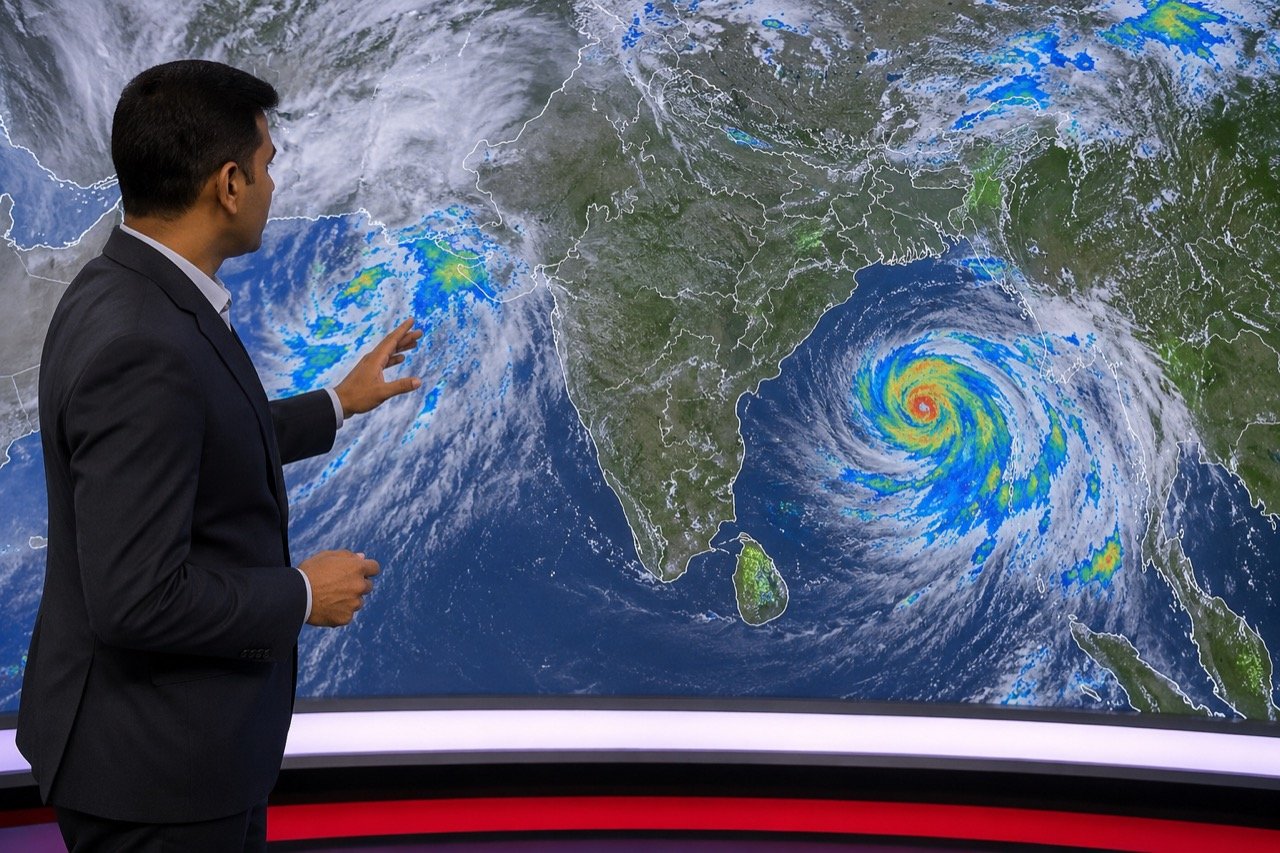
Bay of Bengal Low Pressure System Revives Monsoon Over Western India
A low-pressure system over the Bay of Bengal has pushed the monsoon back into an active phase, bringing steady heavy rain to Kerala, coastal Karnataka and Maharashtra, and putting Mumbai and Pune on preparedness watch.
More from this section
More
AICTE Industry Fellowship 2026: Rs 1.5 Lakh Scheme Closes July 5
The AICTE Industry Fellowship Programme 2026, which places technical-education faculty inside leading companies on a Rs 1.5 lakh monthly stipend, reached its application deadline on July 5.
Bay of Bengal Low Pressure System Revives Monsoon Over Western India
A low-pressure system over the Bay of Bengal has pushed the monsoon back into an active phase, bringing steady heavy rain to Kerala, coastal Karnataka and Maharashtra, and putting Mumbai and Pune on preparedness watch.
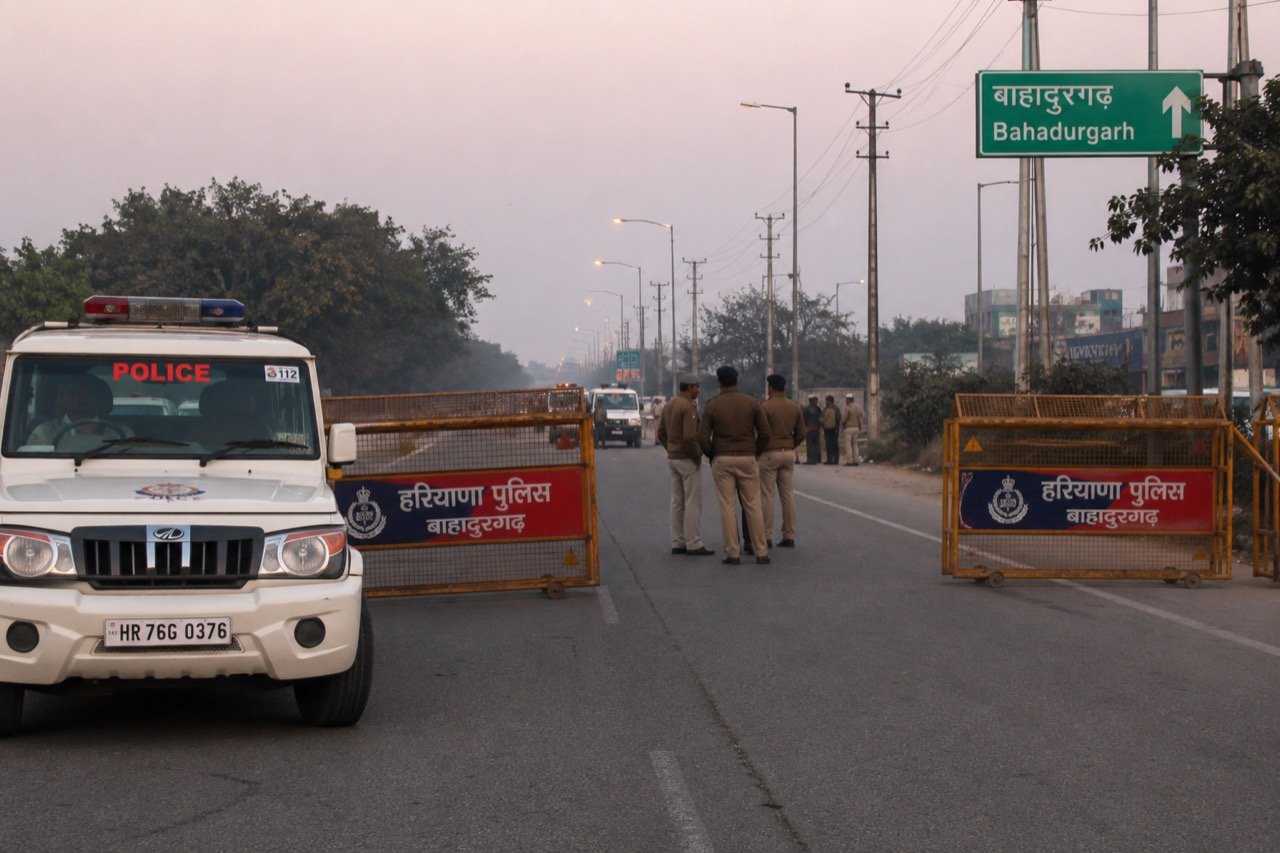
Bishnoi Gang Suspects Injured in Haryana Encounter as Police Tighten Net
A joint Haryana-Delhi Police operation in Bahadurgarh left two suspected Lawrence Bishnoi gang members injured, spotlighting the multi-state coordination now central to India's fight against organised crime networks.