India Copper Capacity Push Grows Urgent as Clean Energy Demand Rises
Rising demand from solar, wind, electric vehicles and grid expansion is turning India's copper supply into a strategic industrial question, with capacity gaps threatening costs and project timelines.
Commentary & Analysis ·
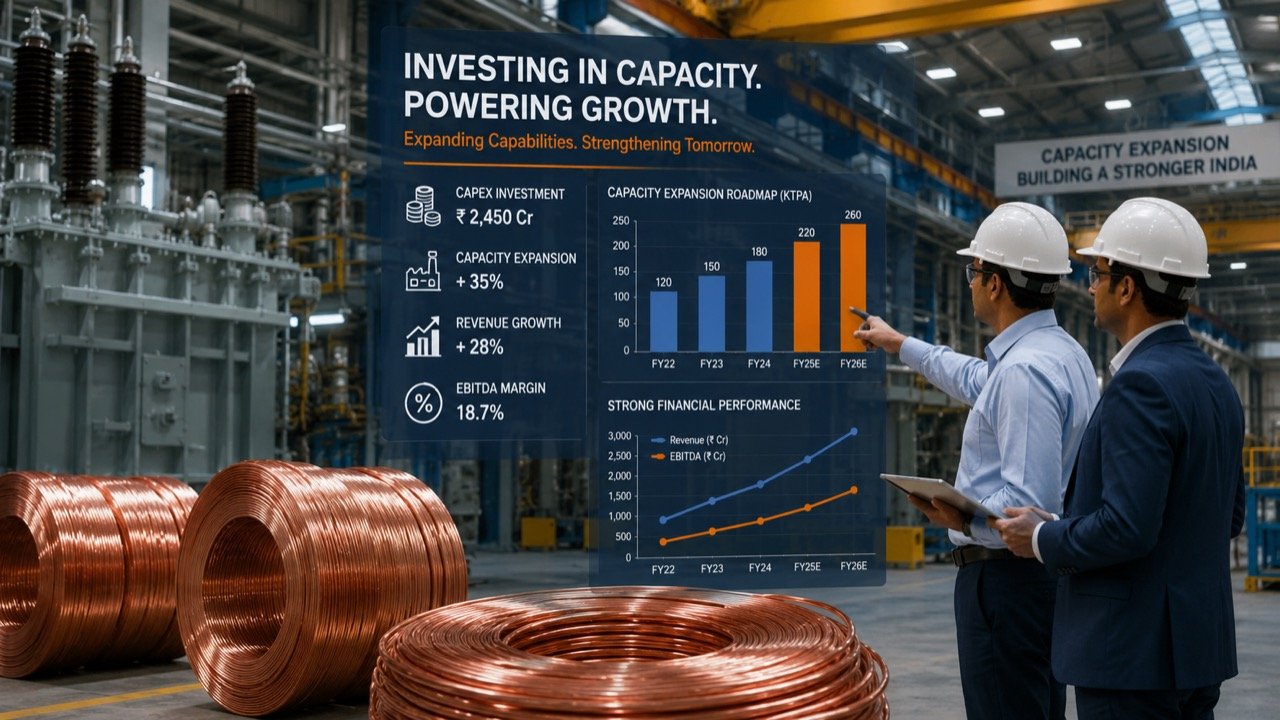
India needs to move faster on expanding copper capacity as demand from clean energy, electric vehicles, grid infrastructure and manufacturing climbs, according to industry-focused coverage cited by Business Standard. The red metal, long a workhorse of industry, is increasingly bound up with the economics of the energy transition. Copper threads through almost every growth priority India has set for itself: power transmission lines, renewable-energy installations, electronics, construction and mobility. As the country scales up solar, wind, battery storage and domestic manufacturing, the metal's availability, and its price, can shape both project costs and delivery timelines.
A metal hiding in plain sight
For decades, copper occupied an unglamorous corner of the commodities conversation, associated with wiring, plumbing and the routine business of construction. That reputation is changing fast, precisely because the metal does not have an obvious substitute in most of its applications. Aluminium can replace copper in some settings, but usually at a cost in efficiency, weight or reliability that engineers are reluctant to accept at scale. This is why copper has quietly become one of the load-bearing inputs of the clean-energy build-out. It is not a headline material in the way lithium or silicon are, but it is arguably more pervasive, appearing in the wiring of a solar farm, the windings of a wind turbine, the battery pack of an electric vehicle, and the transformers that link all of it back to the grid.
The significance of this for India is that the country is trying to expand several copper-intensive sectors simultaneously. Renewable energy targets, electric-vehicle adoption, grid modernisation and a broader manufacturing push are not separate policy tracks that happen to share a supply chain; they are converging demands on the same finite pool of refined metal. When ambitions in solar, wind, EVs and industrial capacity are pursued together, as India is now attempting, the strain on copper supply compounds rather than simply adding up.
Why the squeeze is tightening
Each of the sectors driving this demand is copper-hungry in its own right. An electric vehicle uses several times the copper of a petrol car, reflecting the wiring, motors and battery architecture that define it. Every gigawatt of renewable capacity brought online drags kilometres of cabling and transformer metal behind it, since power generated in a solar park or wind farm is only useful once it has been carried, often over long distances, to where it will be consumed. Add in the copper requirements of expanding domestic manufacturing and upgrading transmission infrastructure, and it becomes clear why supply that looked comfortably adequate only a few years ago now looks exposed.
This is the crux of the concern: it is not that India suddenly lacks copper, but that the trajectory of demand is steepening faster than the trajectory of supply. Policy targets for renewable capacity, EV penetration and grid strengthening were, in many cases, set without fully pricing in how much they would collectively lean on a single, globally traded input. As those targets move from paper to construction sites, the metal's availability becomes a practical constraint rather than an abstract one, capable of shaping both the pace at which projects are delivered and their eventual cost.
Capacity is more than mining
It would be a mistake to treat this as simply a call for more mining. The expansion challenge goes well beyond digging more ore out of the ground. It spans refining and smelting capacity, the recycling of scrap copper, import arrangements with copper-producing nations, the logistics of moving the metal efficiently within the country, and the downstream fabrication that turns refined copper into wire, sheet and components usable by industry. Each of these stages has its own bottlenecks, its own investment requirements and its own lead times, meaning a shortfall at any single point in the chain can slow the whole system down, even if raw ore supply itself is not the limiting factor.
India's task, as the coverage frames it, is to reduce its supply vulnerability without overstating what domestic capability can realistically deliver in the near term. This is a delicate balance. Overpromising on domestic self-sufficiency risks policy that looks assertive on paper but fails to materialise in time to meet demand, while underinvesting risks leaving the country permanently dependent on imported metal at the mercy of global price cycles. Getting that balance right, between ambition and realism, will define the policy choices that shape the sector in the years ahead.
The stakes for industry and policymakers
For manufacturers of EVs, renewable-energy equipment and grid components, copper availability is not an abstract macroeconomic concern but a direct input cost and a scheduling risk. Tight supply tends to show up first as price volatility, which complicates long-term project financing and can force manufacturers to hold larger, more expensive inventories as a hedge. For policymakers, the challenge is coordinating incentives across mining, smelting, recycling and trade policy so that investment flows to the parts of the chain most likely to relieve pressure, rather than concentrating attention solely on the extraction end, which is often the slowest and most capital-intensive to expand.
There is also a strategic dimension that goes beyond ordinary commodity economics. Countries that find themselves dependent on a small number of external suppliers for a critical input have, in recent years, discovered how quickly that dependency can become a point of leverage or vulnerability, whether through export restrictions, price shocks or simple logistical disruption. Copper's growing centrality to the energy transition means India's exposure on this front deserves the same level of strategic attention that has already been directed toward other critical inputs.
The NE Times View
Copper is quietly becoming to the energy transition what crude oil was to the last industrial era, and India cannot afford to treat it as just another commodity line item. The lesson of recent years, from semiconductors to solar modules, is that supply concentration abroad eventually becomes a strategic cost at home. A country that discovers its clean-energy ambitions are hostage to a metal it did not plan carefully for will find that out at the worst possible moment, when prices are already rising and alternatives are scarce.
India should pursue a portfolio approach: new smelting and refining capacity, aggressive scrap recycling, and long-term sourcing deals, rather than betting on any single fix. No one lever, whether it is opening new mines, building new smelters, or signing long-term import contracts, is likely to be sufficient on its own. It is the combination, pursued in parallel and with realistic timelines, that offers the best insurance against a bottleneck. If the clean-energy build-out is not to be throttled by a metals bottleneck, copper planning needs to start now, not when prices spike. Waiting for a price shock to force the issue would mean reacting to a crisis rather than preventing one, at a moment when the cost of every additional gigawatt of renewable capacity and every additional electric vehicle on Indian roads is already meant to be falling, not rising.
Key takeaways
- Copper demand from clean energy, EVs, grid infrastructure and manufacturing is rising simultaneously, compounding pressure on supply that looked adequate only a few years ago.
- Electric vehicles use several times the copper of petrol cars, and every gigawatt of renewable capacity requires extensive cabling and transformer metal.
- Expanding capacity requires more than mining; it spans refining, smelting, scrap recycling, imports, logistics and downstream fabrication.
- India must balance ambition with realism, avoiding both overstated claims of near-term self-sufficiency and continued heavy reliance on external supply.
- The NE Times View calls for a portfolio approach, new smelting and refining capacity, aggressive recycling, and long-term sourcing deals, planned now rather than in response to a future price spike.
You may also like to read

India Refining Capacity Expansion Powers New Energy Push
India's plans to expand oil refining capacity are back in the spotlight, underlining how fuel infrastructure remains central to demand, exports and energy security even as the clean-energy transition gathers pace.

India Retail Inflation Rises to 4.38% in June 2026 as Food Prices Push CPI Above RBI’s Target
The first breach of the central bank’s 4% midpoint in 17 months puts household budgets, monsoon conditions and the interest-rate outlook back in focus.
India Economy This Week: Energy Relief, PMI and Monsoon Demand
India's near-term growth picture is being read through a dashboard of indicators this week, with energy costs, PMI activity readings and monsoon-linked rural demand each pulling the conversation in different directions.

Tata Motors Lifts Prices From July, Doubles Down On EV And Hydrogen
Tata Motors will raise passenger vehicle prices by up to 1.5 percent from July 1 to offset input-cost pressure, even as chairman N. Chandrasekaran reaffirms heavy investment in electric and hydrogen mobility.
More from this section
More
Adani Case: US DOJ Pushes for Permanent Dismissal of Charges
The US Department of Justice has urged a judge to permanently dismiss charges against Gautam Adani, calling the case legally flawed — a reversal with consequences for markets, diplomacy and cross-border enforcement.

Akasa Air Inducts 40th Aircraft in Indian Aviation Scale-Up
Akasa Air's 40th aircraft, ferried to Bengaluru via Seattle, Reykjavik and Cairo, marks a fleet milestone for the young carrier and a fresh signal that India's aviation market remains firmly in expansion mode.
BARC Ratings Suspension Leaves Indian TV Industry Flying Blind
BARC's pause on television ratings has put India's broadcast measurement system under fresh scrutiny, leaving broadcasters, advertisers and media planners without the weekly audience data that anchors the TV economy.