Nagal And Sahaja Yamalapalli To Spearhead India's Asian Games Tennis Squad
India have named a 12-member tennis squad for the Asian Games, with Sumit Nagal and Sahaja Yamalapalli leading singles hopes as the country eyes medals in Aichi-Nagoya.
Commentary & Analysis ·
India have firmed up their tennis plans for the Asian Games, naming a 12-member squad with Sumit Nagal and Sahaja Yamalapalli leading the singles charge. The selection sets the stage for a medal push in Aichi-Nagoya, where tennis has historically offered India some of its more reliable podium chances at a continental level. The announcement, though modest in the volume of headlines it is likely to generate against a crowded sporting calendar, carries real significance for a federation that has long had to make careful choices about where to invest its limited depth of talent.
Leaders of the line-up
Nagal, long India's standard-bearer in men's singles, brings the experience of Grand Slam qualifying campaigns and tour-level battles to a competition where seeding and depth can swing quickly. His presence at the head of the squad is unsurprising: for several years now he has been the player Indian tennis has pointed to as proof that the country can still produce a credible singles competitor on the world stage, even as the broader talent pool has thinned. On the women's side, Sahaja Yamalapalli has emerged as a leading name, and the pairing of an established figure with a rising talent reflects the federation's intent to balance pedigree with momentum. It is a sensible pairing in principle, an experienced campaigner whose game is well scouted by opponents, alongside a newer face who can bring an element of unpredictability, but it also means the singles hopes of an entire squad rest on a fairly narrow base of two players carrying disproportionate expectation.
The doubles calculation
Beyond singles, doubles has often been India's strongest suit at multi-sport Games, and the squad has been built with an eye on assembling competitive combinations across the men's, women's and mixed events. This is not a new strategy, doubles has repeatedly been where Indian tennis has found its most consistent continental and Olympic-adjacent success, largely because pairings can be constructed to maximise chemistry and complementary skills in a way that is harder to engineer in singles, where a player's individual ranking and form are the only currency. The twelve-member composition suggests selectors have deliberately built enough depth to field multiple doubles combinations rather than relying on a single marquee pairing, spreading the risk across several partnerships in men's, women's and mixed draws.
Why the Asian Games matter
For Indian tennis, the Asian Games carry weight that extends beyond the medal table. They are a chance to test players against strong continental fields, to blood emerging talent in a high-pressure team environment, and to keep the sport in the national conversation in a year crowded with cricket and other headline events. In a sporting culture where attention and, by extension, sponsorship and grassroots investment tend to follow visible success, a strong showing in Aichi-Nagoya could do more for the domestic profile of tennis than a similar result achieved in a purely individual tour event that passes largely unnoticed at home. The Games format also offers something the regular tour circuit does not: a team environment, national colours, and the kind of narrative arc that resonates with a broader public than the sport's usual following.
The medal equation
Continental tennis is fiercely competitive, with several Asian nations fielding tour-hardened professionals, so India's medal hopes will hinge on form, the draw and the chemistry of its doubles units. Nations across the region have invested heavily in player development pipelines, and India cannot assume that reputation or past results will carry it through difficult draws. The team's leadership will be looking for players to arrive in peak condition after a busy stretch of the international calendar, which is itself no small ask, tennis players competing across multiple tours and formats often arrive at multi-sport Games carrying fatigue or niggling injuries picked up in the weeks prior. Timing, conditioning and the ability to peak on demand will matter as much as raw ranking points when the draw is made.
What comes next
With the squad confirmed, attention now turns to scheduling, fitness and the build-up tournaments that will sharpen the players ahead of the Games. How Nagal and Yamalapalli perform in the weeks immediately preceding the tournament will offer the clearest signal of where they stand, both physically and psychologically, going into the competition. For Nagal, Yamalapalli and their teammates, the assignment is clear: convert the promise of selection into results when the continent's best gather to compete. Selection, after all, is only the first hurdle, the harder test comes once the draw is made and the pressure of representing the country in a compressed, high-stakes format sets in.
The NE Times View
A squad leaning on Nagal and Yamalapalli reflects honest realism about where Indian tennis stands, strong in pockets but thin in elite singles depth. The Asian Games offer a stage to convert promise into medals, yet the sport has long over-relied on doubles success to mask singles fragility. Nagal's form will tell us how much that gap has actually narrowed. If the singles results in Aichi-Nagoya mirror the pattern of recent years, doubles medals arriving more readily than singles breakthroughs, it will confirm that Indian tennis's structural challenge remains unresolved even as individual careers rise and fall. A genuinely encouraging outcome would be one in which Nagal or Yamalapalli push deep into their singles draws on merit, not simply through favourable seeding, offering evidence that the pipeline beneath them is beginning to produce depth rather than isolated exceptions.
Key takeaways
- India have named a 12-member tennis squad for the Asian Games in Aichi-Nagoya, scheduled for later in the year.
- Sumit Nagal and Sahaja Yamalapalli will lead the men's and women's singles campaigns respectively.
- Doubles remains India's traditional strength at multi-sport Games, and the squad has been built to field competitive combinations across men's, women's and mixed events.
- Selection blends experienced names with emerging players, reflecting a deliberate balance of pedigree and momentum.
- Continental competition is stiff, with India's medal prospects resting on form, the draw and doubles chemistry as much as individual ranking.
You may also like to read
Bhubaneswar Inter-State Meet Becomes The Gateway To India's Asian Games Squad
The National Inter-State Senior Athletics Championships in Bhubaneswar will serve as the decisive selection gate for athletes chasing places at the Aichi-Nagoya Asian Games.
India's Men's Foil Team Books Asian Games Spot Despite Medal Miss
India's men's foil fencers left the Asian Senior Fencing Championships without a medal, but their performance earned direct qualification for the Asian Games, marking a significant milestone for a sport still building its base in the country.
Inter-State Athletics 2026: Yarraji and Kujur Punch Asian Games Tickets as Sindhushree Breaks Pole Vault Record
The National Inter-State Senior Athletics Championships in Bhubaneswar doubled as Asian Games trials, with Jyothi Yarraji, Animesh Kujur and Praveen Chithravel clearing qualifying marks and Sindhushree G setting a national record.
SAI Tells Federations to Pause Asian Games Team Announcements
The Sports Authority of India has asked national federations to hold back Asian Games squad announcements until official clearance, putting selection discipline and athlete communication under scrutiny.
More from this section
More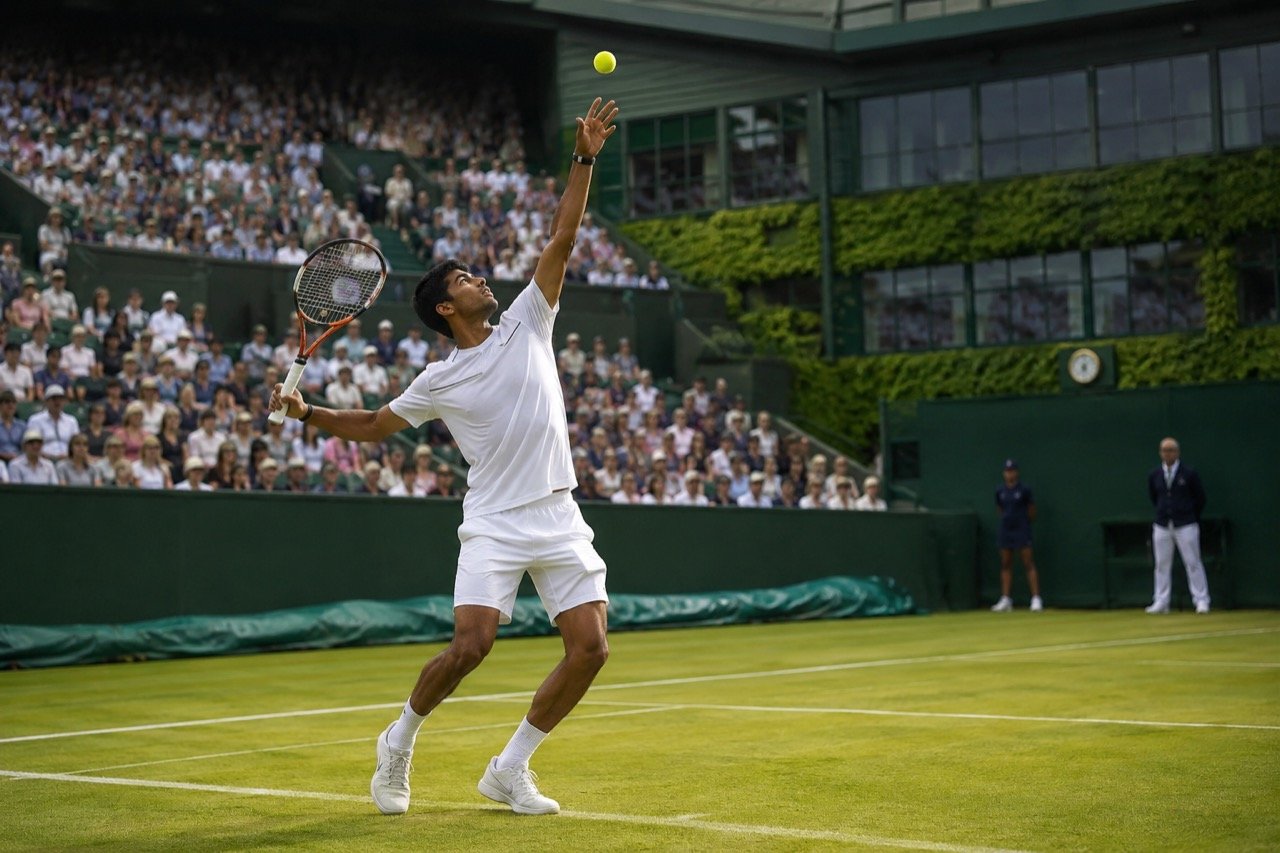
Arnav Paparkar Advances at Wimbledon Boys' Singles in Boost for India
Indian junior Arnav Paparkar has moved into the second round of the Wimbledon boys' singles with a commanding serving display, handing Indian tennis a rare and encouraging grass-court result at the sport's biggest stage.

Axar Patel Becomes First Indian Spinner With 100 T20I Wickets
Axar Patel reached 100 T20 international wickets in the second T20I against England, becoming the first Indian spinner to hit the mark and cementing his standing as one of India's most durable white-ball performers.
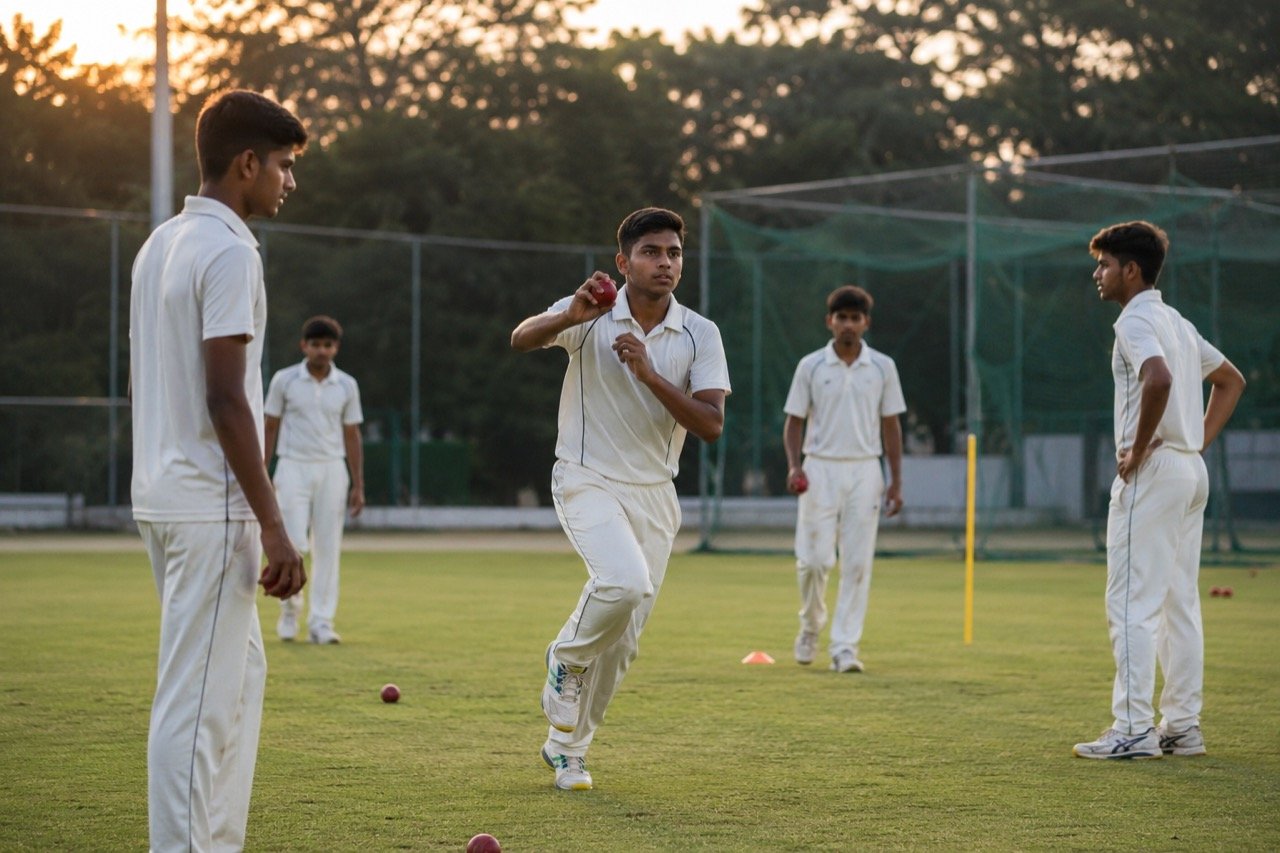
BCCI Emerging Men's Tournament to Hunt Test Prospects in Bengaluru
The BCCI's red-ball Emerging Men's Tournament, running at the Centre of Excellence in Bengaluru through July, is designed to give selectors a longer, harder look at India's next generation of Test cricketers.