Axar Patel Becomes First Indian Spinner With 100 T20I Wickets
Axar Patel reached 100 T20 international wickets in the second T20I against England, becoming the first Indian spinner to hit the mark and cementing his standing as one of India's most durable white-ball performers.
Commentary & Analysis ·

Axar Patel etched his name into Indian cricket's record books during the second T20I against England, becoming the first Indian spinner to take 100 wickets in T20 internationals, according to the Times of India. The landmark hands India another benchmark in a format that prizes all-round utility and composure under pressure, and it arrives at a moment when the national side is still fine-tuning its combinations for the next cycle of white-ball tournaments. For a cricketer who has often operated in the shadow of louder reputations, this is a number that speaks for itself.
Why 100 T20I wickets is a genuine feat
T20 bowling offers little margin for error, and spinners arguably face the harshest examination of all. They are asked to bowl inside the powerplay against batters looking to seize the field restrictions, hold the middle overs when the required rate is climbing, and occasionally close out an innings against opponents drilled to attack every matchup they are shown. There is no format in the game where a single loose delivery is punished as immediately or as visibly. A spinner who cannot adapt his lengths, his pace off the pitch and his field placements over after over will simply not survive long enough to accumulate a career total of any significance.
Accumulating 100 wickets in this environment demands longevity, tactical flexibility and, crucially, the sustained trust of captains across varied conditions. It is not a milestone that can be manufactured in a single purple patch or a friendly home season. It requires a bowler to be selected repeatedly, on flat subcontinental pitches as well as on seaming, bouncier surfaces abroad, and to keep delivering enough value that team management never feels tempted to look elsewhere. That kind of consistency, sustained over years rather than months, is what separates a milestone bowler from a merely useful one.
A new record book for a new format
India has produced a long line of celebrated spinners across generations, from the pace-off artistry of an earlier era to the wrist and finger spinners who dominated Test cricket for decades. But the T20I record book is younger and far more specialised than its Test and ODI counterparts, shaped by a format that rewards different skills and punishes different weaknesses. Being the first Indian slow bowler to a century of wickets in this format gives Axar a distinct historical placement that none of his illustrious predecessors could claim, simply because the format itself did not exist for most of their careers, or did not carry the same weight and volume of matches that it does today.
This is worth dwelling on because it reframes how a player's legacy gets built in the modern game. A young cricketer coming through the ranks today measures success not only against the Test greats of the past but against a separate, parallel lineage of white-ball records. Axar now sits at the head of one such lineage among Indian spinners, and that positioning is unlikely to be overtaken quickly given how few bowlers combine his volume of matches with his control.
Value that extends beyond the ball
His value extends well beyond the ball. Axar contributes meaningful runs down the order, fields athletically, and offers left-arm spin that slots into multiple team combinations without forcing a captain to compromise on balance elsewhere in the XI. In a format where every team is trying to pack as many genuine skills into eleven players as possible, a bowler who can also be trusted to contribute with the bat in a crunch situation is worth considerably more than his bowling figures alone would suggest.
Milestones like this one strengthen the argument that he is a frontline T20 performer in his own right rather than a supporting act to India's more decorated spin and pace options. It is a subtle but important distinction. Players who are perceived as squad depth get selected conditionally, rotated in and out, and rarely given the sustained run that builds a record such as this. A century of wickets is itself proof that Axar has, for a long period now, been picked as a first-choice bowler rather than a contingency option.
What this says about India's bowling depth
India's white-ball set-up has, for much of the past decade, been characterised by an embarrassment of spin-bowling riches, with selectors regularly having to leave out proven performers to accommodate conditions or matchups. That depth is often discussed in the abstract, but milestones like Axar's give it a concrete marker. It shows that the system producing India's spin options is not merely producing quantity but genuine quality capable of standing up over a hundred international matches in the most unforgiving format the game has.
It also raises a natural question about succession and competition. With Axar now holding this record, other spinners coming through domestic and franchise cricket have a tangible target to aim at, and captains and coaches have a reference point for what sustained excellence in this discipline actually looks like. Records of this kind tend to raise the ambient standard for everyone competing for the same handful of places in the XI.
The NE Times View
Axar Patel's milestone deserves more than a passing scoreboard mention. For years he was viewed as the understudy to bigger names, a reliable pair of hands rather than a headline act, yet quietly he has become exactly the kind of cricketer modern T20 sides are built around: economical, adaptable and useful in all three disciplines of batting, bowling and fielding. That is not an easy profile to cultivate, and it rarely draws the attention that outright match-winning spells or blistering innings do. His record also says something about India's depth — the pipeline keeps producing spinners who can thrive in the most batter-friendly format the sport has yet devised, even as bats get bigger, boundaries get shorter and batters get bolder.
As India plans for coming world tournaments, Axar's blend of control and lower-order hitting should make him a first-name pick, not a conditions-dependent one brought in only when the pitch is expected to turn. Selectors and team management would do well to build their combinations around certainties like this rather than treating them as adjustable variables. A cricketer who has proven his worth across a hundred international matches, in all manner of conditions and against all manner of opposition, has already answered the only question that matters.
Key takeaways
- Axar Patel became the first Indian spinner to take 100 wickets in T20 internationals, achieving the milestone during the second T20I against England.
- The feat reflects rare longevity and tactical adaptability, given how unforgiving T20 cricket is for spin bowlers across the powerplay, middle overs and death.
- Because the T20I record book is newer and distinct from Test and ODI history, Axar's placement as a pioneer among Indian spinners in this format is unlikely to be matched soon.
- His all-round contributions with bat, ball and in the field reinforce his standing as a frontline T20 performer rather than a squad-depth option.
- The NE Times View holds that Axar's consistency should secure him a permanent, conditions-independent place in India's XI for upcoming tournaments.
You may also like to read
India Beat England by Six Wickets in First ODI as Axar Patel Delivers Match-Winning All-Round Show
India chased 259 at Edgbaston to beat England by six wickets, led by Axar Patel's 4/62 and unbeaten 57, Shubman Gill's 80 and Washington Sundar's 52 not out.

India vs England 2nd T20I: Bethell's 76 Powers Four-Wicket Chase
Jacob Bethell's 76 off 46 balls steered England past India's 190 at Old Trafford, spoiling Vaibhav Sooryavanshi's record-breaking debut and handing the hosts a 1-0 lead in the five-match series.
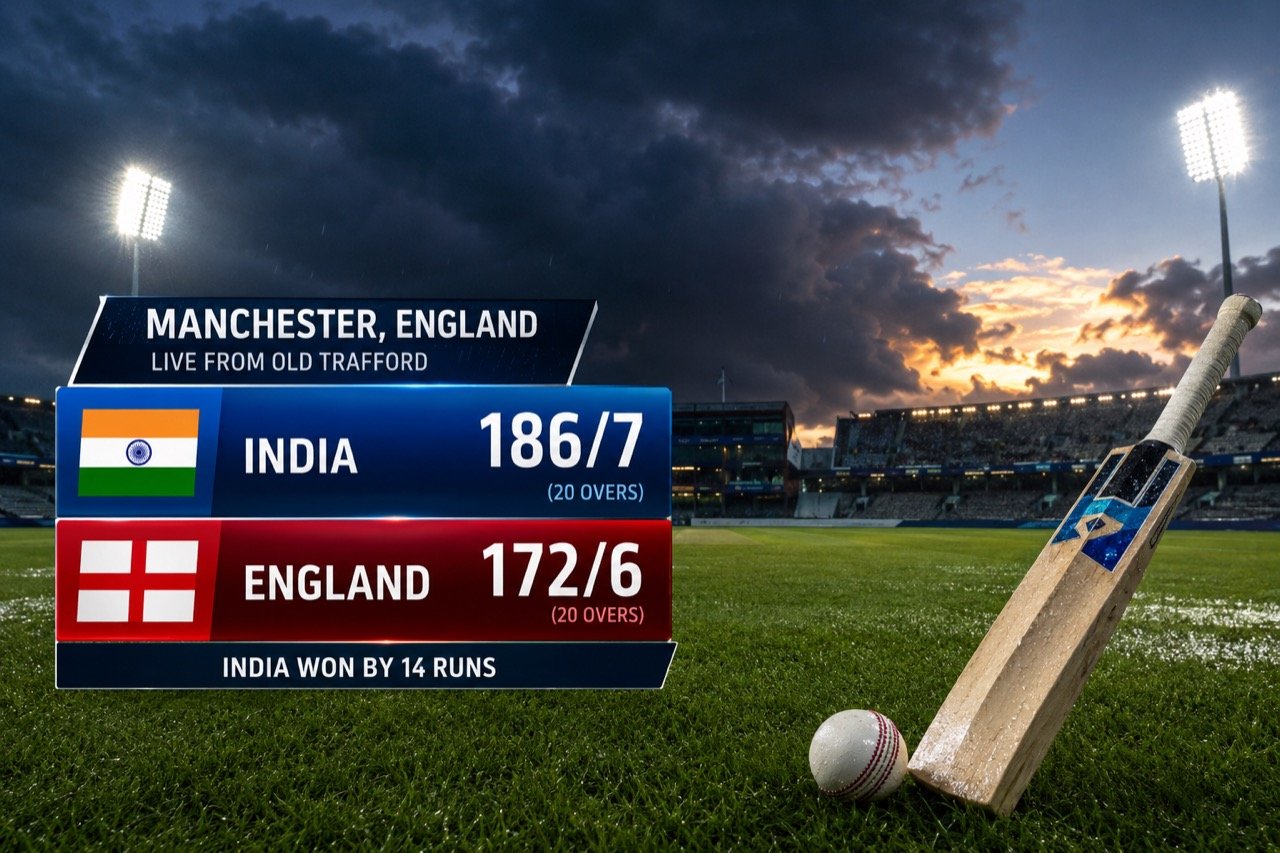
England vs India 2nd T20I: Defeat Puts India's Tactics Under Scrutiny
England's win in the second T20I has shifted the series conversation from team combinations to India's response, with selection calls, death-over plans and finishing roles now firmly under the spotlight.

PV Sindhu in Focus on World Badminton Day as India Eyes New First
World Badminton Day turned the spotlight on PV Sindhu, with fresh coverage placing the two-time Olympic medallist on the brink of another historic first and underlining how far Indian badminton has travelled.
More from this section
More
Arnav Paparkar Advances at Wimbledon Boys' Singles in Boost for India
Indian junior Arnav Paparkar has moved into the second round of the Wimbledon boys' singles with a commanding serving display, handing Indian tennis a rare and encouraging grass-court result at the sport's biggest stage.

BCCI Emerging Men's Tournament to Hunt Test Prospects in Bengaluru
The BCCI's red-ball Emerging Men's Tournament, running at the Centre of Excellence in Bengaluru through July, is designed to give selectors a longer, harder look at India's next generation of Test cricketers.
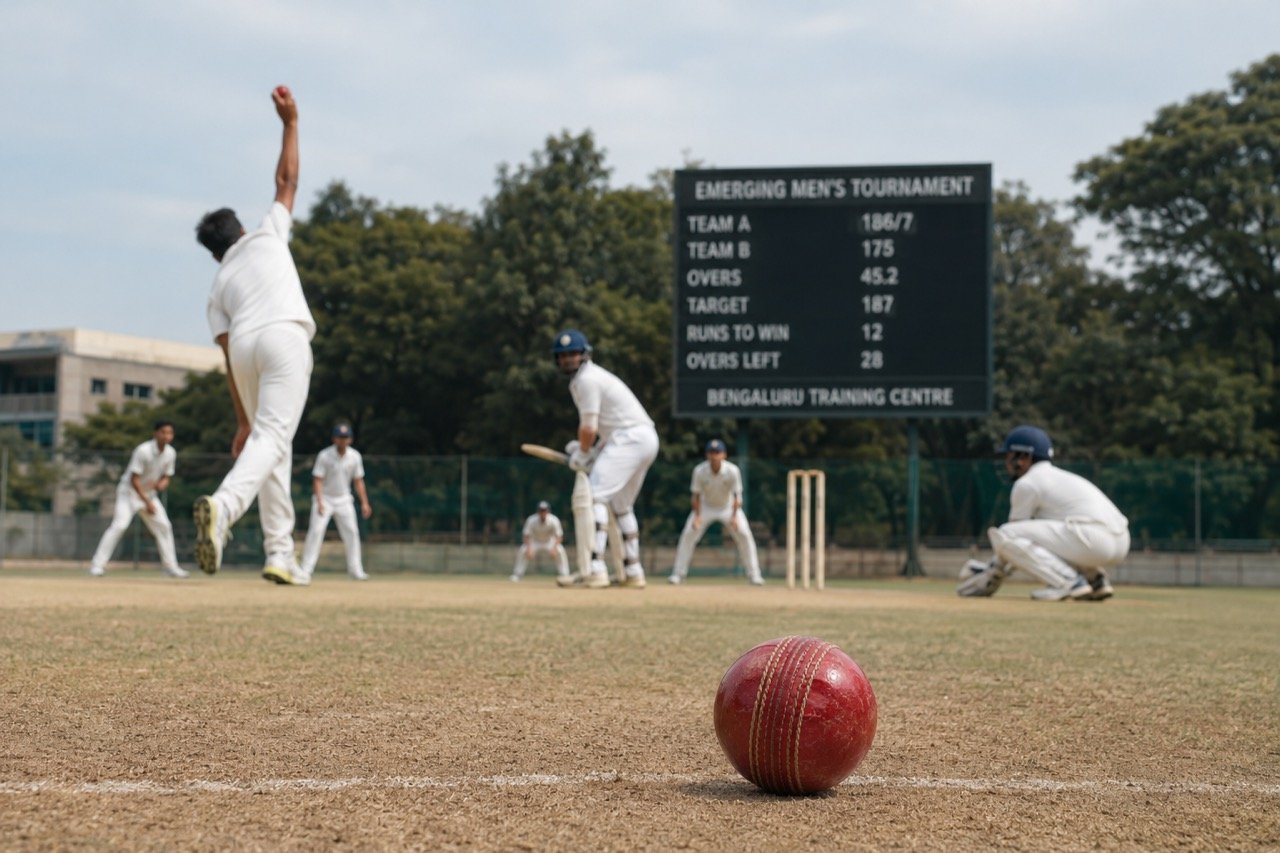
BCCI Emerging Tournament 2026: India's Next Cricket Stars Take Stage
The BCCI's emerging men's tournament gives selectors, franchises and fans a structured look at the young Indian cricketers pushing to move from domestic promise into national contention.