India Bets on AI to Catch the Next Outbreak Under One Health Mission in 2026
Drawing on the hard lessons of COVID-19, the ICMR is inviting proposals for AI systems to detect emerging pathogens across people, animals and the environment, in a bid to predict outbreaks rather than react to them.
Commentary & Analysis ·
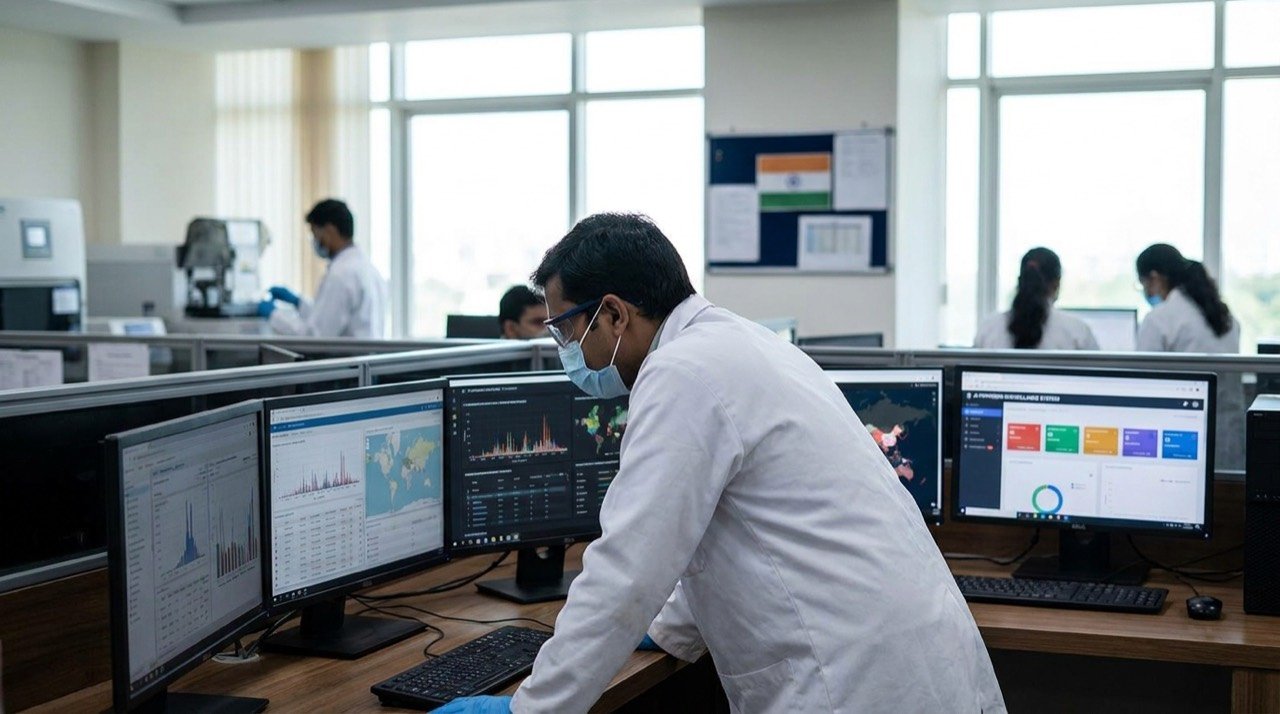
India is reshaping how it watches for the next epidemic. Under the National One Health Mission, the Indian Council of Medical Research has invited proposals to build artificial intelligence systems capable of identifying new and emerging pathogens across humans, animals and the environment. The shift is aimed squarely at predicting outbreaks before they spread, rather than the familiar pattern of scrambling to contain them after the fact. It is a modest-sounding administrative step, an invitation for expressions of interest, but it signals a much larger ambition: to change the basic posture of Indian public health from reactive to anticipatory.
Lessons from the pandemic
The push is explicitly rooted in the experience of COVID-19, when delayed detection allowed infections to take hold before systems could respond. That delay was not unique to India, but the consequences were magnified by the country's scale and density. By embedding AI into surveillance, the ICMR hopes to spot unusual patterns early, flag potential threats and give authorities a head start in a country where dense populations and close animal-human contact create fertile ground for spillover events. The logic is straightforward: outbreaks are easier and cheaper to stop at the source than after they have already seeded multiple clusters. The initiative has invited expressions of interest from institutions to develop AI-based detection systems, which signals a deliberate move from crisis management toward predictive public health intelligence. Coming roughly five years after the first COVID-19 wave, this can be read as an institutional acknowledgement that the old model, in which surveillance meant counting confirmed cases after clinics were already overwhelmed, was too slow for a pathogen that moves faster than paperwork.
It is worth dwelling on why that delay mattered so much in 2020. Early detection buys time for every subsequent decision: whether to restrict travel from a specific district, whether to stockpile particular drugs or protective equipment, and whether to warn hospitals in a region before their wards fill up. An AI system that can flag an anomalous cluster of symptoms, or an unusual pathogen signature in a wastewater sample, days or weeks before it would otherwise be noticed, could in principle compress that decision-making window dramatically. The ICMR's bet is that machine learning, applied across large and varied surveillance streams, can do what overworked human reviewers cannot: continuously scan for faint signals across a vast and heterogeneous country.
The One Health approach
Central to the effort is the One Health principle, which treats human, animal and environmental health as a single connected system rather than three separate silos. This is not a cosmetic framing. Many emerging diseases originate in animals before jumping to people, and the interface where wildlife, livestock, and human settlements meet is precisely where new pathogens tend to first appear. Accordingly, the ICMR is developing protocols, tools and frameworks for integrated surveillance at the animal-human-environment interface, supported by a network of dedicated infectious disease research and diagnostic laboratories. The theory is elegant: if a novel virus is circulating in poultry or livestock in a particular district, catching that signal before it crosses into the human population is far more valuable than catching the first human case after the fact.
India's geography and rural economy make this an unusually demanding proposition. The country has enormous numbers of smallholder farms, informal live-animal markets, and close daily contact between people, livestock, and wildlife in many regions. That proximity is precisely what makes One Health surveillance necessary here, and precisely what makes it hard to execute. Any credible AI system trying to spot cross-species spillover needs a reasonably steady stream of veterinary, environmental and human health data feeding into it. Building the pipes for that data to flow, from a district veterinary office to a national analytics platform, is arguably a harder problem than building the AI model itself.
Building the diagnostic backbone
The AI ambition rests on stronger ground-level infrastructure, since predictive software is only as useful as the diagnostic and reporting network beneath it. The ICMR is establishing infectious disease research and diagnostic laboratories in state and central institutes and medical colleges, and has developed syndromic surveillance protocols along with a list of priority pathogens to test in Indian clinical settings. This is the unglamorous plumbing of public health: standard procedures for how a hospital records and reports a suspicious cluster of symptoms, a shared list of pathogens considered high-risk enough to warrant active testing, and physical laboratories capable of running those tests reliably across the country rather than only in major metropolitan centres.
International collaboration adds another layer to this backbone. The programme includes work with global health agencies on antimicrobial resistance and healthcare-associated infections, both of which are long-standing global health concerns that intersect closely with outbreak surveillance. Antimicrobial resistance in particular is a slow-moving crisis that can make ordinary infections far deadlier, and tracking it alongside novel pathogen surveillance allows the same laboratory network and reporting protocols to serve two purposes at once. That kind of dual-use infrastructure is sensible from a resourcing standpoint, since India cannot realistically build one network for pandemic prediction and an entirely separate one for resistance tracking.
What success would look like
If the programme delivers, India could become one of the first large, diverse nations to operationalise AI-driven outbreak prediction at scale. That would be a meaningful achievement, not just for India but as a template for other populous, resource-constrained countries facing similar spillover risks. The challenge will be turning expressions of interest into deployed, reliable systems that clinicians, veterinarians and public health officers actually trust and use day to day. Interest and proposals are the easy part of any government initiative; sustained funding, trained personnel, and functioning laboratories in every state are the hard part. Even so, the direction of travel is unmistakable: the country wants to see the next pandemic coming long before it arrives, and it is willing to invest in the institutional scaffolding needed to try.
Stakeholders across the system have reason to watch this closely. Hospital administrators and clinicians will want clarity on what new reporting obligations, if any, the syndromic surveillance protocols place on them. State veterinary departments, often under-resourced compared with their human health counterparts, will need to decide how to integrate new diagnostic responsibilities into already stretched budgets. And research institutions bidding for the AI development contracts will be watched for how quickly they can move from proposal to a working, field-tested system rather than a laboratory demonstration that never leaves the pilot stage.
The NE Times View
An AI-driven One Health approach that links human, animal and environmental signals is the right lesson to draw from COVID-19, where India reacted late and paid dearly. The logic of predictive surveillance is sound, and building it around the One Health principle rather than treating human health in isolation reflects a genuine, if belated, maturing of policy thinking. But algorithms are only as good as the data feeding them, and India's veterinary and rural health reporting remains patchy. A prediction model trained on incomplete or inconsistent data will produce false confidence at best and dangerous blind spots at worst. The ICMR's bet will succeed or fail on unglamorous groundwork: laboratory capacity in ordinary medical colleges rather than only flagship institutes, clean and consistent data pipelines connecting veterinary offices to national databases, and the political will to act decisively on early warnings rather than waiting for a crisis to force the issue, as happened in 2020. None of these are technology problems in the narrow sense; they are institutional and administrative ones, and they will determine whether this initiative becomes a genuine early-warning system or another well-intentioned proposal that struggles to move beyond the pilot stage.
Key takeaways
- The ICMR has invited proposals under the National One Health Mission for AI systems that detect emerging pathogens across humans, animals and the environment.
- The initiative is a direct response to COVID-19, aiming to shift India from reactive case-counting to predictive outbreak detection.
- It rests on the One Health principle, integrating surveillance at the animal-human-environment interface where many diseases originate.
- Success depends on ground-level infrastructure: new diagnostic laboratories, syndromic surveillance protocols, priority pathogen lists, and international collaboration on antimicrobial resistance.
- The real test will be whether expressions of interest translate into reliable, deployed systems, given persistent gaps in India's veterinary and rural health data.
You may also like to read
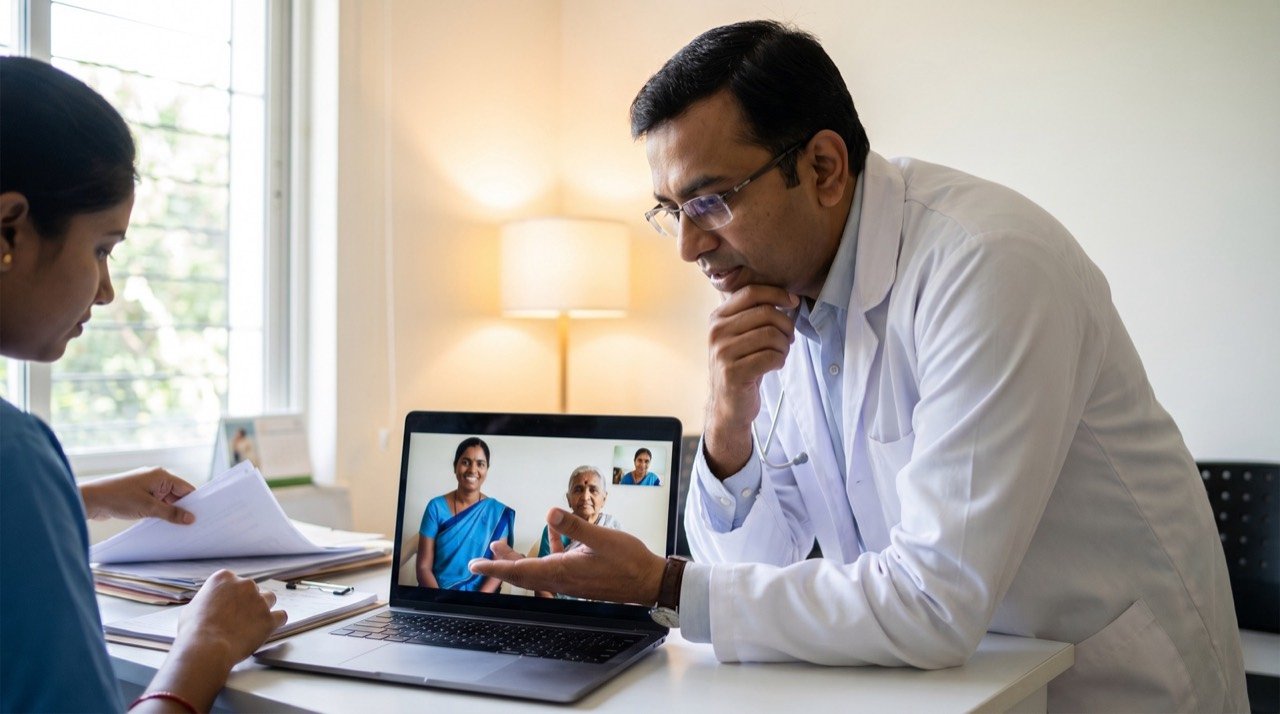
Digital Health Push Brings Telemedicine to More Towns and Villages
A nationwide effort to connect clinics digitally is widening access to doctors and diagnostics far beyond the big cities.
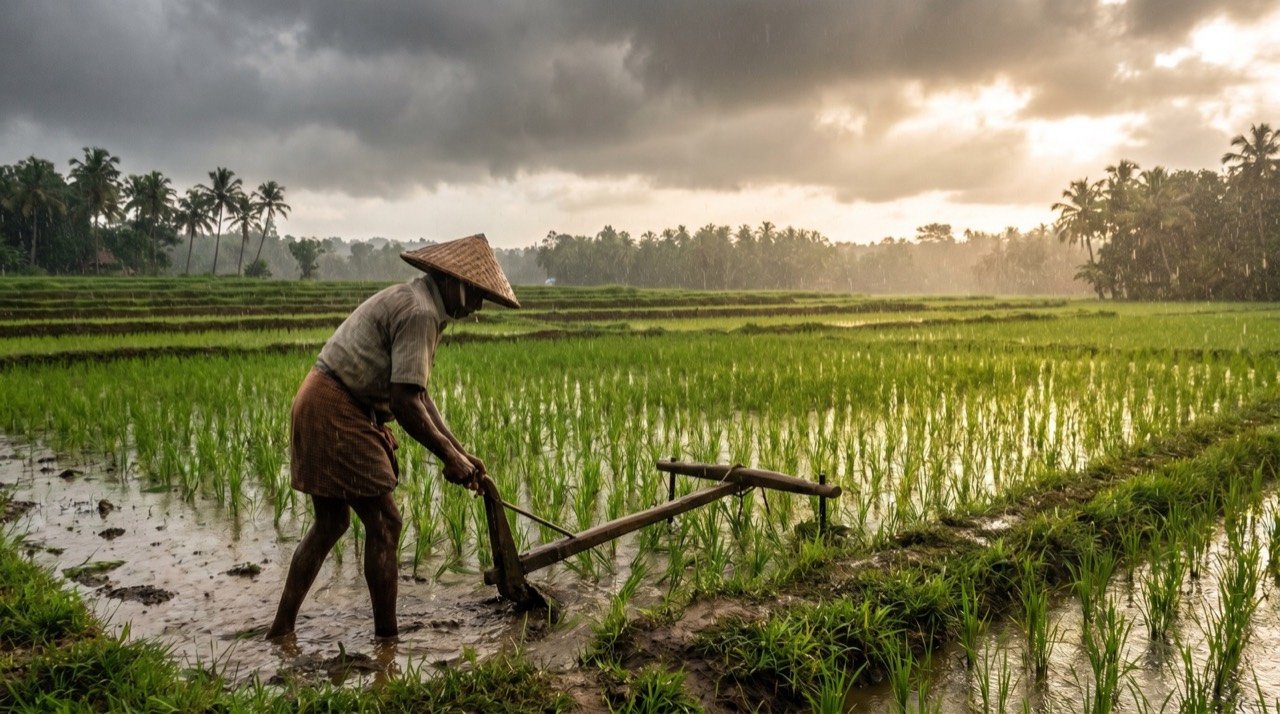
States Brace for Monsoon Fevers as Early Dengue Surge Worries Health Officials
With the southwest monsoon advancing, health departments across India are scrambling to contain dengue, malaria and chikungunya after an unusually early spike in cases reported before the rains even arrived.
India's Second National Mental Health Survey Reframes Wellbeing as the Goal
As NIMHANS conducts India's second National Mental Health Survey, researchers are shifting the lens from illness to wellness, amid mounting evidence that young Indians are struggling more than ever.
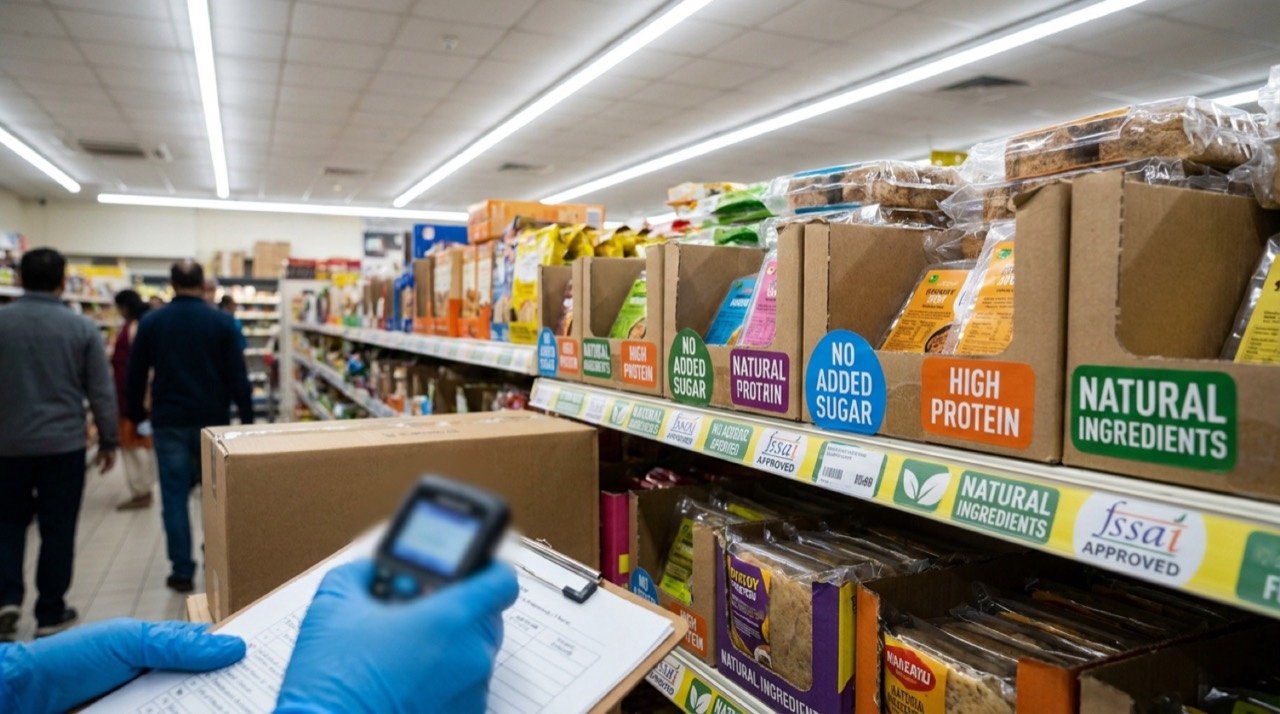
FSSAI Notices Put Packaged-Food Health Claims Under Sharper Scrutiny
Food regulator FSSAI has reportedly issued notices over health and nutrition claims on packaged foods, sharpening scrutiny of labels like 'no added sugar', 'high protein' and 'immunity support'.
More from this section
More
Health Insurance: Why Hospital Cashless Status Matters Before You Buy
Whether a hospital sits inside an insurer's cashless network can decide if a family pays lakhs upfront during an emergency or walks in with paperwork alone, making it a first-order question for policy buyers.

Jharkhand Teen Dies During Fracture Treatment; CM Orders Probe
The death of a Jharkhand teenager during treatment for a reported fracture has led to family allegations of medical negligence and an official probe ordered by the Chief Minister into what went wrong.
Aarogya Setu 2.0 Returns as India's Personal Health Record App
The pandemic-era contact tracing app has been relaunched as a personal health record platform, betting that portable medical data can find a place in India's growing digital health ecosystem.