Health Insurance: Why Hospital Cashless Status Matters Before You Buy
Whether a hospital sits inside an insurer's cashless network can decide if a family pays lakhs upfront during an emergency or walks in with paperwork alone, making it a first-order question for policy buyers.
Commentary & Analysis ·
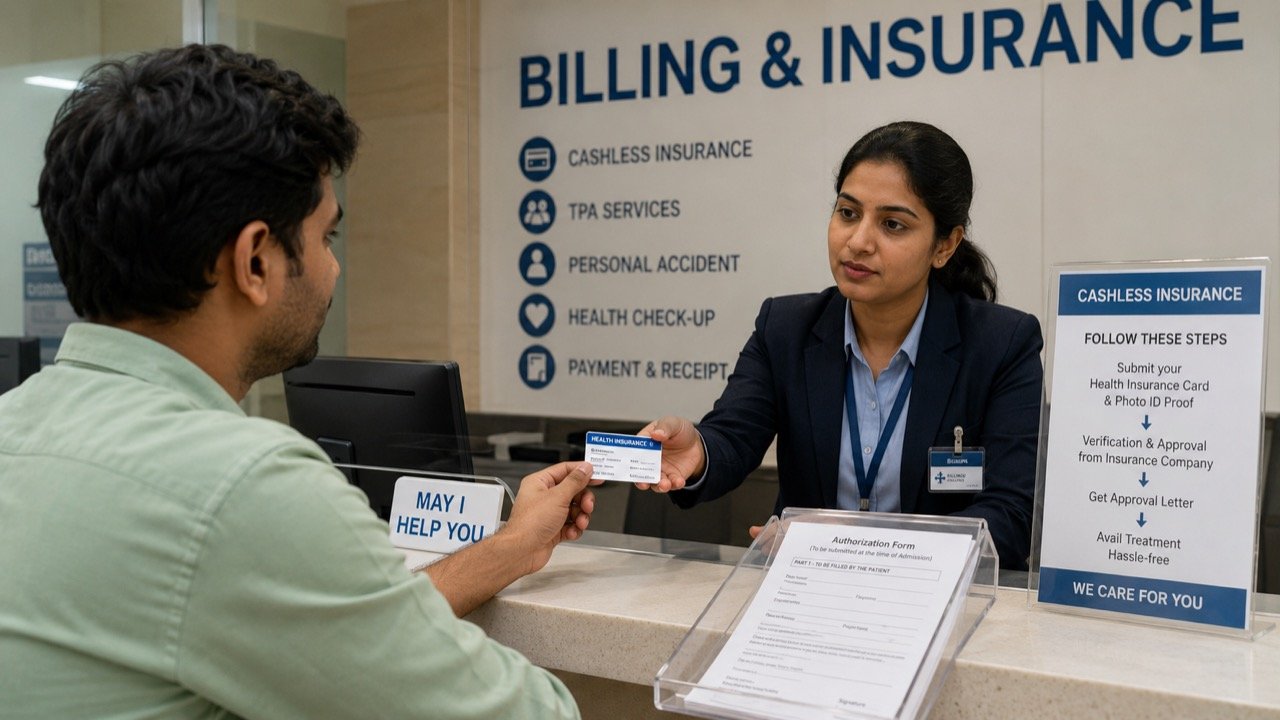
A hospital's cashless status is emerging as one of the most practical questions a health insurance buyer can ask. The distinction is simple but decisive: if a hospital is part of an insurer's cashless network, the insurer settles the bill directly, sparing policyholders from paying large sums upfront and chasing reimbursement afterwards. It sounds like a minor administrative detail until it is tested in real life, at which point it becomes the single factor that determines whether a family walks into a hospital with confidence or with dread.
Why it matters most in an emergency
Business Standard's personal-finance coverage highlighted why buyers should confirm network-hospital status before choosing a policy or planning treatment. In a medical emergency, the gap between cashless admission and a reimbursement claim is not academic — it shapes the family's stress levels, the paperwork burden and sometimes the speed of access to care itself. A patient arriving at a network hospital can typically be admitted once the insurer's desk approves the case, with the financial settlement handled in the background. A patient arriving at a non-network hospital, by contrast, must often arrange the full amount upfront, sometimes running into lakhs of rupees, and then navigate a reimbursement process that can take weeks. For a family already under the strain of a medical crisis, that difference is not a footnote in a policy document — it is the difference between focusing on a loved one's recovery and scrambling to arrange funds at the admission counter.
This is precisely why the cashless question deserves to be asked before a policy is bought, not after a crisis begins. Insurance, by its nature, is a product whose value is tested at the worst possible moment, when there is no time to read fine print or compare alternatives. Building that verification into the buying decision — rather than leaving it to be discovered under duress — shifts the burden of diligence to a calmer, more deliberate moment.
Insurance is no longer just about the premium
The broader shift is that health cover can no longer be bought on price alone. Claim settlement ratios, policy exclusions, room-rent limits, waiting periods and the breadth of the hospital network all determine how useful a policy feels at the moment of need. A policy with an attractively low premium but a thin or outdated hospital network can turn out to be far more expensive in practice, both financially and emotionally, than a slightly costlier policy with wide cashless coverage in the buyer's own city or region.
Cashless access sits at the centre of that checklist because it is the feature a family actually experiences at the hospital counter. Exclusions and waiting periods matter, but they tend to surface in the fine print of a claim form. Cashless status, on the other hand, is visible and immediate — it is the first interaction a policyholder has with their insurer when it matters most. This is one reason financial advisers increasingly urge buyers to treat the hospital network less as a supporting detail and more as a primary filter, on par with premium cost itself.
Why networks are not static
The practical advice is to verify the insurer's latest network hospital list directly — from the insurer, not a months-old brochure — because networks change as hospitals and insurers renegotiate terms. This point is easy to underestimate. Buyers often assume that once a hospital is listed as part of a network, it remains so for the life of the policy. In reality, commercial negotiations between insurers and hospitals can lead to a network hospital being dropped, or a new one being added, at any point during the policy year. A family that checked the network list at the time of purchase may find, a year or two later, that their preferred local hospital has quietly exited the panel. Without active verification closer to the time of need, that change can go unnoticed until it is too late to matter.
This dynamic nature of hospital networks is what makes a single check at the time of purchase insufficient on its own. It argues for periodic re-verification, particularly before any planned procedure, and especially for policyholders who have recently moved cities or who rely on a specific hospital for ongoing treatment of a chronic condition.
The information asymmetry buyers face
Much of the difficulty here stems from an imbalance of information. Insurers hold the definitive, current record of which hospitals are in-network, while policyholders typically rely on whatever list was available at the point of sale, often through an agent, a comparison website or a brochure that may not reflect subsequent changes. This asymmetry places the onus of vigilance almost entirely on the consumer, at precisely the moment — a medical emergency — when they are least equipped to do detailed research. A patient's family, faced with an urgent admission, is unlikely to have the composure or the time to cross-check network status against a live database, if one is even easily accessible.
This is not a small structural gap. It means that the value of a health insurance policy can effectively change without the policyholder's knowledge, simply because a hospital's participation in the network shifted. Addressing this asymmetry is not just a matter of consumer convenience; it goes to the heart of whether the insurance product delivers on its basic promise.
The NE Times View
Cashless networks are where the promise of health insurance either holds or breaks, and Indian buyers are right to make them a first filter. But the burden should not rest on consumers alone: insurers must publish updated, searchable network lists, and hospitals that exit a network mid-year should be required to say so prominently. A searchable, regularly updated online list is not a technically demanding ask in 2026; the absence of one in many cases reflects a failure of consumer-facing infrastructure rather than a genuine constraint. Regulators and insurers alike have an interest in closing this gap, since a policyholder who feels blindsided by a network change is also a policyholder more likely to distrust the wider system, file complaints, or abandon renewal altogether.
Until standardised cashless-everywhere arrangements mature into everyday reality, the family that checks the network before an emergency will always fare better than the one that discovers the fine print in a hospital lobby. Ten minutes of verification today can be worth lakhs tomorrow. That calculus alone should be reason enough for every policyholder, and every prospective buyer, to treat the hospital network list as essential reading rather than an afterthought.
Key takeaways
- A hospital's cashless status determines whether an insurer settles the bill directly or the family must pay upfront and seek reimbursement later.
- Health insurance decisions should weigh claim settlement ratios, exclusions, room-rent limits, waiting periods and hospital network breadth, not premium cost alone.
- Hospital networks change over time as insurers and hospitals renegotiate terms, so a network list checked at purchase can become outdated.
- Buyers should verify the current network hospital list directly from the insurer, ideally before any planned treatment and periodically thereafter.
- Insurers should be pushed to publish updated, searchable network lists, and hospitals exiting a network mid-year should be required to disclose this prominently.
You may also like to read
Aarogya Setu 2.0 Returns as India's Personal Health Record App
The pandemic-era contact tracing app has been relaunched as a personal health record platform, betting that portable medical data can find a place in India's growing digital health ecosystem.
India Bets on AI to Catch the Next Outbreak Under One Health Mission in 2026
Drawing on the hard lessons of COVID-19, the ICMR is inviting proposals for AI systems to detect emerging pathogens across people, animals and the environment, in a bid to predict outbreaks rather than react to them.
FSSAI Notices Put Packaged-Food Health Claims Under Sharper Scrutiny
Food regulator FSSAI has reportedly issued notices over health and nutrition claims on packaged foods, sharpening scrutiny of labels like 'no added sugar', 'high protein' and 'immunity support'.

Digital Health Push Brings Telemedicine to More Towns and Villages
A nationwide effort to connect clinics digitally is widening access to doctors and diagnostics far beyond the big cities.
More from this section
More
Jharkhand Teen Dies During Fracture Treatment; CM Orders Probe
The death of a Jharkhand teenager during treatment for a reported fracture has led to family allegations of medical negligence and an official probe ordered by the Chief Minister into what went wrong.
Aarogya Setu 2.0 Returns as India's Personal Health Record App
The pandemic-era contact tracing app has been relaunched as a personal health record platform, betting that portable medical data can find a place in India's growing digital health ecosystem.
Maharashtra Orders Statewide Blood Centre Checks After FDA Shutdowns
After the Food and Drug Administration shut two blood centres, Maharashtra has ordered inspections of every facility in the state, putting blood-bank safety, licensing and public trust in health infrastructure under fresh scrutiny.