ICC World Club T20: How a New Tournament Could Reshape Cricket
A reported ICC proposal for a World Club T20 competition could redraw the global cricket calendar, deepen franchise power and raise big questions for the IPL, players and smaller cricketing nations.
Commentary & Analysis ·

World cricket may be heading for one of its biggest structural shake-ups in years. A reported International Cricket Council plan to launch a World Club T20 competition has moved to the centre of the game's governance debate, with The Guardian detailing a radical overhaul under discussion among boards, leagues and player bodies. The idea is straightforward on paper: bring the strongest T20 franchise sides from around the world into a single global club event. In practice, it would touch almost every part of the sport — national-team windows, bilateral series, broadcast contracts and the already stretched workloads of leading players.
That such a proposal is even on the table says something about how far franchise cricket has travelled since the Indian Premier League's inception. What began as a domestic innovation has, over the better part of two decades, spawned a constellation of T20 leagues across England, Australia, South Africa, the Caribbean, the United Arab Emirates and elsewhere, many of them owned or part-owned by the same conglomerates that run IPL franchises. A World Club T20 would be the logical next step in that evolution: an attempt to formalise, under the ICC's banner, a competition that pits the best of these leagues against one another rather than leaving cross-league bragging rights to speculation and social media debate.
Why it matters most for India
No country has more at stake than India. The Indian Premier League is the world's most powerful and lucrative T20 league, and its franchises would be obvious anchors of any world club format. A global event could unlock new revenue streams and give IPL owners — many of whom already run teams in other leagues — a genuinely worldwide stage. For ownership groups that have spent years building multi-league portfolios, a unifying tournament is precisely the kind of asset that could justify those investments, turning what has so far been a scattered collection of franchise interests into a single, marketable spectacle with a defined champion.
But the opportunity comes with a squeeze. The international calendar is crowded, and every new tournament forces trade-offs between franchise commitments, national duty and player rest. Indian cricketers are already navigating an unusually dense fixture list that combines IPL commitments, bilateral series, ICC events and, for some, appearances in overseas leagues during windows when they are rested from India duty. Layering a further global club tournament onto that structure would not be a neutral addition; it would require something else to give way, whether that is bilateral cricket, players' recovery time, or the space currently reserved for emerging leagues to build their own identity. How India's board weighs those competing interests will shape whether the plan gains momentum, given the outsized influence the Board of Control for Cricket in India wields in any ICC-level negotiation of this kind.
A proposal, not yet a tournament
It is worth stressing that reform proposals are not finished products. Key questions remain unresolved: where a club event would fit in the schedule, how player workloads would be managed, what happens to windows reserved for international cricket, how broadcast value would be shared, and whether smaller cricket nations would get meaningful participation or be pushed further to the margins. Each of these questions is, in effect, a separate negotiation with its own set of winners and losers, and the answer to one will constrain the answers available to the others.
Scheduling, in particular, is not a mechanical exercise. Every major cricket board runs its calendar around a mix of home international fixtures, ICC events and domestic league windows already committed years in advance through broadcast deals. Inserting a new global club tournament means either compressing existing commitments or asking one stakeholder — a board, a league or a set of players — to absorb the cost. Given how much of the sport's revenue already flows through franchise cricket, there is an obvious temptation for administrators to protect that stream at the expense of the international calendar, which is precisely the trade-off that has fuelled anxiety among traditionalists and smaller boards alike.
Workload, welfare and the players caught in between
Player workload has been a recurring flashpoint in cricket governance for years, and a World Club T20 would sharpen rather than resolve it. The players most likely to be selected for such a tournament are, almost by definition, the same players already in highest demand across the IPL and other leagues, meaning the proposal risks concentrating even greater physical and scheduling burden on a small pool of elite cricketers. Player associations and franchise owners will have legitimate but sometimes conflicting interests here: owners want their marquee names available for as many marketable fixtures as possible, while players and their representatives will reasonably push for defined rest periods and caps on the number of matches and leagues an individual can be committed to in a given cycle.
There is also a broadcasting dimension that cannot be separated from the workload question. A global club event promises a lucrative new media rights package, and that commercial upside is precisely what will make it difficult for any single stakeholder to say no outright, even if the calendar consequences are troubling. Whoever controls the broadcast revenue split — the ICC, the participating boards, or the franchise owners themselves — will effectively be deciding how much leverage each group has in future scheduling disputes.
What it could mean for smaller cricket nations
Perhaps the most consequential unresolved question is what a World Club T20 would mean for countries outside the game's commercial core. If participation is effectively restricted to franchises from the wealthiest leagues, the tournament could further entrench a two-tier structure in which a handful of boards and leagues capture an ever-larger share of the sport's attention and revenue, while associate and smaller full-member nations are left further from the centre of the game's economic life. That outcome would sit uneasily with the ICC's stated mission of growing cricket globally, even as it might make commercial sense for the biggest stakeholders in isolation.
The NE Times View
Cricket's centre of gravity has been shifting from countries to clubs for over a decade, and a World Club T20 would make that shift official. For India, the prize is real — more value for the IPL and its franchises — but so is the risk of a calendar that burns out players and hollows out bilateral cricket. The ICC should treat scheduling and workload not as afterthoughts but as the test of whether this idea deserves to exist. If smaller nations are locked out of the windfall, the game's global claim weakens. Reform is welcome; a land grab dressed as reform is not.
The coming months, as boards, leagues and player bodies continue their discussions, will reveal whether this proposal is built around genuine structural improvement or simply the path of least resistance for the sport's wealthiest stakeholders. The details that emerge on scheduling, workload limits, revenue sharing and participation criteria will matter far more than the headline idea of a global club competition itself.
Key takeaways
- A reported ICC plan for a World Club T20 would bring the strongest T20 franchise sides worldwide into a single global event, as detailed by The Guardian.
- India's stake is unusually high, given the IPL's commercial dominance and the cross-league ownership interests of many franchise owners, but an already crowded calendar raises the risk of further trade-offs against bilateral cricket and player rest.
- Central unresolved issues include where the event fits in the calendar, how player workloads would be managed, how broadcast revenue would be shared, and whether smaller cricket nations get meaningful participation.
- The proposal remains in discussion among boards, leagues and player bodies, not a finalised tournament.
- The NE Times View: reform is welcome only if scheduling, workload and inclusion of smaller nations are treated as core tests, not afterthoughts.
You may also like to read
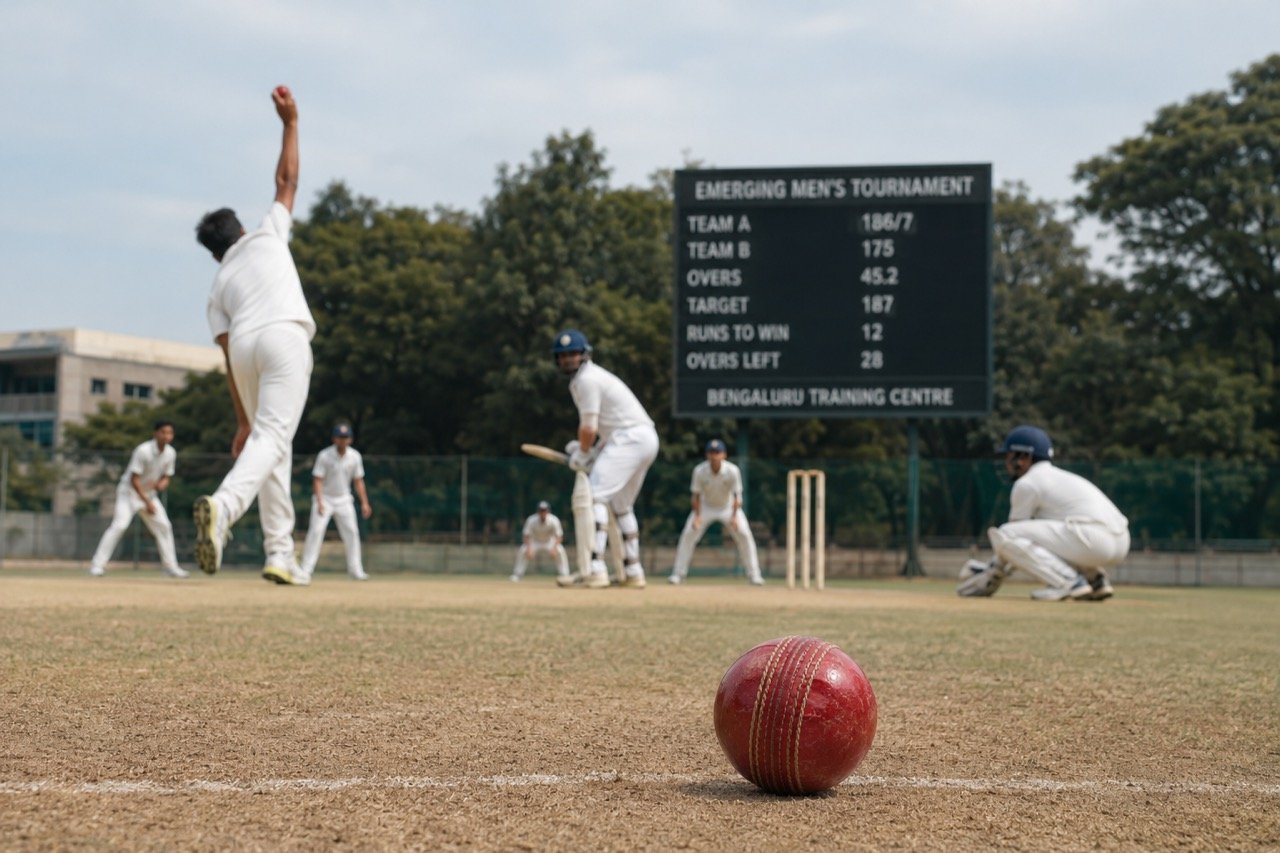
BCCI Emerging Tournament 2026: India's Next Cricket Stars Take Stage
The BCCI's emerging men's tournament gives selectors, franchises and fans a structured look at the young Indian cricketers pushing to move from domestic promise into national contention.

Jasprit Bumrah Eyes ODI Comeback vs England After Tough IPL Season
Jasprit Bumrah's preparation for India's ODI series against England has become the bowling attack's biggest storyline, as the pace spearhead looks to rebuild rhythm and confidence after a career-worst IPL campaign.

Gavaskar Urges BCCI to Create One-Month Rest Window for India Players
Former India captain Sunil Gavaskar has called for a planned one-month rest window for Indian cricketers and stronger protection of the India cap, reigniting the debate over workload in a crowded calendar.
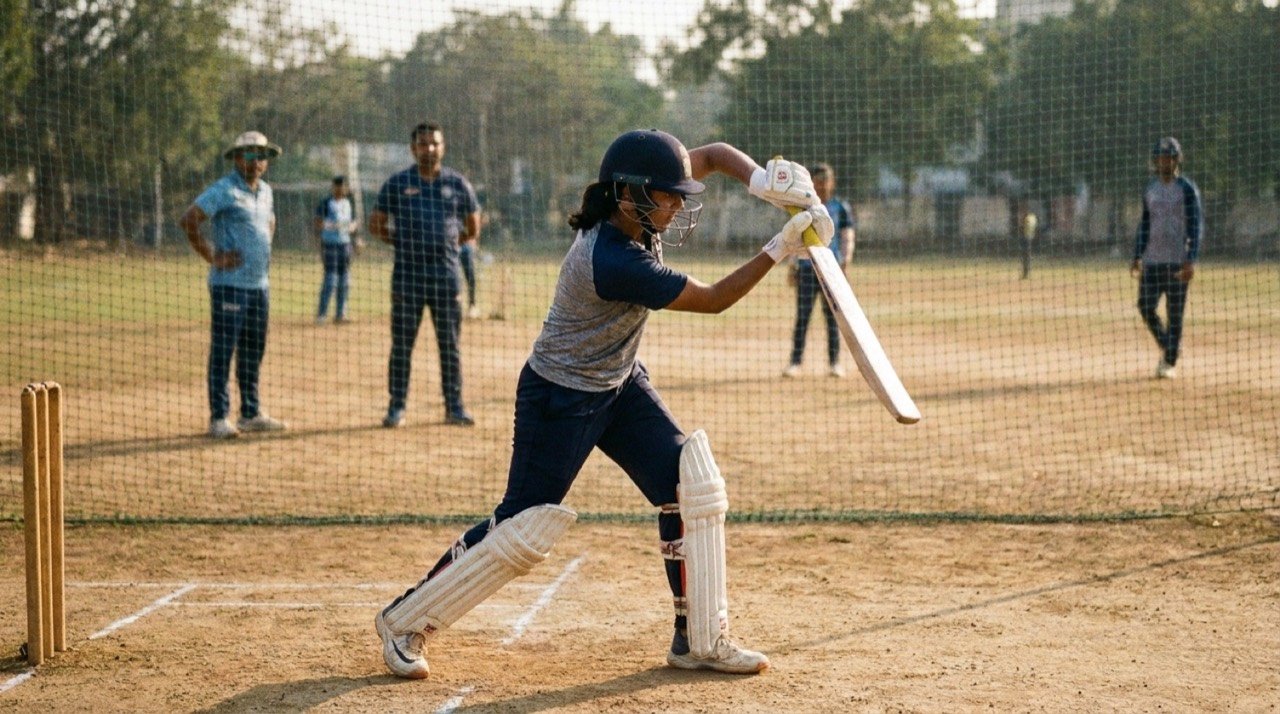
ICC Unveils Post-Pregnancy Return-to-Play Guidelines for Women Cricketers
The global governing body has issued a structured framework covering recovery, mental wellbeing and monitored return, a milestone for women who choose both motherhood and elite cricket careers.
More from this section
More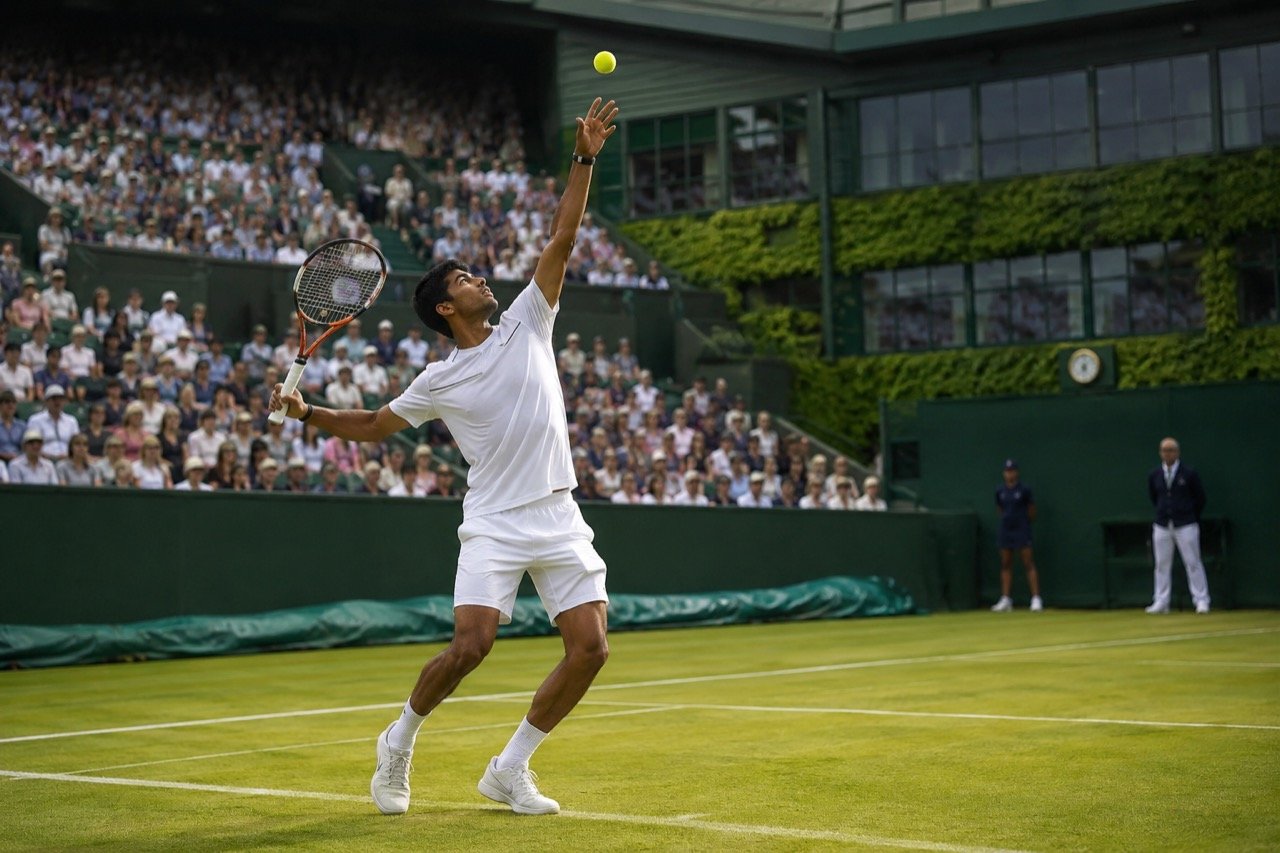
Arnav Paparkar Advances at Wimbledon Boys' Singles in Boost for India
Indian junior Arnav Paparkar has moved into the second round of the Wimbledon boys' singles with a commanding serving display, handing Indian tennis a rare and encouraging grass-court result at the sport's biggest stage.
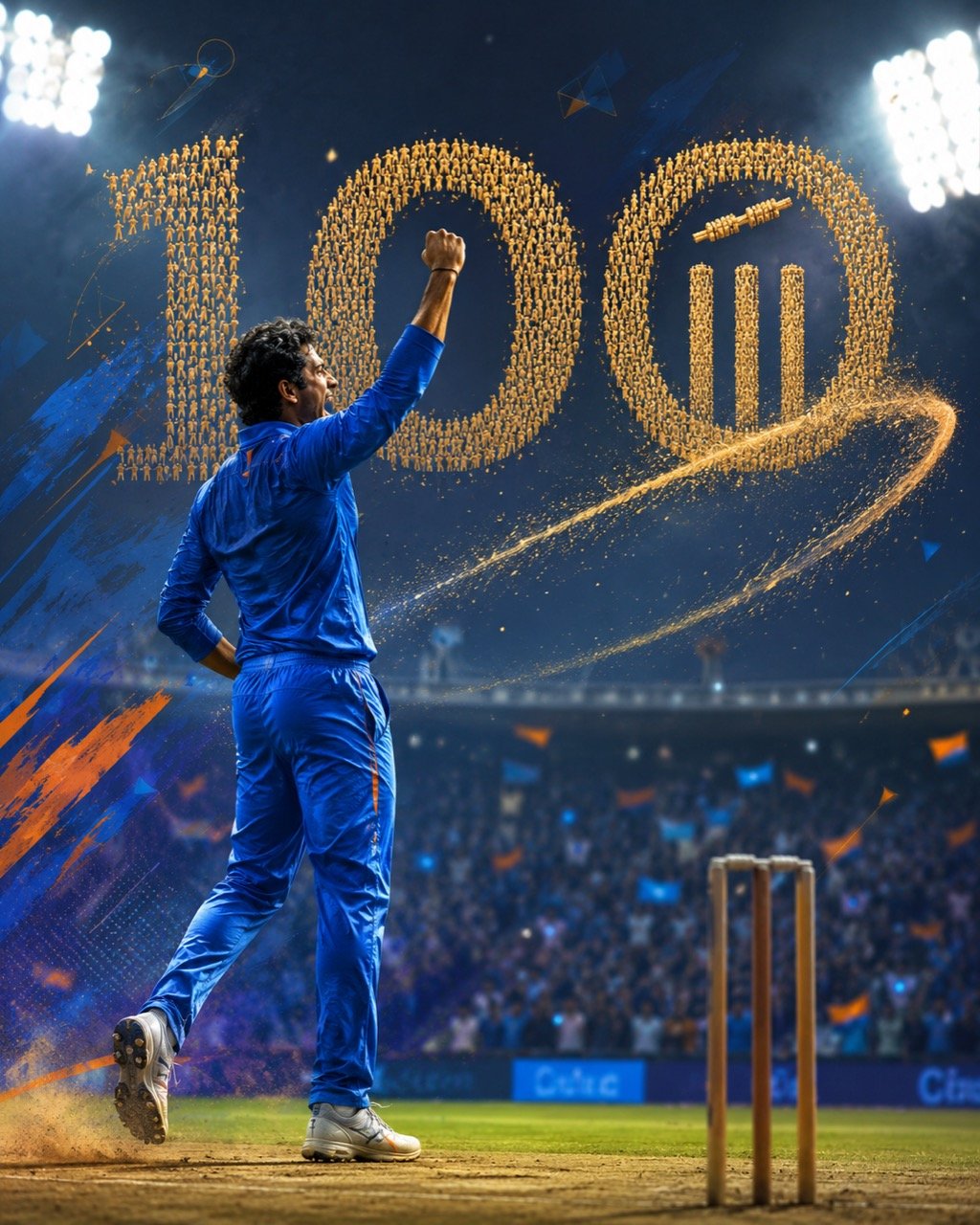
Axar Patel Becomes First Indian Spinner With 100 T20I Wickets
Axar Patel reached 100 T20 international wickets in the second T20I against England, becoming the first Indian spinner to hit the mark and cementing his standing as one of India's most durable white-ball performers.
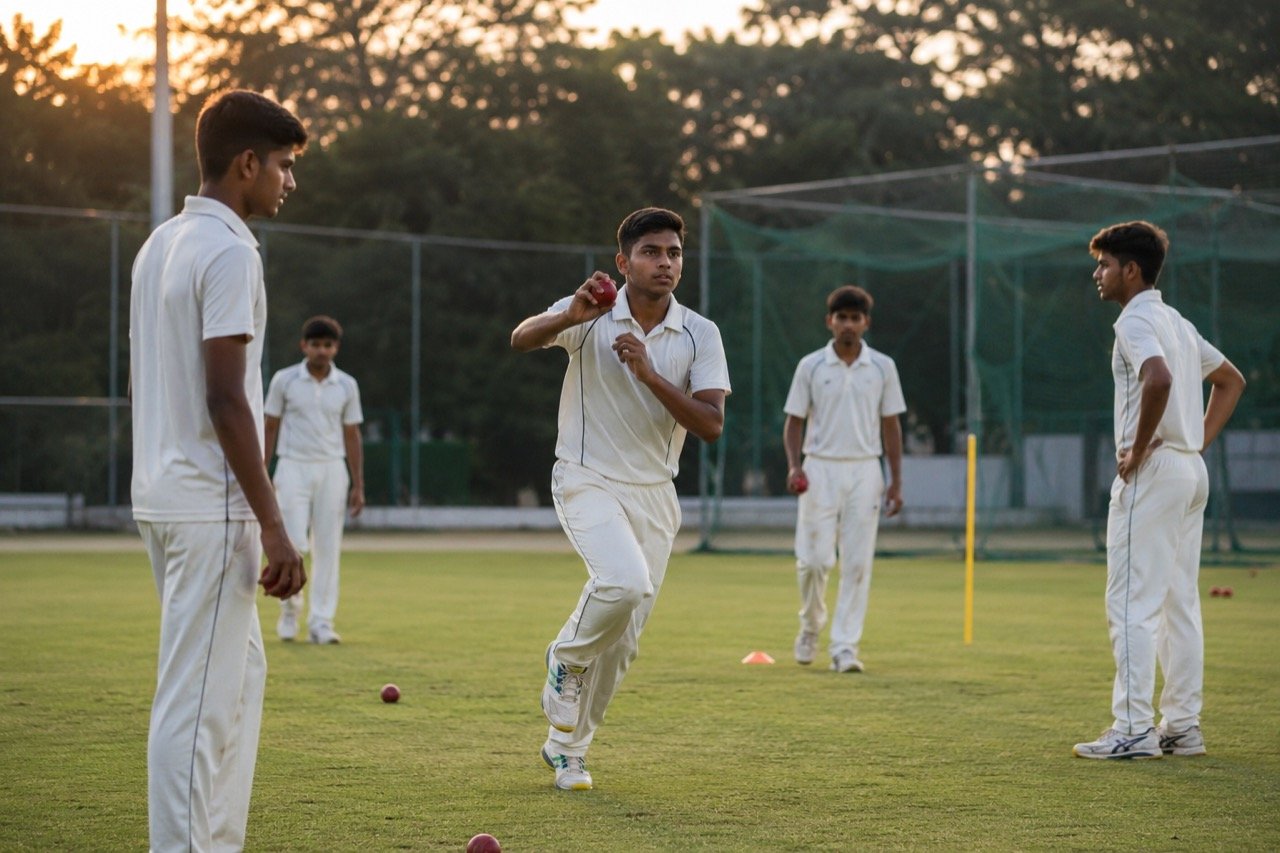
BCCI Emerging Men's Tournament to Hunt Test Prospects in Bengaluru
The BCCI's red-ball Emerging Men's Tournament, running at the Centre of Excellence in Bengaluru through July, is designed to give selectors a longer, harder look at India's next generation of Test cricketers.