Coal India Q1 Output Falls, Raising Monsoon Power Supply Questions
A reported first-quarter production decline at Coal India has put mining trends, monsoon disruption and power-sector inventory planning under scrutiny, given coal's central role in keeping India's lights on.
Commentary & Analysis ·
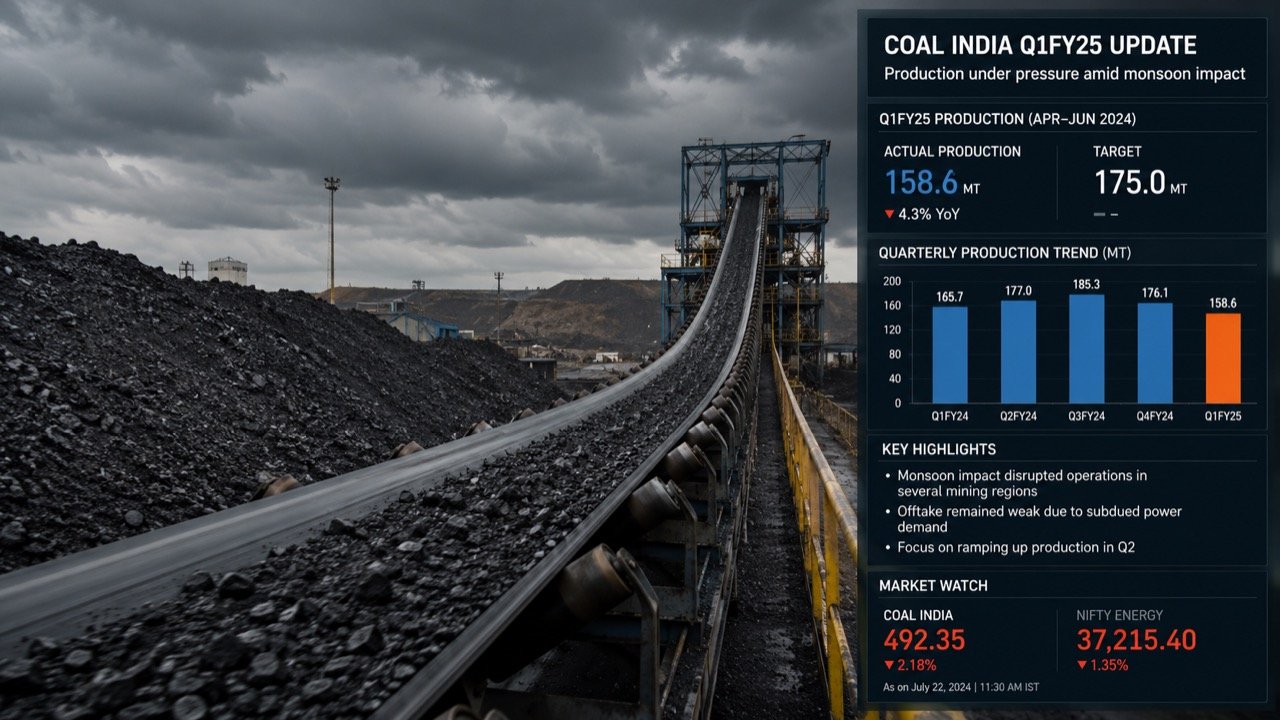
Coal India has drawn fresh business-news attention after reports of a decline in its first-quarter output, a data point with implications far beyond one company's scorecard. Because coal still anchors the bulk of India's electricity generation, any wobble in production feeds straight into questions about power-sector planning. The figure is, on its face, a narrow corporate metric. But given Coal India's outsized weight in the national fuel-supply chain, it inevitably reads as a proxy for something larger: whether the country's power system is prepared for the seasonal stress test that the monsoon imposes every year.
Why a single company's output moves a national conversation
It is worth pausing on why a quarterly production number from one state-run miner can generate this much scrutiny. In most economies, a dip in output from a single firm would be a matter for its shareholders and its sector analysts. In India, Coal India's centrality to thermal power generation means its numbers double as an informal barometer of energy security. When coal supply softens, the concern is not simply about the company's earnings but about whether power plants downstream will have enough fuel to keep turbines running through the months when rainfall complicates both mining and logistics. That dual identity — corporate metric and infrastructure signal — is precisely what elevates a routine quarterly disclosure into a talking point.
What can move the output needle
Coal production is shaped by weather, mine logistics and demand cycles, and the June quarter runs into the teeth of the monsoon. Heavy rain can flood pits, slow overburden removal and disrupt rail transport from mine to plant. Each of these frictions is well understood and recurs with a degree of predictability: opencast mines, which account for the overwhelming share of India's coal output, are particularly exposed to waterlogging, and the removal of overburden — the layers of soil and rock above a coal seam — becomes markedly harder once the rains set in. Rail evacuation, the process of moving mined coal from pitheads to power stations, can also slow when tracks and yards are affected by heavy rainfall. None of this is new or unexpected; it is why inventory planning — how much coal power stations and industrial users hold in stock — becomes the critical buffer in these months. A well-stocked plant can absorb weeks of reduced dispatch without any operational impact, while a thinly stocked one can find itself vulnerable within days.
A signal to monitor, not a crisis
The measured reading is that one quarter's production movement has to be assessed alongside dispatches, stock levels at power plants and actual electricity demand. Production, dispatch and demand are three distinct variables, and conflating them is where alarmist readings of this kind of news tend to go wrong. A dip in output does not automatically translate into a dip in dispatch, since coal already stockpiled at mine heads or in transit can continue to move to plants even as fresh extraction slows. Equally, dispatch levels only matter in the context of demand: if consumption is itself softer because of milder weather or lower industrial activity, the same volume of coal reaching power stations goes further. If stocks were built up ahead of the rains and dispatches are holding, a temporary output dip is manageable. A decline is a flag for closer monitoring rather than, by itself, evidence of a looming supply crunch.
The concentration risk beneath the headline
Still, the episode is a reminder of how concentrated India's power system remains on a single fuel and, to a large degree, a single producer. Output trends at Coal India are effectively a barometer for the country's baseload security. This concentration is a structural feature of the Indian grid rather than an accident of any one quarter, and it is precisely why even modest fluctuations attract disproportionate attention. When so much of a country's electricity ultimately traces back to one company's mines, there is little room for complacency about redundancy. A disruption that might be a rounding error in a more diversified system becomes, in India's case, a matter of genuine planning consequence — which is exactly why officials, plant operators and market watchers alike will be parsing the coming months of dispatch and stock data closely.
What stakeholders will be watching next
For power plant operators, the immediate task is straightforward: track their own coal stock days-on-hand and ensure contracted dispatches from Coal India continue on schedule through the wettest weeks. For the company itself, the challenge is to demonstrate that any shortfall in raw output is being offset by drawing down existing stockpiles and prioritising dispatch to plants running low. For policymakers and grid planners, the episode reinforces a familiar lesson about the value of transparency: regular, credible reporting on plant-level coal stocks allows markets, industry and the public to distinguish a manageable seasonal dip from an emerging shortage before it becomes a crisis. Absent that data, a single quarterly output figure risks being over-interpreted in either direction — dismissed too quickly by some, or treated as a five-alarm warning by others.
The NE Times View
India has been here before: monsoon months test the coal-to-power chain every year, and the difference between a non-event and a headline crisis is almost always inventory discipline. The right response to this quarter's dip is neither alarm nor complacency, but transparency — regular, credible data on plant-level stocks so that markets and consumers are not left guessing. The longer-term lesson is harder: as long as one company's quarterly output can raise national supply questions, the case for faster diversification into storage-backed renewables and better rail logistics writes itself. A power system this dependent on a single fuel source and a single dominant producer will keep having this same conversation every monsoon until the underlying structure changes. Diversification is not a quick fix, but each year that passes without meaningful progress on storage-backed renewables and more resilient rail logistics is another year in which a routine seasonal dip in one company's output can plausibly reopen questions about the entire grid's security.
Key takeaways
- Coal India's first-quarter output decline matters less on its own than in combination with dispatch levels, plant stock days and actual power demand through the monsoon.
- Monsoon-linked disruption to opencast mining and rail evacuation is a recurring, well-understood seasonal pattern rather than a new or unexpected shock.
- Inventory discipline at power plants — stocks built up before the rains — is historically what separates a manageable dip from a genuine supply crunch.
- India's continued reliance on one dominant coal producer for baseload power means even modest output swings draw outsized national attention.
- The episode strengthens the longer-term case for greater transparency in plant-level stock reporting and faster diversification into storage-backed renewables and improved rail logistics.
You may also like to read
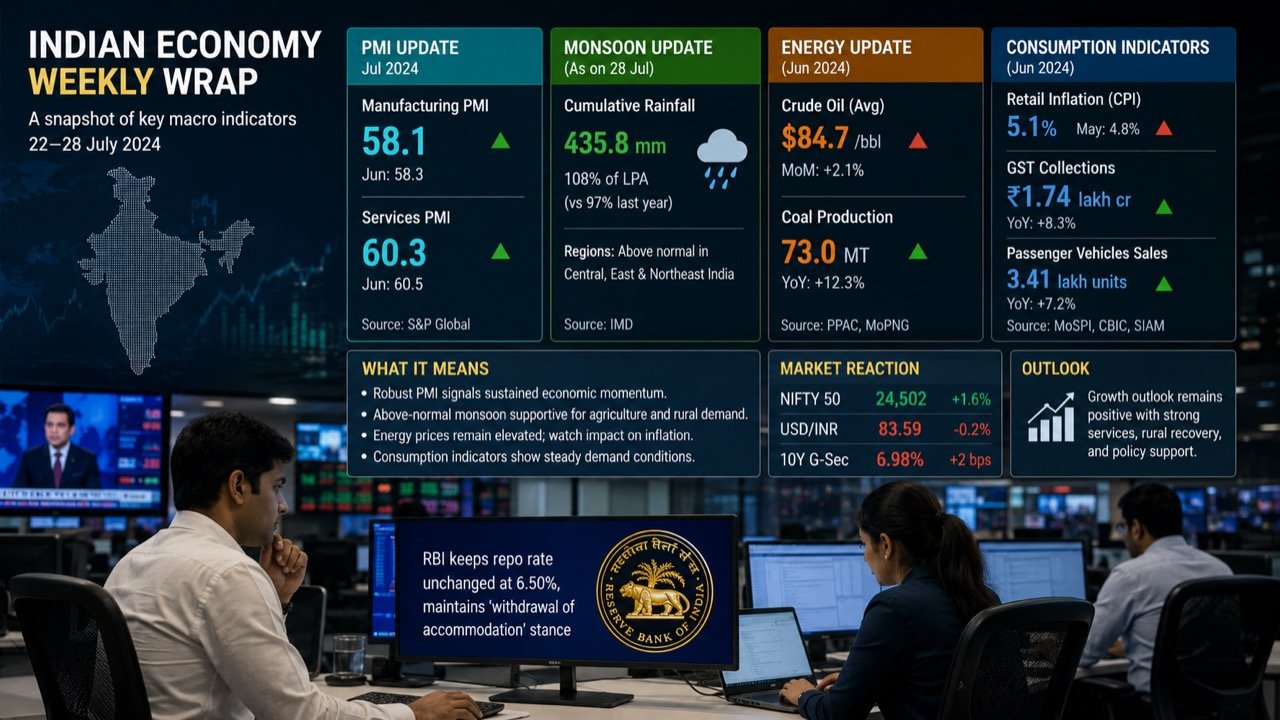
India Economy This Week: Energy Relief, PMI and Monsoon Demand
India's near-term growth picture is being read through a dashboard of indicators this week, with energy costs, PMI activity readings and monsoon-linked rural demand each pulling the conversation in different directions.

El Nino Risk Flags 111 Districts for Monsoon Deficit Worry
A fresh assessment has identified 111 districts as highly vulnerable to an El Nino-linked monsoon deficit, with Maharashtra and Madhya Pradesh accounting for a large share and farm incomes at stake.

India Refining Capacity Expansion Powers New Energy Push
India's plans to expand oil refining capacity are back in the spotlight, underlining how fuel infrastructure remains central to demand, exports and energy security even as the clean-energy transition gathers pace.

India to Lift Petrol and Diesel Sale Curbs From July 1
Restrictions on the sale of petrol and diesel are set to be lifted from July 1, easing uncertainty for motorists, transport operators and fuel retailers even as cities push a parallel shift to electric mobility.
More from this section
More
Adani Case: US DOJ Pushes for Permanent Dismissal of Charges
The US Department of Justice has urged a judge to permanently dismiss charges against Gautam Adani, calling the case legally flawed — a reversal with consequences for markets, diplomacy and cross-border enforcement.

Akasa Air Inducts 40th Aircraft in Indian Aviation Scale-Up
Akasa Air's 40th aircraft, ferried to Bengaluru via Seattle, Reykjavik and Cairo, marks a fleet milestone for the young carrier and a fresh signal that India's aviation market remains firmly in expansion mode.

BARC Ratings Suspension Leaves Indian TV Industry Flying Blind
BARC's pause on television ratings has put India's broadcast measurement system under fresh scrutiny, leaving broadcasters, advertisers and media planners without the weekly audience data that anchors the TV economy.