Baahubali's Animated Afterlife Signals India's Franchise Ambitions
The Eternal War's exploration of Amarendra Baahubali's afterlife shows Indian cinema treating its blockbusters as expandable mythologies, betting that animation can carry a beloved screen world to franchise scale.
Commentary & Analysis ·
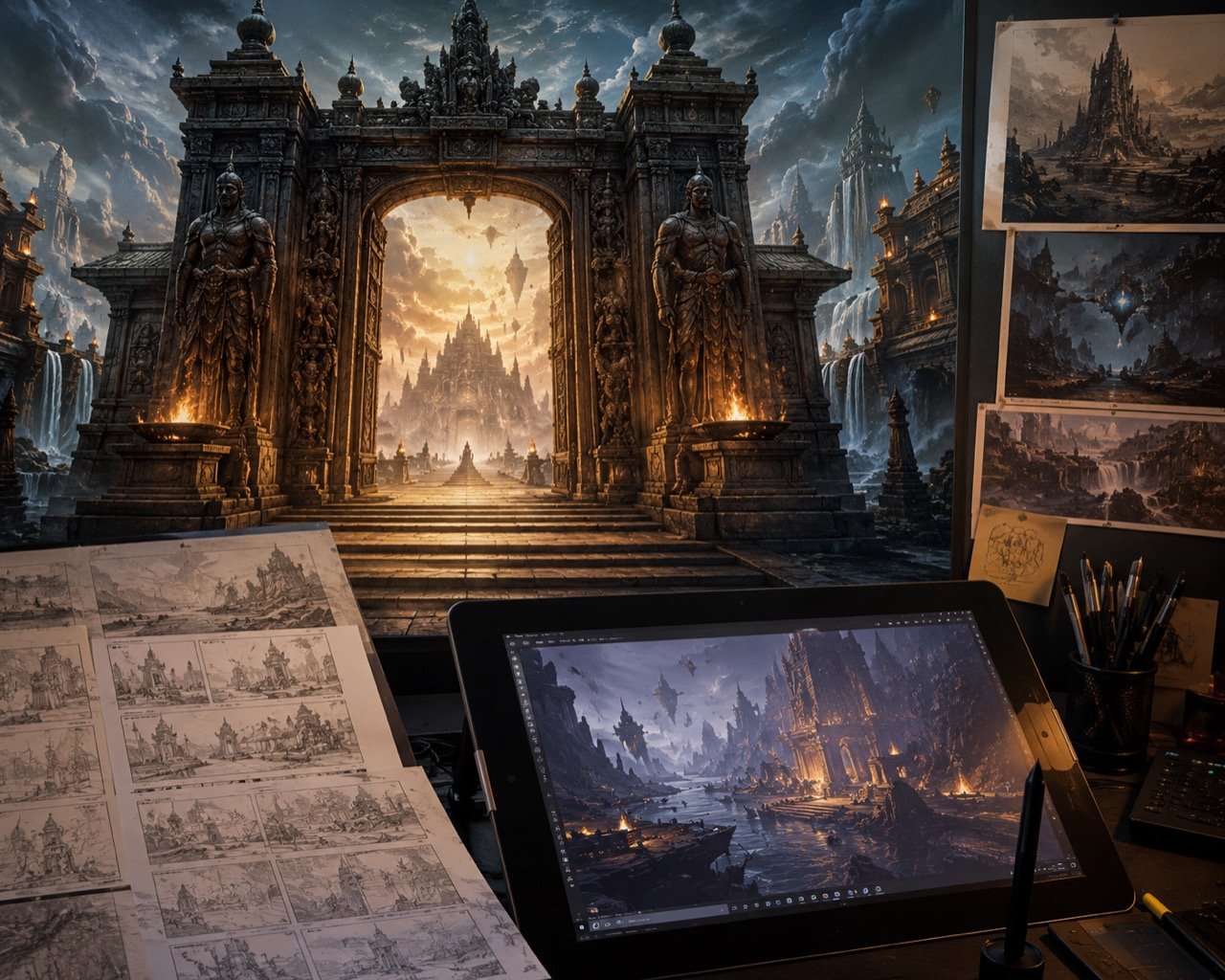
The conversation around The Eternal War and the imagined afterlife of Amarendra Baahubali is about much more than one animated project. It points to a growing ambition inside Indian entertainment: turning blockbuster film properties into expanded universes that live on through animation, prequels and side stories. Much of the recent Telugu entertainment discussion has centred on why creator Ishan Shukla felt compelled to explore Baahubali's afterlife at all. The answer reveals a shift in mindset. The famous screen world is no longer being treated as a closed two-film saga, but as an open mythology that can be extended into new formats and timelines.
That shift is worth pausing on, because it marks a departure from how Indian cinema has traditionally treated even its biggest hits. A blockbuster here has usually meant a self-contained theatrical event, celebrated at release and then left largely untouched beyond a possible sequel. The idea that a property might instead become a living mythology, one that spawns animated spin-offs, alternate timelines and afterlife narratives, is a distinctly different proposition. It treats the audience's attachment to Baahubali not as a one-time transaction at the box office but as an ongoing relationship that can be nurtured across years and formats.
Borrowing the global franchise playbook
In Hollywood and beyond, major franchises routinely survive and grow through animation, spin-offs and alternate formats. Studios have long understood that a strong core story can be reworked into companion pieces that deepen lore, fill in backstory, or imagine what happens after the credits roll, all without requiring the scale or risk of another live-action tentpole. Indian cinema is now experimenting with the same logic, and the Baahubali universe, one of the country's strongest modern mythic brands, is a natural first candidate for that treatment.
The choice of Baahubali for this experiment is not incidental. Few Indian franchises carry the same combination of scale, mythic texture and cultural penetration. A story already built around kingdoms, prophecy, betrayal and destiny lends itself naturally to the kind of world-building that animation thrives on. If Indian entertainment is going to test whether franchise thinking can take root domestically, a property with this much narrative and emotional real estate already banked is the logical place to begin.
Why animation, specifically
Animation brings real creative advantages that live action cannot easily match. It can stage battles, landscapes and metaphysical ideas, such as an afterlife, that would be prohibitively expensive or simply impractical to shoot conventionally. Freed from the physical constraints of sets, stunts and location shoots, animators can render entire realms of the imagination at a fraction of the cost, while still delivering the visual scale that audiences associate with the Baahubali name.
Beyond the practical savings, animation also serves a strategic audience-building function. It can pull in younger viewers who may not have experienced the original films in a cinema, while keeping the existing fan base engaged through familiar characters and expanded lore. This dual appeal, reaching new viewers without alienating loyal ones, is precisely what gives a franchise a longer commercial life than any single film could sustain on its own. It also opens the door to formats beyond the cinema screen: streaming series, shorter serialised content, and merchandising tied to an ever-expanding mythology rather than a single finite story.
The risk of hollow brand extension
The danger is equally plain. A beloved cinematic world hands any new project an instant audience, but it also raises expectations for visual ambition, emotional continuity and respect for the original characters. Fans who invested years in Baahubali's story will not extend automatic goodwill to a spin-off simply because it carries the name. If anything, the emotional stakes are higher: viewers who feel the character's legacy is being handled carelessly are likely to react more sharply than they would to an unrelated new production.
This is the trap that has undone franchise extensions elsewhere in the world as well. When storytelling feels like brand extension without emotional weight, a marketing exercise dressed up as narrative, fans may reject it as unnecessary, or worse, as a dilution of what made the original special. The commercial logic of squeezing more value from a proven property is obvious to studios and producers, but audiences are rarely won over by logic alone. They respond to whether a new chapter feels earned, and whether it adds genuine meaning to a story they already love rather than simply extending its shelf life.
What success would actually require
For The Eternal War, and for any future attempts to build out the Baahubali mythology, the creative bar is therefore unusually high. It is not enough to reproduce familiar visual motifs or reintroduce beloved characters in new settings. The afterlife premise itself demands a level of thematic seriousness, since it inherently deals with questions of legacy, judgement and what a hero's life ultimately meant. Handled with care, this could deepen the emotional resonance of the original saga. Handled carelessly, it risks trivialising it.
There is also a broader industry dimension to watch. If this project performs well, creatively and commercially, it could encourage other major Indian franchises to pursue similar animated expansions, prequels or afterlife-style narratives of their own. Conversely, a poorly received attempt could reinforce scepticism that Indian cinema's biggest properties are best left as self-contained cinematic events rather than the seeds of ongoing universes. In that sense, this single project carries weight well beyond its own box office or streaming performance.
The NE Times View
We read this expansion with cautious optimism. India has produced world-scale blockbusters but has rarely built world-scale franchises around them, and animation is the most credible bridge between the two. It offers the visual ambition audiences expect from the Baahubali name, at a cost and creative flexibility that live action cannot match, while opening the property to new viewers and new formats. If The Eternal War treats Baahubali's afterlife as a story that must be earned rather than a logo to be exploited, it could set the template for how Indian cinema grows its mythologies in the years ahead.
The test is simple: audiences will forgive a smaller canvas, but not a smaller heart. A modestly budgeted animated feature can still move viewers if it treats its characters and their legacy with sincerity. What it cannot survive is being perceived as a cynical attempt to monetise nostalgia. How Ishan Shukla and his collaborators navigate that distinction will determine not just the fate of this one project, but whether Indian entertainment has genuinely learned to build franchises, or merely learned to extend them.
Key takeaways
- The Eternal War reflects a broader shift in Indian entertainment towards treating hit films as open mythologies rather than closed, self-contained sagas.
- Animation offers a cost-effective way to stage the battles, landscapes and metaphysical concepts, such as an afterlife, that live action would struggle to render affordably.
- The approach mirrors the global franchise playbook, where animation and spin-offs extend a property's life and reach without the risk of another full-scale live-action production.
- The central risk is hollow brand extension: fans who feel a new project lacks emotional weight or continuity with the original may reject it outright.
- The project's reception could shape whether other major Indian franchises pursue similar animated expansions, making it a bellwether for the industry's franchise ambitions.
You may also like to read

Priyadarshan's Hera Pheri 3 Exit Remarks Stir Franchise Debate
Priyadarshan's candid comments about leaving Hera Pheri 3 have reopened a wider industry conversation about how much creative control legacy comedy franchises need to protect their identity.
Samantha Shoot Anecdote Puts Film Set Safety Back in Focus
Director Nandini Reddy's account of Samantha Ruth Prabhu filming a song and car-chase sequence during pregnancy has reopened questions about scheduling, safety and support on demanding South Indian film sets.
Adivi Sesh's G2 Rolls Into Hyderabad as Spy Sequel Gains Pace
Reports that the next schedule of Adivi Sesh's G2 will be shot in Hyderabad have put the Goodachari sequel back in the spotlight, signalling steady progress for one of Telugu cinema's most anticipated spy franchises.
Jaya Janaki Nayaka's Streaming Surge Rewrites Its Flop Verdict
Once written off at the box office, the Telugu film Jaya Janaki Nayaka — known to Hindi audiences as Khoonkhar — has amassed extraordinary online viewership, forcing a rethink of what success means for Indian cinema.
More from this section
More
72nd National Film Awards: Fans Back Mammootty, Allu Arjun, Sai Pallavi
Speculation around the 72nd National Film Awards is intensifying as fan communities across India's language film industries champion favourites including Mammootty, Allu Arjun and Sai Pallavi ahead of any official announcement.

Aamir Khan Marries Gauri Spratt in Private Pali Hill Ceremony
Aamir Khan and Gauri Spratt tied the knot at the actor's Pali Hill home in Mumbai on July 5, turning a deliberately small family ceremony into Bollywood's biggest story of the day.

Akanksha Chamola's Lock Upp 2 Confession Sets Reality TV Abuzz
A personal revelation by Akanksha Chamola ahead of Lock Upp 2 has handed the reality show a viral talking point, underlining how confession-driven formats continue to dominate Indian television conversation.