Jaya Janaki Nayaka's Streaming Surge Rewrites Its Flop Verdict
Once written off at the box office, the Telugu film Jaya Janaki Nayaka — known to Hindi audiences as Khoonkhar — has amassed extraordinary online viewership, forcing a rethink of what success means for Indian cinema.
Commentary & Analysis ·
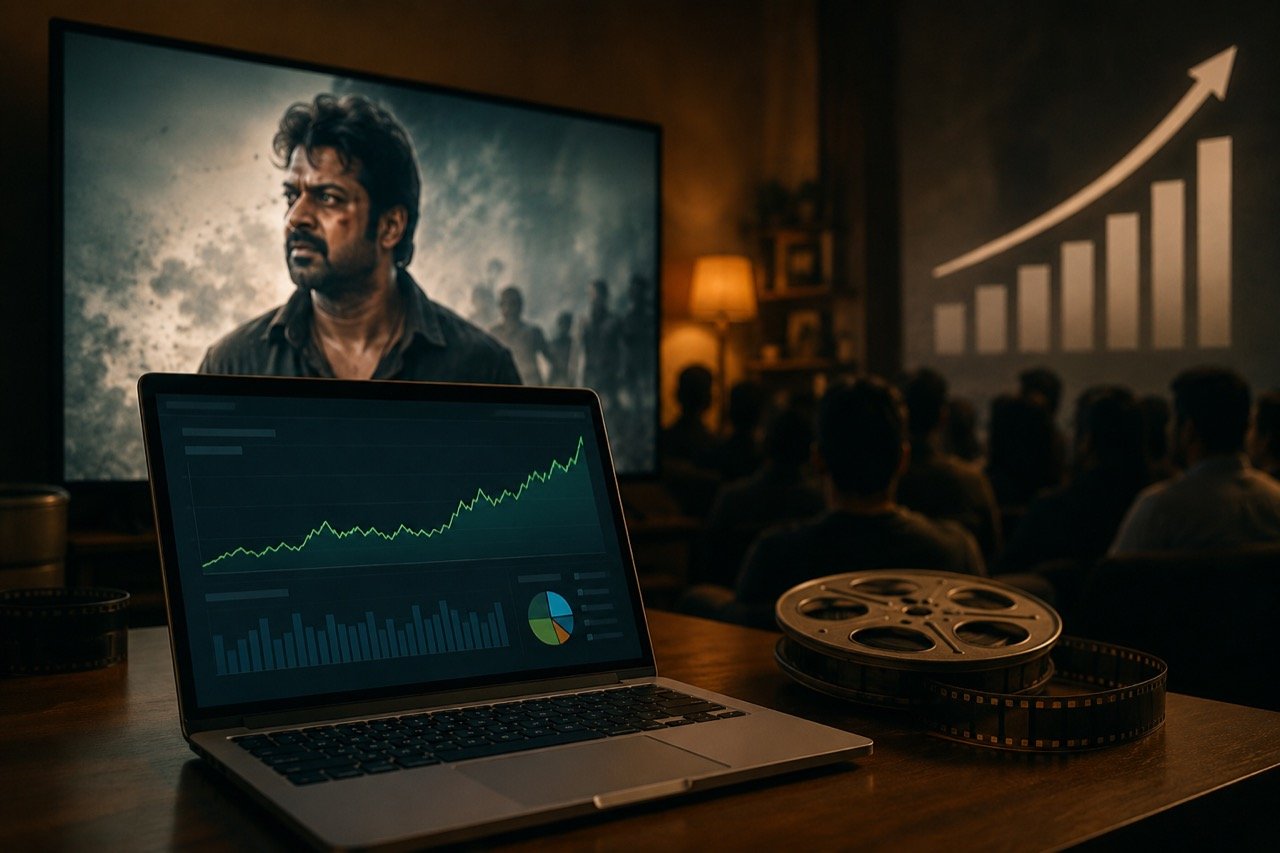
Jaya Janaki Nayaka's journey from theatrical disappointment to massive online viewership has become one of Indian cinema's most striking second-life stories. The Telugu action drama, familiar to millions of Hindi-dubbed viewers as Khoonkhar, has reportedly gained extraordinary digital traction despite its earlier commercial reputation. The shift matters because streaming platforms, YouTube distribution and dubbed circulation have quietly rewritten what success means for an Indian film. A title that misses its first theatrical target can later become a mass favourite in another language, another format and an entirely different viewing environment.
What makes this case worth dwelling on is the gap between the two verdicts a single film can now receive. Jaya Janaki Nayaka's theatrical run delivered the judgement that trade watchers are most accustomed to reading: a film released, measured against expectation in its opening days, and filed away as an underperformer. That verdict was never in dispute and it still stands as part of the film's record. What has changed is that this early judgement is no longer the last word. Years after release, the same film has found an audience many times larger than its theatrical footprint, through a route that did not exist in anything like its current form when the film first came out.
The dubbed-film discovery engine
This pattern now runs across South Indian cinema, and Jaya Janaki Nayaka's transformation into Khoonkhar for Hindi-speaking viewers is a textbook illustration of how it works. Action dramas, emotional family sagas and star-led spectacles routinely travel far beyond their original markets after dubbing, reaching households that had no exposure to the film, its stars or its original language at the time of release. Viewers who never saw the film in theatres encounter it instead through clips, algorithmic recommendations and television-style repeat viewing online. Unlike a theatrical run, which is bounded by a release window and the number of screens a distributor can secure, this digital route is a discovery engine that keeps working years after the fact, with no natural expiry date.
The mechanics of that engine are worth spelling out, because they explain why a film can lie dormant commercially for years and then surge. A dubbed version uploaded to a streaming platform or video platform does not need a marketing push to find viewers in the way a theatrical release does. It sits in a catalogue, gets surfaced by recommendation algorithms to viewers who have watched similar action or family dramas, and accumulates views steadily rather than in the compressed burst of an opening weekend. Clips and highlight reels circulating separately can drive curious viewers back to the full film. None of this requires the original theatrical campaign to have succeeded; in fact, it operates almost entirely independently of it.
What a digital afterlife changes
The phenomenon complicates simple box-office judgement in ways the industry is still adjusting to. Theatrical revenue remains crucial: it is what determines a film's immediate profitability, the confidence a studio places in its stars and director for the next production, and the narrative that trade commentary builds in the days after release. But it is no longer the sole measure of a film's cultural reach or its eventual commercial value. For producers, a film that flourishes in a later window, whether through a streaming deal, YouTube monetisation or dubbed syndication, gains real library value that can be revisited in negotiations long after the theatrical chapter has closed. For stars, dubbed circulation can build recognition in markets they never originally targeted, creating an audience base in a different language region that did not exist at the time the film was made.
This matters because the incentives facing everyone involved in a film's life cycle are shaped by which measure of success they believe counts. A studio that treats the opening weekend as the only meaningful test will price and plan a film's afterlife carelessly, potentially undervaluing dubbing rights or streaming deals that could, over years, generate returns disproportionate to what the theatrical run suggested was possible. A studio that understands the discovery engine will treat dubbing and digital distribution as a second act worth investing in deliberately, rather than an afterthought tacked on once the theatrical window has closed.
Reconciling two commercial histories
None of this erases theatrical history. Jaya Janaki Nayaka underperformed on release, and that record stands as a matter of fact, not something to be revised away by its later popularity online. But its digital afterlife shows that a film can fail in one window and thrive in another, and both chapters now belong to its full commercial story rather than being treated as contradictory or mutually exclusive. A film's value is increasingly best understood as the sum of these separate windows, each governed by its own audience, its own distribution logic and its own timeline, rather than as a single verdict rendered in the first few days after release.
This has implications beyond any single title. If theatrical failure and digital success can coexist within the same film's history, then any commentary or trade analysis that treats a poor opening weekend as the final assessment of a film's worth is working with an incomplete picture. The full picture only emerges over a much longer horizon, sometimes years, as dubbed versions circulate, streaming rights get renegotiated, and algorithmic recommendation continues to surface older titles to new viewers who had no relationship to the film's original release at all.
The NE Times View
We see this as a healthy correction to India's obsession with opening-weekend verdicts. When a so-called flop can find hundreds of millions of viewers online, the industry's scoreboard is clearly incomplete, and producers who value their libraries accordingly will be better placed than those chasing only first-week numbers. For audiences, it is a reminder that the algorithm often gives good films the second chance that critics and trade charts denied them. The lesson for Indian cinema is to plan for a film's whole life, not just its first Friday.
That lesson carries practical weight for how the industry allocates attention and capital. If a film's true commercial and cultural value can only be assessed after its digital afterlife has played out, then rushing to label a title a failure within days of release risks being not just premature but simply wrong on the facts as they eventually settle. Equally, dubbing and streaming distribution deserve to be treated as core parts of a film's release strategy from the outset, not as a salvage operation for titles that stumbled theatrically. Jaya Janaki Nayaka's case suggests that some of the industry's most valuable assets may be sitting quietly in catalogues, waiting for the discovery engine of dubbing and streaming to find them an audience the theatrical release never could.
Key takeaways
- Jaya Janaki Nayaka underperformed theatrically but has reportedly gained extraordinary digital traction as the Hindi-dubbed Khoonkhar, illustrating a growing gap between opening-weekend verdicts and a film's long-term reach.
- Dubbing, streaming platforms and YouTube distribution function as a discovery engine that keeps working for years after a film's theatrical release has ended.
- A film's digital afterlife does not erase its theatrical record, but it adds a second, separate chapter to its overall commercial story.
- Producers who build library value through dubbing and streaming, rather than focusing solely on first-week numbers, stand to benefit most from this shift.
- The trend argues for judging Indian cinema's commercial fortunes over a film's entire life cycle rather than its opening weekend alone.
You may also like to read

JioStar Posts Rs 36,248 Crore Year as Sports and Ads Power Streaming Surge
The Reliance-Disney venture crossed 200 million paid subscribers and 500 million monthly users, with a T20 World Cup-led quarter cementing its scale.
Tollywood Engineers A First-Half Turnaround In 2026 As Mid-Budget Hits Steady The Ship
After a shaky start to the year, Telugu cinema clawed back momentum in the first half of 2026, with content-led successes and a couple of big-ticket earners restoring trade confidence.

Zenofar Fathima's Reel Files Season 4 Boosts Indie Streaming Push
Zenofar Fathima's return with The Reel Files Season 4 gives India's independent streaming circuit a fresh talking point, showing how creator-driven projects are building audiences outside the traditional star system.
South Indian OTT Releases This Week: Regional Streaming in Focus
This week's South Indian streaming slate, led by titles like Isakapatnam and Mollywood Times, shows how weekly OTT lists now shape viewing choices across Telugu, Tamil, Malayalam and Kannada markets.
More from this section
More
72nd National Film Awards: Fans Back Mammootty, Allu Arjun, Sai Pallavi
Speculation around the 72nd National Film Awards is intensifying as fan communities across India's language film industries champion favourites including Mammootty, Allu Arjun and Sai Pallavi ahead of any official announcement.

Aamir Khan Marries Gauri Spratt in Private Pali Hill Ceremony
Aamir Khan and Gauri Spratt tied the knot at the actor's Pali Hill home in Mumbai on July 5, turning a deliberately small family ceremony into Bollywood's biggest story of the day.

Akanksha Chamola's Lock Upp 2 Confession Sets Reality TV Abuzz
A personal revelation by Akanksha Chamola ahead of Lock Upp 2 has handed the reality show a viral talking point, underlining how confession-driven formats continue to dominate Indian television conversation.