Scientists Warn Of More Heat Records Ahead As Atlantic Current Nears Tipping Point
A WMO forecast projects near-record global temperatures through 2030 as researchers raise fresh alarm that a key Atlantic ocean current may be approaching collapse.
Commentary & Analysis ·
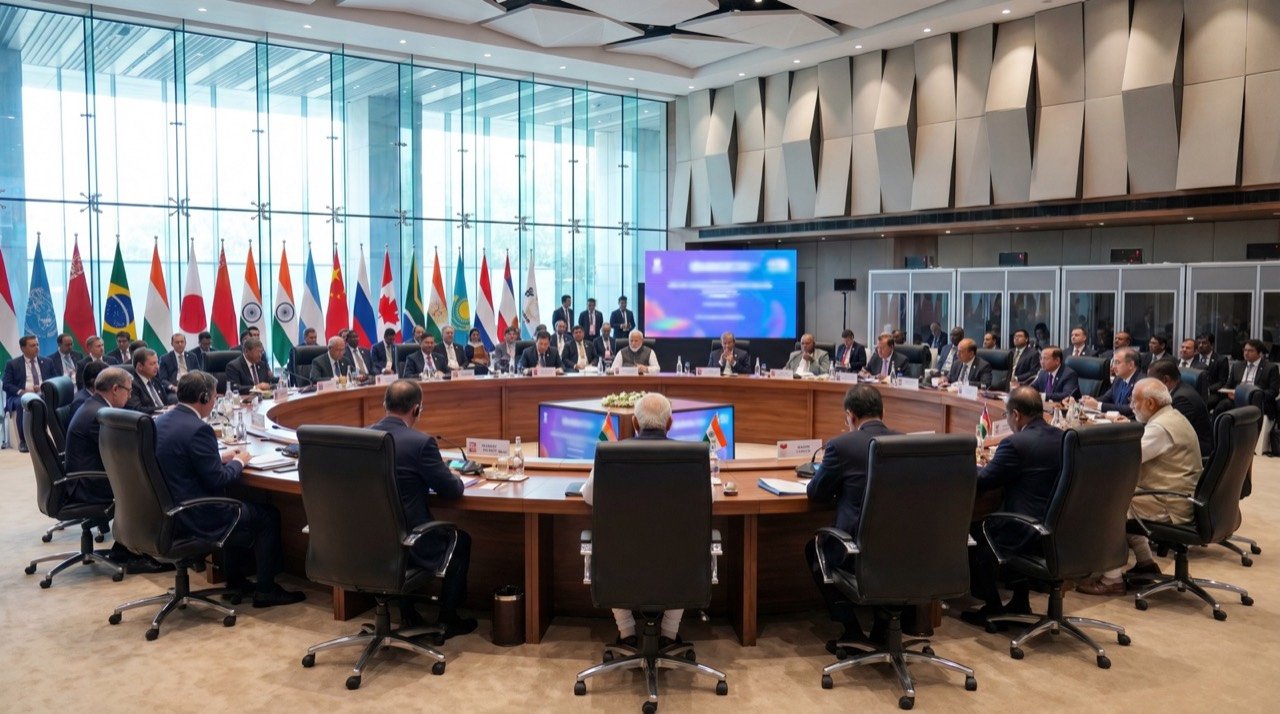
The World Meteorological Organization and the UK Met Office have warned that global temperatures are set to hover at near-record levels through 2030, even as climate scientists flag growing risks to a vast Atlantic ocean current that keeps Europe mild. The dual warnings, issued amid an exceptional early-summer heatwave across Europe, carry sobering implications for India's monsoon-dependent economy. Taken together, the two findings point to a decade in which the extremes witnessed in recent years are less an aberration than a baseline, a shift that policymakers in New Delhi and state capitals will need to reckon with far beyond the diplomatic language typically reserved for climate summits.
Records likely to keep falling
The WMO projects that average annual temperatures over 2026 to 2030 will run between 1.3 and 1.9 degrees Celsius above pre-industrial levels, with at least one year likely to surpass 2024, the warmest year on record. That is a striking claim: it suggests the world is not merely flirting with previous extremes but is on course to exceed them within the next four years. There is a 75 per cent chance the five-year mean will exceed the symbolic 1.5C threshold set under the Paris Agreement, a benchmark that was, until relatively recently, treated as a distant guardrail rather than an imminent probability. The gap between the rhetoric of international climate diplomacy and the physical reality now being forecast by national meteorological agencies is widening, and that gap has direct consequences for a country like India, where climate variability translates quickly into food prices, water stress and public health emergencies.
Forecasters also flagged an 80 per cent likelihood of an El Nino event developing before August, a pattern that can disrupt rainfall across South Asia and influence the strength and timing of India's southwest monsoon. El Nino years have historically been associated with weaker or more erratic monsoons in India, though the relationship is not mechanical: some El Nino years have still delivered adequate rainfall, while others have produced serious deficits. What matters for planners is that the probability of disruption has risen sharply, and an 80 per cent likelihood is high enough that contingency planning, rather than wait-and-watch, becomes the responsible posture.
The AMOC alarm
Scientists have renewed warnings that the Atlantic Meridional Overturning Circulation, or AMOC, is nearing a tipping point as the planet heats. The current system regulates temperatures across Europe, and researchers cite the Irminger Sea near Greenland as a crucial "action centre" whose monitoring is now described as at risk. The AMOC functions as one of the planet's great heat-distribution systems, carrying warm water northward and cold water back south in a loop that has operated in a broadly stable pattern for millennia. A disruption could trigger far-reaching and abrupt shifts in weather patterns, not confined to the North Atlantic basin but propagating through the interconnected systems that also shape monsoon behaviour, jet-stream position and storm tracks across the globe.
What makes tipping-point warnings different from ordinary climate projections is the nature of the risk itself. Unlike a gradual, linear rise in average temperature, a tipping point implies a threshold beyond which a system can shift relatively abruptly to a new state, one that may be difficult or impossible to reverse on human timescales. Scientists have been cautious about assigning precise dates to any such AMOC collapse, and rightly so, given the complexity of ocean circulation modelling. But the fact that a major current system, one that scientists have generally regarded as a slow-moving, centuries-scale process, is now being described in terms of tipping risk should itself be read as a signal that the underlying warming trend documented by the WMO forecast is not a background statistic but is actively straining planetary systems that touch weather far beyond Europe.
The stakes for India
For India, where agriculture, water security and hundreds of millions of livelihoods hinge on a reliable monsoon, an El Nino-influenced season raises the spectre of erratic rainfall. The southwest monsoon delivers the bulk of the country's annual rainfall and underwrites everything from kharif sowing decisions to reservoir levels that carry through to the following summer. A weak or delayed monsoon does not merely dent farm output; it cascades into rural incomes, food inflation, and the fiscal calculations of state and central governments that must decide, often at short notice, whether to expand relief programmes or subsidise inputs.
Rising baseline temperatures also intensify heatwaves of the kind that have repeatedly strained the power grid and endangered outdoor workers. As average temperatures climb toward the upper end of the WMO's projected 1.3 to 1.9C range, the frequency and severity of heatwave days in northern and central India can be expected to rise in tandem, placing additional demand on electricity systems already tested during peak summer months and raising occupational health risks for labourers, farmers and delivery workers who have no option but to work outdoors. The findings reinforce pressure on policymakers to accelerate adaptation and clean-energy plans, not as a long-term aspiration but as an immediate operational necessity for grid planners, urban heat-action authorities and agricultural ministries alike.
As one climate scientist put it, in remarks paraphrased for context, every fraction of a degree added tightens the odds against stable monsoons and liveable summers. That framing captures why the WMO's seemingly narrow numerical range, 1.3 to 1.9C, matters so much in practice: each additional tenth of a degree does not add risk in a smooth, predictable line but compounds it across interconnected systems, from ocean currents to monsoon dynamics to urban heat exposure.
A preview playing out in real time
The forecasts arrive as Europe swelters under temperatures running more than 10C above normal in places, a vivid preview of the warming the WMO describes. That such an extreme event is unfolding even before the five-year forecast period has fully begun underscores how the projected averages are not abstract statistical ranges but are already visible in the form of concrete, disruptive weather events. For India, the message is clear: the climate risks shaping the decade are no longer distant projections but present-day pressures on food, water and energy, and the European heatwave offers a preview of the kind of extremes that can emerge even in regions historically associated with temperate summers.
The juxtaposition of the two warnings, a rising temperature baseline and a wobbling ocean current, also illustrates why climate risk assessment increasingly requires looking beyond any single indicator. A monsoon forecast that accounts only for El Nino probability, without factoring in the broader warming trend or the potential for large-scale circulation disruptions, risks understating the true range of possible outcomes that Indian planners must prepare for.
The NE Times View
Near-record heat through 2030 and a wobbling Atlantic current are not abstract for a country whose monsoon underwrites its farms and economy. AMOC disruption could scramble the very rainfall India depends on, yet adaptation funding remains an afterthought. This forecast should shift climate from a diplomatic talking point to a domestic budgeting priority for water, agriculture and heat resilience. The temptation in New Delhi, as in many capitals, is to treat such warnings as inputs for the next round of international negotiations. That would be a mistake. The 75 per cent probability of breaching 1.5C and the 80 per cent chance of El Nino are not bargaining chips; they are planning parameters that ought to inform irrigation investment, heat-action plans in vulnerable cities, and the pace at which renewable energy capacity is added to the grid. Treating this as a domestic budgeting priority, rather than a talking point reserved for COP summits, is the only response proportionate to what the WMO and Met Office are describing.
Key takeaways
- The WMO projects 2026-2030 average temperatures at 1.3 to 1.9C above pre-industrial levels, with a 75 per cent chance the five-year mean exceeds the Paris Agreement's 1.5C threshold.
- An 80 per cent likelihood of El Nino developing before August raises the risk of disrupted rainfall across South Asia, including India's southwest monsoon.
- Scientists warn the Atlantic Meridional Overturning Circulation is nearing a tipping point, with the Irminger Sea near Greenland flagged as a critical monitoring zone.
- India's agriculture, water security and power grid face compounding pressure from erratic monsoons and intensifying heatwaves.
- The NE Times View holds that these forecasts demand India treat climate adaptation as a domestic budgeting priority rather than a diplomatic afterthought.
You may also like to read
Exceptional Early Heatwave Shatters Records Across Europe
An unusually intense bout of heat arriving weeks ahead of the typical summer peak has broken temperature records from Portugal to Britain, with scientists pointing to climate change.
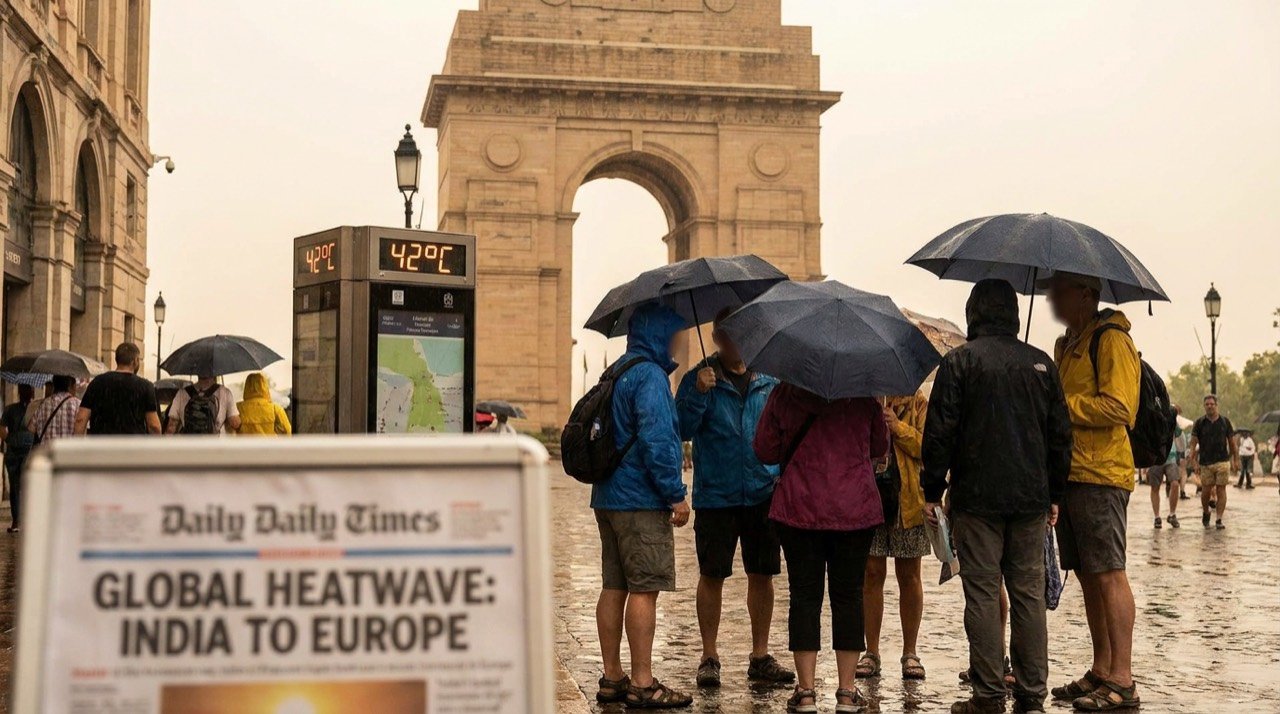
Europe's Record-Breaking Heatwave Turns Deadly as France Logs Its Hottest Day
A ferocious early-summer heatwave has shattered temperature records across Western Europe and killed hundreds, prompting red alerts, early monument closures and fresh caution for the thousands of Indian tourists and students heading there this season.
India Hosts Regional Summit, Pushing Trade and Climate Cooperation
Leaders gathered for talks aimed at deepening regional trade ties and coordinating action on climate resilience.
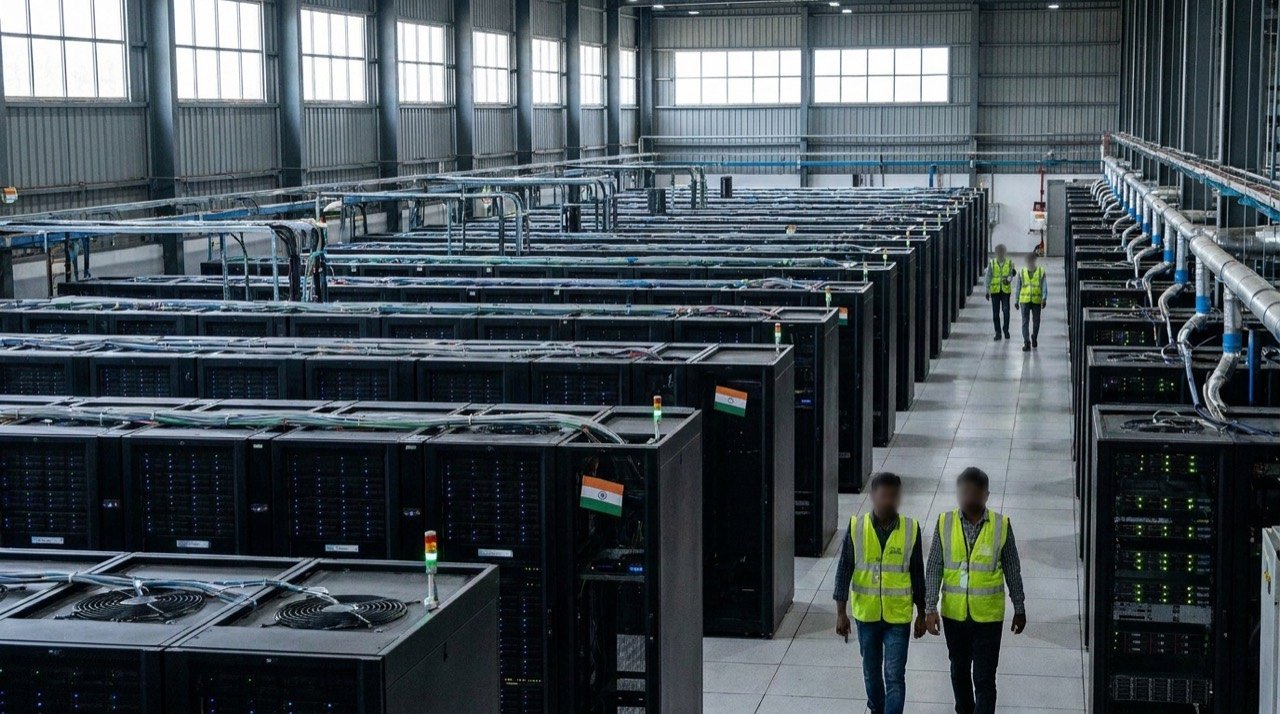
China's LineShine Dethrones US as World's Fastest Supercomputer, Sharpening India's AI Resolve
China has reclaimed the top spot on the global supercomputing rankings with an all-domestic machine running at over two exaflops, a milestone in the US-China tech contest that underscores why India is racing to build its own sovereign computing power.
More from this section
More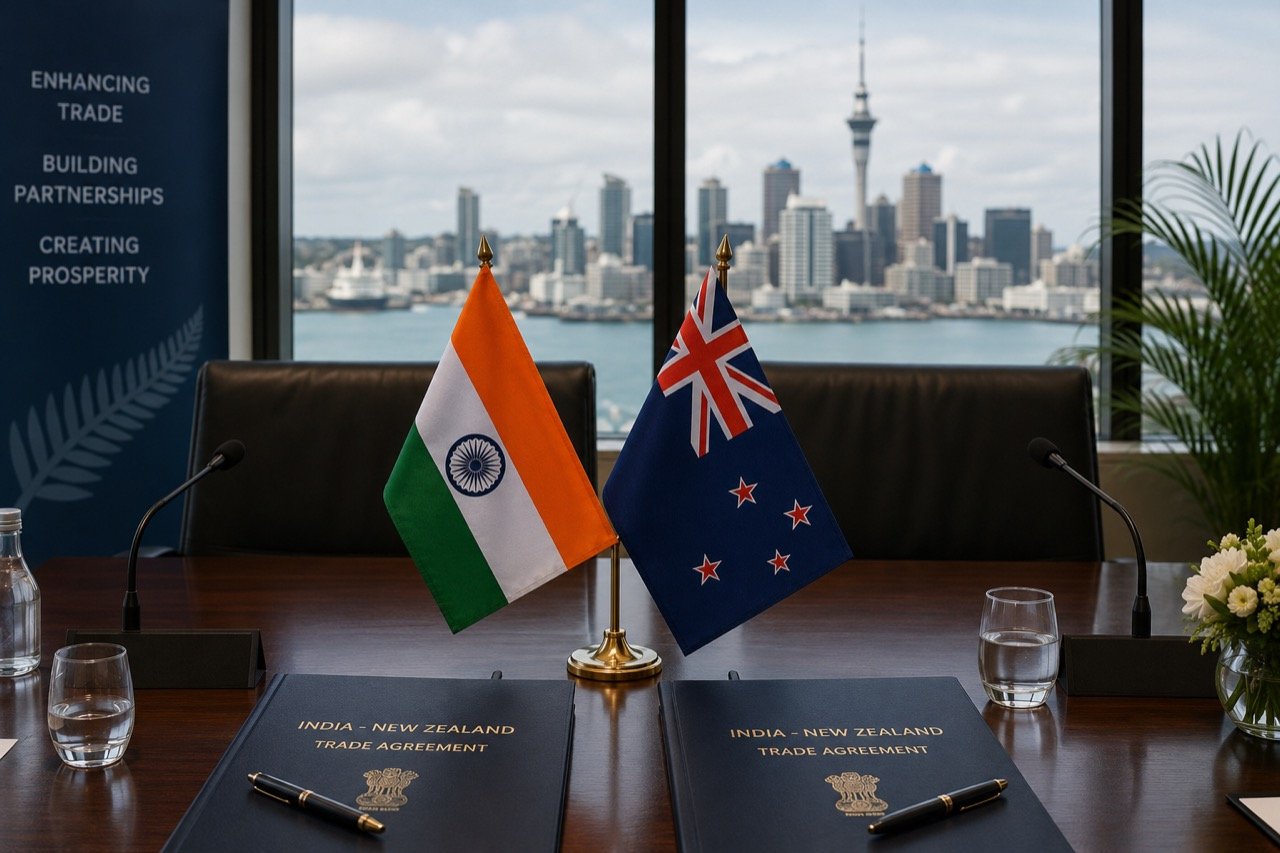
India-New Zealand Ties: Visit Plans Put FTA and Diplomacy in Focus
Reports of a planned high-level India-New Zealand engagement have revived attention on free trade talks, professional mobility and Indo-Pacific cooperation between two partners with clear room to grow.

Modi Greets Trump on US 250th Independence Day, Hails Partnership
Prime Minister Narendra Modi marked America's 250th Independence Day with a message to President Trump, saying the next 250 years should lift the India-US partnership to new heights.
India Watches Dhaka's China-Backed Teesta Plan as Stakes Rise
New Delhi is closely tracking Bangladesh's proposal to develop the Teesta river with Chinese assistance, a move that revives one of South Asia's most sensitive water-sharing disputes and tests regional strategic trust.