China's LineShine Dethrones US as World's Fastest Supercomputer, Sharpening India's AI Resolve
China has reclaimed the top spot on the global supercomputing rankings with an all-domestic machine running at over two exaflops, a milestone in the US-China tech contest that underscores why India is racing to build its own sovereign computing power.
Commentary & Analysis ·
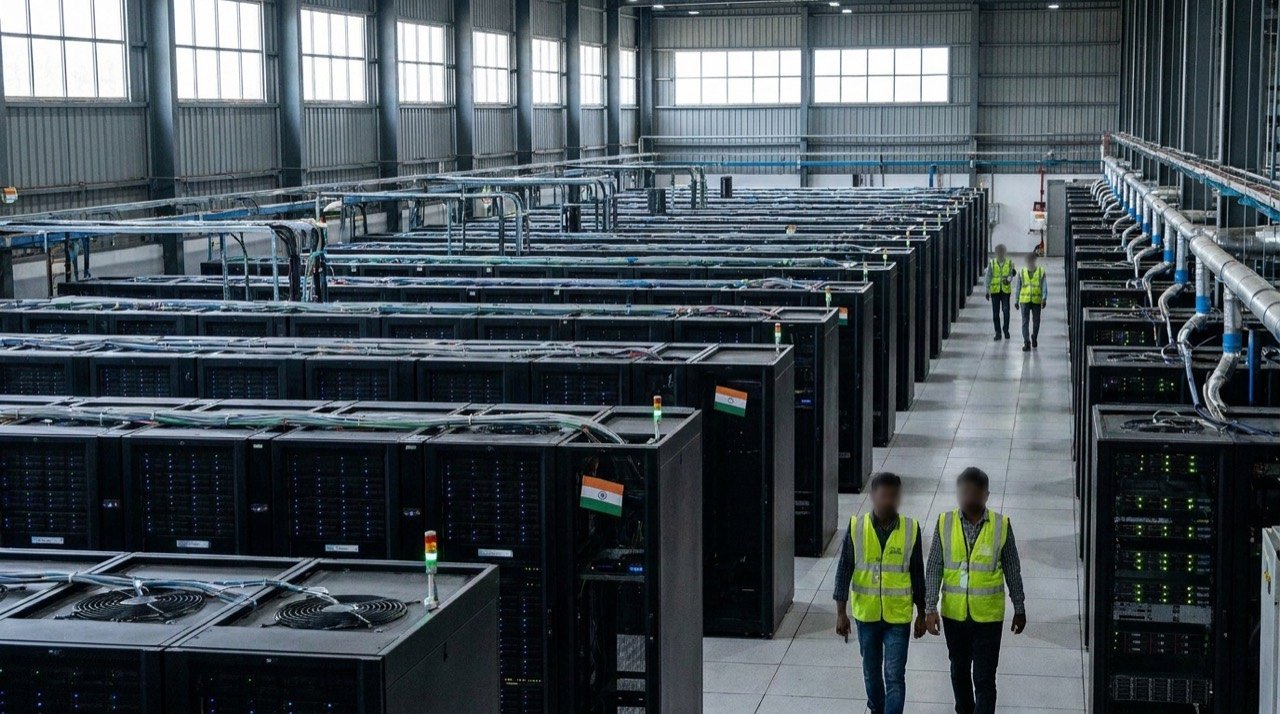
China has taken back the crown for the world's fastest supercomputer, with a system called LineShine topping the biannual TOP500 list announced in Hamburg. The achievement, reported on 24 June 2026, is more than a bragging right. Built entirely on domestic chips, it marks a milestone in the intensifying US-China technology contest and offers pointed lessons for India's own push toward sovereign computing. On the surface, this is a story about processors and rankings. Underneath, it is a story about which nations control the physical infrastructure that increasingly underwrites economic growth, scientific research and military capability alike.
A two-exaflop, all-Chinese machine
Located at the National Supercomputing Centre in Shenzhen, LineShine reached 2.198 exaflops, performing more than two quintillion calculations per second and edging out the United States' El Capitan by roughly 20 percent. It debuted at number one as the first system to cross two exaflops using a CPU-only design, built on a custom Chinese processor platform with nearly 14 million cores and a proprietary interconnect. The result marks the first time since 2017 that a Chinese system has led the ranking. That eight-year gap matters. It spans a period in which Washington tightened export controls on advanced semiconductors and chip-making equipment specifically to slow Chinese progress in high-performance computing and artificial intelligence. LineShine's emergence, built without reliance on foreign-designed processors, suggests that those controls, whatever else they achieved, did not prevent Beijing from eventually assembling a machine capable of leading the world's most closely watched computing benchmark.
The scale of the engineering effort behind LineShine is worth pausing on. Assembling nearly 14 million processor cores into a single coherent system, linked by an interconnect designed in-house rather than licensed from an established Western vendor, is not a trivial undertaking. It implies years of parallel investment in chip design, fabrication capacity, systems architecture and the software stack needed to keep such a machine stable and usable for research institutions. A machine of this size is also a statement of intent: it signals that China's semiconductor and systems industries have reached a point where they can deliver at the very top end of performance without importing the components that have historically defined that tier.
The caveat that matters
Analysts cautioned, however, that on a separate benchmark designed to resemble AI training work, LineShine slipped to fourth, suggesting its lead is sharpest in traditional scientific computing rather than the AI race that increasingly defines the field. This distinction is not a minor technical footnote. The TOP500 ranking that LineShine leads measures raw floating-point performance on workloads more typical of climate modelling, physics simulations and other classical high-performance computing tasks. The AI-oriented benchmark measures something different: the kind of mixed-precision, matrix-heavy computation that underpins training large language models and other modern AI systems. A machine can excel at one without dominating the other, and LineShine's fourth-place finish on the AI-relevant test indicates that its architecture, however formidable in classical terms, is not necessarily the template that will define leadership in the AI era specifically.
This nuance is important for anyone reading the headline as a simple verdict on the broader US-China AI contest. It is not. It is, instead, evidence that China has re-established parity or better in one important but specific domain of supercomputing, while the picture in AI-specific compute remains more contested and, on this particular benchmark, still favours other systems. The two races, classical supercomputing supremacy and AI training capacity, are related but distinct, and conflating them risks overstating or understating what LineShine actually demonstrates.
What it means for India
India's fastest machine, AIRAWAT at C-DAC Pune, has hovered well down the global list, ranked in the high triple digits in recent editions. The gap underscores why New Delhi has prioritised the IndiaAI Mission and the National Supercomputing Mission, with ambitions to assemble large GPU fleets and a sovereign foundational model capability. Officials argue that compute is now strategic infrastructure on par with energy and telecom, and that dependence on imported high-end chips is a vulnerability. China's demonstration of an all-domestic top-ranked machine is likely to reinforce that case in Indian policy circles.
The comparison between AIRAWAT and LineShine is instructive precisely because of how stark it is. India is not merely behind the leading edge of global supercomputing; it is behind by an order of magnitude that places its flagship system hundreds of places down a list of five hundred. Closing that gap through incremental additions of imported hardware is one path, and it is the path India has largely followed to date. But LineShine illustrates a different route: sustained, patient investment in domestic chip design and fabrication that eventually produces a machine capable of leading the world outright, without needing to import the most sensitive components at all. For a country like India, which has articulated ambitions around a sovereign foundational AI model and a National Supercomputing Mission, the Chinese example is a data point on what that kind of independence actually requires in terms of time, capital and industrial depth.
Compute as strategic infrastructure
The framing of compute as strategic infrastructure, comparable to energy grids or telecommunications networks, is not rhetorical flourish. Modern AI systems, scientific research pipelines and increasingly even defence applications depend on access to large-scale computing capacity. A nation that must import its most advanced chips is, in effect, dependent on the continued goodwill, or at least the continued commercial availability, of the countries and companies that supply them. Export controls of the kind Washington has applied to China over the past several years demonstrate how quickly that dependence can become a point of leverage in geopolitical disputes. For India, watching this dynamic play out between two other major powers offers a preview of the position it could find itself in in a future dispute if it has not built comparable domestic capacity of its own.
This is why the IndiaAI Mission and the National Supercomputing Mission are not simply exercises in prestige-seeking. They are attempts to insure against a scenario in which India's access to the compute underpinning its economy and its AI ambitions could be constrained by decisions made in Washington, Beijing or elsewhere. Whether India's current pace of investment is sufficient to close the gap meaningfully within a reasonable timeframe remains an open question, and one that the LineShine milestone will likely sharpen inside Indian policy discussions in the months ahead.
The NE Times View
For India, the takeaway is less about catching China at the very top of the list and more about building resilient, home-grown capacity at scale. As compute becomes the foundation of economic and strategic competitiveness, the contest in Shenzhen and the United States is a backdrop to decisions being made in New Delhi today.
China's all-domestic exascale machine is a pointed reminder that compute is the new strategic high ground, and India is starting late. Sovereign AI ambitions mean little without indigenous chips, fabrication and the patient state investment China has poured in for years. The lesson is not to chase rankings but to build the unglamorous foundations beneath them: the fabrication plants, the chip design talent, the systems engineering base that took Beijing the better part of a decade to assemble even before it produced a chart-topping machine. India's window to avoid permanent dependence is open, but it is narrowing, and the LineShine announcement should be read in New Delhi not as a distant curiosity from a rival's technology sector but as a benchmark against which its own missions should be measured.
Key takeaways
- LineShine, built on domestic Chinese chips at the National Supercomputing Centre in Shenzhen, topped the TOP500 list at 2.198 exaflops, beating the US system El Capitan by about 20 percent, the first Chinese system to lead since 2017.
- It is the first machine to exceed two exaflops using a CPU-only design, built on a custom Chinese processor platform with nearly 14 million cores and a proprietary interconnect.
- On a separate AI-training-oriented benchmark, LineShine ranked only fourth, showing its strength lies more in classical scientific computing than in the AI-specific compute race.
- India's fastest system, AIRAWAT at C-DAC Pune, ranks in the high triple digits globally, a gap that underpins the rationale for the IndiaAI Mission and the National Supercomputing Mission.
- The episode reinforces the view in Indian policy circles that compute is strategic infrastructure, and that sovereign chip design and fabrication, not just GPU purchases, are essential to reducing long-term dependence.
You may also like to read
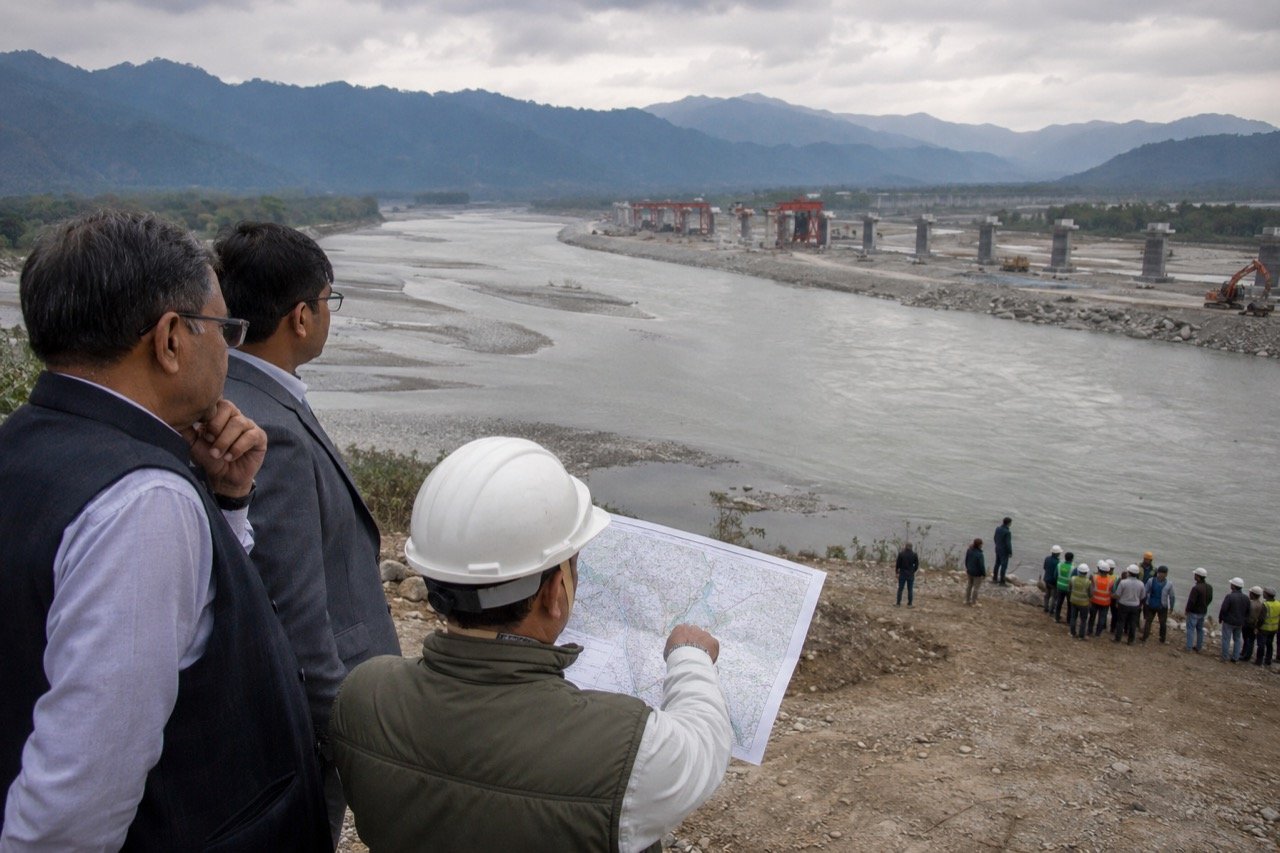
India Watches Dhaka's China-Backed Teesta Plan as Stakes Rise
New Delhi is closely tracking Bangladesh's proposal to develop the Teesta river with Chinese assistance, a move that revives one of South Asia's most sensitive water-sharing disputes and tests regional strategic trust.
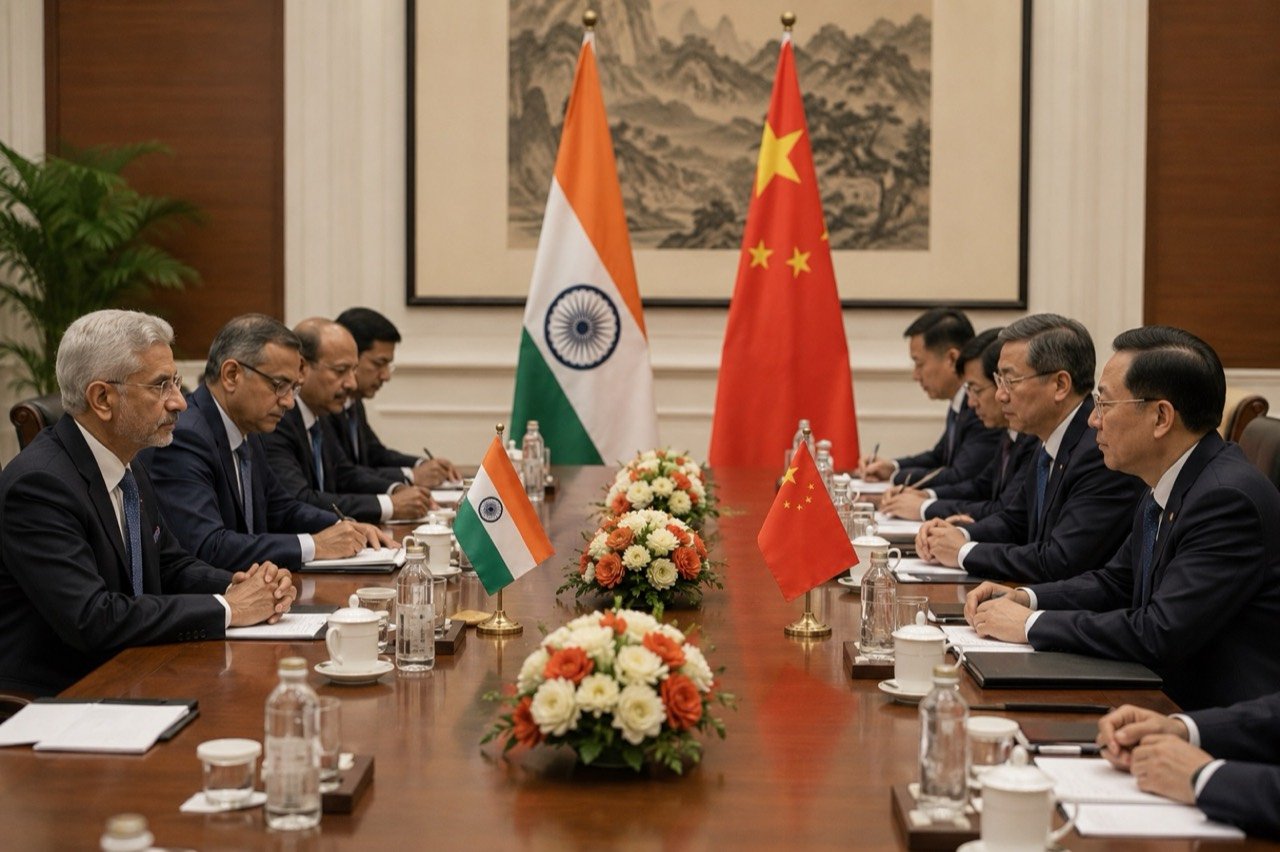
India-China Security Talks Signal Cautious Normalisation of Ties
NSA Ajit Doval and Chinese Foreign Minister Wang Yi met on the sidelines of the BRICS security advisers' meeting in New Delhi, noting progress toward a gradual, guarded normalisation of strained relations.

Expanded 48-Team World Cup Kicks Off Across North America
The 2026 FIFA World Cup opened in Mexico City as the tournament debuts a record 48-team format spread across the United States, Mexico and Canada.
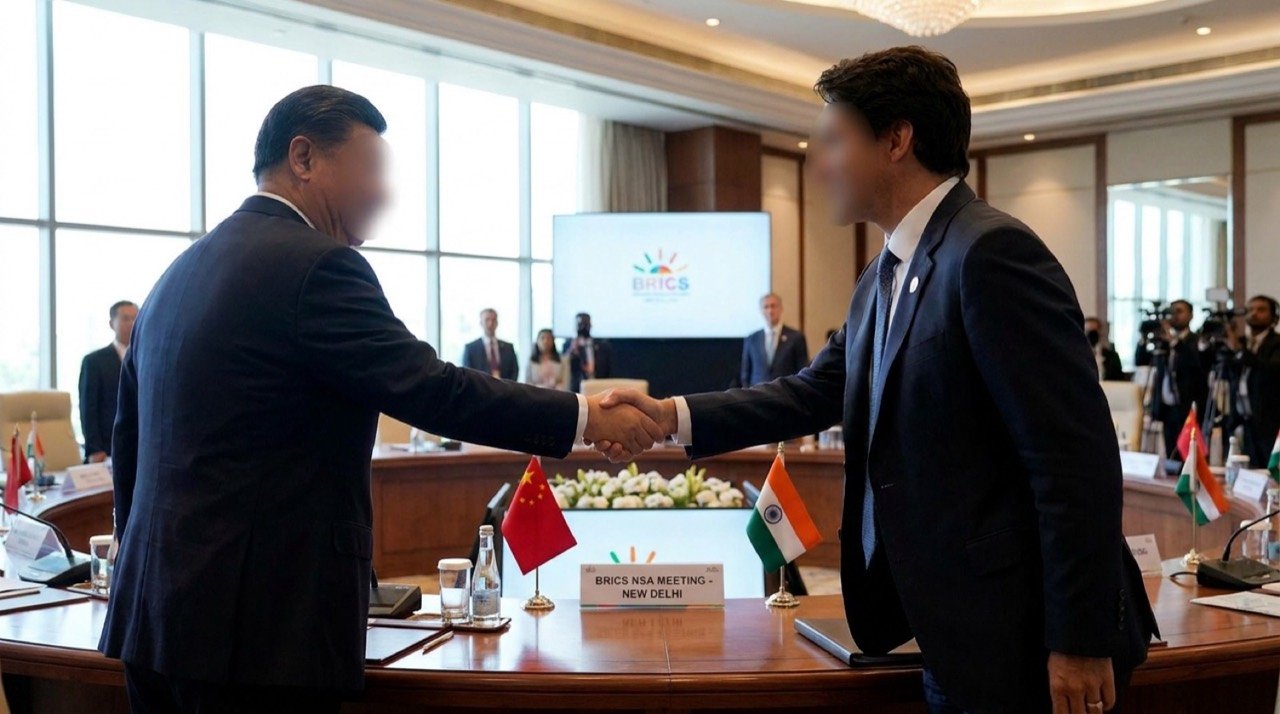
India-China Talks: Wang Yi, Doval Put Border Calm and Core Interests in Focus
Chinese Foreign Minister Wang Yi told NSA Ajit Doval in New Delhi that India and China must respect each other's core interests and keep the border issue in its proper place within the broader relationship.
More from this section
More
India-New Zealand Ties: Visit Plans Put FTA and Diplomacy in Focus
Reports of a planned high-level India-New Zealand engagement have revived attention on free trade talks, professional mobility and Indo-Pacific cooperation between two partners with clear room to grow.
Modi Greets Trump on US 250th Independence Day, Hails Partnership
Prime Minister Narendra Modi marked America's 250th Independence Day with a message to President Trump, saying the next 250 years should lift the India-US partnership to new heights.
India Watches Dhaka's China-Backed Teesta Plan as Stakes Rise
New Delhi is closely tracking Bangladesh's proposal to develop the Teesta river with Chinese assistance, a move that revives one of South Asia's most sensitive water-sharing disputes and tests regional strategic trust.