UN Inquiry Led by Indian Jurist Says Israel Deliberately Targeted Gaza's Children
A United Nations commission chaired by former Indian judge Srinivasan Muralidhar has concluded that Israel continues to commit genocide by deliberately targeting Palestinian children, in a 94-page report that names a death toll of more than 20,000 minors.
Commentary & Analysis ·
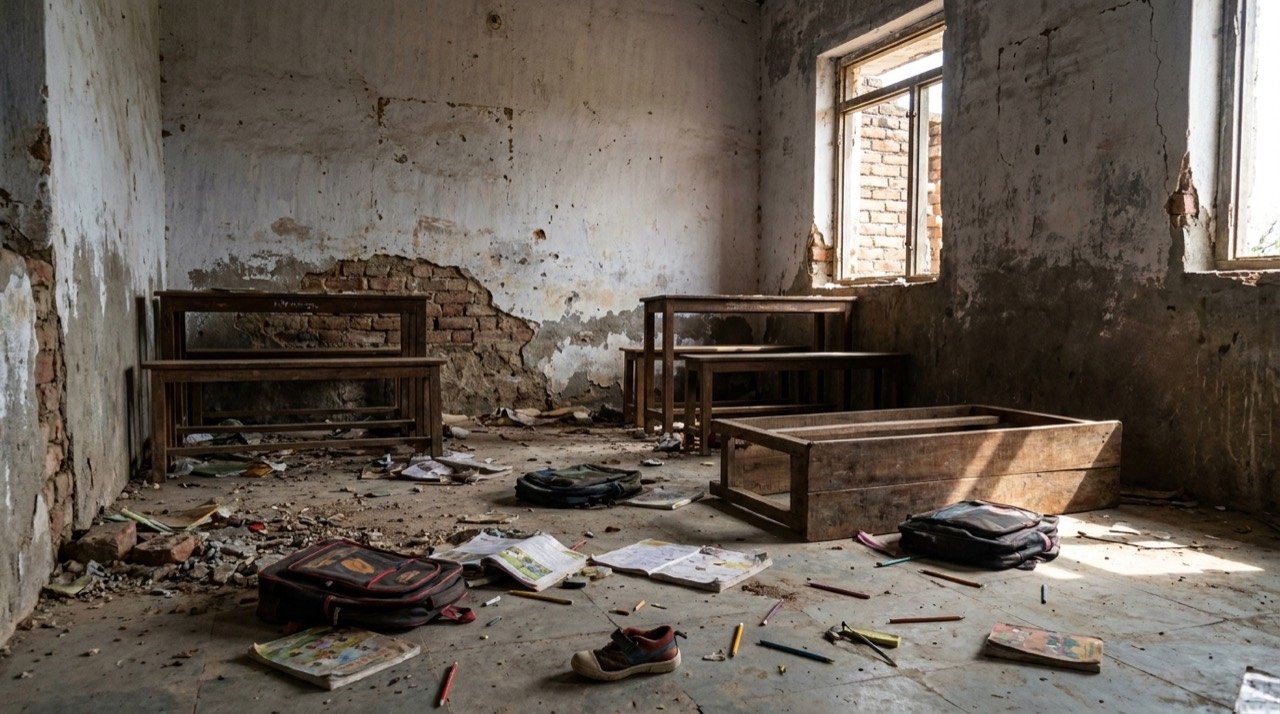
A United Nations independent commission of inquiry has found that Israeli authorities and security forces have deliberately targeted Palestinian children, amounting to genocide and other atrocity crimes in Gaza. The findings, released on 23 June 2026, carry a notable India connection: the commission is chaired by Srinivasan Muralidhar, a former judge of the Delhi and Odisha High Courts widely respected in Indian legal circles. That an Indian jurist should sit at the head of one of the most consequential accountability exercises the United Nations has undertaken in recent years is, in itself, a matter deserving sober attention in New Delhi, quite apart from the gravity of what the report actually documents.
What the report found
The 94-page report, titled around the theme that "the essence of childhood has been destroyed," documents the killing of at least 20,179 Palestinian children and injuries to 44,143 others between October 2023 and October 2025. These are not abstract figures. Each represents a life extinguished or altered irrevocably, and taken together they form the empirical spine of the commission's most serious conclusion: that the deliberate targeting of children is one of the key elements establishing genocidal intent. The commission found that about 30 percent of those killed in Gaza since the start of the war were children, a proportion that, if it withstands the scrutiny any such finding must invite, speaks to a pattern rather than incidental battlefield casualty.
The report also documents a further, quieter form of harm: strikes on neonatal and maternity care facilities that the commission says have damaged newborn survival, contributing to rising miscarriages and birth defects. This detail matters because it broadens the frame of the inquiry beyond direct killings in combat to the degradation of the medical infrastructure that sustains the very youngest and most vulnerable lives, and to harms that will be felt for years after any ceasefire holds.
Why the finding of intent matters
Genocide, in international law, turns not merely on the scale of killing but on the question of intent, on whether harm to a protected group, in this case children as a distinct and identifiable population, was the deliberate object of a policy rather than its unfortunate by-product. This is what elevates the commission's conclusions beyond a tally of casualties into a legal and moral indictment. It is also why the finding will be contested as fiercely as it will be cited: intent is the hardest element of any atrocity-crime finding to establish, and it is precisely where accusation and rebuttal will concentrate in the months ahead, in courtrooms, in diplomatic chambers and in public opinion.
The commission's further observation, that children continued to be killed and injured even after the October 2025 ceasefire, and its accusation that Israel has disregarded the truce and its obligations under international law, extends the finding from a wartime critique into an ongoing one. If accurate, it suggests the commission views the danger to Palestinian children as a continuing condition rather than a closed chapter of the conflict, a distinction with real consequence for how the international community calibrates its response now.
The Indian connection
Muralidhar, who stated that "the evidence shows that Palestinian children have been deliberately targeted and killed by the Israeli security forces," leads a reconstituted three-member panel alongside Florence Mumba and Chris Sidoti. His prominence at the head of one of the UN's most contentious inquiries has drawn attention in India to the role of Indian-origin jurists in global accountability mechanisms. It is worth pausing on what this represents: an Indian judge, trained and seasoned within India's own high courts, now issuing findings that will be read as authoritative testimony on one of the defining humanitarian catastrophes of this decade. For a country that has long sought a larger voice in global governance and international law, the presence of its jurists at the centre of such inquiries is a marker of standing, whatever view one takes of the report's conclusions.
Israel has rejected the commission's mandate and its conclusions, a position consistent with its longstanding view that the UN's Gaza-related inquiries are structurally predisposed against it. That rejection does not settle the matter, but it does foreshadow the contested reception this report will receive: welcomed by those who have long argued for accountability, dismissed by those who question the commission's impartiality, and pored over by governments, like India's, that must weigh the finding without being seen to take sides prematurely.
India's delicate balancing act
For India, which maintains ties with both Israel and the Palestinian leadership and has called consistently for restraint and a two-state solution, the report sits within a delicate diplomatic balance. New Delhi's relationship with Israel has deepened substantially over the past decade, spanning defence, agriculture and technology cooperation, even as India has never abandoned its historic rhetorical commitment to the Palestinian cause and to a negotiated two-state outcome. A finding of this magnitude, and from a commission chaired by an Indian jurist, does not leave room for India to simply continue managing both relationships in parallel without comment. The visibility of Muralidhar's role ensures the findings will be closely read in New Delhi and across the region, and other governments will be watching for signs of how India chooses, or declines, to respond.
This is not a hypothetical dilemma confined to chancelleries. It touches India's self-conception as a nation whose foreign policy claims to be guided by principle as much as by interest, and whose voice on human rights and international law has historically carried weight in the developing world. A report of this seriousness, prepared under the chairmanship of one of its own retired judges, is not the kind of document New Delhi can treat as a routine multilateral development to be acknowledged and set aside.
The NE Times View
A finding of this gravity, chaired by a respected Indian jurist, places New Delhi in an uncomfortable spot between its deepening ties with Israel and its long-standing solidarity with Palestine. The report's documentation of more than 20,000 child deaths demands a response rooted in principle, not convenience. India's moral standing on the world stage is built on exactly such moments. Silence, here, would itself be a statement, and not a neutral one. A government that has built its global brand partly on the language of civilisational values and moral leadership in international fora cannot indefinitely defer engaging with a finding of this magnitude, still less one delivered under the imprimatur of its own former judiciary. What India says, and does not say, in the weeks ahead will be read as a signal of where its foreign policy genuinely stands when interest and principle diverge.
Key takeaways
- A UN commission chaired by former Indian judge Srinivasan Muralidhar has found that Israeli forces deliberately targeted Palestinian children, an element the panel says helps establish genocidal intent.
- The report documents at least 20,179 child deaths and 44,143 injuries between October 2023 and October 2025, with children accounting for roughly 30 percent of total Gaza deaths in that period.
- The commission also links strikes on maternity and neonatal facilities to rising miscarriages and birth defects, and alleges killings of children continued even after the October 2025 ceasefire.
- Israel has rejected both the commission's mandate and its conclusions, ensuring the findings will remain contested.
- The report places India in a delicate position given its simultaneous ties with Israel and historic support for Palestinian statehood, with an Indian jurist's chairmanship raising the stakes for New Delhi's response.
You may also like to read
UN Warns Gaza Risks 'Permanent Limbo' As Transition Plan Stalls
A senior UN envoy has told the Security Council that delays in the Council-backed Gaza transition plan are deepening suffering, with fuel and water shortages crippling relief efforts.

Fragile Israel-Iran Ceasefire Holds As Trump Pushes Towards Signed Peace Deal
After months of missile exchanges, Israel and Iran have suspended attacks under a conditional truce, with Washington claiming a formal peace agreement is now within reach.

China's LineShine Dethrones US as World's Fastest Supercomputer, Sharpening India's AI Resolve
China has reclaimed the top spot on the global supercomputing rankings with an all-domestic machine running at over two exaflops, a milestone in the US-China tech contest that underscores why India is racing to build its own sovereign computing power.
Iran-IAEA Inspection Standoff Tests Fragile Truce, With India Watching Its Energy Stakes
The UN nuclear watchdog insists inspectors will return to Iran's enrichment sites under an interim US-Iran deal, but Tehran says access waits for a final agreement, leaving Indian importers eyeing both oil flows and the Strait of Hormuz.
More from this section
More
India-New Zealand Ties: Visit Plans Put FTA and Diplomacy in Focus
Reports of a planned high-level India-New Zealand engagement have revived attention on free trade talks, professional mobility and Indo-Pacific cooperation between two partners with clear room to grow.

Modi Greets Trump on US 250th Independence Day, Hails Partnership
Prime Minister Narendra Modi marked America's 250th Independence Day with a message to President Trump, saying the next 250 years should lift the India-US partnership to new heights.
India Watches Dhaka's China-Backed Teesta Plan as Stakes Rise
New Delhi is closely tracking Bangladesh's proposal to develop the Teesta river with Chinese assistance, a move that revives one of South Asia's most sensitive water-sharing disputes and tests regional strategic trust.