TCS Payment to DXC Closes a Long-Running US Trade Secrets Dispute
Tata Consultancy Services has paid about $213.6 million to DXC Technology after the US Supreme Court declined its appeal, moving a high-profile trade secrets case toward financial closure.
Commentary & Analysis ·
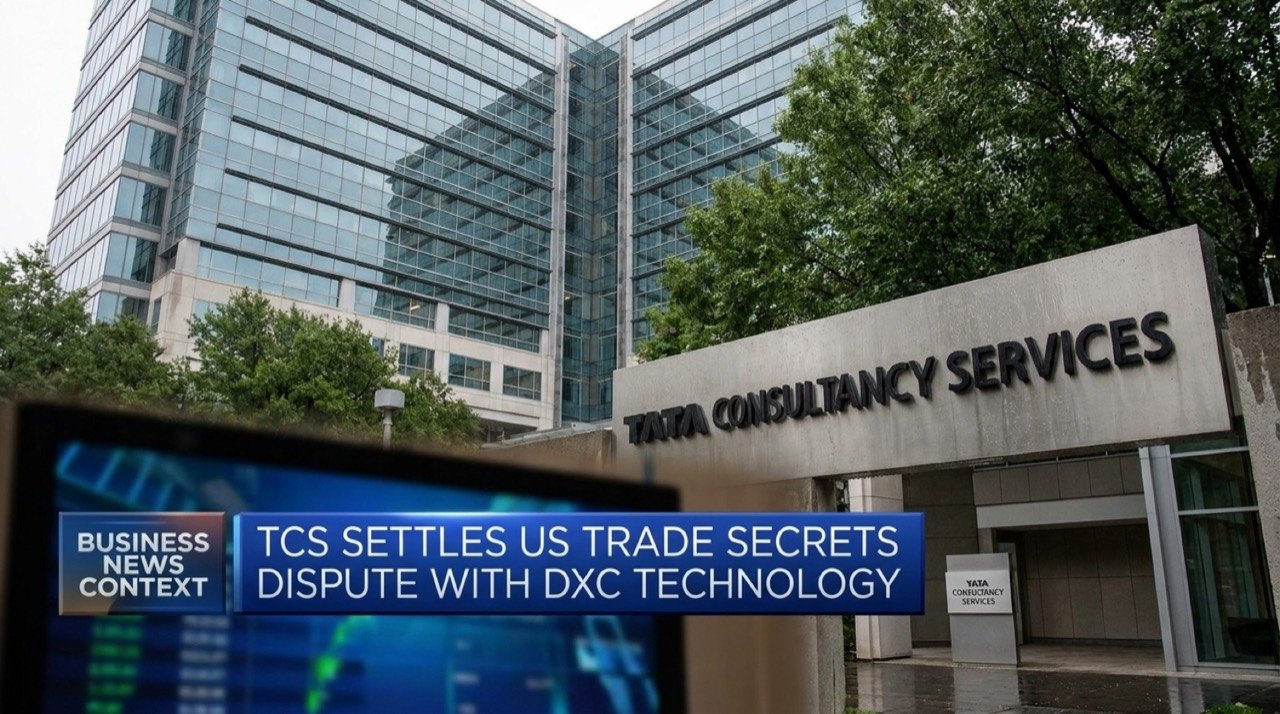
Tata Consultancy Services has made a reported payment of about $213.6 million to DXC Technology, drawing a line under a long-running trade secrets dispute in the United States. The payment followed the US Supreme Court's decision to decline TCS's appeal in the case, effectively exhausting the company's legal options and converting a protracted courtroom fight into a question of financial settlement.
A closely watched cross-border case
The dispute attracted close attention because of who was involved: one of India's largest IT services exporters on one side and a US technology services company on the other. Cases of this scale are watched not only for their own outcome but for what they signal about the legal exposure Indian firms carry when they operate at the heart of global technology supply chains.
With the Supreme Court declining to take up the appeal, the avenues for further challenge narrowed sharply. The payment to DXC reflects that reality, even as the company continues to emphasise compliance and the uninterrupted delivery of services to clients.
From legal uncertainty to financial closure
For investors and clients, the most important takeaway is the shift from open-ended legal uncertainty toward a defined financial outcome. A pending appeal at the apex court leaves a cloud of unquantified risk; a settled payment, by contrast, allows the matter to be priced and put behind the company.
TCS has continued to stress operational continuity throughout, signalling to customers that the dispute does not disrupt ongoing engagements. For a services business built on long-term client relationships, preserving that confidence is as important as resolving the liability itself.
A wider lesson for Indian IT
Beyond the immediate parties, the case underlines why Indian IT firms are watching intellectual property safeguards far more carefully in cross-border contracts. Trade secrets litigation in foreign jurisdictions can be costly and prolonged, and the financial stakes are substantial.
- TCS reportedly paid about $213.6 million to DXC Technology.
- The US Supreme Court declined to take up TCS's appeal.
- The matter moves from legal uncertainty toward financial closure.
- TCS continues to stress compliance and operational continuity.
- The case highlights IP controls, access limits, training and documentation in global deals.
“For Indian IT exporters, the real takeaway is how rigorously intellectual property and access controls must be managed in cross-border work.”
— Technology sector analyst
With the legal process now effectively concluded, attention turns to how Indian IT companies tighten the controls that such disputes expose, from access restrictions and employee training to careful documentation in international contracts. For TCS, closing the case removes a lingering uncertainty; for the wider industry, it is a reminder that operating globally means managing legal risk as deliberately as technical delivery.
The NE Times View
Paying out and moving on is the pragmatic call, but the lesson for Indian IT runs deeper than one cheque. As these firms shift from outsourced services to proprietary platforms and IP, exposure to trade-secret litigation in their largest market grows. The sector's future margins depend on building defensible original technology, and on compliance cultures robust enough to keep it out of foreign courtrooms.
This article is original commentary and analysis by The NE Times. Background facts were referenced from NDTV Profit and Reuters.
You may also like to read

Infosys, TCS And Wipro Cross 300,000 Copilot Seats As AI Reshapes Hiring
India's top IT services firms have scaled Microsoft 365 Copilot to more than 300,000 employees in under six months, even as leaders warn that AI agents will slow future hiring across the sector.
TCS Cut 23,460 Jobs in FY26 as Indian IT Bets on an AI-First Model
India's largest software exporter led sector-wide reductions as firms slimmed benches and slowed fresher intake, even as global capability centres kept hiring.

Board of Trade Meets as Exporters Press on FTAs and GST Refunds
Commerce Minister Piyush Goyal chaired a Board of Trade meeting where exporters pushed for faster GST refunds, lower logistics costs and workable free trade agreements amid global demand uncertainty.

Sensex, Nifty Week Ahead: Trade Deal Hopes and Q1 Earnings in Focus
Indian equities enter a news-heavy week with trade-deal expectations, quarterly earnings, foreign flows and global cues all converging to set the direction for the Sensex and Nifty.
More from this section
More
Adani Case: US DOJ Pushes for Permanent Dismissal of Charges
The US Department of Justice has urged a judge to permanently dismiss charges against Gautam Adani, calling the case legally flawed — a reversal with consequences for markets, diplomacy and cross-border enforcement.

Akasa Air Inducts 40th Aircraft in Indian Aviation Scale-Up
Akasa Air's 40th aircraft, ferried to Bengaluru via Seattle, Reykjavik and Cairo, marks a fleet milestone for the young carrier and a fresh signal that India's aviation market remains firmly in expansion mode.
BARC Ratings Suspension Leaves Indian TV Industry Flying Blind
BARC's pause on television ratings has put India's broadcast measurement system under fresh scrutiny, leaving broadcasters, advertisers and media planners without the weekly audience data that anchors the TV economy.