Board of Trade Meets as Exporters Press on FTAs and GST Refunds
Commerce Minister Piyush Goyal chaired a Board of Trade meeting where exporters pushed for faster GST refunds, lower logistics costs and workable free trade agreements amid global demand uncertainty.
Commentary & Analysis ·
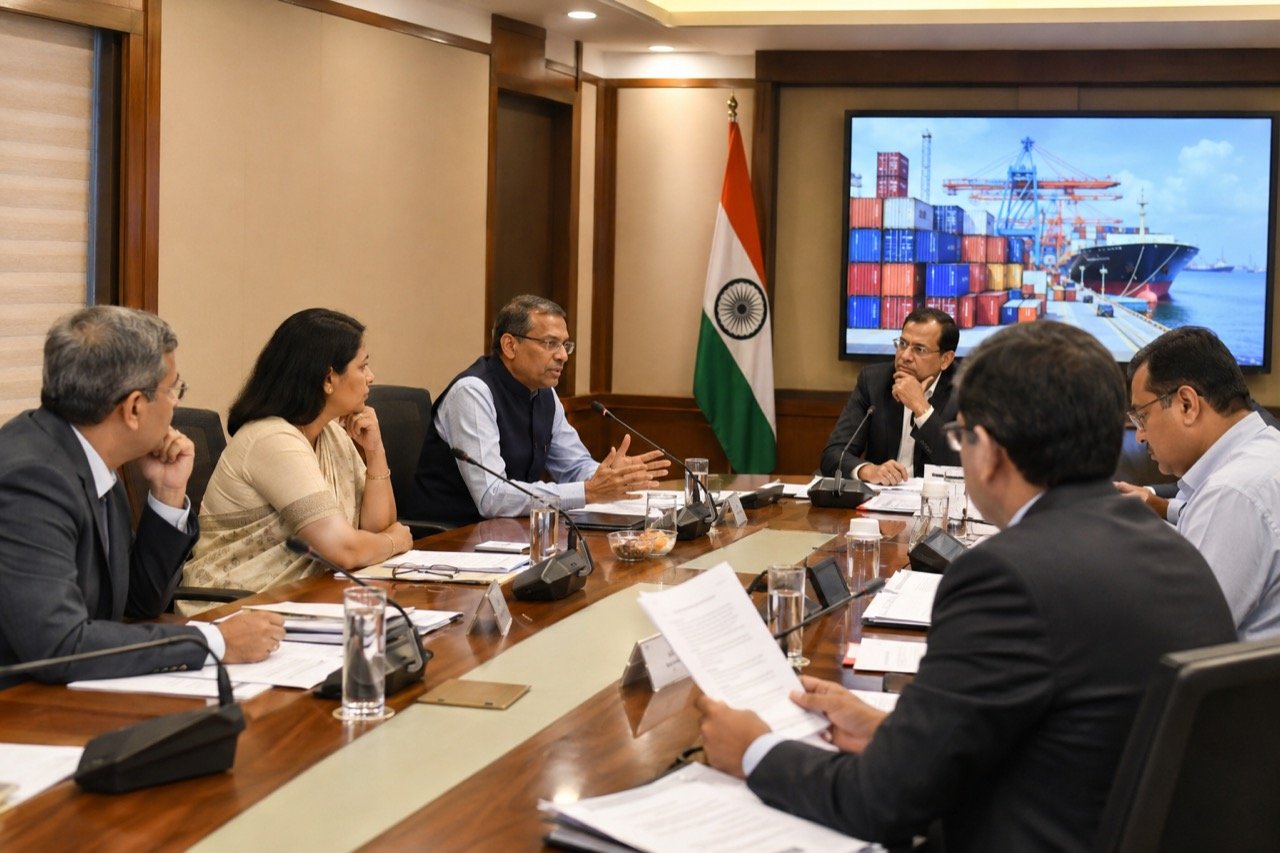
India's export agenda moved back to centre stage as Commerce and Industry Minister Piyush Goyal chaired a meeting of the Board of Trade, bringing exporters and government officials to the same table. The agenda, as reported in business coverage, ranged across free trade agreements, GST refund bottlenecks, export promotion schemes and policy support for traders navigating an uncertain global environment. On paper, this is a routine consultative exercise. In substance, it is a barometer of how well India's trade machinery is coping with a world where demand is patchy, freight costs remain elevated and rival manufacturing economies are competing hard for the same export orders.
Why this meeting matters
Exports sit at the intersection of growth, employment, currency stability and industrial competitiveness. When shipments slow, the effects ripple through factory orders, port activity and jobs. That makes the Board of Trade less a ceremonial gathering and more a working forum where policy friction meets commercial reality. It is one of the few settings where exporters can raise operational grievances directly with the ministry responsible for trade policy, rather than routing complaints through trade bodies and hoping they surface in due course. The composition of the meeting, bringing officials and exporters into the same room, is itself an acknowledgement that policy designed in isolation from ground-level experience tends to underperform once it meets the reality of shipping schedules, customs desks and bank reconciliations.
Indian exporters are currently squeezed from several directions: uneven global demand, elevated shipping and logistics costs, layered compliance requirements and sharpening competition from rival manufacturing hubs. For these businesses, policy discussions translate directly into orders won or lost and margins preserved or eroded. A meeting of this kind therefore carries weight well beyond the room in which it is held. Every week that a refund sits unprocessed or a rule of origin clause remains ambiguous is a week in which an Indian exporter's quote to an overseas buyer looks less competitive than it should.
The practical asks on the table
Three themes stand out. Free trade agreements can open markets, but only if rules of origin, standards and tariff schedules are simple enough for companies to actually use. An agreement that exists on paper but is too complex or ambiguous in its documentation requirements offers little practical benefit to a mid-sized manufacturer trying to certify a shipment within a tight delivery window. Faster GST refunds would ease cash flow, a lifeline for smaller exporters operating on thin working capital, many of whom cannot absorb months of locked-up funds while still paying suppliers and wages. And logistics improvements often decide whether Indian goods stay price competitive on the shelf abroad, since freight and handling costs can erode a price advantage built up through years of manufacturing efficiency.
Each of these three asks reflects a different layer of friction. Trade agreements are a policy and diplomatic matter, negotiated over years and shaped by reciprocal concessions with partner countries. GST refunds are an administrative and fiscal matter, resolved through tax department processes and system efficiency. Logistics costs are a structural and infrastructural matter, tied to ports, roads, rail links and the broader cost of doing business in India. That the Board of Trade agenda spans all three suggests exporters are not treating these as separate silos, but as a single, cumulative burden that determines whether an order is worth chasing at all.
The cash flow dimension for smaller exporters
It is worth dwelling on why GST refund delays draw such consistent attention from exporters. Export transactions are typically zero-rated for GST purposes, meaning exporters are entitled to reclaim taxes paid on inputs. When that reclaim is delayed, the exporter is effectively extending an interest-free loan to the government while still needing to fund raw material purchases, wages and other overheads. For a large, well-capitalised company this is an irritant. For a small or mid-sized exporter operating on thin margins and limited banking lines, it can determine whether the next order can be accepted at all. This is precisely why the issue recurs at forums like the Board of Trade rather than being resolved once and considered closed: the underlying administrative capacity to process refunds swiftly and consistently has to keep pace with a growing and increasingly diverse export base.
Free trade agreements as a live utilisation question
India has signed or is negotiating an ambitious slate of trade agreements, yet exporters routinely report that paperwork, refund delays and freight costs blunt the advantage on the ground. This distinction between an agreement's existence and its actual utilisation is central to understanding why the Board of Trade continues to revisit the same themes. A trade agreement's headline benefit, preferential tariff access, is only realised when an exporter can navigate the certification and documentation required to claim it. If the compliance burden of proving origin outweighs the tariff saving, particularly for smaller shipments, businesses simply default to standard terms and the diplomatic achievement of the agreement goes underused. Tracking utilisation rates, not just the number of agreements signed, would give a far more honest picture of whether trade policy is delivering commercial results.
What to watch next
The value of this meeting will not be visible in the immediate aftermath. It will show up, or fail to show up, in the months that follow, in whether refund processing times shorten, whether FTA documentation is simplified, and whether logistics costs facing exporters ease even modestly. Trade bodies and exporter associations are likely to continue raising these same points at subsequent forums if no measurable change follows, which is itself a useful signal for observers: repetition of the same grievances across successive Board of Trade sessions would indicate a gap between dialogue and delivery. Conversely, if exporters report tangible improvement in refund turnaround or documentation ease at the next such meeting, that would mark a genuine shift from consultation to execution.
The NE Times View
The real test of this Board of Trade meeting will be follow-through, not the communique. India has signed or is negotiating an ambitious slate of trade agreements, yet exporters routinely report that paperwork, refund delays and freight costs blunt the advantage on the ground. If the government can convert this dialogue into measurable timelines, refunds cleared within fixed windows, FTA utilisation rates tracked and published, the meeting will have earned its place on the calendar. For India's small and mid-sized exporters especially, execution now matters far more than announcement. A country's trade diplomacy can only be as effective as the administrative machinery that sits beneath it, and it is that machinery, tax refund desks, customs documentation and port logistics, that will ultimately decide whether this meeting is remembered as a turning point or as one more entry in a long list of consultations.
Key takeaways
- Commerce and Industry Minister Piyush Goyal chaired a Board of Trade meeting covering free trade agreements, GST refund delays, export promotion schemes and logistics support.
- Indian exporters face pressure from uneven global demand, high shipping costs, compliance burdens and competition from rival manufacturing hubs.
- Simplifying FTA rules of origin and documentation, speeding GST refunds, and cutting logistics costs were the three practical priorities raised.
- Slow GST refunds strain the working capital of smaller exporters most severely, since export sales are zero-rated and refunds are meant to be timely.
- The meeting's real significance will depend on measurable follow-through, such as fixed refund timelines and published FTA utilisation rates, rather than the discussion itself.
You may also like to read
India-US Trade Talks Resume in Delhi as Exporters Seek a Competitive Edge
Piyush Goyal and US Trade Representative Jamieson Greer have begun a fresh round of negotiations on an interim deal, with India pressing for terms that hand its exporters a clear advantage over rivals.
India-US Interim Trade Deal Enters Final Stretch Ahead of July Tariff Deadline
With a July tariff deadline looming, New Delhi and Washington are racing to seal an interim trade pact that shields sensitive sectors while securing predictable access to India's largest export market.
India-US Ministerial Trade Talks Open in New Delhi as Both Sides Chase a Tariff Deal
Commerce Minister Piyush Goyal and US Trade Representative Jamieson Greer have begun ministerial-level talks in New Delhi, aiming to narrow gaps on tariffs, agriculture and digital trade before a possible bilateral package.
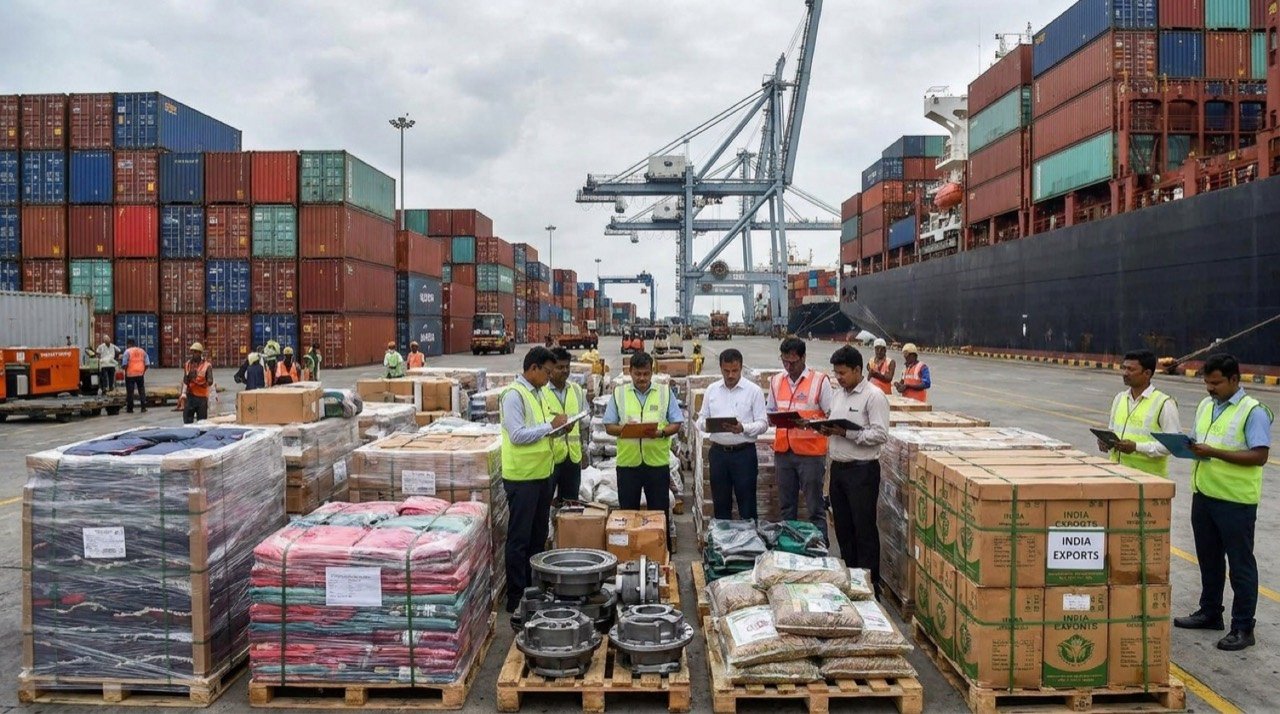
India Holds Chintan Shivir on Green Trade Barriers and FTA Risks for Exporters
A two-day workshop in New Delhi examines how environment-linked non-tariff measures and carbon rules could squeeze market access for Indian exporters across key sectors.
More from this section
More
Adani Case: US DOJ Pushes for Permanent Dismissal of Charges
The US Department of Justice has urged a judge to permanently dismiss charges against Gautam Adani, calling the case legally flawed — a reversal with consequences for markets, diplomacy and cross-border enforcement.

Akasa Air Inducts 40th Aircraft in Indian Aviation Scale-Up
Akasa Air's 40th aircraft, ferried to Bengaluru via Seattle, Reykjavik and Cairo, marks a fleet milestone for the young carrier and a fresh signal that India's aviation market remains firmly in expansion mode.
BARC Ratings Suspension Leaves Indian TV Industry Flying Blind
BARC's pause on television ratings has put India's broadcast measurement system under fresh scrutiny, leaving broadcasters, advertisers and media planners without the weekly audience data that anchors the TV economy.