Satluj Leaves Viewers Emotional as Delayed Film Finally Streams
First reactions to the long-delayed Diljit Dosanjh and Arjun Rampal starrer Satluj have turned its uncut OTT release into a wider conversation about performance, Punjab's public memory and access to cinema.
Commentary & Analysis ·
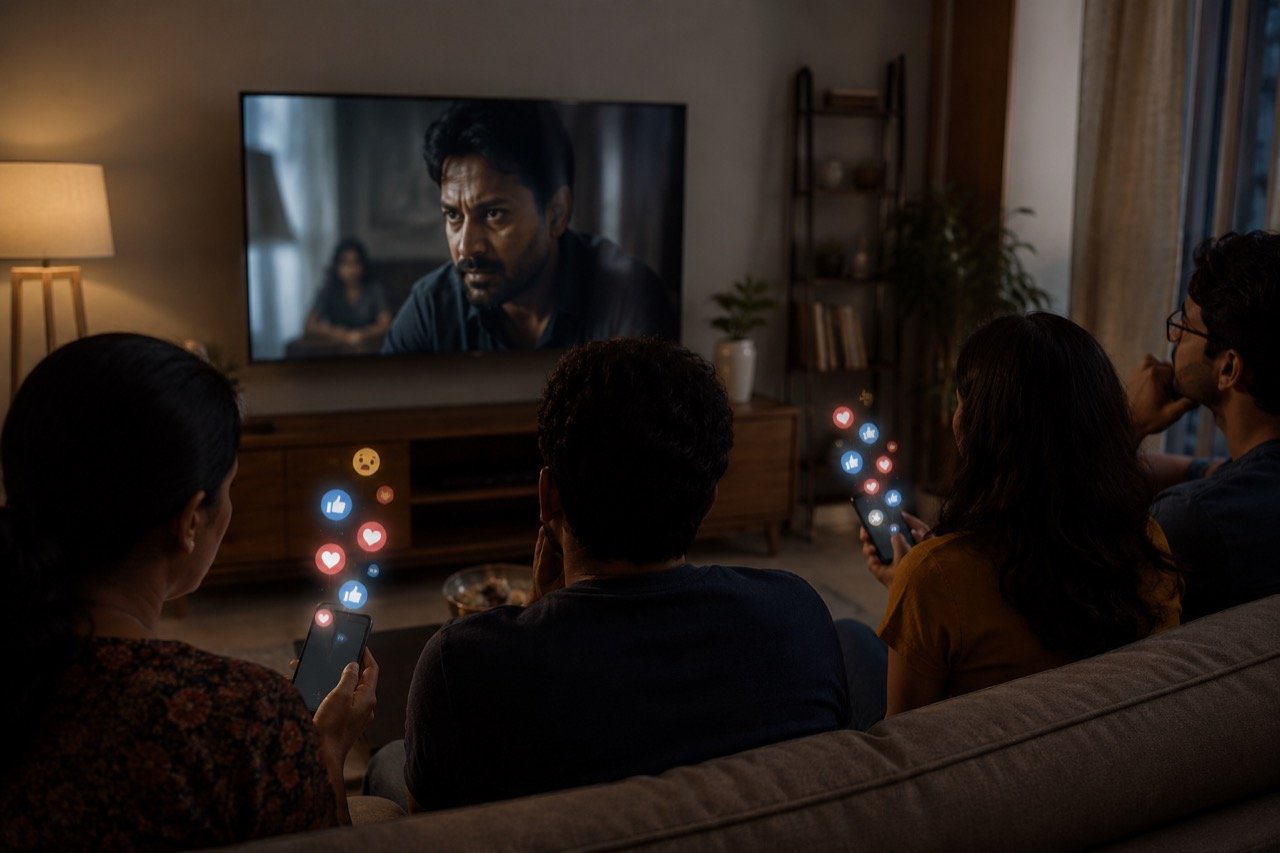
Satluj is no longer being covered only as a delayed release. Now that the film has finally reached OTT audiences, viewer reactions have become the story in their own right. Times of India reported that social media users responded emotionally to the Diljit Dosanjh and Arjun Rampal starrer, with many calling it an important watch connected to Punjab's history and public memory. What began as a straightforward release-day news item has, within days, turned into something closer to a cultural moment, with the conversation online outpacing the usual churn of weekend streaming chatter.
Why the first reaction wave matters here
Audience response carries unusual weight for a film with a long certification journey. When a movie spends years in limbo, the first public reception becomes part of its story: viewers are not just judging performances and pacing, they are reacting to the fact that they can at last watch the film in an authorised, uncut form. This is a different kind of viewing experience from an ordinary release. Every scene arrives freighted with the memory of the delay itself, so the emotional charge in early reactions is not purely about craft. It is also about relief, vindication and, for some, a sense that a story they had been waiting years to see has finally been allowed to reach them intact.
That distinction matters for how the film's early reception should be read. A title that releases on schedule earns its opening reaction from the work alone. Satluj, by contrast, is being judged simultaneously on the film itself and on the years-long process that preceded it. The two are difficult to separate, and that is precisely why the reaction wave has become newsworthy in a way that ordinary streaming debuts rarely are.
Performance meets release history
The strongest thread in the conversation is the convergence of craft and context. Diljit Dosanjh's central performance, Honey Trehan's direction and the film's uncut streaming availability all feed the emotional weight around the title, previously known to many as Punjab 95. For audiences who tracked the delay for years, the question being tested online is whether the film lives up to its long wait. That is a high bar for any film to clear, and it is notable that the early commentary is engaging with that question directly rather than dismissing it.
Dosanjh's profile as both a musician and an actor with a substantial cross-regional following means his choice of this role was always going to draw scrutiny beyond Punjab. His association with a film built around a difficult chapter of the region's history lends the project a visibility that a lesser-known cast might not have generated. Trehan's direction, meanwhile, is being discussed in relation to how faithfully and how carefully the film handles material that touches on real historical trauma. Arjun Rampal's presence rounds out a cast that appears to have been read by early viewers as committed to treating the subject with gravity rather than spectacle.
Reading social media reactions with appropriate caution
Social media reactions should be read as partial evidence rather than a scientific measure of opinion, since they amplify the most passionate voices. Platforms reward strong emotion and pithy expression, which means the loudest reactions are not necessarily representative of the full viewing public, many of whom may watch quietly without posting anything at all. It would be a mistake to treat trending posts as a verdict on the film's overall reception or its eventual place in the broader catalogue of Punjab-set cinema.
That caveat aside, these reactions usefully reveal what viewers are carrying away: seriousness, sadness, admiration for the performances and relief that the film is finally accessible. Those four notes, taken together, tell a coherent story about the kind of experience the film seems to be delivering; not a light entertainment watch but one that viewers feel obliged to sit with afterward. That pattern of response is itself informative, even if it cannot be treated as a statistically sound survey of national opinion.
An event, not a routine watch
Debate around Satluj is likely to continue, but the opening reaction wave has already given it momentum beyond routine streaming listings. It is being discussed as an event, not just a weekend watch. That framing matters commercially and culturally. For the streaming platform involved, sustained conversation is valuable regardless of whether every comment is positive, since it keeps the title visible in a crowded content environment where most releases are forgotten within days. For audiences, particularly in Punjab and among the Punjabi diaspora, the film's arrival appears to be functioning as an occasion for shared reflection on a period of regional history that has not always received prominent cinematic treatment.
The extended path to release, previously tied to the film's certification difficulties under its earlier title, also means industry observers are likely to watch how this reception is interpreted by other filmmakers and platforms weighing similar projects. A strong emotional response, even an unquantifiable one drawn from social media, can shape decisions about future films that engage with sensitive historical subject matter.
The NE Times View
Satluj's reception is a reminder that delayed films do not simply lose relevance, sometimes the wait itself deepens the audience's investment. That should give India's certification system pause: years of limbo did not mute this film, it amplified the conversation around it. Whatever the intent behind the delay, the practical effect appears to have been to build anticipation rather than erase it, which is worth reflecting on for a system that presumably aims for the opposite outcome.
The emotional response from Punjabi viewers in particular shows a real hunger for cinema that engages honestly with the region's difficult history. That hunger has arguably been under-served for years, and its visibility now suggests there is a substantial audience willing to engage seriously with such material when it is finally offered to them without dilution.
Streaming platforms willing to carry such films uncut are quietly widening the space for serious Indian storytelling, and audiences are rewarding them for it. If that pattern holds beyond this single title, it may encourage more platforms to back films that had previously struggled to find a home through conventional theatrical certification routes. For now, Satluj stands as an early test case for whether patience, both from filmmakers and from audiences, can eventually be repaid.
Key takeaways
- Satluj's uncut OTT release has generated an emotional social media reaction wave that is being treated as a story in itself, not just a routine streaming debut.
- The reaction blends judgment of the film's craft, Diljit Dosanjh's performance and Honey Trehan's direction, with relief that the long-delayed title, formerly known as Punjab 95, is finally available intact.
- Social media sentiment should be treated as suggestive rather than definitive, since it tends to amplify passionate voices over the wider, quieter viewing public.
- The film's long certification delay appears to have intensified rather than diminished audience interest, a pattern worth noting for India's film certification process.
- The reception may encourage streaming platforms to back more serious, historically grounded regional cinema that has struggled to clear conventional theatrical release hurdles.
You may also like to read
Satluj streams uncut at last, ending a three-year censor battle
Diljit Dosanjh's long-delayed drama about activist Jaswant Singh Khalra has finally premiered on streaming in its uncut form, reigniting debate over how India certifies politically sensitive cinema.
Satluj Paused in India: ZEE5 Statement Turns Release Into Flashpoint
Diljit Dosanjh's Satluj became one of India's most searched entertainment stories after ZEE5 said the film would be unavailable in the country, just days after its streaming debut sparked confusion and fan reaction.
Diljit Dosanjh's Satluj: No Cuts Despite Punjab 95 Title Change
Diljit Dosanjh says Satluj reaches audiences without cuts despite its renaming from Punjab 95, as reported support from Jaswant Khalra's wife keeps the film's release debate in the headlines.

Mollywood Times OTT Release Streams in Four Dubbed Languages
The Malayalam film Mollywood Times premieres on streaming with Telugu, Tamil, Kannada and Hindi dubs from day one, signalling how OTT platforms are widening the national reach of Kerala's cinema.
More from this section
More
72nd National Film Awards: Fans Back Mammootty, Allu Arjun, Sai Pallavi
Speculation around the 72nd National Film Awards is intensifying as fan communities across India's language film industries champion favourites including Mammootty, Allu Arjun and Sai Pallavi ahead of any official announcement.

Aamir Khan Marries Gauri Spratt in Private Pali Hill Ceremony
Aamir Khan and Gauri Spratt tied the knot at the actor's Pali Hill home in Mumbai on July 5, turning a deliberately small family ceremony into Bollywood's biggest story of the day.

Akanksha Chamola's Lock Upp 2 Confession Sets Reality TV Abuzz
A personal revelation by Akanksha Chamola ahead of Lock Upp 2 has handed the reality show a viral talking point, underlining how confession-driven formats continue to dominate Indian television conversation.