Diljit Dosanjh's Satluj: No Cuts Despite Punjab 95 Title Change
Diljit Dosanjh says Satluj reaches audiences without cuts despite its renaming from Punjab 95, as reported support from Jaswant Khalra's wife keeps the film's release debate in the headlines.
Commentary & Analysis ·
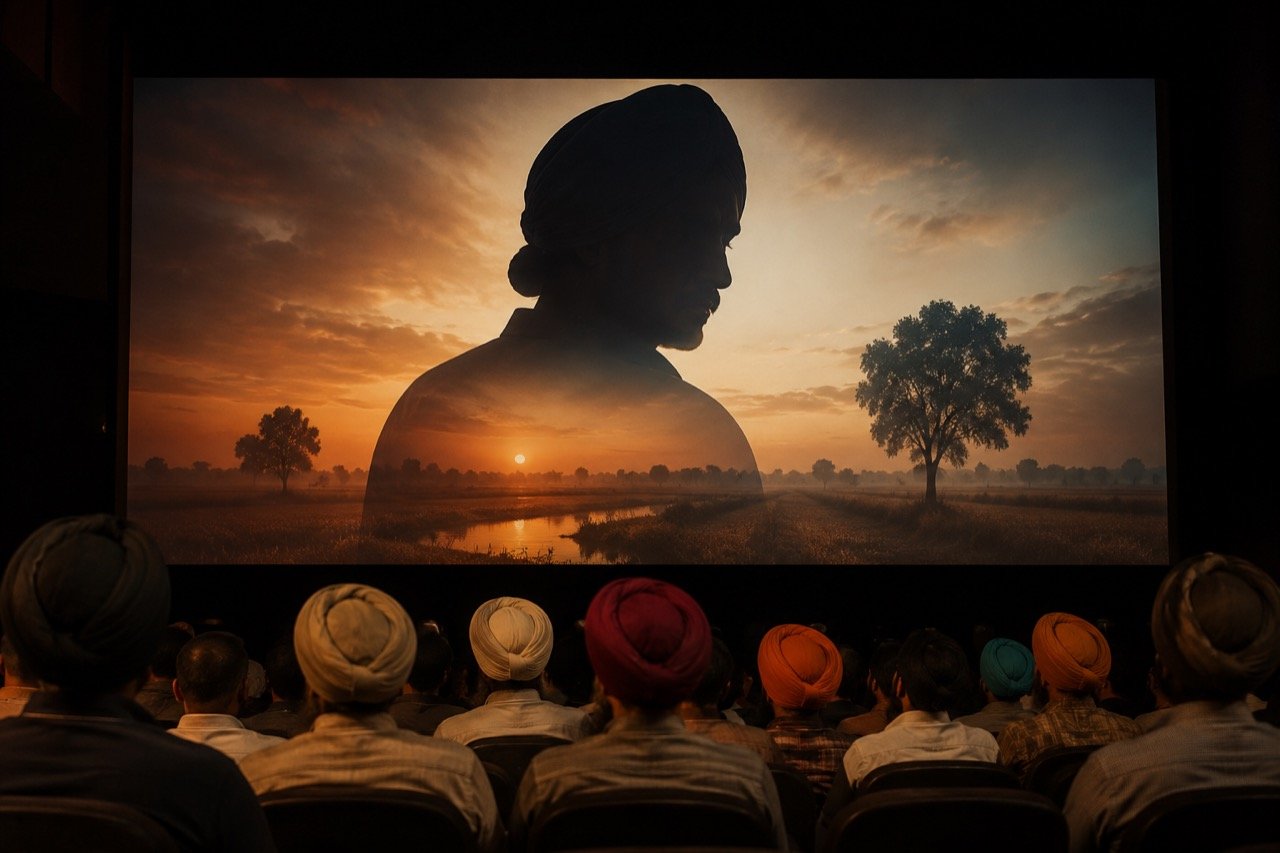
Satluj, the Diljit Dosanjh film long discussed under its earlier name Punjab 95, continues to command attention in India's entertainment pages, and for reasons that go well beyond the usual cycle of star-driven promotion. According to Indian Express coverage, the project has received support from the wife of Jaswant Khalra, the human rights figure whose story anchors the film, while Dosanjh has stated that the film carries no cuts despite the change of title. That single detail, no cuts despite the change of title, is the crux of why this story has travelled further than a routine release update.
What changed, and what did not
The renaming from Punjab 95 to Satluj was the most visible compromise in the film's long journey to release. For a project that has spent years navigating the space between a filmmaker's intent and the machinery of certification, a title change is the kind of concession that is easy to notice and easy to over-read. Dosanjh's assertion that the content itself was not trimmed is the detail audiences most wanted resolved, because viewers searching for the film have repeatedly asked which version they will actually see when it finally reaches them. On the available reporting, the answer is reassuring in its simplicity: the title shifted, but the film did not. That distinction matters enormously to anyone who has followed Indian cinema's long and uneven relationship with films that touch on real, unresolved, and politically sensitive history.
It is worth pausing on why a title change would be sought at all if the underlying film remains intact. Titles carry associative weight. Punjab 95 tied the film explicitly to a year and a place freighted with memory, and a name change of this kind typically signals an attempt to soften that immediate association without altering what unfolds on screen. Whether one reads that as a reasonable compromise or an unnecessary concession likely depends on how much symbolic importance one attaches to naming versus substance. The NE Times View, below, takes a considered position on that question, but the factual baseline established by this reporting is that the narrative, the scenes, and the treatment of Khalra's story have reportedly been preserved.
The weight of the family's endorsement
The reported endorsement from Khalra's family adds considerable weight to how this story should be read. When the people closest to a real-life subject stand behind a film, it blunts the argument that the project distorts or exploits their story for dramatic effect. This is not a small consideration. Films built around real human rights cases routinely face two very different lines of criticism: one from those who feel such stories should not be told at all in a manner that risks sensationalising suffering, and another from those who feel that dramatization inevitably compromises the truth of what actually happened. Support from Jaswant Khalra's wife short-circuits both lines of criticism to a meaningful degree. It signals that those with the most direct stake in how his story is portrayed do not see the finished film as a betrayal of that story.
This also reframes the title change itself. Rather than reading the shift from Punjab 95 to Satluj as evidence of the filmmakers bowing to pressure and diluting the project, the family's support allows it to be understood as a procedural hurdle rather than a creative surrender. A river's name, Satluj, replacing a year and a place name, Punjab 95, is still an evocative choice, one that gestures at the same geography and history without the more pointed specificity of the original title. For audiences trying to decide how much trust to place in the finished product, the family's stance is arguably a more reliable signal than any statement from the production itself, precisely because it comes from outside the commercial interest in the film's success.
Diljit's widening canvas
For Dosanjh, Satluj extends a career that now spans Punjabi cinema, Hindi films, global music tours and international screen work. That a film choice of his can generate this much discussion beyond routine star coverage says as much about his standing as about the film's sensitive subject matter. Dosanjh has, over the past several years, moved between commercially safe projects and material that carries genuine risk, whether reputational, political, or artistic. Choosing to attach himself to a film about Jaswant Khalra, a figure whose work exposing human rights abuses came at enormous personal cost, is not the kind of decision a star makes purely for box office calculation. It suggests an artist increasingly willing to use his platform for projects that carry weight beyond entertainment value alone.
This also matters for how the Indian film industry more broadly negotiates difficult history. When an actor with Dosanjh's cross-border visibility, spanning Punjabi audiences, the wider Hindi film market, and international diaspora communities through his music career, commits to a project like this, it changes the calculus for other artists and producers considering similarly sensitive subjects. Success or even sustained attention for Satluj could make space for more such projects; a difficult or truncated release could reinforce caution elsewhere in the industry.
What the road to release still holds
The next phase will turn on audience response and further verified details as the release conversation matures. Films that have undergone this kind of protracted negotiation with certification authorities and gatekeepers often face a second test once they actually reach viewers: whether the finished product feels compromised in ways not captured by official statements about cuts and titles. Audiences are frequently more attentive to tone, pacing, and omission than any press statement can fully address. It will be worth watching how critics and viewers who are familiar with Jaswant Khalra's actual history respond once they can compare the film against the historical record.
There is also the question of distribution and how widely Satluj will be shown, given that films touching on sensitive Punjab-related history have sometimes faced uneven theatrical rollout even after clearing certification hurdles. Reporting so far has focused on the title change and the absence of cuts, but the practical questions of release scale, regional availability, and eventual streaming access remain open and will shape how many people actually get to judge the finished film for themselves.
The NE Times View
The Satluj saga is really a story about how much friction serious cinema still faces in India when it touches uncomfortable history. A title change that pacifies gatekeepers while leaving the film intact may look like a pragmatic win, but it sets a curious precedent: the name becomes negotiable, the memory does not. That is a fragile kind of victory, dependent on trust that what has been reported, no cuts, is what audiences will actually encounter in cinemas. The support of Jaswant Khalra's family is the most important signal here, and audiences should weigh it more heavily than any certification wrangle, because it speaks to the integrity of the portrayal in a way that procedural details about naming cannot. If Satluj reaches viewers uncut, that is a quiet victory for both Punjabi cinema and the space for difficult stories on Indian screens, one that other filmmakers working on equally sensitive material will likely study closely.
Key takeaways
- Satluj, formerly titled Punjab 95, has reportedly kept its content intact despite the title change, according to Dosanjh's own statement.
- The film's most significant validation comes from the reported support of Jaswant Khalra's wife, which counters concerns about distortion or exploitation of his story.
- The title change is best understood as a procedural compromise rather than a creative one, based on available reporting.
- Dosanjh's involvement reflects a broader pattern of him lending his cross-border star power to artistically and politically weightier projects.
- The film's eventual reception, and how widely it is released, will be the real test of whether this compromise held.
You may also like to read
Satluj Paused in India: ZEE5 Statement Turns Release Into Flashpoint
Diljit Dosanjh's Satluj became one of India's most searched entertainment stories after ZEE5 said the film would be unavailable in the country, just days after its streaming debut sparked confusion and fan reaction.
Satluj Leaves Viewers Emotional as Delayed Film Finally Streams
First reactions to the long-delayed Diljit Dosanjh and Arjun Rampal starrer Satluj have turned its uncut OTT release into a wider conversation about performance, Punjab's public memory and access to cinema.
Diljit Dosanjh to Become First Punjabi Artist to Headline London's Wembley Stadium
With a solo date at the 90,000-capacity venue, the Punjabi superstar joins a roster headlined by Michael Jackson, Queen and Prince - a milestone moment for Indian music on the global stage.
Satluj streams uncut at last, ending a three-year censor battle
Diljit Dosanjh's long-delayed drama about activist Jaswant Singh Khalra has finally premiered on streaming in its uncut form, reigniting debate over how India certifies politically sensitive cinema.
More from this section
More
72nd National Film Awards: Fans Back Mammootty, Allu Arjun, Sai Pallavi
Speculation around the 72nd National Film Awards is intensifying as fan communities across India's language film industries champion favourites including Mammootty, Allu Arjun and Sai Pallavi ahead of any official announcement.

Aamir Khan Marries Gauri Spratt in Private Pali Hill Ceremony
Aamir Khan and Gauri Spratt tied the knot at the actor's Pali Hill home in Mumbai on July 5, turning a deliberately small family ceremony into Bollywood's biggest story of the day.

Akanksha Chamola's Lock Upp 2 Confession Sets Reality TV Abuzz
A personal revelation by Akanksha Chamola ahead of Lock Upp 2 has handed the reality show a viral talking point, underlining how confession-driven formats continue to dominate Indian television conversation.