Satluj Paused in India: ZEE5 Statement Turns Release Into Flashpoint
Diljit Dosanjh's Satluj became one of India's most searched entertainment stories after ZEE5 said the film would be unavailable in the country, just days after its streaming debut sparked confusion and fan reaction.
Commentary & Analysis ·
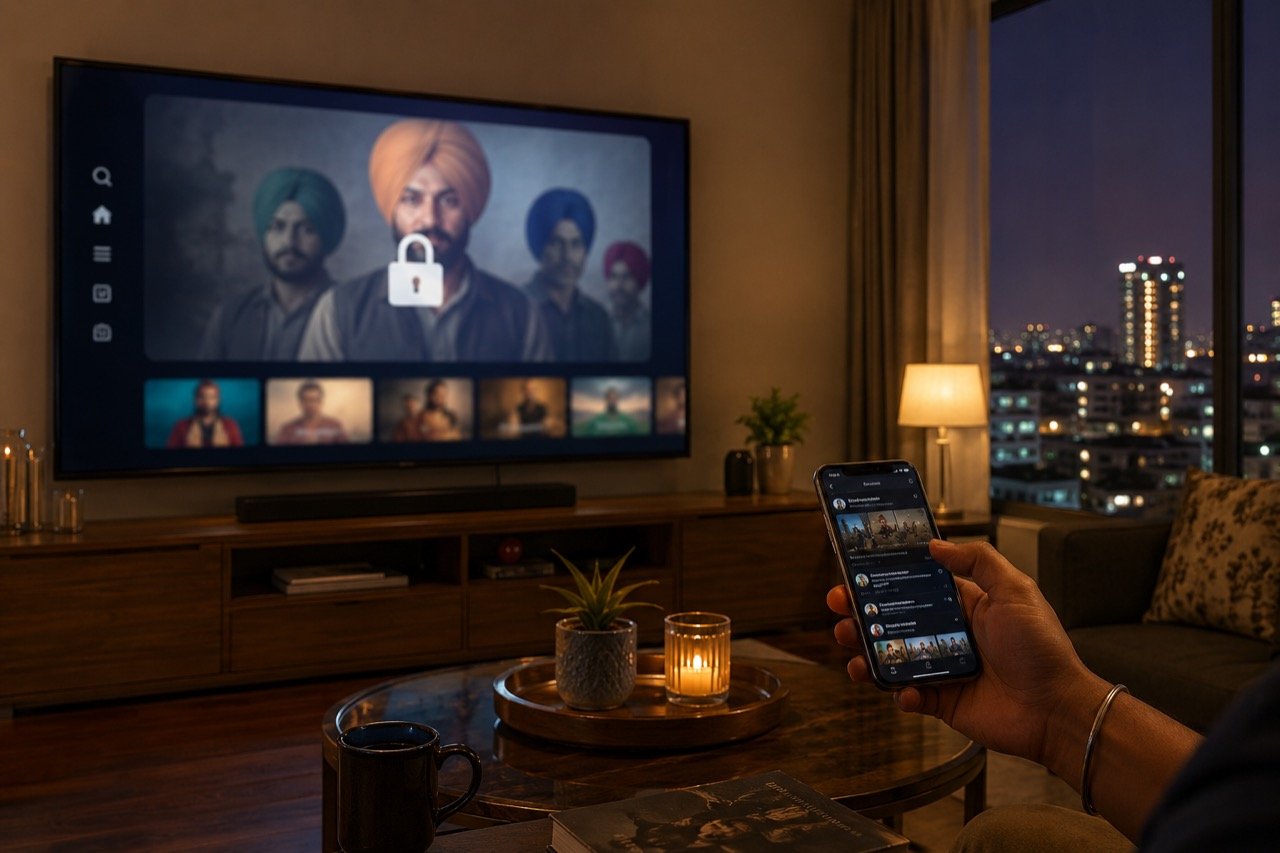
A late-evening pause on Satluj turned a streaming release into a national entertainment flashpoint on July 5. NDTV and Hindustan Times reported that ZEE5 said the Diljit Dosanjh-starrer would be unavailable in India, days after it had already reached viewers, leaving weekend audiences confused and pushing the title to the top of entertainment feeds. ZEE5's statement, as reported by entertainment outlets, thanked viewers for their response while confirming that availability in India had changed. Dosanjh's team and fan accounts quickly amplified the message that the film remains part of the conversation, particularly for audiences outside India, where it continues to stream.
A weekend release turns into a puzzle
For a title to go from a normal streaming premiere to a trending talking point within a matter of days is itself a story about how Indian audiences now consume entertainment news. Satluj had reached ZEE5 viewers and appeared to be settling into the familiar rhythm of a post-release week: reviews, opinions, social chatter, perhaps a modest bump from word of mouth. Instead, the platform's own statement interrupted that rhythm, and viewers who expected a straightforward viewing experience were instead met with an availability change they had not been told to anticipate. That gap between expectation and outcome is precisely what pushed Satluj to the top of entertainment feeds over the weekend, as people who could no longer find the film in India tried to work out why.
It is worth noting what ZEE5 actually said, and what it did not say. The statement, as reported by NDTV and Hindustan Times, thanked viewers for their response to the film and confirmed that its availability in India had changed. It did not, at least in what has been made public, spell out the operational or business reasoning behind that change. That combination, a warm acknowledgement of audience interest paired with a bare confirmation of removal, is an unusual one, and it is precisely the kind of gap that invites speculation rather than closing it down.
When a release becomes a rights story
This episode sits at the intersection of film publicity, digital rights and platform decision-making, three areas that used to operate mostly out of public view but increasingly collide in full sight of the audience. A theatrical release can be tracked through show counts and box office numbers, figures that are published, compared and debated in a fairly transparent way. A streaming title, by contrast, can change status almost instantly and without the same public paper trail, leaving viewers entirely dependent on platform notices, or the lack of them, to understand what has happened to something they were watching or planning to watch. Within hours of ZEE5's statement, search intent around Satluj shifted noticeably, moving away from reviews and opinion pieces and toward practical questions: where can it be watched now, and why has it become unavailable in India specifically.
That shift matters because it shows how quickly a content question becomes a rights question in the public mind, even when the underlying facts are not yet public. Audiences do not typically distinguish between a licensing dispute, a contractual window closing, a regulatory issue or a business decision by the platform. What they see is simply that a film they could watch yesterday is gone today, and the explanation offered is thin. In that vacuum, the story stops being about the film itself and becomes a story about the platform's handling of it.
What is confirmed, and what is not
It is important to be precise about what can actually be said with confidence here. The confirmed development is the availability change itself, along with ZEE5's statement and the social media activity connected to the film, including the amplification from Dosanjh's team and fan accounts emphasising that the film remains available and part of the conversation outside India. What remains unclear from public reporting is the full operational reasoning behind the India-specific pause. That distinction between the confirmed fact of removal and the unconfirmed reason for it matters a great deal, because streaming controversies of this kind tend to attract speculation far faster than they attract verified information. Absent a detailed explanation, audiences and commentators alike are left to fill in the blanks, and that filling-in process rarely favours calm, accurate assessment.
This is also why credible reporting from outlets such as NDTV and Hindustan Times, which have covered the statement as reported, plays such an outsized role in moments like this. In the absence of a fuller platform disclosure, these reports are effectively the only anchor point the public has, and they deserve to be treated as such rather than supplemented with unverified claims circulating on social media.
Stakeholders navigating a familiar bind
Each party involved has a different incentive in how this plays out. ZEE5, as the platform, has to balance subscriber trust against whatever commercial or contractual constraints prompted the change, and its brief, appreciative statement suggests an attempt to manage the moment without over-explaining it. Dosanjh's team, along with his fan base, has an obvious interest in keeping attention on the film rather than on the confusion surrounding its India availability, hence the swift emphasis on its continued streaming presence for audiences outside India. Ordinary viewers, meanwhile, are the party with the least information and the least control, left to track down official updates simply to understand whether the film they started watching, or wanted to watch, is still accessible to them at all.
This asymmetry, where the platform and talent side have more information and more say in how the story is framed, while the audience has neither, is a recurring feature of streaming controversies in India. It is one reason these episodes tend to generate disproportionate attention relative to the underlying facts.
The NE Times View
India's streaming market is no longer a quiet back end for films after their release; OTT premieres are now live public events, and Satluj proves it. When a prominent title vanishes without a clear explanation, the vacuum fills instantly with rumour, and platforms that stay vague pay for it in trust, even if the underlying reason turns out to be mundane. ZEE5 owes its subscribers transparent communication about why a title they were actively watching has been pulled from availability in India, not merely a note of thanks for their interest. Viewers, for their part, are best served by following official updates and credible reporting from established outlets rather than reposted claims of uncertain origin. Paradoxically, the pause may only enlarge Satluj's audience in the long run; few things make an Indian film more talked about than being suddenly hard to watch, and this weekend's confusion has arguably done more for the film's visibility than a smooth, uneventful release would have.
Key takeaways
- ZEE5 confirmed on July 5 that Satluj, starring Diljit Dosanjh, had become unavailable in India days after its release, as reported by NDTV and Hindustan Times.
- The platform's statement thanked viewers but did not detail the operational reasoning behind the India-specific pause, leaving a gap that speculation quickly filled.
- The film reportedly remains available to audiences outside India, a point Dosanjh's team and fan accounts moved quickly to highlight.
- The episode underscores how streaming availability changes now function as live public events and rights stories, unlike theatrical releases tracked through transparent box office data.
- Viewers are advised to rely on official platform updates and credible reporting rather than unverified social media claims until fuller details emerge.
You may also like to read
Diljit Dosanjh's Satluj: No Cuts Despite Punjab 95 Title Change
Diljit Dosanjh says Satluj reaches audiences without cuts despite its renaming from Punjab 95, as reported support from Jaswant Khalra's wife keeps the film's release debate in the headlines.
Satluj Leaves Viewers Emotional as Delayed Film Finally Streams
First reactions to the long-delayed Diljit Dosanjh and Arjun Rampal starrer Satluj have turned its uncut OTT release into a wider conversation about performance, Punjab's public memory and access to cinema.
Parimala And Co OTT Release: Jayaram Film Streams on ZEE5 July 10
The Jayaram and Urvashi mystery-comedy Parimala And Co gets a confirmed digital premiere on ZEE5 from July 10, giving Tamil audiences who missed the theatrical run a clear route to the film.
Satluj streams uncut at last, ending a three-year censor battle
Diljit Dosanjh's long-delayed drama about activist Jaswant Singh Khalra has finally premiered on streaming in its uncut form, reigniting debate over how India certifies politically sensitive cinema.
More from this section
More
72nd National Film Awards: Fans Back Mammootty, Allu Arjun, Sai Pallavi
Speculation around the 72nd National Film Awards is intensifying as fan communities across India's language film industries champion favourites including Mammootty, Allu Arjun and Sai Pallavi ahead of any official announcement.

Aamir Khan Marries Gauri Spratt in Private Pali Hill Ceremony
Aamir Khan and Gauri Spratt tied the knot at the actor's Pali Hill home in Mumbai on July 5, turning a deliberately small family ceremony into Bollywood's biggest story of the day.

Akanksha Chamola's Lock Upp 2 Confession Sets Reality TV Abuzz
A personal revelation by Akanksha Chamola ahead of Lock Upp 2 has handed the reality show a viral talking point, underlining how confession-driven formats continue to dominate Indian television conversation.