Mollywood Times OTT Release Streams in Four Dubbed Languages
The Malayalam film Mollywood Times premieres on streaming with Telugu, Tamil, Kannada and Hindi dubs from day one, signalling how OTT platforms are widening the national reach of Kerala's cinema.
Commentary & Analysis ·

Mollywood Times has entered its streaming phase with an unusually broad launch: the Malayalam film's OTT premiere arrives with Telugu, Tamil, Kannada and Hindi dubbed versions available from day one, according to reports from 123Telugu. What might have been a routine release update has become a story about how regional cinema now travels across India. On the surface, this is a scheduling detail — a film moving from theatres to a streaming platform with a handful of dubbed tracks attached. Underneath, it is a small but telling data point about how the economics and expectations of Indian film distribution have shifted, and about the position Malayalam cinema now occupies within that shifting landscape.
Access is the real headline
Malayalam cinema enjoys a strong national reputation for its writing, performances and grounded storytelling, yet theatrical distribution outside Kerala remains patchy. A film can earn critical acclaim and enthusiastic word of mouth within the state, only to reach audiences elsewhere in India months later, if at all, and usually without the promotional push that accompanies a wider release. Streaming platforms flatten that barrier in a way theatrical distribution structurally cannot. By offering dubbed versions and subtitles at launch, a film like Mollywood Times can reach viewers who do not track Malayalam releases week to week but are happy to sample them online, provided the friction of language is removed at the point of discovery rather than left for the viewer to solve themselves.
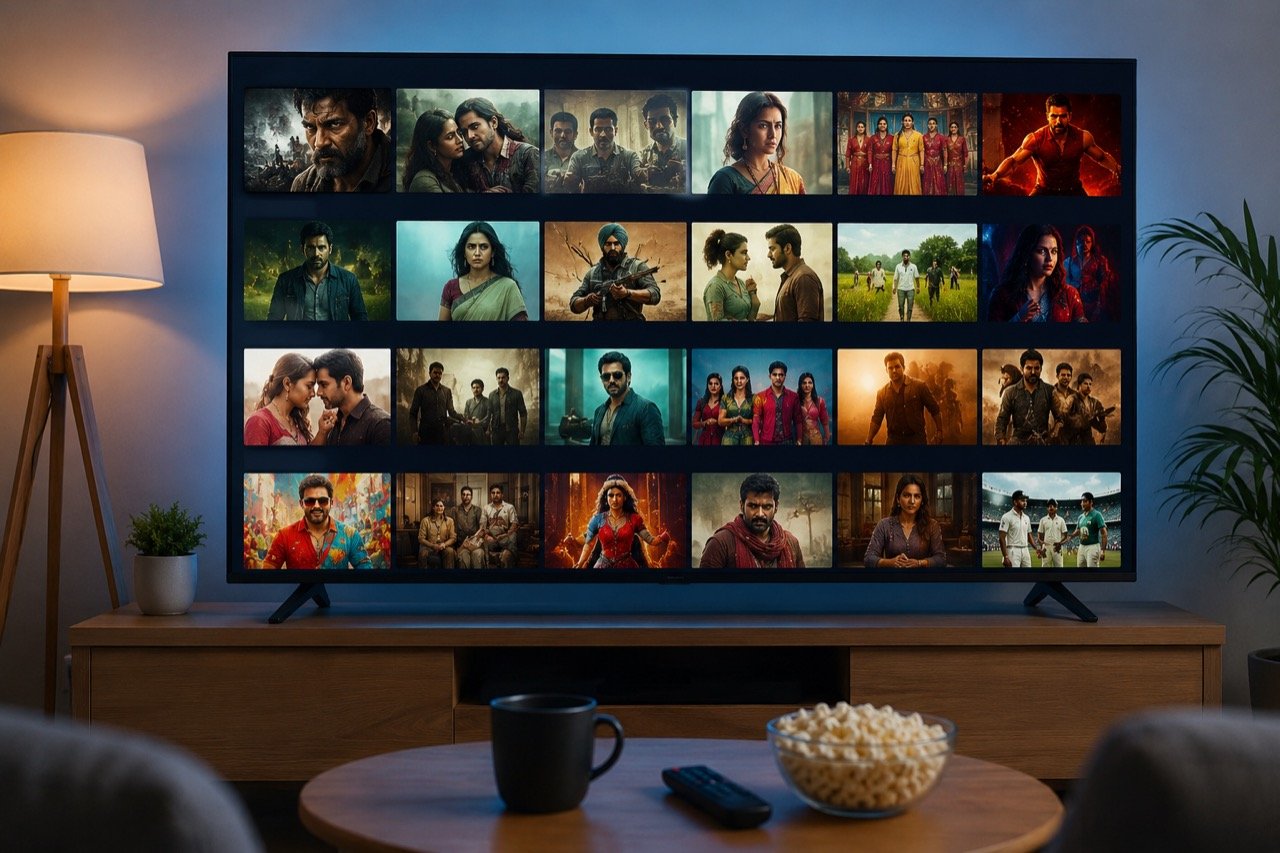
For audiences searching for the film, the practical questions are simple: when is it streaming, on which platform, and in which languages. The day-one multilingual rollout answers all three at once, and gives the title a better chance of standing out in a crowded platform interface, where a viewer scrolling through dozens of thumbnails typically decides within seconds whether a title is worth a click. A film that can be watched immediately in a viewer's preferred language removes the single biggest reason for that viewer to scroll past it.
Dubbing moves from afterthought to strategy
The release also reflects a wider industry calculation. Dubbing was once reserved for big-budget action spectacles, films whose scale and visual spectacle were assumed to travel regardless of dialogue, while smaller, dialogue-driven films were left to find niche audiences through subtitles alone or not at all. Streamers now apply dubbing to mid-scale dramas, comedies and genre films because discovery depends on reducing friction, not on matching the scale of the production. The logic is straightforward: if a viewer can watch a title in their preferred language with one click, the likelihood of sampling rises sharply, and sampling is the first and most important hurdle any content faces on a platform with near-limitless competing choices.
This represents a meaningful change in how streaming platforms think about regional content. Where dubbing budgets were once allocated selectively, based on a film's perceived crossover potential, the day-one, four-language rollout for Mollywood Times suggests platforms are increasingly treating multilingual access as a baseline expectation rather than a bonus feature reserved for a select few titles. That shift matters more than any single film's performance, because it changes the calculus for every regional production that follows.
What this means for the Malayalam industry
For the Malayalam industry, this is another marker of national circulation. Its stories are being packaged not only for home audiences in Kerala but for a pan-Indian streaming public, and Mollywood Times will now test whether that wider access converts curiosity into sustained viewing. This is not a small distinction. Access alone does not guarantee an audience; a film still needs to hold viewers once they press play, and much of the commentary around Malayalam cinema's national rise has rested on the assumption that its content is strong enough to do exactly that. A wide, simultaneous multilingual release is, in effect, a stress test of that assumption at scale.
It is also worth considering the position this places smaller regional industries in more broadly. If streaming platforms are willing to invest in four dubbed tracks for a mid-scale Malayalam title, the same logic should extend to strong titles from other regional industries that have historically struggled to travel beyond their home markets. Mollywood Times, in that sense, is not just a single release but a marker that can be pointed to when arguing for similar treatment elsewhere.
Stakeholder perspectives
From a platform's perspective, the calculation is about maximising the return on a single acquisition. Dubbing costs are a fraction of production costs, and a title that can be marketed to five language audiences instead of one offers a far better return on that investment, particularly for content acquired at a fixed licensing cost. From a filmmaker's perspective, day-one multilingual availability offers something theatrical release rarely could: a genuine chance for the work to be judged by audiences outside its home state on its own merits, rather than filtered through the delays and gaps of traditional distribution. From a viewer's perspective, the change is simpler still — more good cinema becomes reachable without requiring active effort to seek it out, whether that effort involves waiting for a delayed release, hunting for subtitled prints, or relying on piracy as a stopgap.
What to watch next
The immediate question is how the streaming numbers for Mollywood Times break down by language track once data becomes available, since that would offer the clearest signal of whether the dubbed versions are being watched in meaningful numbers or largely ignored in favour of the original. Beyond this single title, the pattern to watch is whether day-one multilingual dubbing becomes standard practice for mid-scale Malayalam releases generally, or remains reserved for titles a platform judges to have unusual crossover potential. If it becomes the norm rather than the exception, that would confirm a structural shift in how regional content is packaged for national audiences, rather than a one-off marketing decision tied to this particular film.
The NE Times View
The quiet significance of this release is that language is ceasing to be a gatekeeper in Indian entertainment. Day-one dubs turn every regional film into a potential national release, which rewards good storytelling over marketing muscle. For viewers, that means a deeper catalogue of quality cinema; for smaller industries, it means the audience ceiling is no longer set by geography. The films that benefit most will be exactly the kind Malayalam cinema specialises in — modest budgets, strong scripts, word-of-mouth appeal. If that thesis holds, Mollywood Times will be remembered less for its own box office or streaming performance and more as an early example of a distribution pattern that eventually became routine.
Key takeaways
- Mollywood Times launched on streaming with Telugu, Tamil, Kannada and Hindi dubbed versions available from day one, according to 123Telugu.
- Day-one multilingual dubbing reduces the friction that has historically limited Malayalam cinema's reach outside Kerala.
- Streaming platforms now apply dubbing to mid-scale films, not just big-budget spectacles, treating language access as central to discovery.
- The release tests whether wider access converts into sustained viewing, not just initial curiosity.
- If day-one multilingual rollouts become standard practice, they could reshape opportunities for other regional film industries beyond Malayalam cinema.
You may also like to read

Balti OTT Release: Shane Nigam's Malayalam Kabaddi Drama Hits Streaming
Balti, the Malayalam sports-crime drama starring Shane Nigam and Shanthanu Bhagyaraj, has confirmed its OTT release plan, giving the kabaddi-centred border-region story a second shot at finding its audience online.
OTT Releases July 3-10: Regional Films and Series Pack the Watchlist
The July 3-10 streaming window brings Hindi, Tamil, Telugu, Malayalam and Kannada titles together with international series across Netflix, JioHotstar, Apple TV Plus and ZEE5, creating one of the month's busiest watchlists.

JioHotstar bets big on the South: $444 million pledge to corner India's fastest-growing film market
The Reliance-Disney streaming giant plans to spend roughly 40 billion rupees over five years on Tamil, Telugu, Kannada and Malayalam content, a strategic tilt towards regions where viewers watch far longer and the box office increasingly outpaces Bollywood.

Kireedam Restored Re-Release: Mohanlal Classic Returns in July
Mohanlal's landmark film Kireedam is set to return to theatres in restored form this July, reinforcing India's growing appetite for classic cinema presented with upgraded picture and sound.
More from this section
More
72nd National Film Awards: Fans Back Mammootty, Allu Arjun, Sai Pallavi
Speculation around the 72nd National Film Awards is intensifying as fan communities across India's language film industries champion favourites including Mammootty, Allu Arjun and Sai Pallavi ahead of any official announcement.

Aamir Khan Marries Gauri Spratt in Private Pali Hill Ceremony
Aamir Khan and Gauri Spratt tied the knot at the actor's Pali Hill home in Mumbai on July 5, turning a deliberately small family ceremony into Bollywood's biggest story of the day.

Akanksha Chamola's Lock Upp 2 Confession Sets Reality TV Abuzz
A personal revelation by Akanksha Chamola ahead of Lock Upp 2 has handed the reality show a viral talking point, underlining how confession-driven formats continue to dominate Indian television conversation.