DFP 2026 Unveiled: Rajnath Singh Moves to Fast-Track Defence R&D
Defence Minister Rajnath Singh has released the Defence Framework Procedure 2026, a revised procurement framework meant to push research and development outputs into the armed forces faster and deepen ties with industry and academia.
Commentary & Analysis ·
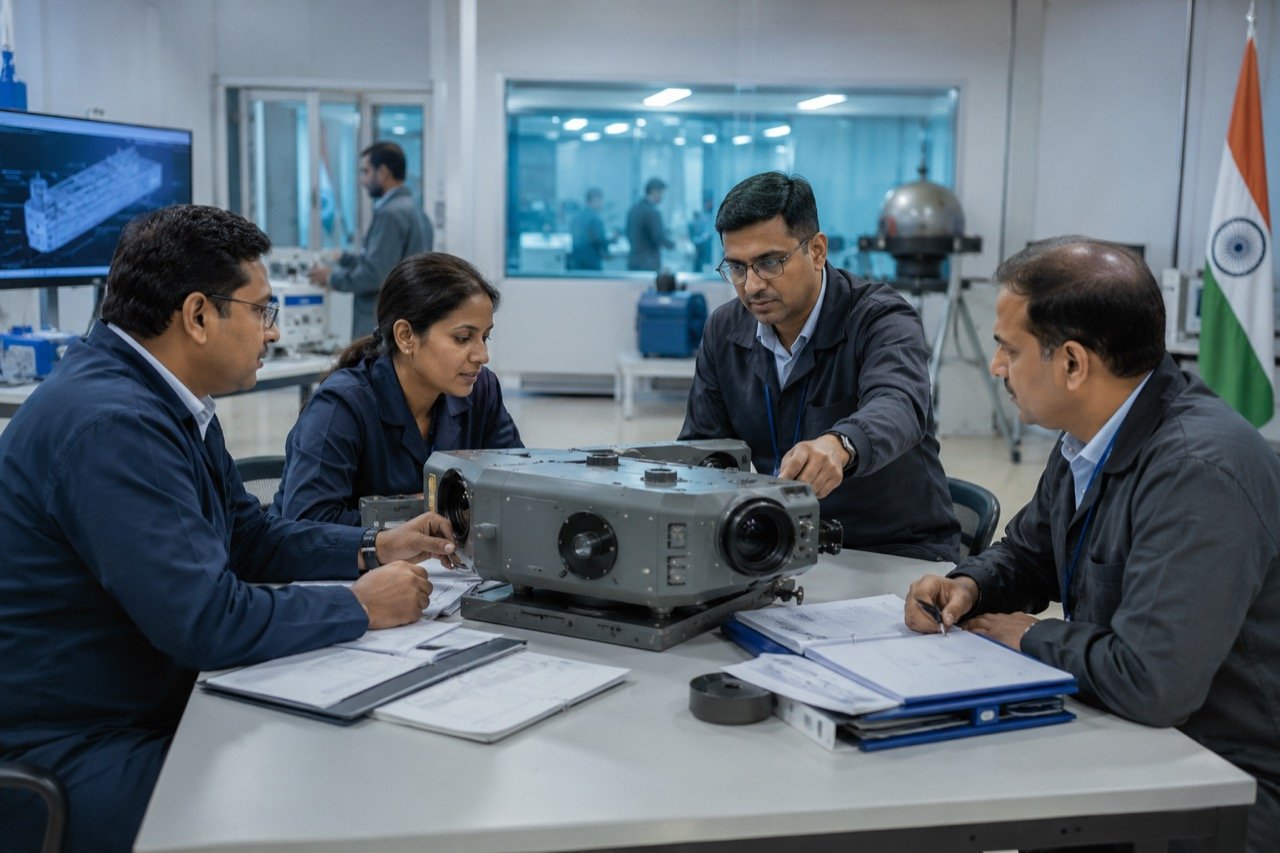
Defence Minister Rajnath Singh has released the Defence Framework Procedure 2026, a revised framework designed to accelerate the journey of research and development outputs into India's armed forces. The Defence Ministry has pitched DFP 2026 as a tool to improve efficiency, empower decision-making and strengthen collaboration with industry and academia. On the surface, this reads as another administrative circular in a long line of procurement reforms. But the timing and framing suggest the ministry sees this as more than housekeeping — it is an attempt to address a problem that has dogged India's defence establishment for decades: the gap between what its scientists and engineers can build and what actually reaches a soldier, sailor or airman in the field.
The gap DFP 2026 is meant to close
The significance of the new procedure lies precisely in the gap it targets. India runs a large defence research ecosystem, spanning government laboratories, private industry and academic institutions, yet promising technologies routinely stall on the road from laboratory to field. This is not a new observation, but it remains a stubborn one. Procurement rules, long approval chains and patchy coordination between researchers, industry partners and the services often decide whether a system reaches soldiers in time — or at all. A prototype that performs well in trials can spend years awaiting the paperwork, budgetary sign-offs and inter-departmental clearances needed before it is inducted into service. In a security environment where technology cycles move quickly and adversaries are not standing still, that lag is not a mere inconvenience. It is a strategic cost, measured in capabilities that arrive late or not at all.
By revising the framework governing how research outputs move through the system, the ministry appears to be targeting the connective tissue of the process rather than any single technology or programme. That is a sensible place to intervene, because the problem has rarely been a shortage of ideas or scientific talent. It has been the machinery around those ideas — the approvals, the handoffs between agencies, the absence of clear timelines — that has slowed things down.
Part of the self-reliance push
DFP 2026 is positioned squarely within the Aatmanirbhar Bharat agenda, the broader government push toward self-reliance in defence production. The framework is not merely about buying equipment faster; it is about building domestic technological capacity. This distinction matters. A procurement system geared only towards speed could simply favour established foreign suppliers with off-the-shelf products. A procurement system geared towards self-reliance, by contrast, has to make space for the slower, riskier process of taking an indigenous idea from concept to field-ready system, and doing so in a way that gives domestic developers confidence to invest their own time and capital.
Done well, quicker R&D procurement lets Indian companies and academic institutions engage with defence users earlier and with more predictability, rather than waiting years for requirements to crystallise. That predictability is itself valuable. Start-ups and smaller firms, in particular, often cannot afford to sink resources into a defence project without some assurance that a viable outcome will be adopted within a reasonable timeframe. Universities and public research institutions face a related problem: research that never translates into deployed capability struggles to justify continued funding and attention, even when the underlying science is sound. A framework that shortens and clarifies the path from R&D to induction could, in principle, make defence-oriented research a more attractive proposition for a wider range of Indian institutions, not just the large public-sector defence undertakings that have traditionally dominated the space.
What the framework changes, and what it cannot change
A framework of this kind operates mainly on process — who approves what, in what sequence, and under what authority. DFP 2026, as described by the ministry, is meant to improve efficiency, empower decision-making and strengthen collaboration between the services, industry and academia. Those are the right levers to pull if the underlying complaint is that decisions take too long to reach and too many parties have to sign off before anything moves forward. Clearer decision-making authority can shorten the chain of approvals. Better mechanisms for collaboration can reduce the number of times a project has to be re-explained or re-justified to a different set of stakeholders as it moves from one stage to the next.
Execution, however, is the hard part. A framework can create authority and process clarity, but outcomes hinge on budgets, timelines, accountability and how sharply the services define their needs. If the armed forces themselves are slow or vague in specifying what they require, no amount of procedural streamlining elsewhere in the pipeline will compensate. Similarly, if the budgetary allocations needed to carry a promising prototype through trials and into production are not available or are subject to their own delays, the framework's efficiencies will be absorbed elsewhere in the system rather than translated into faster fielding.
Defence innovation also carries inherent risk: not every prototype becomes a deployable system. This is true of research and development in any field, but it carries particular weight in defence, where public money is involved and failures can be politically and institutionally uncomfortable to acknowledge. A sound procurement regime has to leave room for experimentation without diluting oversight of public money. That balance — encouraging risk-taking in research while maintaining accountability for how funds are spent — is difficult to strike through a written procedure alone. It depends on how the framework is actually applied by the officials and committees who administer it.
Stakeholders with a stake in the outcome
Several groups will be watching how DFP 2026 plays out in practice. The armed forces need capabilities that arrive in time to be relevant, and any procedure that shortens the R&D-to-induction timeline is, in principle, in their direct interest. Indian industry, particularly newer and smaller defence-technology firms, stands to benefit from a more predictable pipeline that reduces the risk of investing in a system that never finds its way to procurement. Public research institutions and universities have an interest in seeing their work translate into fielded outcomes, both for its own sake and to justify continued investment in defence-oriented research. And the Ministry of Defence itself has a political and institutional interest in being able to point to concrete results from a self-reliance agenda that has now been in place for several years and is increasingly expected to show returns.
These interests are not automatically aligned. A framework that speeds up decisions for the services might, for instance, create pressure on smaller industry partners or research labs to move faster than their capacity allows, particularly if funding and support do not keep pace with tightened timelines. Conversely, a framework that is generous to industry and academia in terms of engagement and predictability could be seen by some within the services as diluting the rigour with which requirements are tested before commitment. Managing these tensions well, rather than simply publishing a new procedure, will determine whether DFP 2026 achieves what it sets out to do.
The NE Times View
India has no shortage of procurement reforms on paper — what it lacks is proof that they change timelines on the ground. DFP 2026 will earn its keep only if a start-up or DRDO lab can point, two years from now, to a system that reached a forward unit measurably faster because of it. The government should commit to publishing induction timelines under the new procedure so progress can be audited, not asserted. For a country facing two difficult borders, the distance between a successful trial and a fielded capability is a strategic variable, and shrinking it matters more than any launch event.
The test for DFP 2026, then, is not whether it reads well as a policy document, but whether it produces a measurable change in behaviour across the defence research ecosystem. That means faster movement of specific projects through specific stages, clearer accountability when timelines slip, and transparency that allows outside observers — not just the ministry itself — to judge whether the framework is working. Absent that kind of evidence, DFP 2026 risks joining a long list of well-intentioned reforms whose actual effect on India's defence-readiness timelines remains, at best, unclear.
Key takeaways
- DFP 2026 is a revised procedure aimed at speeding the movement of defence R&D outputs into the armed forces, addressing a long-standing gap between laboratory success and fielded capability.
- The framework sits within the Aatmanirbhar Bharat self-reliance agenda, aiming to give Indian industry and academic institutions earlier and more predictable engagement with defence requirements.
- Success depends on execution factors beyond the procedure itself, including budgets, timelines, accountability and how clearly the services define their needs.
- Defence R&D inherently carries risk, and the framework must balance space for experimentation against oversight of public funds.
- The real test will be measurable: whether specific projects reach forward units faster, with induction timelines published and open to audit rather than simply asserted.
You may also like to read

DAC Clears Rs 52,000 Crore Push for India's Defence Modernisation
The Defence Acquisition Council has approved procurement proposals worth over Rs 52,000 crore, signalling sustained investment in aircraft, radar and capability upgrades across India's armed forces.

Defence Ministry overhauls spending rules, doubles financial powers of military commanders
The new Delegation of Financial Powers to Defence Services framework, in force from 8 June, lets field commanders clear urgent purchases worth more than Rs 1.25 lakh crore through the revenue route.

BJP MLA Raju Singh Jailed Four Years Over Celebratory Firing Death
A Delhi court has sentenced BJP legislator Raju Singh to four years in prison after holding him responsible for a fatal bullet fired in celebration, renewing focus on reckless gun use at private events.

Delhi Child Murder Case Puts Footpath Safety and Fast Policing Under Scrutiny
The killing of a 10-year-old girl sleeping on a Delhi footpath, with an arrest made within hours, has forced hard questions about pavement dwellers, night-time safety and the speed of missing-child response.
More from this section
More
AICTE Industry Fellowship 2026: Rs 1.5 Lakh Scheme Closes July 5
The AICTE Industry Fellowship Programme 2026, which places technical-education faculty inside leading companies on a Rs 1.5 lakh monthly stipend, reached its application deadline on July 5.
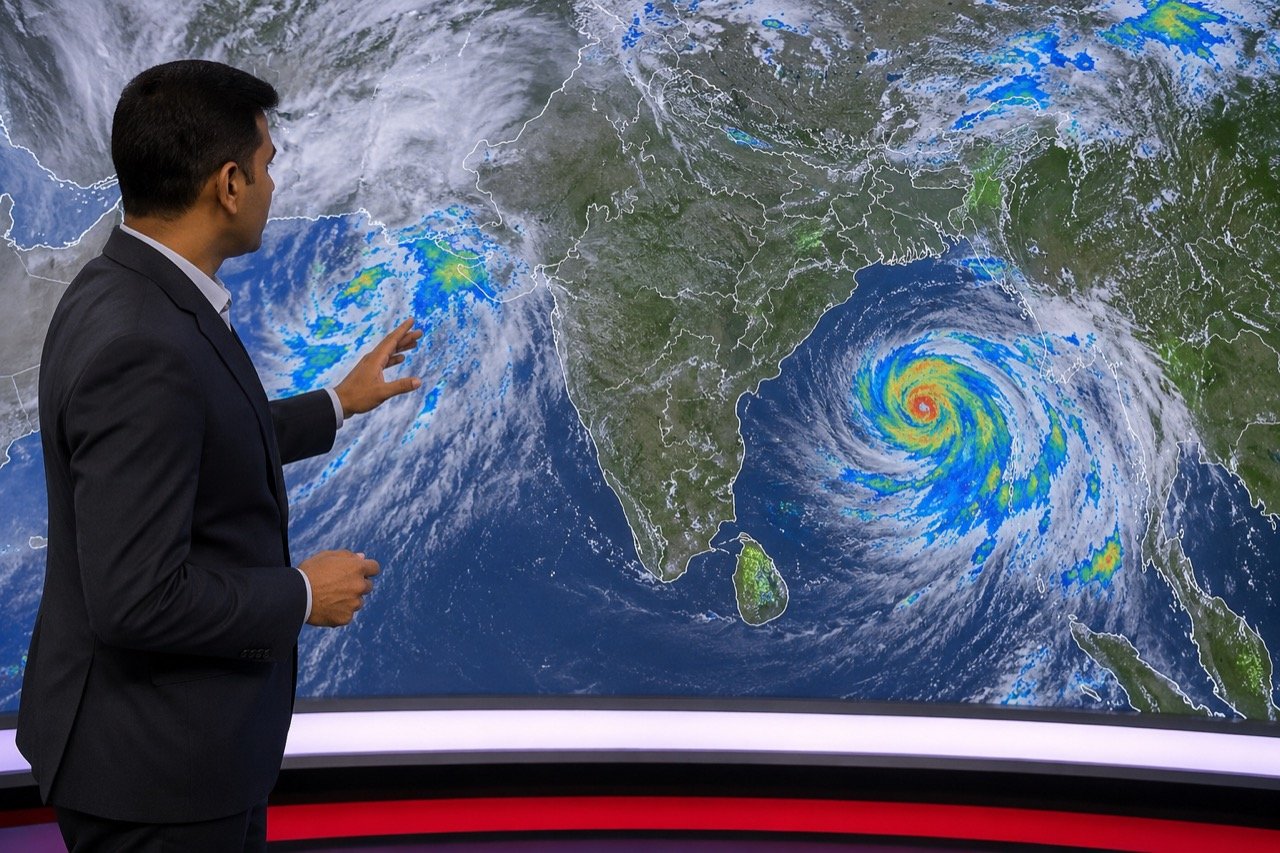
Bay of Bengal Low Pressure System Revives Monsoon Over Western India
A low-pressure system over the Bay of Bengal has pushed the monsoon back into an active phase, bringing steady heavy rain to Kerala, coastal Karnataka and Maharashtra, and putting Mumbai and Pune on preparedness watch.
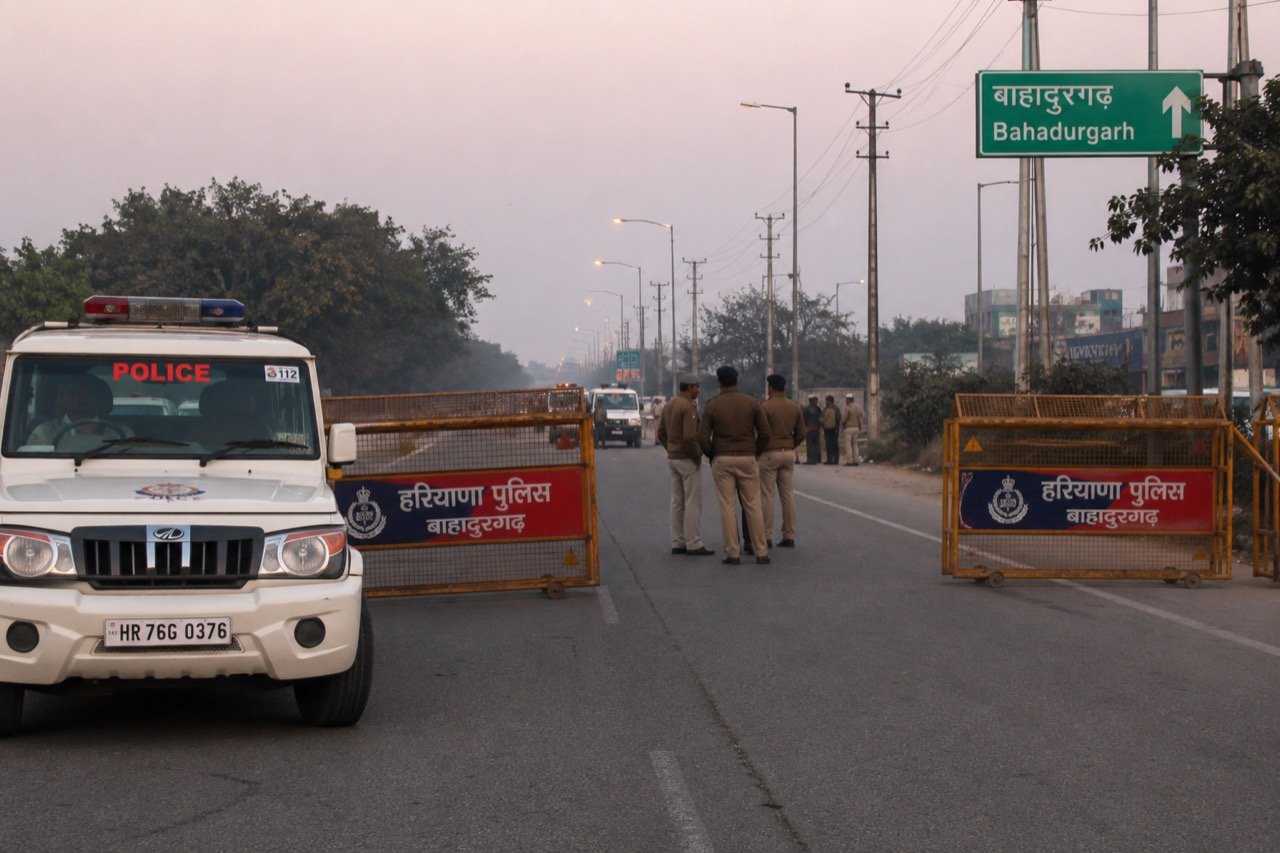
Bishnoi Gang Suspects Injured in Haryana Encounter as Police Tighten Net
A joint Haryana-Delhi Police operation in Bahadurgarh left two suspected Lawrence Bishnoi gang members injured, spotlighting the multi-state coordination now central to India's fight against organised crime networks.