BJP MLA Raju Singh Jailed Four Years Over Celebratory Firing Death
A Delhi court has sentenced BJP legislator Raju Singh to four years in prison after holding him responsible for a fatal bullet fired in celebration, renewing focus on reckless gun use at private events.
Commentary & Analysis ·
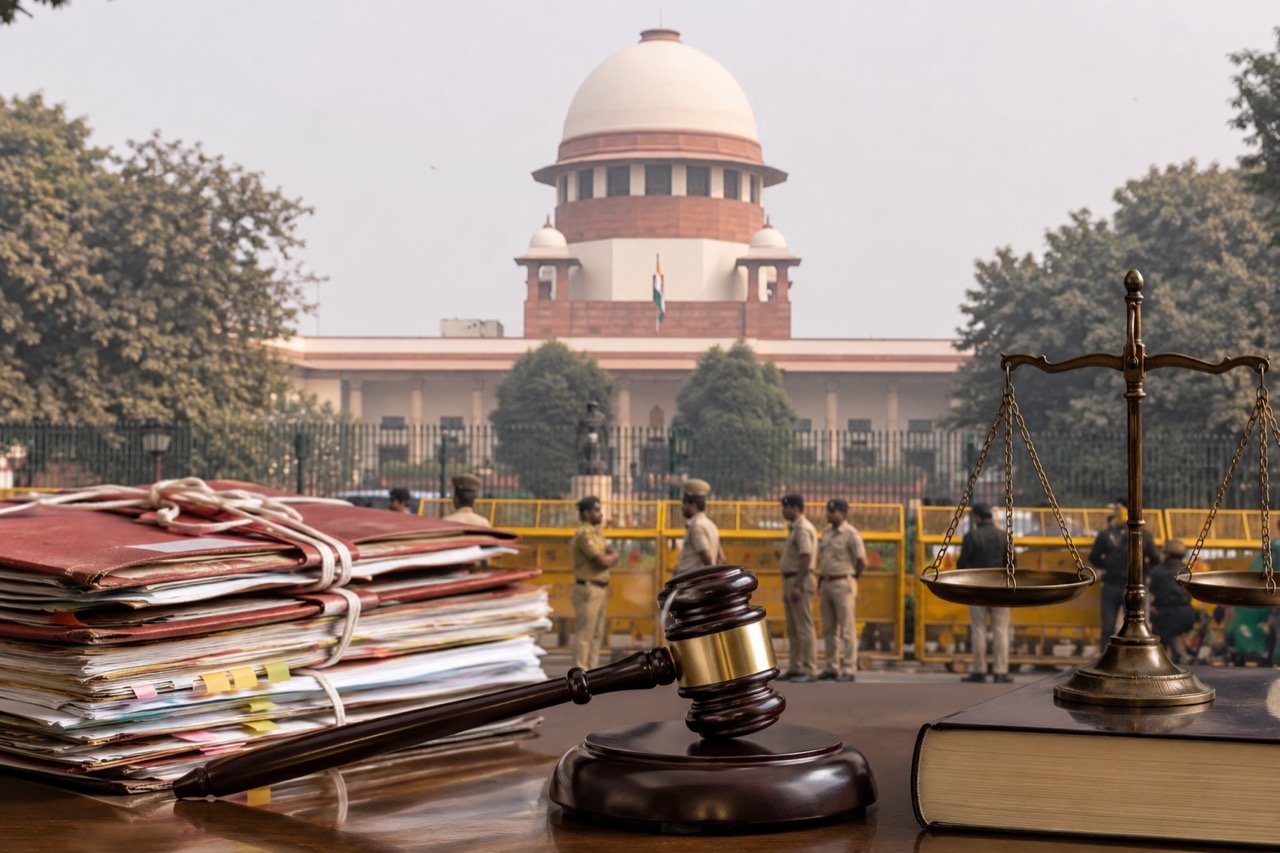
A Delhi court has sentenced BJP MLA Raju Singh to four years in jail in a celebratory firing death case, holding him responsible for the fatal bullet that killed the victim. The verdict has renewed attention on the legal consequences of reckless gun use at private gatherings. Celebratory firing is often socially framed as bravado or festivity at weddings and parties, but the law treats its consequences with full seriousness when injury or death follows. The court's finding underlines that a moment of showmanship can carry criminal liability lasting years.
What makes this case notable is not merely the act itself but the identity of the man now bearing its consequences. Raju Singh was a sitting legislator of the ruling party at the time of the incident, a status that in many parts of India confers a measure of informal immunity from the ordinary machinery of law enforcement. That the case proceeded to trial, resulted in a finding of responsibility, and culminated in an actual custodial sentence of four years is itself the story. Cases involving powerful or politically connected individuals frequently stall at earlier stages — investigations that lose momentum, witnesses who turn hostile, or prosecutions that drag on for years without resolution. Here, the process ran its course to a definitive judicial conclusion.
Accountability does not stop at public office
The central issue in the case is accountability. Holding elected office does not place a person outside the criminal process, and the private nature of an event does not dilute the duty to avoid endangering others. The sentencing of a sitting legislator sends that message unambiguously. For ordinary citizens who have long suspected that rank and political connection buy a different, softer version of justice, a verdict of this kind offers a data point to the contrary — however modest a single case may be against the scale of the wider problem.
It is worth pausing on why celebratory firing continues at all, given that its dangers are well known. In many communities, particularly at weddings, victory celebrations and other festive occasions, firing a weapon into the air has become a symbol of status, joy or bravado. Guests and hosts alike may see it as a customary flourish rather than a criminal act, and law enforcement in some regions has historically treated it with a degree of tolerance verging on indifference. This social normalisation is precisely what makes such cases important: a bullet fired upward does not disappear, and physics guarantees it must come down somewhere, at speed, with no way to control where. The victim in this case bore the cost of that basic and entirely foreseeable danger.
A recurring and preventable pattern
The case also carries a clear public-safety dimension. India has repeatedly recorded deaths and injuries linked to firing at weddings and celebrations — incidents that unfold in seconds but leave legal and human consequences that endure for years. Each such tragedy tends to generate a short burst of public attention, occasional calls for stricter licensing enforcement, and then recedes from the news cycle until the next incident occurs. The pattern suggests that isolated prosecutions, however significant individually, have not yet produced the systemic behavioural change that would prevent recurrence.
This is where the political dimension of the present case becomes relevant beyond the individual verdict. A conviction of a ruling-party legislator is likely to be read differently depending on one's vantage point. Supporters of accountability and the rule of law will point to it as evidence that no one is above the law. Critics of the party may ask whether the case would have proceeded as it did had the MLA not already faced sufficient public or media pressure. Opposition parties may seek to use the episode to question the ruling party's broader record on law and order, or on holding its own members to account. None of these readings change the underlying facts established by the court, but they will shape how the verdict is discussed in public and political forums in the days ahead.
The limits of deterrence through sentencing alone
Responsible coverage of such verdicts focuses on deterrence, victim impact and lawful firearm handling rather than sensationalism. It is tempting to treat a single high-profile conviction as a turning point, but deterrence works best when it is consistent, visible and applied irrespective of who is involved. A four-year sentence for one legislator, however well-publicised, will not by itself dismantle a culture of celebratory gunfire that spans weddings, election victories and sporting occasions across the country. What it can do is add one more data point to the calculation that anyone considering firing a weapon in celebration must now make: that the law will, at least sometimes, follow through to conviction and imprisonment, regardless of political standing.
While appeal options may follow, the immediate news is the sentence itself and the court's finding of responsibility. It is standard practice in the Indian legal system for a convicted person, particularly one with the resources and legal access that come with elected office, to challenge a trial court verdict in a higher court. Should an appeal be filed, the sentence could be stayed, modified or upheld depending on the outcome of that process. For now, however, the finding stands as delivered, and it is that finding — not any hypothetical future appeal — that carries the immediate weight of legal and public consequence.
Why this case should matter beyond the headline
The broader lesson is straightforward: celebratory firing is not a harmless tradition but a dangerous act with potentially criminal outcomes. For families planning weddings, for organisers of victory processions, and for anyone who has grown up regarding a few shots fired into the air as an acceptable expression of joy, this verdict is a reminder that the law draws no such exception. The victim in this case did not attend the gathering expecting to be killed by a stray celebratory bullet, and it is that basic, unpredictable danger that the court's sentence seeks to address. A weapon discharged in celebration carries the same lethal potential as one discharged in anger or in crime; the intention behind the trigger pull does not change the physics of the bullet's path.
The NE Times View
This verdict matters because it attaches a real cost to a practice too often indulged as culture. When a legislator is jailed for a celebratory shot that killed, the deterrent signal reaches every wedding hall and victory procession in the country. But sentencing alone will not end the practice; states need consistent licence revocations, event-level enforcement and public campaigns that treat gunfire at celebrations as the crime it is. Enforcement cannot rest solely on the rare case that reaches trial and results in conviction — it must extend to the everyday policing of licensed firearms at large gatherings, proactive surveillance around weddings and public celebrations known to carry this risk, and swift, visible consequences for violations that do not require a death to trigger action.
The true measure of this judgment will be whether the next family tempted to fire into the air remembers it — and puts the weapon down. Verdicts of this kind are, in the end, only as effective as the memory and the fear they instil. If the case fades from public consciousness within weeks, as so many similar tragedies have before it, its deterrent value will have been squandered. If, instead, it becomes a reference point invoked whenever celebratory firing is proposed or attempted, the four years handed down to Raju Singh will have achieved something more lasting than a single conviction — a shift, however incremental, in how Indian society treats a dangerous habit it has too long excused as festive custom.
Key takeaways
- A Delhi court sentenced BJP MLA Raju Singh to four years in jail after finding him responsible for a fatal celebratory firing incident.
- The verdict reinforces that elected office and private gatherings offer no shield from criminal liability for reckless gun use.
- Celebratory firing remains a recurring cause of death and injury at Indian weddings and celebrations despite being well understood as dangerous.
- An appeal may follow, but the trial court's finding of responsibility and the sentence itself stand as the immediate legal outcome.
- Lasting deterrence will depend on consistent enforcement — licence revocations, event-level policing and public awareness — not on isolated convictions alone.
You may also like to read
NRI Marriage Registration Proposal Enters Madhya Pradesh UCC Debate
A BJP submission to Madhya Pradesh's Uniform Civil Code committee proposes registering NRI marriages within a week and linking them to passports, aiming to curb abandonment in cross-border unions.
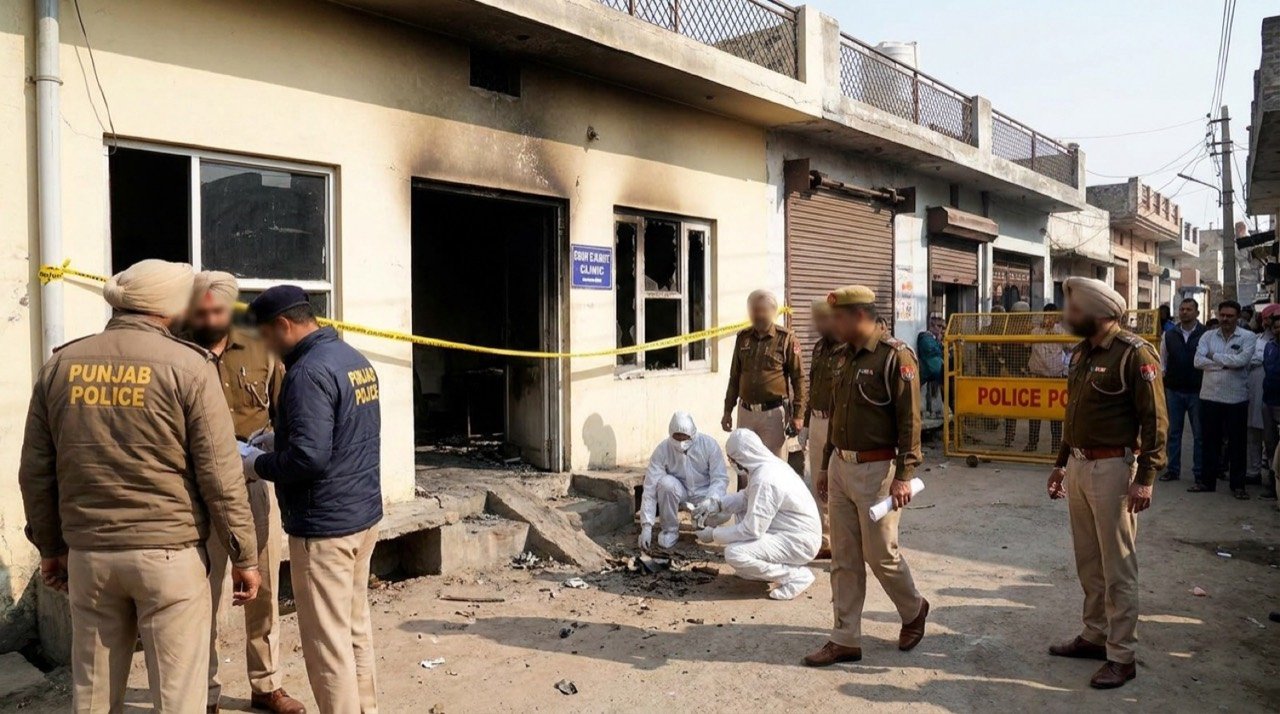
Bathinda Clinic Petrol Bomb Attack Triggers Police Probe and Safety Concerns
A petrol bomb was allegedly hurled at a clinic linked to a BJP leader in Bathinda, prompting a police investigation and fresh worry over targeted intimidation in Punjab's local politics.
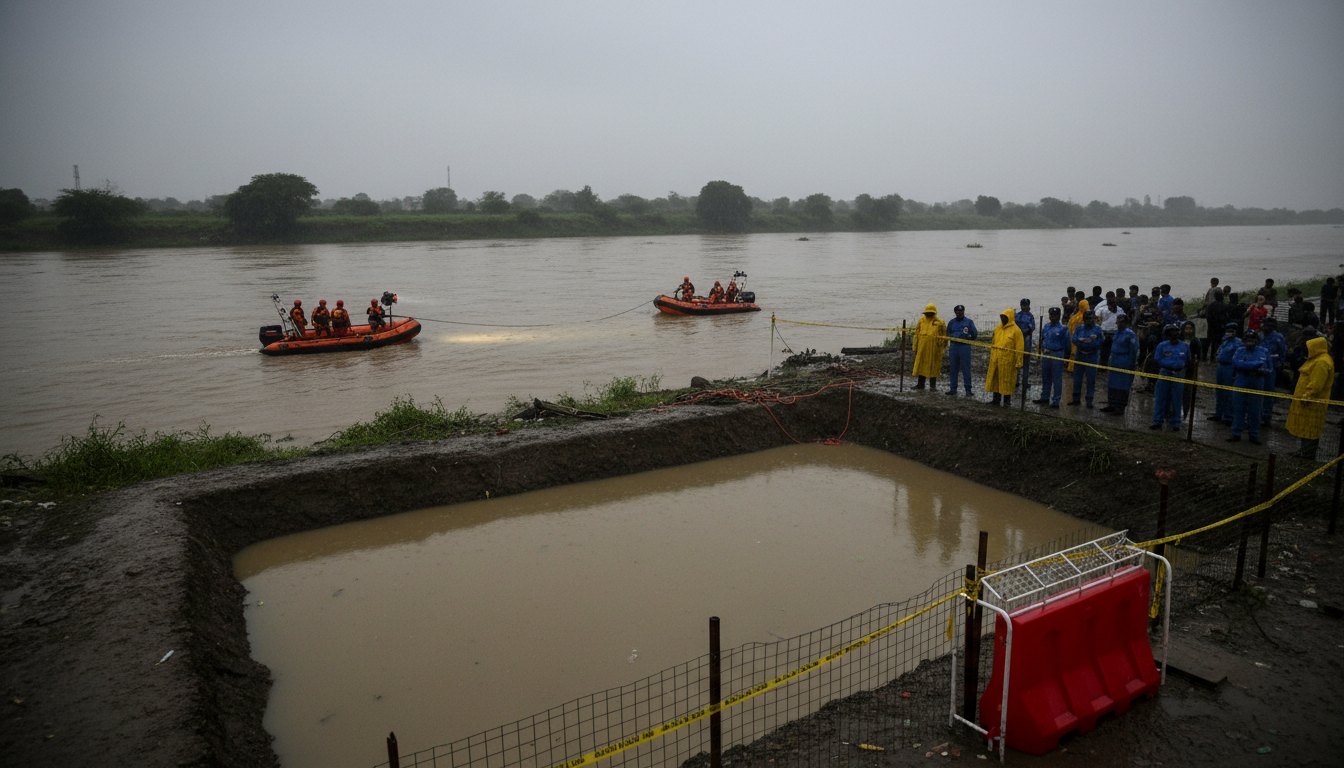
Delhi Monsoon Tragedy: Two Children Drown in Rain-Filled Pit as Search Continues for Four Missing in Yamuna
Separate incidents in Outer North Delhi show how ordinary neighbourhood spaces and riverbanks can turn lethal during the monsoon.
Delhi Weather: Warmest July Day in Two Years, Orange Rain Alert Next
Delhi's maximum temperature climbed to 38.6 degrees Celsius on Sunday, its warmest July day in two years, even as the IMD issued an orange alert for moderate rain on Monday.
More from this section
More
AICTE Industry Fellowship 2026: Rs 1.5 Lakh Scheme Closes July 5
The AICTE Industry Fellowship Programme 2026, which places technical-education faculty inside leading companies on a Rs 1.5 lakh monthly stipend, reached its application deadline on July 5.
Bay of Bengal Low Pressure System Revives Monsoon Over Western India
A low-pressure system over the Bay of Bengal has pushed the monsoon back into an active phase, bringing steady heavy rain to Kerala, coastal Karnataka and Maharashtra, and putting Mumbai and Pune on preparedness watch.
Bishnoi Gang Suspects Injured in Haryana Encounter as Police Tighten Net
A joint Haryana-Delhi Police operation in Bahadurgarh left two suspected Lawrence Bishnoi gang members injured, spotlighting the multi-state coordination now central to India's fight against organised crime networks.