DAC Clears Rs 52,000 Crore Push for India's Defence Modernisation
The Defence Acquisition Council has approved procurement proposals worth over Rs 52,000 crore, signalling sustained investment in aircraft, radar and capability upgrades across India's armed forces.
Commentary & Analysis ·
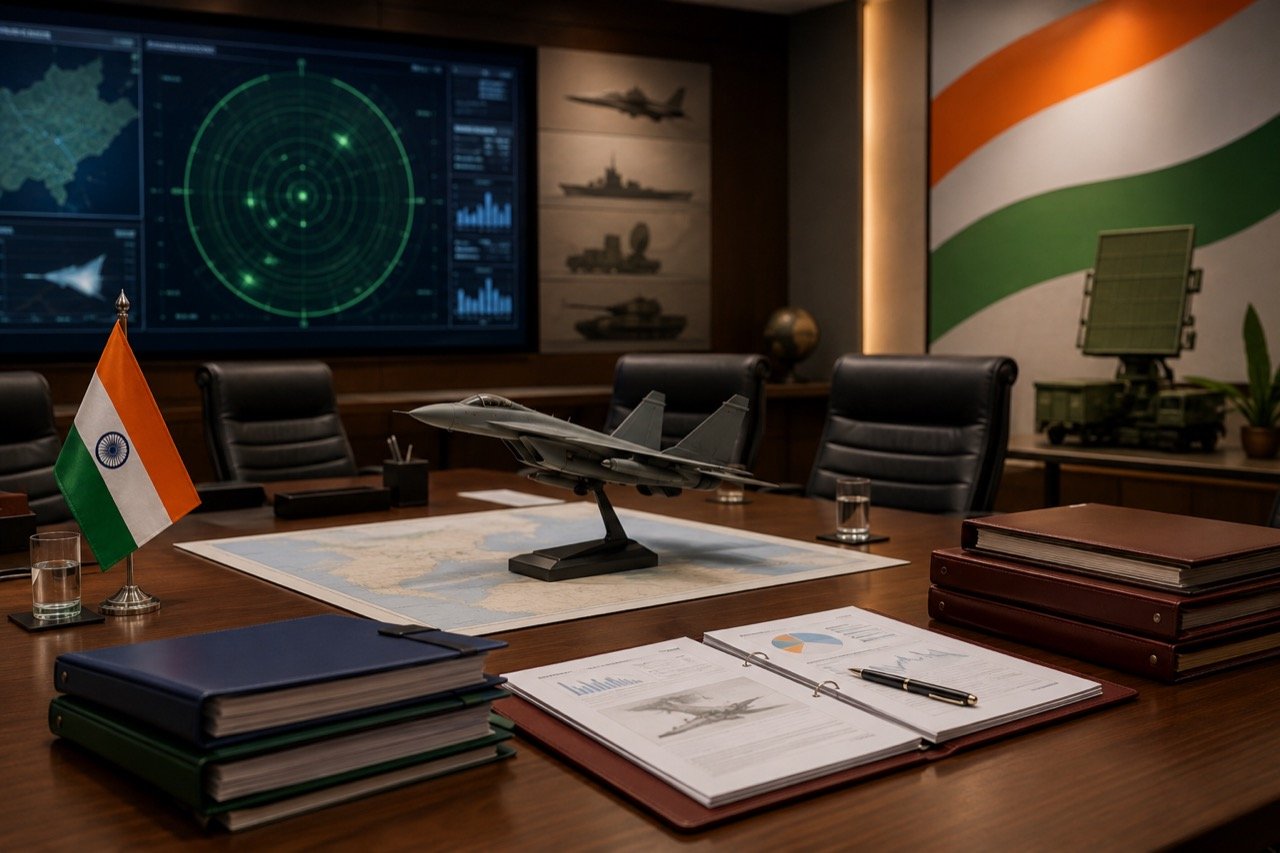
India's Defence Acquisition Council has cleared procurement proposals worth more than Rs 52,000 crore, putting aircraft, radar systems and broader military modernisation back at the centre of the national security conversation. The scale of the tranche alone guarantees headlines, but the more consequential story lies in what such a clearance actually represents within India's defence establishment, and in the long, uneven journey between a paper approval and a functioning platform in service. DAC approvals mark an early but pivotal stage in the acquisition pipeline, flagging priority areas for both the armed forces and the defence industry, and signalling where the government intends to direct capital over the coming years.
What the DAC approval actually means
It is worth being precise about what has happened here, because the language of "clearance" is often conflated with delivery. The Defence Acquisition Council sits at the apex of India's procurement architecture, and its role is to accord what is known as Acceptance of Necessity, the formal recognition that a capability gap exists and that the armed forces should proceed to acquire a solution. This is a gatekeeping function, not a purchasing one. Approval of proposals worth Rs 52,000 crore therefore means that the government has agreed these are legitimate, funded priorities worth pursuing, spanning aircraft, radar systems and other modernisation requirements. It does not mean contracts have been signed, vendors selected, or equipment ordered. That distinction matters enormously for how the public and the defence industry should read this news.
Approval is the start, not the finish
Defence procurement is a long and complex road. A DAC clearance does not mean immediate deliveries; it begins or advances a process that typically runs through tendering, negotiations, field trials and final contracting. Each of those stages carries its own timeline and its own risks. Tendering requires drafting detailed technical specifications that satisfy the services without narrowing the field to a single favoured vendor. Negotiations, particularly on big-ticket platforms, can stretch for years as price, technology transfer terms and offset obligations are hammered out. Field trials, especially for aircraft and sensor systems, must be conducted across varied terrain and climate conditions to validate performance claims, and any shortfall can send a programme back to the drawing board. Only once all of this is settled does final contracting occur, at which point the clock on actual delivery timelines truly starts. Each stage must balance operational needs against cost, technology transfer, domestic manufacturing requirements and timelines, and it is not unusual for years to elapse between an Acceptance of Necessity and a signed contract, let alone a delivered platform.
The industrial stakes
The industrial angle is as significant as the military one. When domestic firms are involved, procurement decisions of this scale directly support Make in India and Atmanirbhar Bharat goals, deepening India's defence manufacturing base rather than simply funnelling capital abroad. For Indian defence manufacturers, both public sector undertakings and private players who have invested in building capacity over the past decade, a tranche of this size represents a meaningful order book opportunity, provided the proposals translate into contracts that specify genuine domestic production rather than nominal assembly of imported kits. These decisions also shape the calculations of global suppliers seeking Indian partnerships and co-production arrangements. Foreign original equipment manufacturers watching the Indian market closely will be assessing whether this tranche favours joint ventures, licensed production, or outright import, since that determines whether they need an Indian industrial partner at all and on what terms.
The wider strategic logic
The strategic logic behind sustained approvals of this kind is straightforward: India faces a demanding security environment on multiple fronts and requires sustained, predictable modernisation rather than episodic bursts of spending followed by long fallow periods. Aircraft and radar systems in particular speak to persistent gaps in air power projection and airspace surveillance that have been flagged repeatedly by defence planners. The latest approvals are one more data point on that long-term defence spending trajectory, reinforcing a pattern in which the DAC periodically clears large tranches to keep the acquisition pipeline populated, even as the harder work of contracting proceeds more slowly in the background. For observers tracking India's defence posture, the significance is less in any single clearance and more in the cumulative trend of how much capability is being queued up for eventual induction.
The NE Times View
Headline numbers from the DAC are easy to celebrate and easy to misread. India's real procurement problem has rarely been approvals, it has been the years that elapse between clearance and contract, during which costs rise and operational gaps persist. Inflation alone can erode the purchasing power of an approved sum by the time a contract is finally inked, forcing renegotiation or scope reduction. Meanwhile, the operational shortfall that justified the Acceptance of Necessity in the first place does not pause to wait for paperwork; squadrons age, radar coverage gaps remain, and adversary capabilities continue to evolve. The measure of this Rs 52,000 crore tranche will be conversion speed, how quickly these proposals become signed deals and delivered platforms, rather than how large the number sounds today.
There is also a genuine opportunity here for Indian industry, provided indigenous content requirements are enforced in substance rather than accounting. It is not difficult for a programme to claim high domestic value addition on paper while the bulk of critical subsystems, sensors and software remain imported, with only low-value assembly happening on Indian soil. Whether this tranche builds real manufacturing depth or merely recycles the label of indigenisation is a question that will only be answered once contracts are public and their component sourcing is scrutinised. Readers should track not what was approved this week, but what actually gets contracted in the next twelve months, and whether the platforms that emerge reflect a genuine strengthening of India's domestic defence base or simply another round of import substitution dressed in indigenous language.
What to watch next
Several markers will indicate whether this approval cycle is translating into substance. The first is the pace at which tenders are issued for the aircraft and radar proposals specifically, since delays at the tendering stage are often the earliest sign that a programme is stalling. The second is which vendors, domestic or foreign, emerge as front-runners once trials begin, offering an early read on whether the indigenous manufacturing base is genuinely competitive for these categories. The third is whether contract values, once signed, remain close to the approved Rs 52,000 crore figure or drift upward due to renegotiation, which would itself be a signal of how well the original costing held up over the intervening months. Finally, any public disclosure of delivery timelines will offer the clearest indication yet of how this tranche compares with past DAC approvals in terms of actually reaching the armed forces.
Key takeaways
- The DAC has cleared procurement proposals worth more than Rs 52,000 crore covering aircraft, radar systems and broader military modernisation.
- Approval is an early pipeline stage, Acceptance of Necessity, not a signed contract, and the road ahead includes tendering, negotiations, field trials and final contracting.
- Domestic industry stands to benefit under Make in India and Atmanirbhar Bharat, but only if indigenous content requirements are enforced in substance.
- The approvals reflect a long-term, sustained modernisation trajectory driven by India's multi-front security environment.
- The real test is conversion speed, watch what gets contracted and delivered over the next twelve months, not the headline figure announced today.
You may also like to read
DFP 2026 Unveiled: Rajnath Singh Moves to Fast-Track Defence R&D
Defence Minister Rajnath Singh has released the Defence Framework Procedure 2026, a revised procurement framework meant to push research and development outputs into the armed forces faster and deepen ties with industry and academia.
India and Israel Identify New Defence Projects to Build Joint Resilience
India and Israel have identified new defence projects aimed at deepening cooperation in technology, resilience and strategic industry, with co-development and local manufacturing at the heart of the partnership.
Rs 35,440-Crore Push: Dhan Dhaanya Scheme and Pulses Mission Anchor New Farm Drive
The Centre's twin agriculture schemes, worth Rs 35,440 crore, target 100 districts for productivity and crop diversification while pursuing self-reliance in pulses across the country.
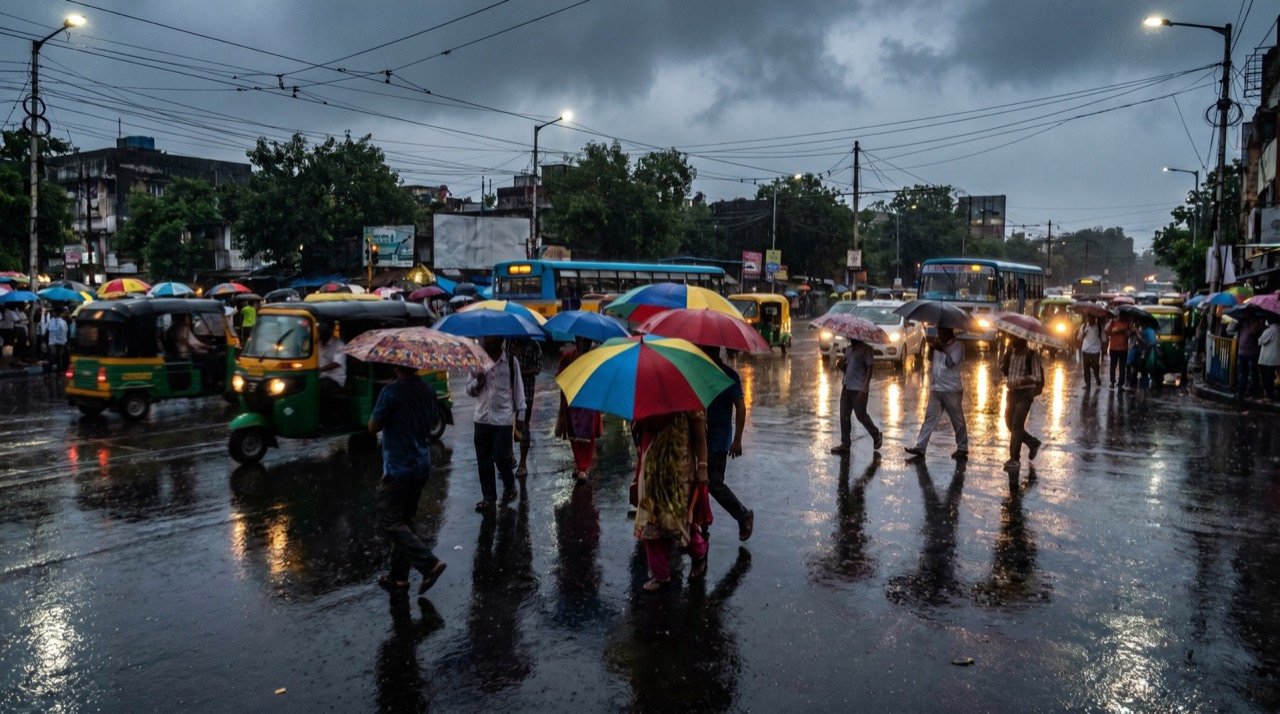
Cabinet Clears Jet Fuel Price Stabilisation Fund And NCR Vehicle Replacement Push
The Union Cabinet has approved a Price Stabilisation Fund to cushion airlines against jet fuel volatility, alongside a scheme to replace ageing trucks and buses across the Delhi-NCR region.
More from this section
More
AICTE Industry Fellowship 2026: Rs 1.5 Lakh Scheme Closes July 5
The AICTE Industry Fellowship Programme 2026, which places technical-education faculty inside leading companies on a Rs 1.5 lakh monthly stipend, reached its application deadline on July 5.
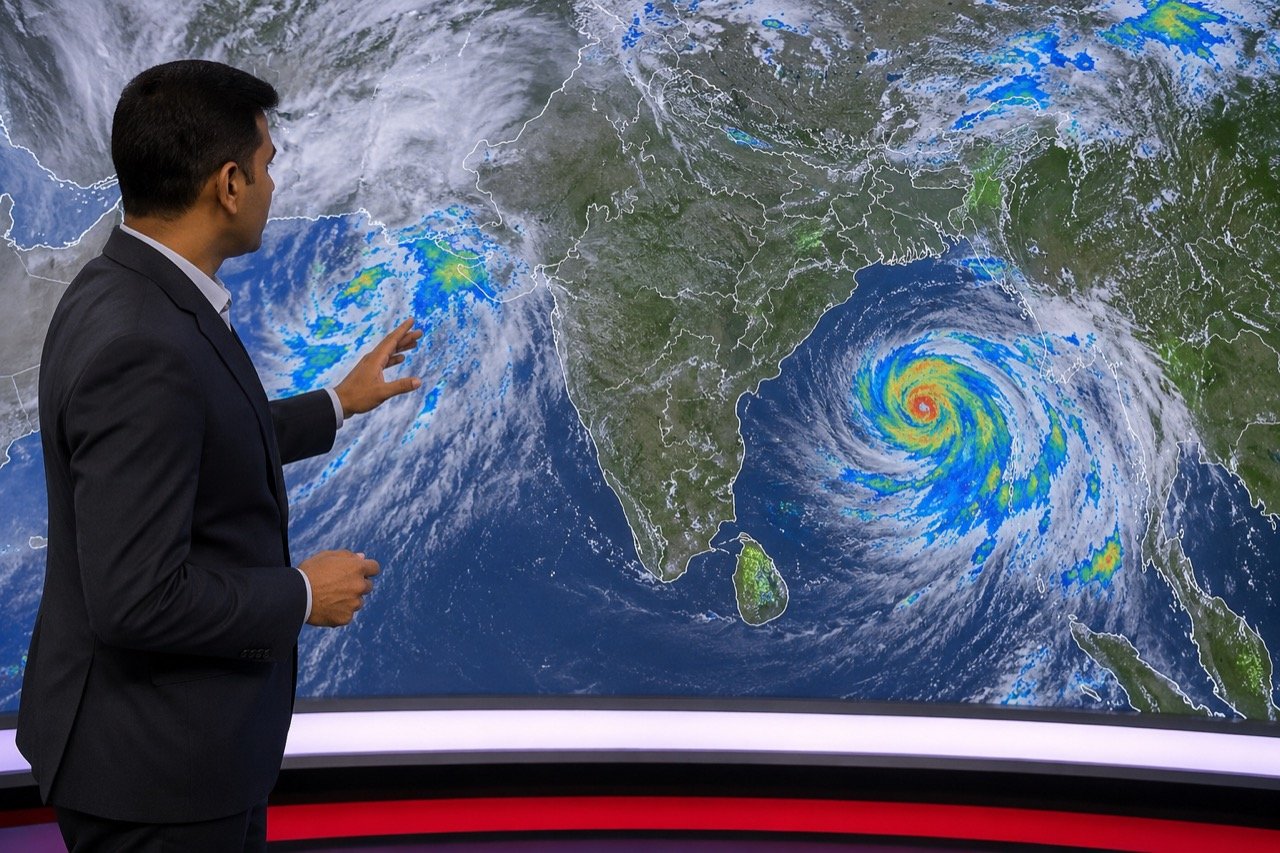
Bay of Bengal Low Pressure System Revives Monsoon Over Western India
A low-pressure system over the Bay of Bengal has pushed the monsoon back into an active phase, bringing steady heavy rain to Kerala, coastal Karnataka and Maharashtra, and putting Mumbai and Pune on preparedness watch.
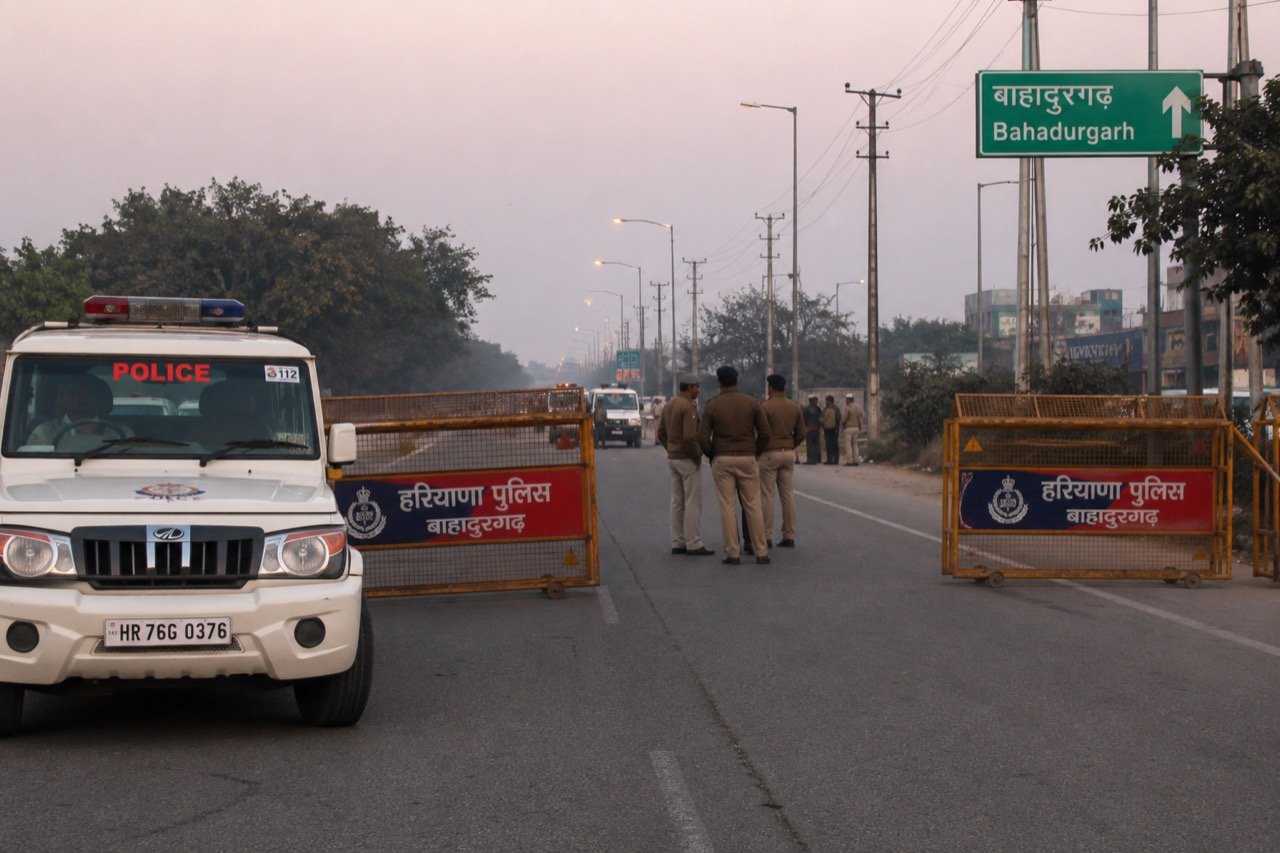
Bishnoi Gang Suspects Injured in Haryana Encounter as Police Tighten Net
A joint Haryana-Delhi Police operation in Bahadurgarh left two suspected Lawrence Bishnoi gang members injured, spotlighting the multi-state coordination now central to India's fight against organised crime networks.