Rs 35,440-Crore Push: Dhan Dhaanya Scheme and Pulses Mission Anchor New Farm Drive
The Centre's twin agriculture schemes, worth Rs 35,440 crore, target 100 districts for productivity and crop diversification while pursuing self-reliance in pulses across the country.
Commentary & Analysis ·
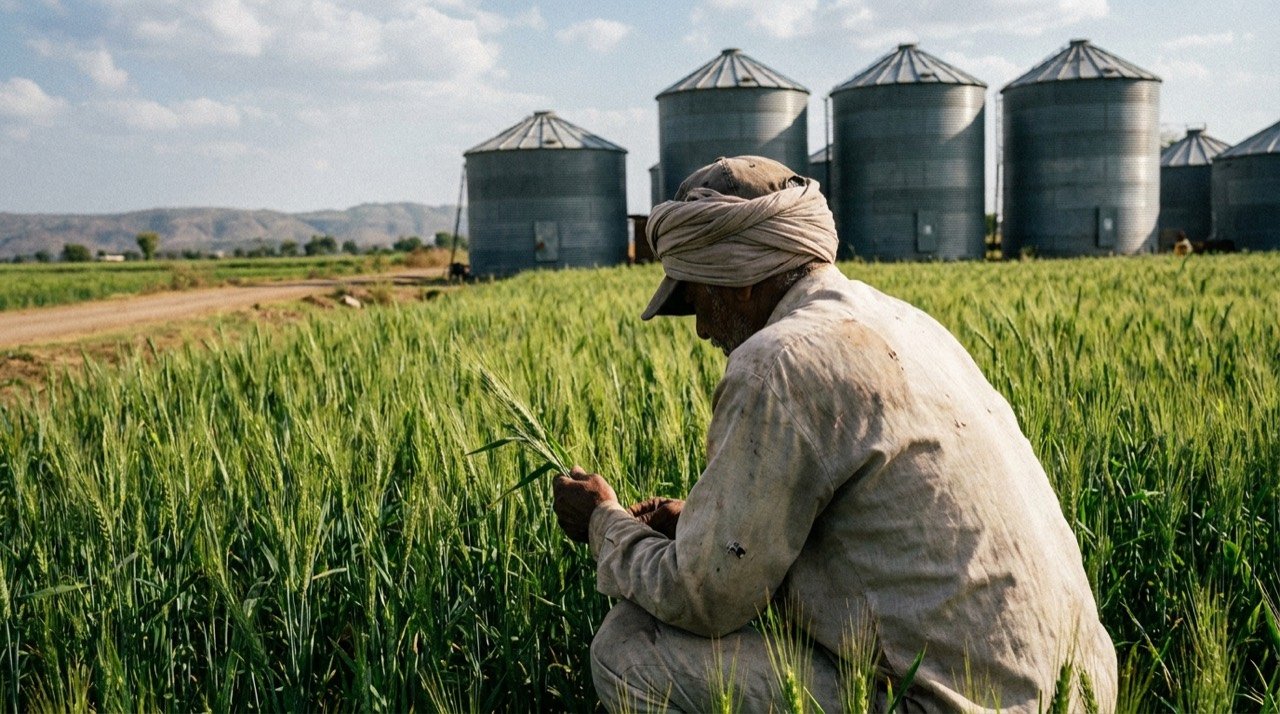
As the monsoon spreads across the country and the kharif sowing window opens, the Centre's flagship agriculture package has moved firmly into the spotlight. Anchored by two schemes with a combined outlay of Rs 35,440 crore, the initiative amounts to a test of whether targeted, well-directed public spending can lift farm productivity and reduce India's long-standing reliance on imported pulses. The timing is not incidental. Sowing decisions taken in the coming weeks will shape output for the entire crop year, and the government has chosen this moment to put its structural reform ambitions on public display, alongside the usual mix of income-support measures that have defined its agricultural policy for years.
A focus on 100 lagging districts
The PM Dhan Dhaanya Krishi Yojana, carrying an outlay of Rs 24,000 crore, is deliberately narrow in its geography and broad in its ambition. Rather than spreading resources thinly across every agricultural district in the country, the scheme concentrates its funding on 100 selected districts that have been identified for relatively lower agricultural performance. This is a meaningful design choice. It borrows from the aspirational-districts framework that has been used in other sectors of governance, where underperformance is treated not as a reason to write off a region but as the very criterion for prioritising it. The goals set out for the scheme are wide-ranging: raising productivity, encouraging crop diversification, promoting sustainable farming practices, expanding post-harvest storage capacity, improving irrigation infrastructure, and widening access to institutional credit for farming families.
What distinguishes this approach from simple cash disbursement is its reliance on convergence. Rather than creating an entirely new administrative apparatus, the scheme is designed to work alongside and through existing programmes, using a district-level delivery model to coordinate resources that might otherwise arrive piecemeal or not at all. For farmers in these 100 districts, the theoretical promise is that storage, irrigation and credit arrive as a coordinated package rather than as disconnected interventions from different departments. Whether that coordination materialises in practice, of course, is the question that will determine the scheme's ultimate worth.
Betting on pulses self-reliance
The second pillar of the package, the Mission for Aatmnirbharta in Pulses, carries an outlay of Rs 11,440 crore and takes aim at a structural weakness that has persisted in Indian agriculture for decades. India remains dependent on imports for tur, urad and masoor in many years, a vulnerability that becomes acutely visible whenever global supply tightens or exporting nations restrict outbound trade. Pulses are not a marginal crop category in the Indian diet; they are a primary source of protein for hundreds of millions of households, which makes import dependence in this category a matter of nutritional security as much as agricultural economics.
The mission's strategy rests on three levers: expanding the area under pulses cultivation, improving the quality of seeds available to farmers, and strengthening the procurement architecture so that domestic output can meet demand without leaving farmers exposed to price crashes at harvest time. Each of these levers addresses a different point of failure in the current system. Acreage expansion tackles the raw supply constraint. Seed quality addresses the yield gap that has kept Indian pulses productivity below that of competing producers. And procurement strengthening is meant to give farmers the confidence that growing pulses, rather than defaulting to more water-intensive staples, will not leave them without a buyer.
Timing against an uncertain monsoon
The rollout of both schemes coincides with a monsoon that the India Meteorological Department has forecast at below-normal levels, with El Nino conditions expected to suppress rainfall over the season. This is not a minor detail; it is the backdrop against which the entire package must be judged. A below-normal monsoon sharpens the stakes for exactly the interventions these schemes are built around: crop diversification away from water-guzzling monocultures, and water-use efficiency measures that make every available drop of irrigation count. If rainfall disappoints as forecast, the districts targeted under the Dhan Dhaanya scheme, already among the weaker performers, will be tested first and hardest.
This new package does not stand in isolation. It sits alongside long-running programmes such as PM Kisan, which provides direct income support to farming households, and e-NAM, the electronic trading platform meant to give farmers wider market access. The pairing signals an evident shift in the government's approach: direct income transfers alone have not been sufficient to transform farm productivity, and the new schemes represent an attempt to layer structural, supply-side investment on top of the existing income-support architecture. For a government that has leaned heavily on direct benefit transfers as its signature rural policy tool, this represents an acknowledgment that cash alone does not fix storage gaps, irrigation deficits or seed quality problems.
Why the delivery model matters more than the headline number
A combined outlay of Rs 35,440 crore is, by any measure, a substantial commitment. But large outlays in Indian agricultural policy have a well-documented history of underperforming their stated ambitions, not because the diagnosis was wrong but because implementation faltered somewhere between the finance ministry and the farmer's field. The district-level convergence model that both schemes rely on will only work if the various arms of government, irrigation departments, credit institutions, procurement agencies and extension services, actually coordinate on the ground rather than operating in the silos that have historically characterised rural administration in India. Farmers in the 100 targeted districts will not experience the scheme as a budget line; they will experience it as whether a warehouse gets built, whether a loan application is processed, and whether a procurement agent shows up at harvest time willing to pay a fair price.
Similarly, the pulses mission's success will hinge on whether procurement guarantees are credible enough to change farmer behaviour at the moment of sowing. Farmers make cropping decisions based on expected returns, and if past experience has taught them that pulses procurement is unreliable or that prices crash at harvest, no amount of seed-quality improvement will shift acreage decisively. The mission's real test, then, is not agronomic but institutional: can the procurement system convince farmers that betting on pulses this kharif season is a safer economic choice than it has been in previous years.
The NE Times View
Targeting 100 districts and pursuing pulses self-reliance is the right diagnosis: India's chronic dependence on imported lentils is a strategic vulnerability, not merely a price problem that surfaces occasionally in retail inflation data. Concentrating resources on underperforming districts, rather than spreading them uniformly, is also sound policy design, provided it is not diluted by political pressure to widen the list. But farm schemes in India live or die on last-mile delivery, not on headline outlays announced in Delhi. Rs 35,440 crore matters only if procurement centres are actually staffed and funded, if seed access reaches smallholders before the sowing window closes, and if assured buyers are genuinely present at harvest rather than existing only on paper. The test, as with so many well-intentioned Indian agricultural programmes before this one, is whether the diversification and productivity gains stick once the launch publicity fades and the districts return to the routine business of dealing with whatever the monsoon actually delivers.
Key takeaways
- The Centre's farm package combines the Rs 24,000-crore PM Dhan Dhaanya Krishi Yojana, covering 100 identified low-performing districts, with the Rs 11,440-crore Mission for Aatmnirbharta in Pulses, for a total outlay of Rs 35,440 crore.
- The Dhan Dhaanya scheme emphasises convergence, coordinating storage, irrigation and credit access at the district level rather than through standalone interventions.
- The pulses mission targets India's persistent import dependence on tur, urad and masoor through expanded acreage, better seed quality and stronger procurement.
- The rollout coincides with an IMD forecast of a below-normal monsoon linked to El Nino conditions, raising the stakes for diversification and water-use efficiency.
- Success will depend on last-mile execution, procurement reliability and credit access reaching smallholders, not on the size of the announced outlay alone.
You may also like to read
Drought Spreads Across India, Deepening Distress for Farmers
Drought conditions are extending across parts of India, compounding stress for farmers already grappling with uncertain rainfall, rising input costs and difficult sowing decisions at a critical point in the season.
Monsoon Arrives Early Across the South, Lifting India's Farm Outlook
The southwest monsoon has swept in ahead of schedule, raising hopes for a strong kharif sowing season and easing inflation worries — though officials urge caution on how the rains spread.
Monsoon Deficit Triggers Farm Contingency Mapping Across 315 Districts
A weak June monsoon, with the rain deficit reported at 43 percent, has pushed the Centre to map 315 districts for contingency measures and tighten oversight of kharif sowing.

DAC Clears Rs 52,000 Crore Push for India's Defence Modernisation
The Defence Acquisition Council has approved procurement proposals worth over Rs 52,000 crore, signalling sustained investment in aircraft, radar and capability upgrades across India's armed forces.
More from this section
More
AICTE Industry Fellowship 2026: Rs 1.5 Lakh Scheme Closes July 5
The AICTE Industry Fellowship Programme 2026, which places technical-education faculty inside leading companies on a Rs 1.5 lakh monthly stipend, reached its application deadline on July 5.

Bay of Bengal Low Pressure System Revives Monsoon Over Western India
A low-pressure system over the Bay of Bengal has pushed the monsoon back into an active phase, bringing steady heavy rain to Kerala, coastal Karnataka and Maharashtra, and putting Mumbai and Pune on preparedness watch.
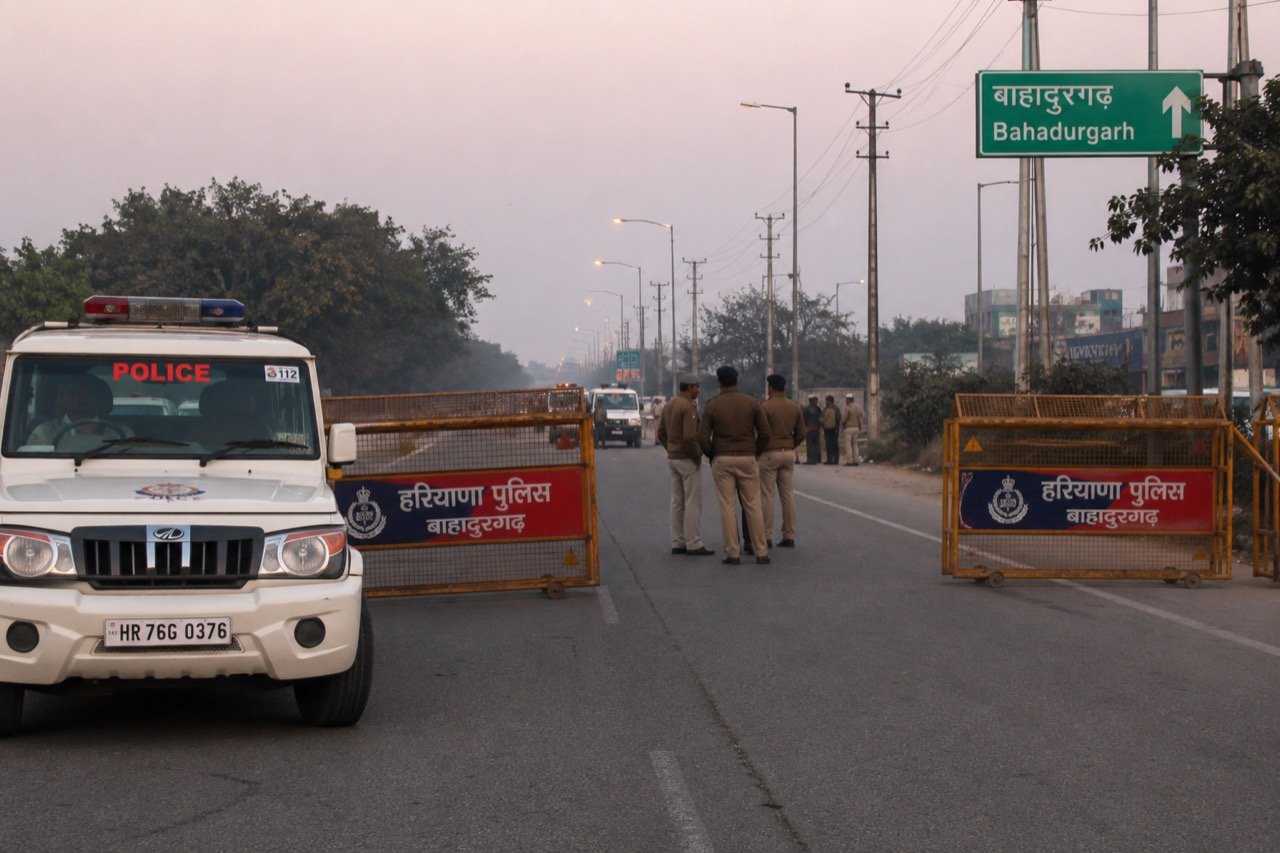
Bishnoi Gang Suspects Injured in Haryana Encounter as Police Tighten Net
A joint Haryana-Delhi Police operation in Bahadurgarh left two suspected Lawrence Bishnoi gang members injured, spotlighting the multi-state coordination now central to India's fight against organised crime networks.