Drought Spreads Across India, Deepening Distress for Farmers
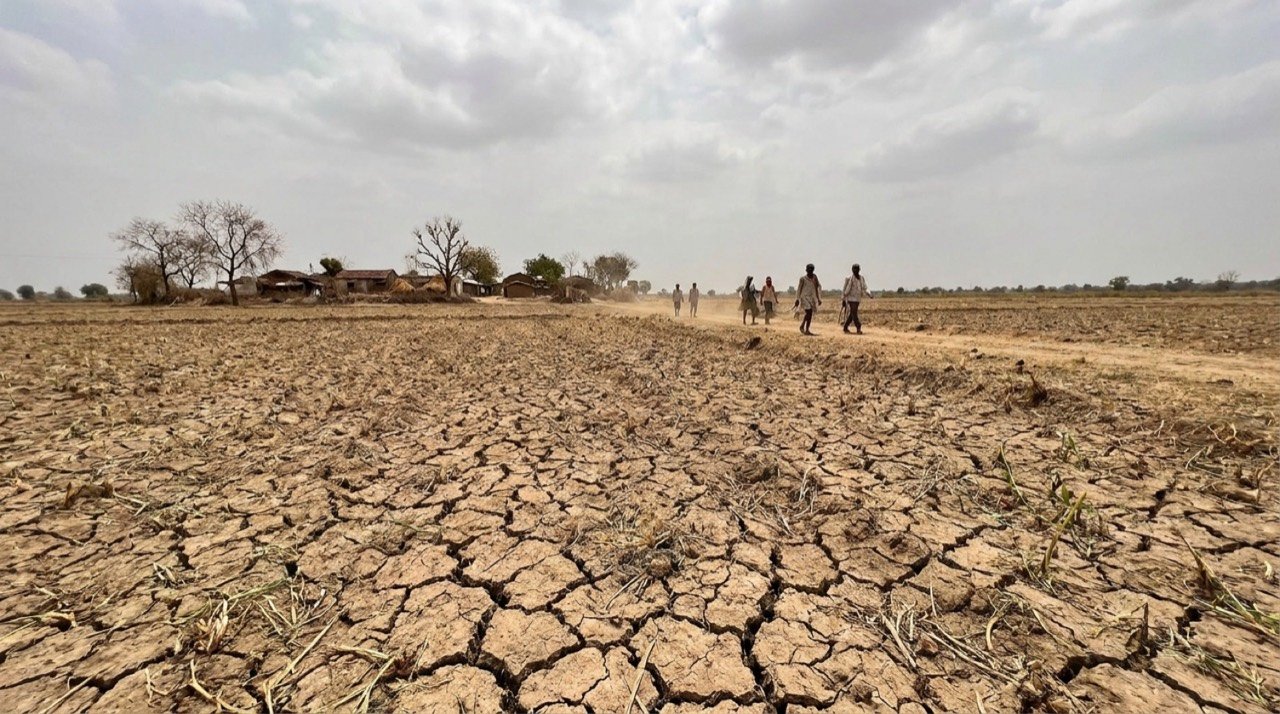
Drought conditions are extending across parts of India, compounding stress for farmers already grappling with uncertain rainfall, rising input costs and difficult sowing decisions at a critical point in the season.
Commentary & Analysis ·
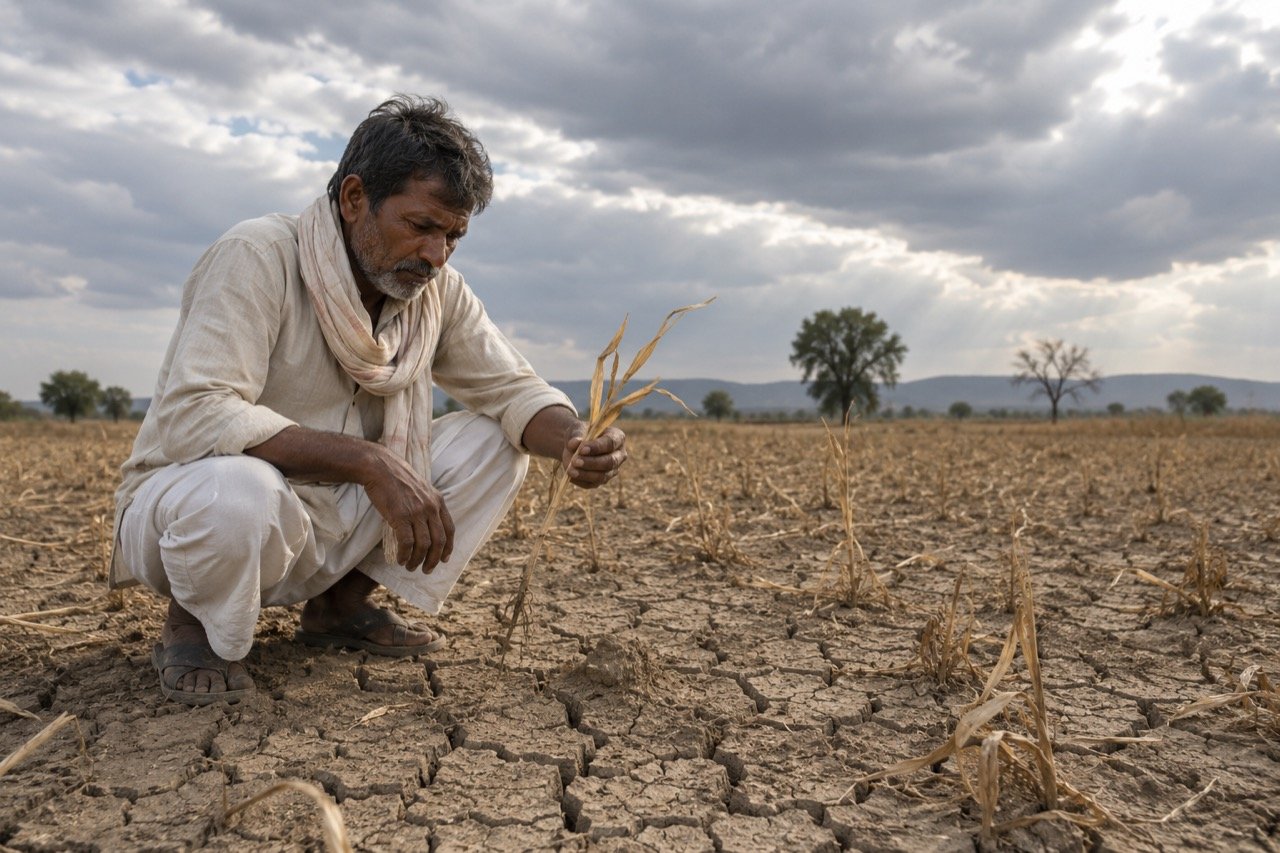
Drought conditions are spreading across India, according to reporting by NDTV, raising fresh concern for farmers who are already navigating erratic rainfall, higher input costs and hard choices about what and when to sow during a crucial stretch of the agricultural calendar. Drought is never just a weather statistic. It cascades through rural life: sowing decisions shift, groundwater is drawn down faster, fodder becomes scarce, debts mount and food prices feel the pressure. When dryness extends across multiple regions at once, the impact moves quickly from fields to markets to household budgets, and can eventually drive migration.
Why a spreading drought is different from a bad season
A single dry patch in one district is a local hardship. A drought that spreads across multiple regions at once is a different order of problem, because it removes the buffers that usually cushion a bad season. In a normal year, a shortfall in one state can be partly offset by surplus production elsewhere, by grain moving from better-off regions to stressed ones, and by farm labourers finding work in nearby areas that were spared the dry spell. When dryness is widespread rather than isolated, those informal safety valves narrow. Fodder that might have been trucked in from a wetter neighbouring district becomes harder to source. Labour markets that might have absorbed displaced farm workers are themselves under strain. This is precisely why the current spread of drought conditions deserves attention beyond the usual seasonal concern: it is the breadth of the problem, not just its depth in any one place, that determines how much stress the wider rural economy can absorb.
Averages hide local distress
Climate variability has made a single national rainfall number increasingly misleading. Some regions are seeing intense downpours while others endure long dry spells, and farmers make their decisions at the village and district level, not by headline averages. A national or even state-level rainfall figure that looks broadly normal can conceal a district that has effectively lost its sowing window. That unevenness is precisely what makes the current spread of drought conditions worrying: it suggests that the usual smoothing effect of averaging across a large and geographically diverse country is failing to capture the real distribution of stress. For policymakers, this means that relying on broad rainfall statistics to decide where relief and support are needed risks misallocating resources, sending assistance to places that do not need it as urgently while leaving genuinely stressed districts under-served.
The chain reaction from field to household
The immediate questions are how widespread the shortfall is and how fast response mechanisms are activated. Timely crop advisories, irrigation support, early relief and prompt insurance processing can significantly reduce harm; delayed responses tend to convert a weather event into a livelihoods crisis. The sequence is worth spelling out, because each link in the chain represents a point where intervention could still change the outcome. First, farmers facing uncertain rainfall must decide whether to sow at all, what crop to choose, and whether to gamble on a second round of seed and fertiliser if the first sowing fails. Second, as surface water becomes scarce, reliance on groundwater rises, drawing down aquifers that, in many parts of India, were already under pressure well before this season began. Third, livestock owners who cannot find adequate fodder face the painful choice of distress sales of animals that represent years of accumulated household wealth. Fourth, as farm incomes fall, debts taken on for the current season, or carried over from previous years, become harder to service, pushing some households toward moneylenders on unfavourable terms. Each of these steps compounds the next, which is why acting early in the chain, before sowing failure translates into livestock loss and debt distress, offers far more protection than acting after the fact.
Stakeholders under pressure
Different actors in this story face the drought from different vantage points, and their incentives do not always align neatly. Farmers themselves bear the most immediate and personal risk, having already committed to input costs for seed and fertiliser before the extent of the dry spell became clear. State governments face the task of assessing damage, issuing advisories and triggering relief mechanisms, often under fiscal constraints that make generous, fast-moving support politically and administratively difficult. Insurers, where crop insurance schemes are in force, are tasked with assessing losses and processing payouts in a timeframe that actually matters to a farming household managing cash flow through a lean season; a payout that arrives months after the crop has failed does little to prevent the intervening distress. Consumers, meanwhile, stand at the far end of the chain, absorbing the effects of reduced supply through higher prices for staples, particularly if the affected crops are ones with limited buffer stocks. Understanding the drought as a story with multiple stakeholders, each with different capacities to absorb shocks, is essential to designing a response that does not simply shift the burden from one group to another.
What to watch
Official drought assessments, state government advisories, reservoir levels and crop-specific impact reports will indicate how serious the season becomes. Each of these signals will shape both farm incomes and food prices in the months ahead. Reservoir levels in particular offer an early warning that is more concrete than rainfall figures alone, since they reflect actual water availability for irrigation and drinking rather than projected supply. Crop-specific reports matter because different crops have different tolerances for water stress and different windows in which a shortfall becomes irreversible; a delay that a hardier crop can absorb might be fatal for a more water-intensive one sown in the same district. Watching how quickly state governments move from assessment to formal drought declaration, and from declaration to disbursed relief, will be a more telling indicator of how this season plays out than any single rainfall statistic.
The NE Times View
India's drought response still leans too heavily on relief after the damage is done, rather than resilience before it. Farmers need faster, more localised weather information, stronger water management and insurance systems that pay out quickly enough to matter. The spreading dryness this season should be treated as a stress test of those systems, not just an appeal for sympathy. For a country where agriculture anchors crores of livelihoods, building climate resilience into everyday farm policy is now the difference between a bad season and a rural crisis. The pattern of uneven rainfall, with some regions flooded and others parched in the same season, is not an anomaly to be waited out; it is increasingly the operating condition under which Indian agriculture must function. Policy built around the assumption of a predictable monsoon, arriving on time and distributed evenly, is policy built for a climate that no longer exists. What is needed instead is a system that assumes variability as the norm: localised advisories that reach farmers before sowing decisions are locked in, water management that treats groundwater as a resource to be protected rather than a fallback to be exhausted, and insurance mechanisms judged not by their existence on paper but by the speed with which they convert a verified loss into cash in a farmer's hands.
Key takeaways
- Drought conditions are spreading across multiple regions of India, per NDTV reporting, narrowing the informal buffers, such as grain transfers and labour mobility, that normally soften localised bad seasons.
- National rainfall averages increasingly mask sharp local variation, meaning district-level assessment, not headline statistics, should guide where relief and support are targeted.
- The chain from sowing failure to groundwater depletion, fodder scarcity, distress livestock sales and mounting debt means early intervention is far more effective than relief delivered after damage is done.
- Reservoir levels, state advisories and crop-specific impact reports are the concrete signals to track in the coming months, more informative than rainfall totals alone.
- Building resilience, through localised weather information, better water management and fast-paying insurance, into everyday farm policy is essential if a difficult season is not to become a deeper rural crisis.
You may also like to read
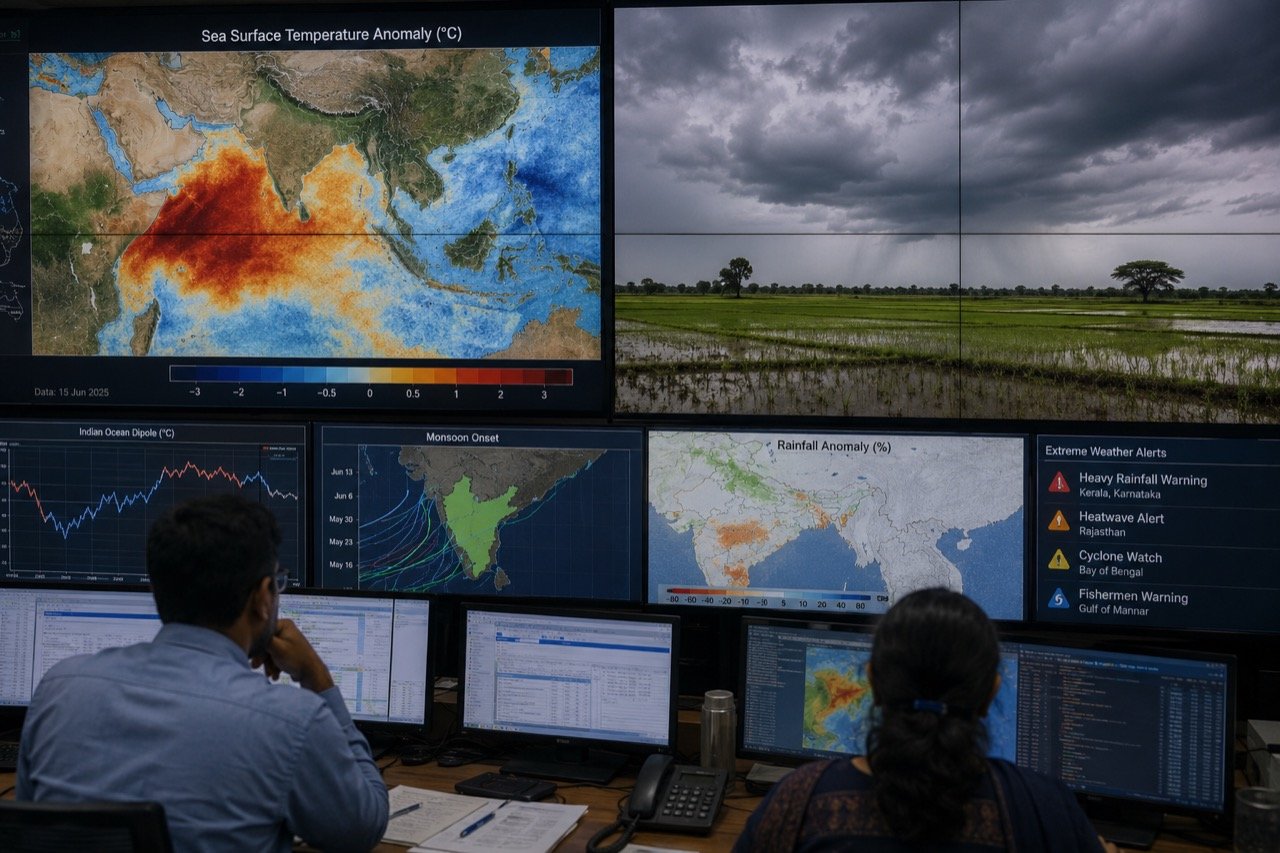
WMO Flags Rapid El Nino Risk, Putting India's Monsoon On Watch
A World Meteorological Organization warning that El Nino could develop rapidly between July and September has revived concerns about below-normal rainfall over the Indian subcontinent and its economic ripple effects.
Monsoon advances across the country in June, but IMD warns of a below-normal season
After reaching Kerala on 4 June, the southwest monsoon has spread into eastern and central India, even as the weather office trims its seasonal rainfall forecast to 90% of the long-period average.
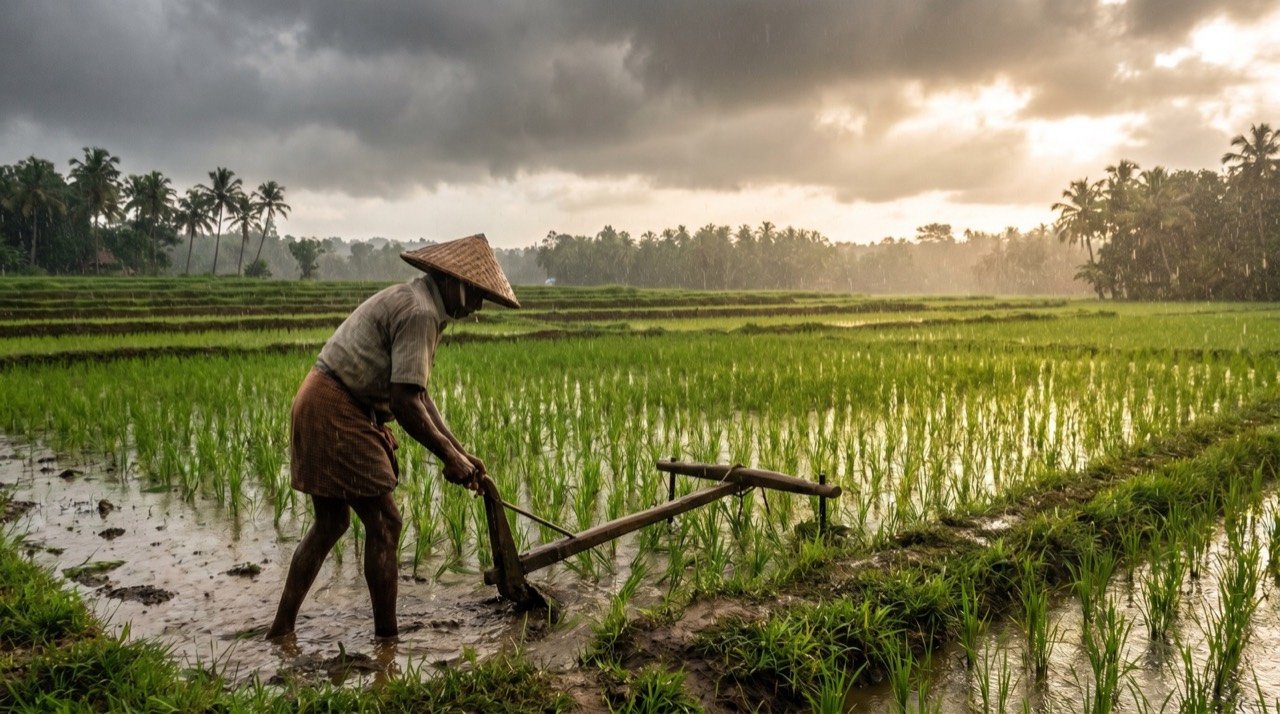
Monsoon Arrives Early Across the South, Lifting India's Farm Outlook
The southwest monsoon has swept in ahead of schedule, raising hopes for a strong kharif sowing season and easing inflation worries — though officials urge caution on how the rains spread.
Monsoon Deficit Triggers Farm Contingency Mapping Across 315 Districts
A weak June monsoon, with the rain deficit reported at 43 percent, has pushed the Centre to map 315 districts for contingency measures and tighten oversight of kharif sowing.
More from this section
More
AICTE Industry Fellowship 2026: Rs 1.5 Lakh Scheme Closes July 5
The AICTE Industry Fellowship Programme 2026, which places technical-education faculty inside leading companies on a Rs 1.5 lakh monthly stipend, reached its application deadline on July 5.
Bay of Bengal Low Pressure System Revives Monsoon Over Western India
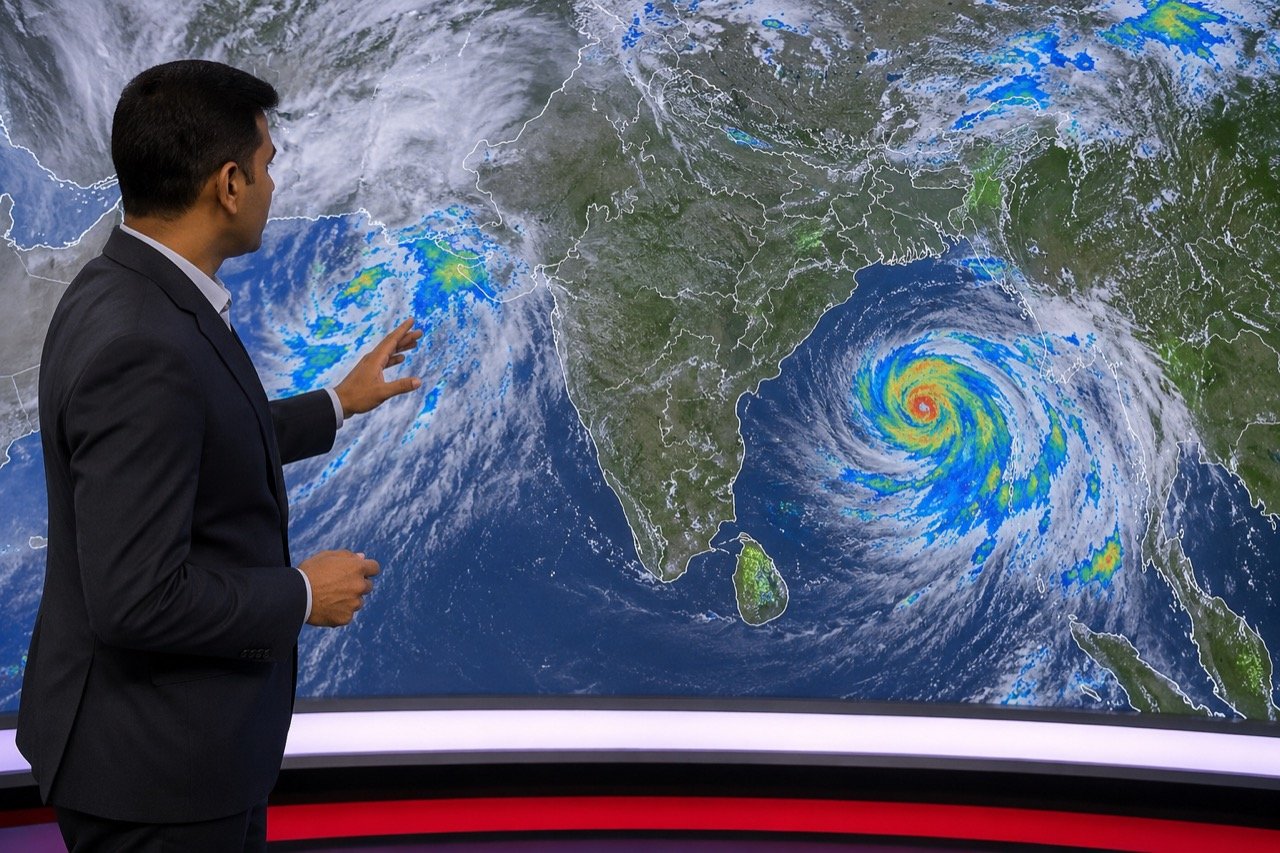
A low-pressure system over the Bay of Bengal has pushed the monsoon back into an active phase, bringing steady heavy rain to Kerala, coastal Karnataka and Maharashtra, and putting Mumbai and Pune on preparedness watch.
Bishnoi Gang Suspects Injured in Haryana Encounter as Police Tighten Net
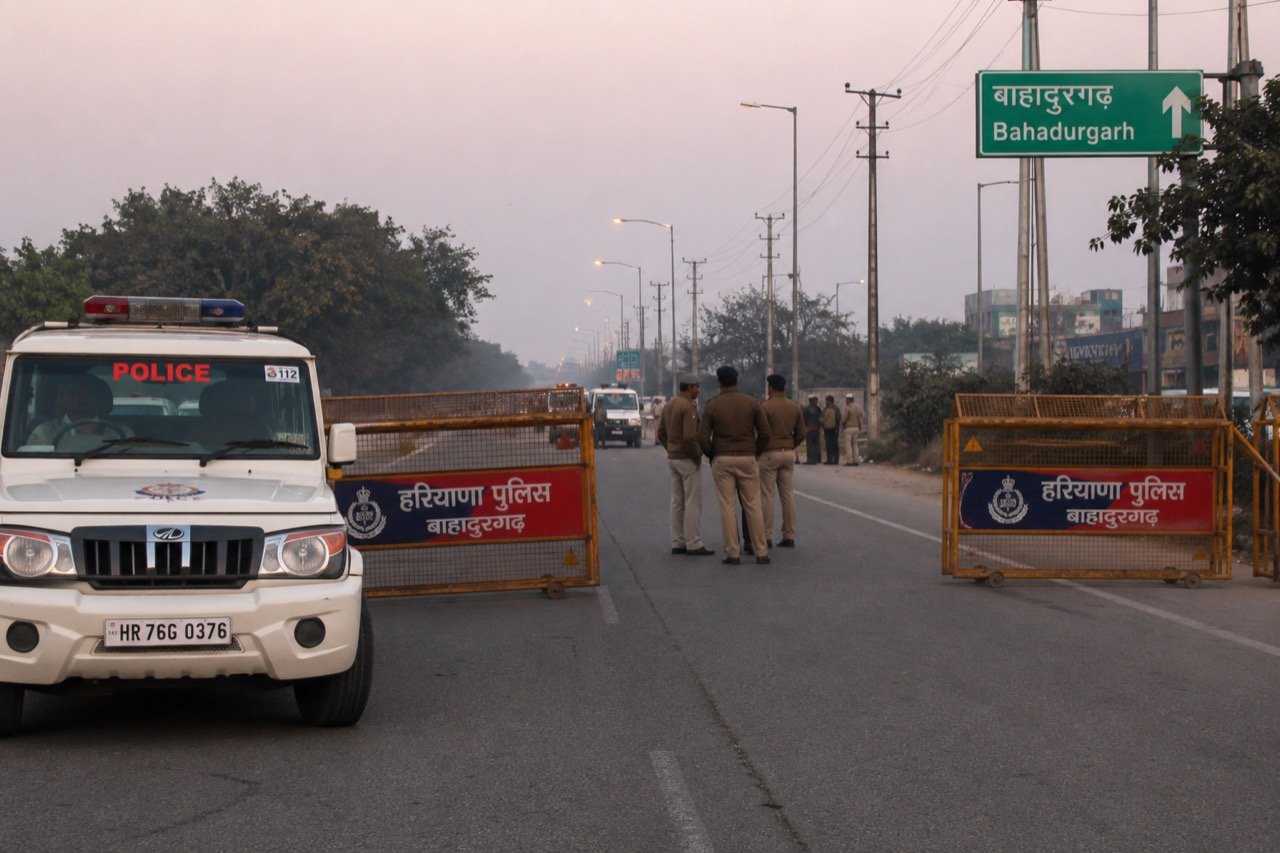
A joint Haryana-Delhi Police operation in Bahadurgarh left two suspected Lawrence Bishnoi gang members injured, spotlighting the multi-state coordination now central to India's fight against organised crime networks.