Rajasthan Custody Over RSS Video Puts Free Speech and Policing in the Spotlight
A social-media user's video on RSS-style activity in a playground has landed him in Rajasthan Police custody, triggering a political row over whether commentary has been criminalised.
Commentary & Analysis ·
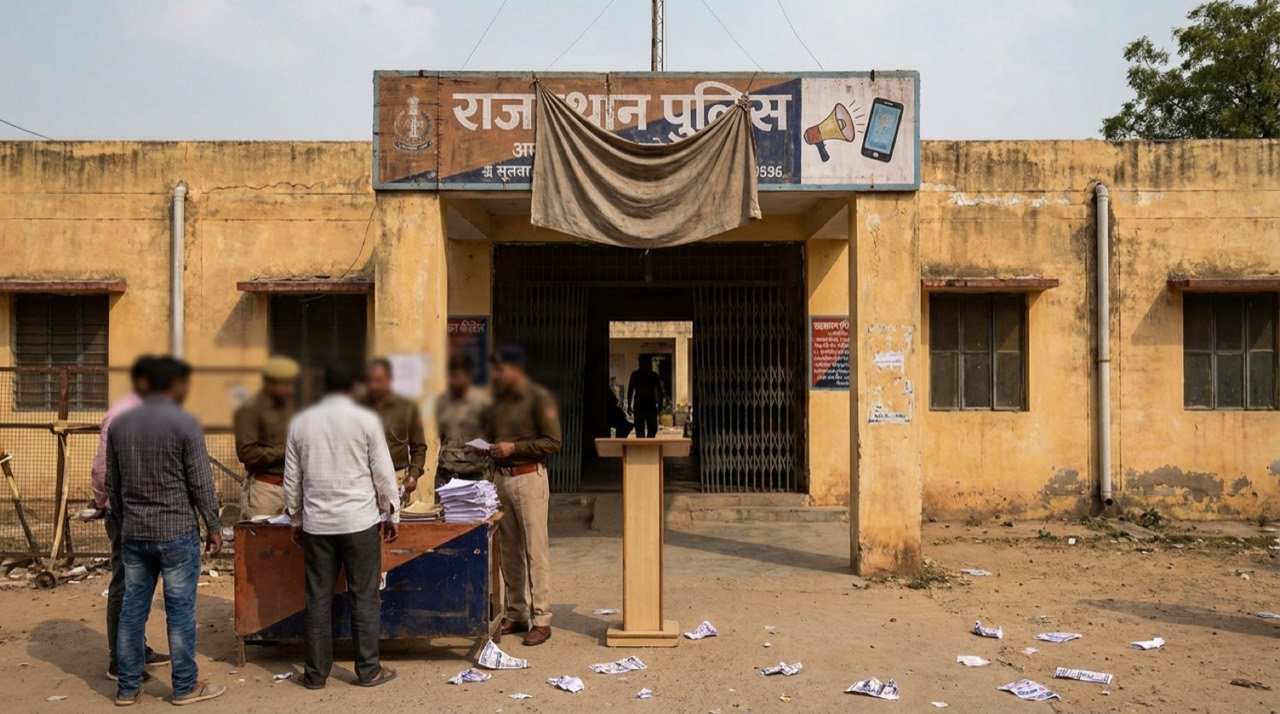
A short video posted by a social-media user about RSS-style activity in a playground has escalated into a political controversy in Rajasthan, after police took the man into custody. On its face, the episode looks like a minor local matter: an ordinary citizen filming something he saw in a public space and sharing it online. But the police action that followed has turned it into something larger, a case study in how the machinery of public-order policing interacts with political speech in the age of the smartphone. The story sits squarely at the intersection of social media, law enforcement discretion and political contestation, and it has reopened a familiar national debate over where lawful commentary ends and a punishable offence begins.
What the police say happened
According to the reporting available, police said complaints had alleged that the video could disturb peace and spread discord. On that basis, officers acted against the man who posted it, framing the matter as one of maintaining public order rather than suppressing opinion. This is an important distinction in how such cases are typically justified: authorities rarely say they are acting against an opinion as such, but instead invoke the language of peace, order and communal harmony to bring an action within the bounds of law. That framing is not unusual in Indian policing practice, where provisions designed to prevent incitement or unrest are sometimes the first recourse when a complaint is lodged over online content.
Crucially, the available accounts do not establish guilt. They describe competing claims, a complaint on one side and a custody action on the other, rather than any judicial finding. This absence of an adjudicated outcome is precisely why legal observers have urged careful scrutiny of the specific provisions invoked and the evidence behind them before drawing conclusions. A person can be taken into custody on the basis of a complaint long before any court has tested whether an offence was actually committed, and the gap between those two moments is where much of the public anxiety in this case, and in cases like it, tends to concentrate.
The opposition's challenge
The Congress questioned whether criticism or commentary about the Rashtriya Swayamsevak Sangh had quietly become an offence, asking pointedly whether a new and unwritten rule was being applied. The party framed the custody as a test of free expression rather than a routine law-and-order action, a rhetorical move that shifts the terrain of the dispute from a narrow question of statutory interpretation to a broader one about the health of public discourse. "Is there a new secret law?" the party asked, in effect demanding that the state either point to a specific, clearly defined offence or concede that the action was less about law and more about managing perception.
That argument taps a wider anxiety that has built up over several years: the use of public-order provisions against online posts, where the line between content that genuinely threatens peace and content that merely irritates the powerful can be difficult to draw in practice. Opposition parties across states have periodically raised similar concerns when citizens, journalists or activists have faced police action after posting material critical of ruling parties or affiliated organisations, regardless of which party is in power nationally or in a given state. The pattern the Congress is pointing to in Rajasthan is not presented as unique to this state or this organisation; rather, it is invoked as an instance of a recurring structural problem in how speech is policed.
Why the case matters beyond Rajasthan
The dispute matters beyond its immediate facts because it illustrates how routine social-media posts can rapidly become flashpoints when policing, politics and ideology converge. A video that might, in another context, have circulated quietly among a small circle of viewers instead became the trigger for a formal complaint, a police action and now a political row playing out in public. This trajectory, from ordinary post to custody to opposition statement, is itself instructive: it shows how quickly the state's coercive apparatus can be brought to bear on speech once a complaint is filed, and how little friction there sometimes is between a complaint and an arrest.
How courts and authorities treat such cases shapes the everyday confidence of ordinary users to comment on public institutions, political organisations and social phenomena they observe around them. If a video describing activity witnessed in a public playground can lead to custody, the practical lesson for millions of social-media users is one of caution bordering on self-censorship. That is a cost that is difficult to quantify but easy to recognise: it is measured not in the number of prosecutions but in the number of posts never made, the commentary never offered, out of fear of exactly this kind of response.
The stakeholders and their competing interests
Three sets of interests are visible in this episode. First, the complainants and the police, who frame their action strictly as a public-order matter, concerned with discord and disturbance rather than with the content of any criticism itself. Second, the man taken into custody, whose position in the available reporting is limited to the fact of the video and the fact of his detention, with no indication yet of a formal judicial process having tested the claims against him. Third, the Congress, which has stepped into the dispute as a political actor with an obvious incentive to frame the matter as an attack on free expression, but whose underlying question, whether commentary on a powerful organisation is being treated as functionally illegal, is one that deserves consideration on its own terms regardless of who is asking it.
It is worth noting that the reporting available does not tell us the specific legal provisions cited against the man, nor does it detail the exact content of the video beyond it depicting RSS-style activity in a playground. That absence of detail is itself part of the story: much of the public debate is proceeding on the basis of the fact of custody and the fact of a complaint, rather than a fully disclosed evidentiary record. This is common in the early stages of such controversies, when political statements and initial police framing outrun the slower process of judicial and factual clarification.
What to watch next
For now, the resolution depends on legal scrutiny of the charges and the factual record. Whether the man is formally charged, and under what provisions, will determine whether this becomes a prolonged legal dispute or is resolved quickly through release or clarification. Equally significant will be whether any court is asked to weigh in on the underlying question of whether the video itself met the threshold for disturbing public peace, since that judicial test, rather than the political argument, is what will ultimately settle the narrower legal question at the heart of the case.
The outcome will be watched closely as a marker of how India balances the policing of online speech against the constitutional protection of expression and political criticism. Cases like this one accumulate into a body of precedent, formal and informal, that shapes how citizens understand the risks of commentary on powerful institutions, and how police forces across states calibrate their own thresholds for acting on complaints of this kind.
The NE Times View
Detaining a citizen over a video commenting on activity in a public playground sets an alarming bar for what counts as a punishable offence. The NE Times View is that criticism, even of a powerful organisation, is protected speech, not a crime, and the police should not be deployed to settle ideological scores. Unless there is a genuine, demonstrable breach of law, one supported by evidence that meets the threshold the relevant provisions actually require, this custody looks like intimidation and should be reviewed swiftly. The burden ought to sit with the state to show precisely how a video of this kind met the legal standard for disturbing peace, not with the citizen to prove that his commentary was harmless.
Key takeaways
- A social-media video depicting RSS-style activity in a playground triggered complaints alleging it could disturb peace and spread discord.
- Police took the man who posted the video into custody, framing the action as a public-order matter rather than suppression of opinion.
- Congress questioned whether criticism of the RSS had effectively become an offence, asking "Is there a new secret law?"
- Available reports establish no guilt, only competing claims between police justification and opposition criticism, pending legal scrutiny.
- The case will be watched as a test of how India balances public-order policing with constitutional protections for expression and political criticism.
You may also like to read
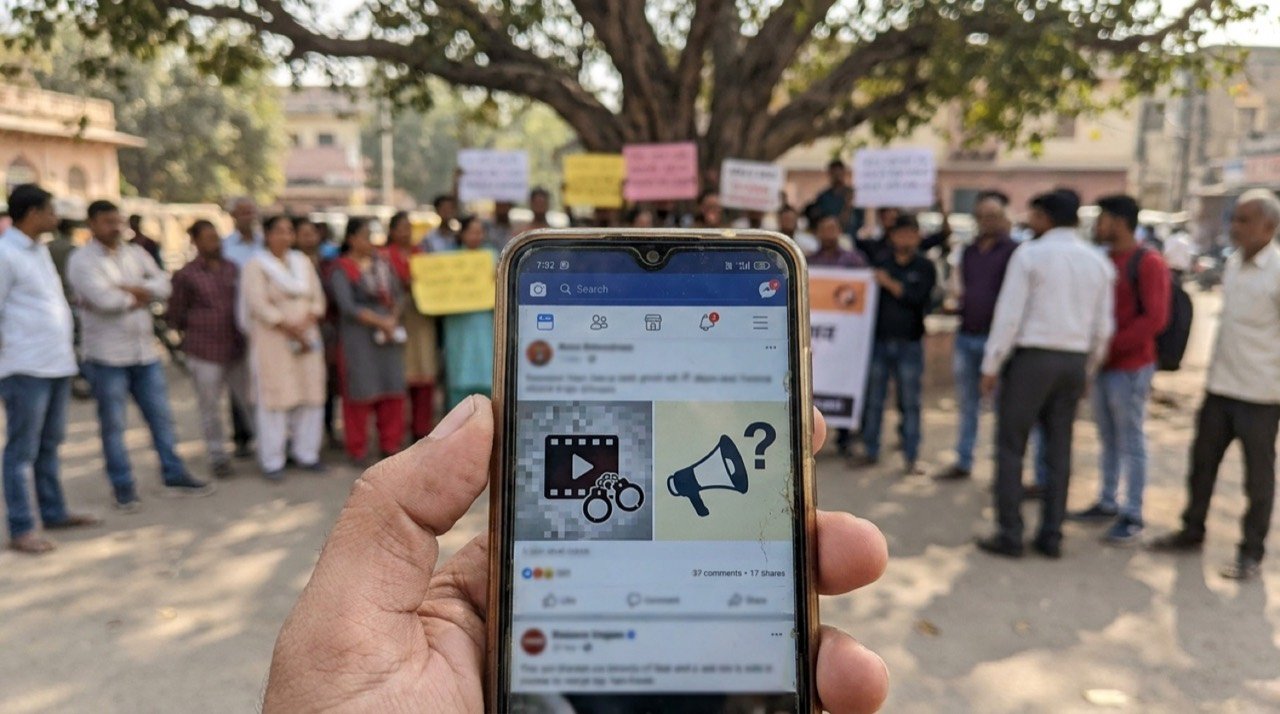
Rajasthan Detention Over RSS-Linked Instagram Video Reignites Free-Speech Debate
The detention of an Instagram user in Rajasthan over a video involving RSS-linked imagery has reopened a debate on social-media speech, proportionate policing and online public order.
Rajasthan Forms Panel to Draft Uniform Civil Code Legislation
Rajasthan has set up a committee to prepare draft Uniform Civil Code legislation, drawing the state into a national debate over personal laws, gender rights and community protections.

Modi's Balotra Push: Rs 1.06 Lakh Crore Projects and Energy Message
Prime Minister Narendra Modi's visit to Balotra in Rajasthan paired development projects worth around Rs 1.06 lakh crore with remarks crediting India's diplomacy for steering the country through West Asia-linked energy pressures.
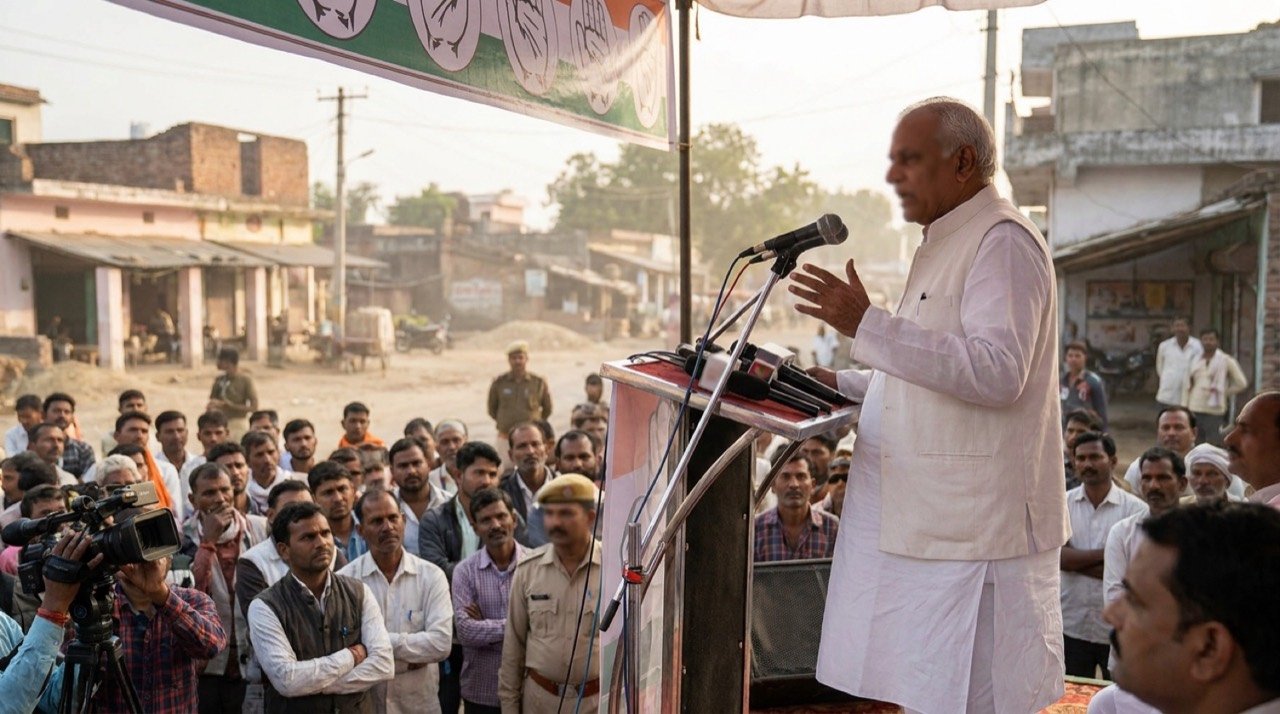
Vijayvargiya's 'Don't Use Our Roads' Remark Sparks Political Row in Madhya Pradesh
A reported comment by Madhya Pradesh minister Kailash Vijayvargiya linking public road use to political loyalty has triggered a sharp clash over civic rights and the language of public office.
More from this section
More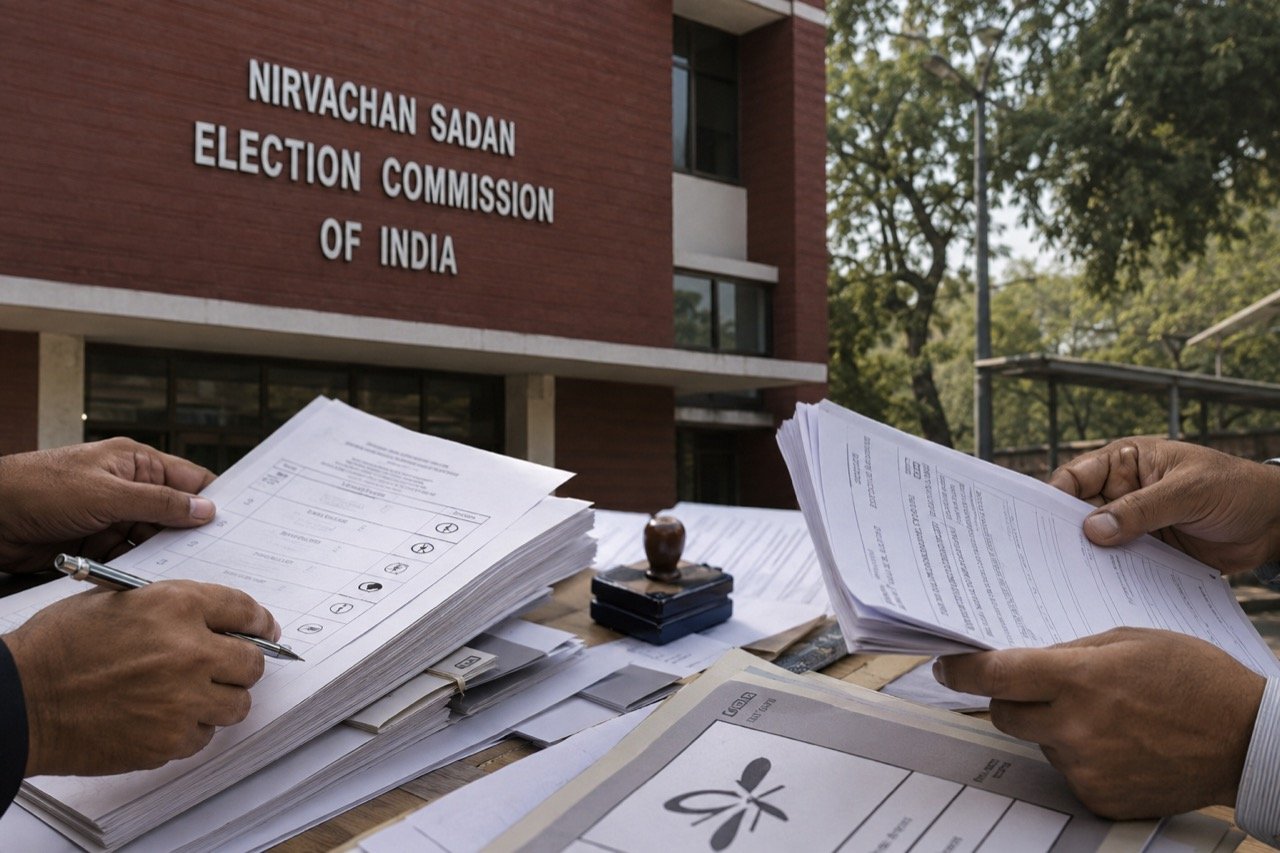
K Kavitha Party Denied TRS Name by Election Commission
The Election Commission has refused to register K Kavitha's Telangana Rakshana Sena under the TRS acronym after objections, forcing a branding reset for the new party at a politically sensitive moment in Telangana.
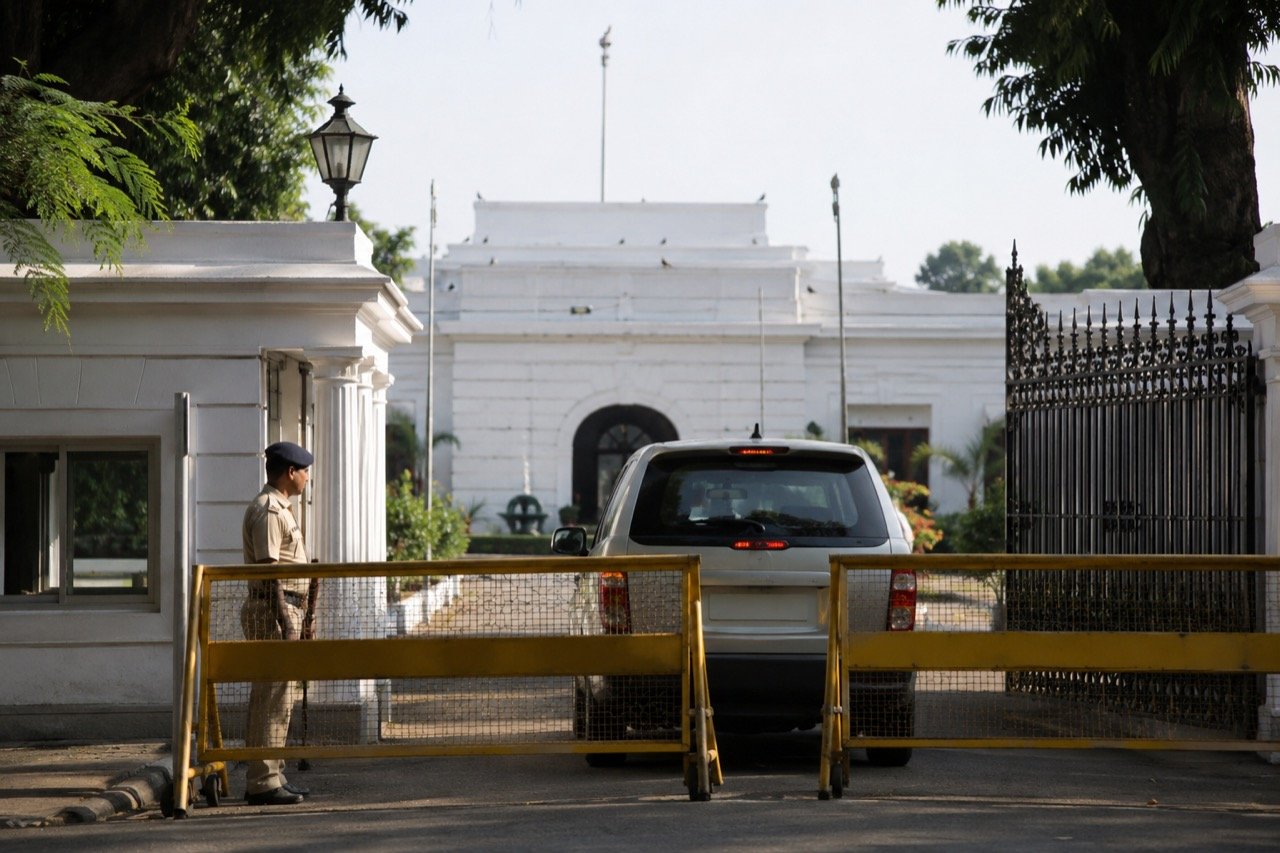
Lalu Prasad Yadav Security Downgrade, Bungalow Order Stir Bihar
A government order downgrading Lalu Prasad Yadav's security cover and asking him to vacate an official bungalow has opened a fresh political flashpoint in Bihar, with the RJD chief's reaction fuelling the row.
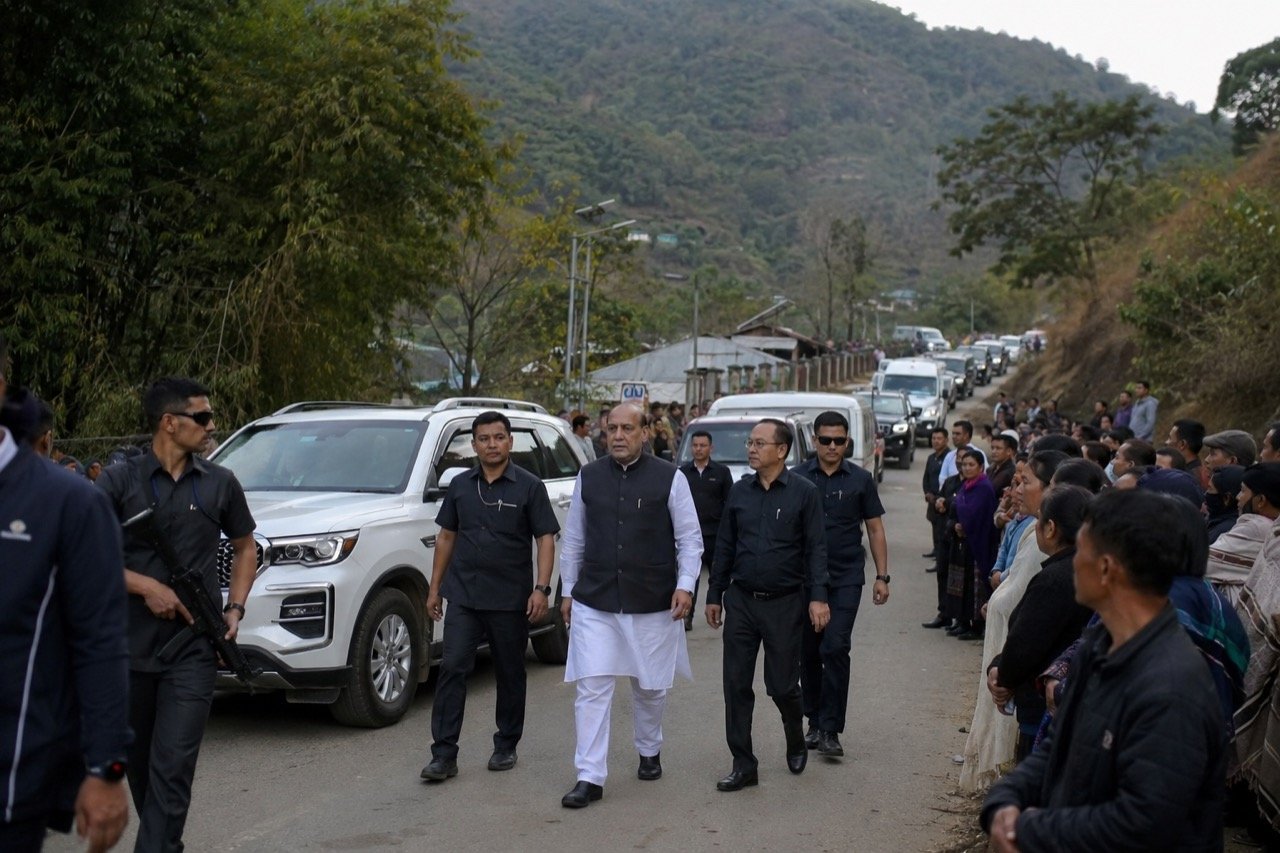
Manipur CM's Churachandpur Visit: First Since 2023 Unrest
The Manipur Chief Minister travelled to Churachandpur for a BJP MLA's funeral, his first visit to the district since the 2023 violence, lending the sombre occasion an unmistakable political significance.