PSU Banks See Loan Growth Outrun Deposits as Credit Demand Holds
Public-sector banks are lending faster than they are gathering deposits, a gap that signals firm credit appetite in the economy but puts funding costs and deposit mobilisation under the spotlight.
Commentary & Analysis ·
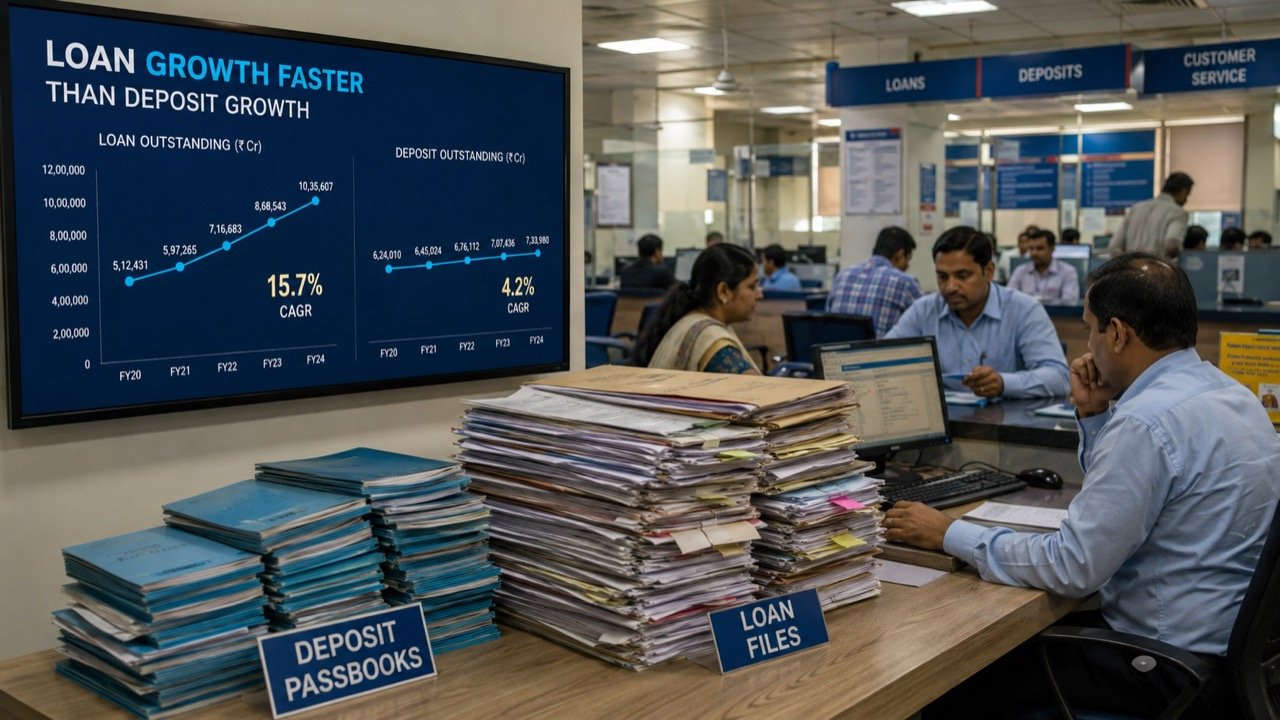
India's public-sector banks are back in the spotlight after fresh reports indicated that their loan books are expanding faster than their deposit bases. The widening loan-deposit gap has emerged as one of the most closely watched signals in the banking sector, pointing to credit demand that remains firm even as funds flowing into savings and term deposits grow at a slower clip. On the surface, this looks like a technical banking metric of interest mainly to analysts and treasury desks. In practice, it touches almost every corner of the economy, from the interest a household earns on a fixed deposit to the rate a small manufacturer pays on a working-capital loan.
Why the loan-deposit gap matters
Deposits are the raw material of lending. A bank cannot indefinitely extend credit unless it has a matching, stable pool of funds to draw on. When loan growth persistently outpaces deposit growth, banks are left with three broad choices: compete more aggressively for household savings by raising deposit rates, lean on costlier market borrowings such as certificates of deposit or bonds, or moderate the pace of credit expansion altogether. None of these is cost-free. Chasing deposits through higher rates squeezes the interest margin banks earn between what they pay savers and what they charge borrowers. Turning to wholesale borrowing brings in funds that are typically more expensive and can be more volatile, since institutional lenders are quicker to pull back in times of stress than retail depositors. And slowing credit growth, while the most conservative option, risks starving businesses and households of the financing that keeps investment and consumption moving.
Each of these paths, in other words, carries consequences for margins, balance-sheet strength and the sustainability of the current lending cycle. The choice a bank makes is not merely a treasury decision; it is a statement about how it intends to manage growth in the period ahead.
The case for cautious optimism
It would be a mistake to read the widening gap purely as a warning sign. On the positive side, strong loan demand is generally a healthy indicator of an economy in expansion mode. It suggests that businesses are borrowing for working capital and expansion, while households continue to take retail credit for homes, vehicles and consumption needs. Both of these feed into broader economic activity, supporting everything from construction and manufacturing output to retail sales, and in turn can lift bank profitability through higher interest income. A banking system where nobody wants to borrow is, in many ways, a bigger cause for concern than one where credit appetite is outrunning the pace of savings.
The distinction that matters is between a temporary mismatch driven by buoyant demand and a structural funding problem. The former is a sign of confidence working its way through the system; the latter is a sign of strain that eventually forces a reckoning. For now, the data reads closer to the first description than the second, but the difference between the two often becomes clear only with time and with how banks respond.
What it means for borrowers and savers
The trend filters directly into everyday finance in ways that are easy to overlook amid the macro commentary. If banks need to attract more deposits to keep pace with lending, savers could see better rates on fixed and recurring deposits, a welcome change for households that have long complained about returns on safe savings instruments lagging behind inflation and other investment avenues. Better deposit pricing would mark a shift in the balance of power between banks and savers, at least at the margin.
At the same time, tighter funding conditions can influence loan pricing in the other direction, affecting home loans, working-capital lines for small businesses and retail borrowing costs. If banks pass on higher deposit costs to borrowers, or if they rely more on expensive wholesale funding, the cost of credit across the economy could edge upward. For a small business owner seeking a working-capital line, or a family evaluating a home loan, the practical effect of a loan-deposit gap playing out in bank boardrooms could be felt in the interest rate quoted at the local branch.
How PSU banks are likely to respond
How PSU banks balance growth against liquidity will shape credit conditions in the months ahead. State-run lenders have historically had certain advantages in deposit mobilisation, including extensive branch networks, a reputation for safety among conservative savers, and government backing that reassures depositors in a way private banks sometimes cannot match as easily. These strengths give PSU banks tools to address a widening gap without necessarily resorting to costlier alternatives, provided they use the time and goodwill they have built up wisely.
For now, the data reads as a story of firm credit appetite rather than stress. There is no indication in the current numbers of asset quality deterioration or funding panic. But analysts and the market will be watching deposit mobilisation numbers closely in the coming quarters, since a prolonged gap, rather than a temporary one, would force harder choices on funding and growth. The next few reporting cycles, showing whether deposit growth begins to catch up or continues to lag, will be far more informative than any single data point.
The NE Times View
The loan-deposit divergence is less a warning light than a test of discipline for India's state-run lenders. Years of balance-sheet repair, painstakingly built after a difficult period of non-performing assets and recapitalisation, have given PSU banks room to grow, and it would be a setback to squander that hard-won stability on a funding squeeze born of impatience or complacency. The temptation in a strong credit cycle is always to keep lending and worry about funding later; that temptation is precisely what discipline is meant to guard against.
The sensible path is to reward depositors better rather than chase expensive wholesale money. Offering savers a fairer return is not just good optics; it is the more durable route to funding growth, because retail deposits tend to be stickier and less prone to sudden flight than market borrowings. If the gap narrows through stronger deposit mobilisation rather than through a slowdown in lending or a scramble for costly funds, this credit cycle can stay both robust and durable. That outcome would be good news for borrowers, savers and the wider economy alike, reinforcing rather than undermining the credibility that PSU banks have spent years rebuilding.
Key takeaways
- Loan growth at India's PSU banks is currently outpacing deposit growth, widening the loan-deposit gap and drawing close attention from analysts.
- Banks facing this gap must choose between raising deposit rates, turning to costlier market borrowings, or slowing credit growth, each with trade-offs for margins and stability.
- Strong credit demand reflects healthy business and household borrowing activity, but a persistent gap could eventually strain funding and push up borrowing costs.
- Savers may benefit from improved deposit rates if banks compete harder for household savings, while borrowers could face firmer loan pricing if funding costs rise.
- The coming quarters' deposit mobilisation data will determine whether this remains a sign of a healthy credit cycle or evolves into a funding challenge for PSU banks.
You may also like to read
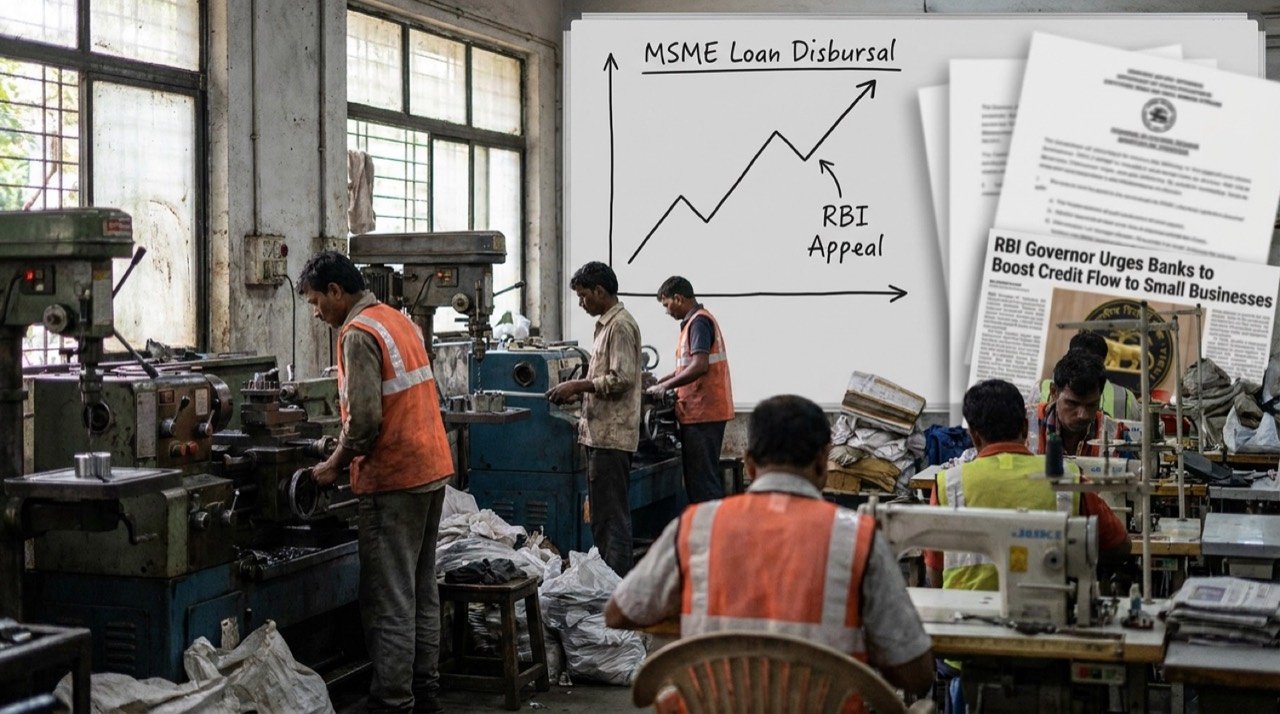
RBI Governor Urges Banks to Treat MSMEs as Growth Partners, Not Just Borrowers
RBI Governor Sanjay Malhotra has called on banks to see micro, small and medium enterprises as growth partners, reviving focus on credit access for the firms that employ millions across India.

RBI Aligns UPI-Linked Credit Line Rules With Underlying Loan Norms
The Reserve Bank of India has clarified that credit lines delivered over UPI must follow the prudential rules of the underlying loan, closing a regulatory gap as banks and fintechs race to build payment-linked lending.
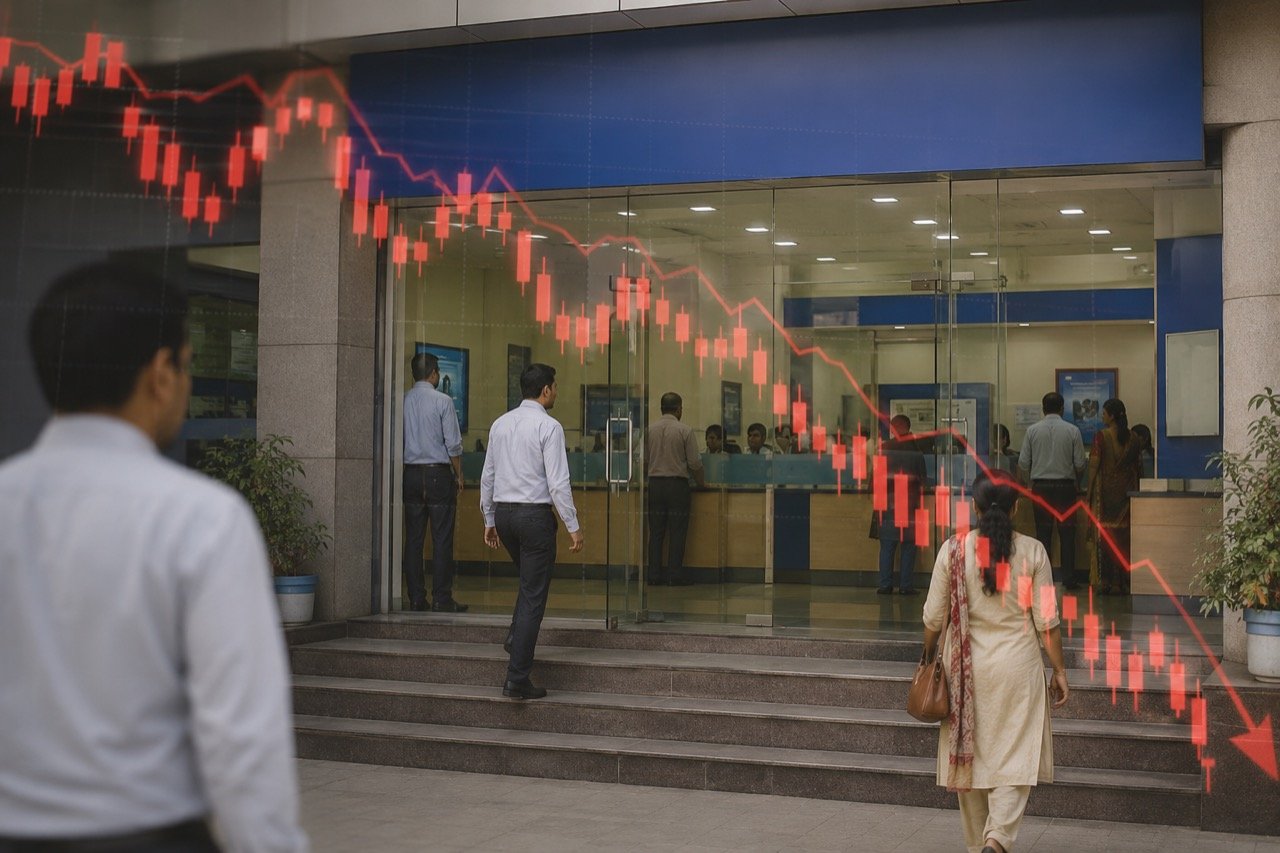
Union Bank Shares Fall After Q1 Update and Management Changes
Union Bank of India stock slipped after its June-quarter business update showed slower deposit growth alongside stronger advances, with senior management changes adding to investor caution.

Reliance Capital Ex-CFO Arrest Puts Corporate Governance on Watch
The CBI's arrest of a former Reliance Capital chief financial officer in a reported Rs 9,280 crore bank-fraud case has renewed scrutiny of corporate disclosures, lender due diligence and the strength of India's financial safeguards.
More from this section
More
Adani Case: US DOJ Pushes for Permanent Dismissal of Charges
The US Department of Justice has urged a judge to permanently dismiss charges against Gautam Adani, calling the case legally flawed — a reversal with consequences for markets, diplomacy and cross-border enforcement.

Akasa Air Inducts 40th Aircraft in Indian Aviation Scale-Up
Akasa Air's 40th aircraft, ferried to Bengaluru via Seattle, Reykjavik and Cairo, marks a fleet milestone for the young carrier and a fresh signal that India's aviation market remains firmly in expansion mode.

BARC Ratings Suspension Leaves Indian TV Industry Flying Blind
BARC's pause on television ratings has put India's broadcast measurement system under fresh scrutiny, leaving broadcasters, advertisers and media planners without the weekly audience data that anchors the TV economy.