Reliance Capital Ex-CFO Arrest Puts Corporate Governance on Watch
The CBI's arrest of a former Reliance Capital chief financial officer in a reported Rs 9,280 crore bank-fraud case has renewed scrutiny of corporate disclosures, lender due diligence and the strength of India's financial safeguards.
Commentary & Analysis ·

The arrest of a former Reliance Capital chief financial officer in a bank-fraud investigation has put corporate governance, lender oversight and financial accountability firmly back in the spotlight. Reports indicate the CBI took the former executive into custody in connection with an alleged fraud running into thousands of crores, with a Mumbai court remanding him to agency custody. The episode, still at an early investigative stage, has nonetheless reopened a familiar but unresolved conversation in India's financial sector: how much faith the system should place in individual executives, and how much it should place in the structures meant to check them.
Why the CFO's chair matters
Cases involving senior finance executives draw outsized attention because the CFO function sits near the centre of corporate control. It touches accounts, borrowing, financial reporting, cash flow and communication with lenders. A chief financial officer is, in effect, the custodian of the numbers that shareholders, auditors, rating agencies and banks all rely upon to make decisions. When allegations arise in that zone, they inevitably raise questions about internal checks, board oversight and whether banks were equipped to spot warning signs early. It is precisely because the CFO's office is designed to be a check on excess elsewhere in a company that any allegation against its occupant carries a heavier symbolic weight than a similar allegation against, say, a mid-level manager. If the checkpoint itself is compromised, the entire chain of assurance that flows from it comes into question.
A neutral frame remains essential. An arrest or investigation is not a conviction, and every accused person is entitled to due process under law. Yet such cases are legitimately newsworthy: they involve public money, regulated institutions and the credibility of India's financial architecture. A non-banking financial company of the scale and public profile once associated with Reliance Capital is not merely a private commercial entity; it is a node in a wider credit ecosystem that includes depositors, co-lenders, bondholders and, ultimately, ordinary savers whose money is channelled through such institutions. Any doubt about the integrity of its financial reporting therefore has ripple effects well beyond the company's own balance sheet.
The slow grind of financial fraud investigations
India's experience with white-collar and financial-sector fraud cases follows a fairly consistent pattern: a dramatic arrest, extensive media coverage in the initial days, and then a long, often opaque, period of investigation, chargesheets, bail hearings and appeals that can stretch across years. This is not necessarily a flaw unique to this case; complex financial fraud investigations require forensic audits, tracing of fund flows across multiple entities, and cooperation between agencies, all of which take time. But the gap between public attention at the moment of arrest and public attention at the moment of resolution — which is often minimal by comparison — creates a structural problem. The institutions and individuals affected by an alleged fraud, including lenders who extended credit in good faith and employees whose careers become entangled with the company's reputation, are left in a prolonged state of uncertainty that the legal process alone does not resolve quickly.
This is why the framing of such cases matters so much. A custodial remand is a procedural step, not a verdict on guilt. But the public conversation around these cases tends to compress that distinction, treating an arrest as though it settles the question of wrongdoing. The more useful frame, and the one this newspaper prefers, is to treat the arrest as the opening of a process whose outcome will only be meaningful once it concludes with clarity — whether that clarity vindicates the accused or confirms the allegations.
Lessons for investors and lenders
For investors, the episode is a reminder to read beyond headline profit numbers. Governance quality, audit notes, debt structure and related-party exposures can matter as much as growth projections. A company's reported profitability can look robust even as underlying financial arrangements deteriorate, particularly in sectors like non-banking finance where leverage and borrowing relationships are central to the business model. Investors who rely solely on top-line metrics without scrutinising footnotes, auditor qualifications and related-party transaction disclosures are, in effect, outsourcing their due diligence to management's own account of events — a risky proposition when that very account is what is being called into question.
For lenders, the case underlines the importance of post-disbursal monitoring and documentation discipline — the unglamorous work that determines whether early red flags are caught or missed. It is one thing to conduct rigorous due diligence before disbursing a loan; it is another to maintain the ongoing vigilance needed to detect diversion of funds, deteriorating asset quality or governance lapses after the money has already left the bank's books. Banks and financial institutions that lend to large, complex borrowers need monitoring systems that do not simply trust periodic filings at face value but actively verify how borrowed funds are being deployed. The alleged scale of the fraud in this case, running into thousands of crores, suggests that if the allegations are proven, existing monitoring mechanisms may have been insufficient to catch problems before they compounded.
The wider governance question
The broader point is that financial trust is built through systems, not personalities. Strong companies need controls that can withstand stress, leadership changes and market downturns, and regulators need processes that clarify accountability without trial by headline. A single competent or honest executive cannot substitute for institutional safeguards, because personnel change, incentives shift and even well-intentioned individuals operate under pressures that can compromise judgement. This is precisely why corporate governance frameworks emphasise board independence, audit committee oversight and external auditor scrutiny as institutional counterweights to any one individual's discretion, however senior that individual's role.
This case also has implications for how regulators and lenders in India think about non-banking financial companies more broadly. The NBFC sector has, over the past several years, seen its own share of governance and liquidity stress episodes, and each one tends to prompt calls for tighter oversight, better disclosure norms and closer coordination between banking regulators and corporate affairs authorities. Whether this particular case leads to any concrete tightening of monitoring norms, or simply adds to the list of pending matters working their way through investigative and judicial processes, will say a great deal about whether India's financial sector is capable of learning from its own recurring episodes.
The NE Times View
India's corporate-fraud cases too often generate dramatic arrests followed by years of procedural drift, leaving depositors, shareholders and honest employees in limbo. What matters now is not the spectacle of custody but whether the investigation produces a clear, time-bound accounting of how a regulated financial company's borrowings allegedly went astray. A protracted, unresolved investigation serves no one: not the accused, who remains under a cloud without resolution; not the lenders, who need clarity to assess their own exposures; and not the public, whose trust in regulated financial institutions depends on seeing that allegations of this magnitude are actually followed through to a conclusion.
If the process ends with strengthened lender monitoring norms and sharper board accountability, it will have served the public interest, offering a template for how such investigations can produce institutional improvement rather than mere spectacle. If it fades into the long queue of pending white-collar trials, the cost will be paid in eroded trust in India's financial system — a cost that compounds quietly each time a high-profile case fails to reach a timely and transparent conclusion.
Key takeaways
- The arrest of a former Reliance Capital CFO in an alleged multi-thousand-crore bank-fraud case has renewed scrutiny of corporate governance and lender oversight, though it remains an allegation at this stage, not a conviction.
- The CFO role's centrality to accounts, borrowing and lender communication means allegations there raise wider questions about internal checks and board oversight.
- Investors should weigh governance quality, audit notes and debt structure alongside headline profit figures rather than relying on them alone.
- Lenders' post-disbursal monitoring and documentation discipline are as critical as pre-loan due diligence in catching early warning signs.
- The case's ultimate value to the public interest depends on whether it concludes with a clear, time-bound accounting and reforms to monitoring and accountability, rather than fading into prolonged procedural drift.
You may also like to read

CBI Arrests Former Reliance Finance CEOs in Multi-Crore Bank Fraud Probe
The arrests of ex-RCFL and RHFL chief executives mark a sharp escalation in probes into alleged losses of more than Rs 7,600 crore to public sector banks.
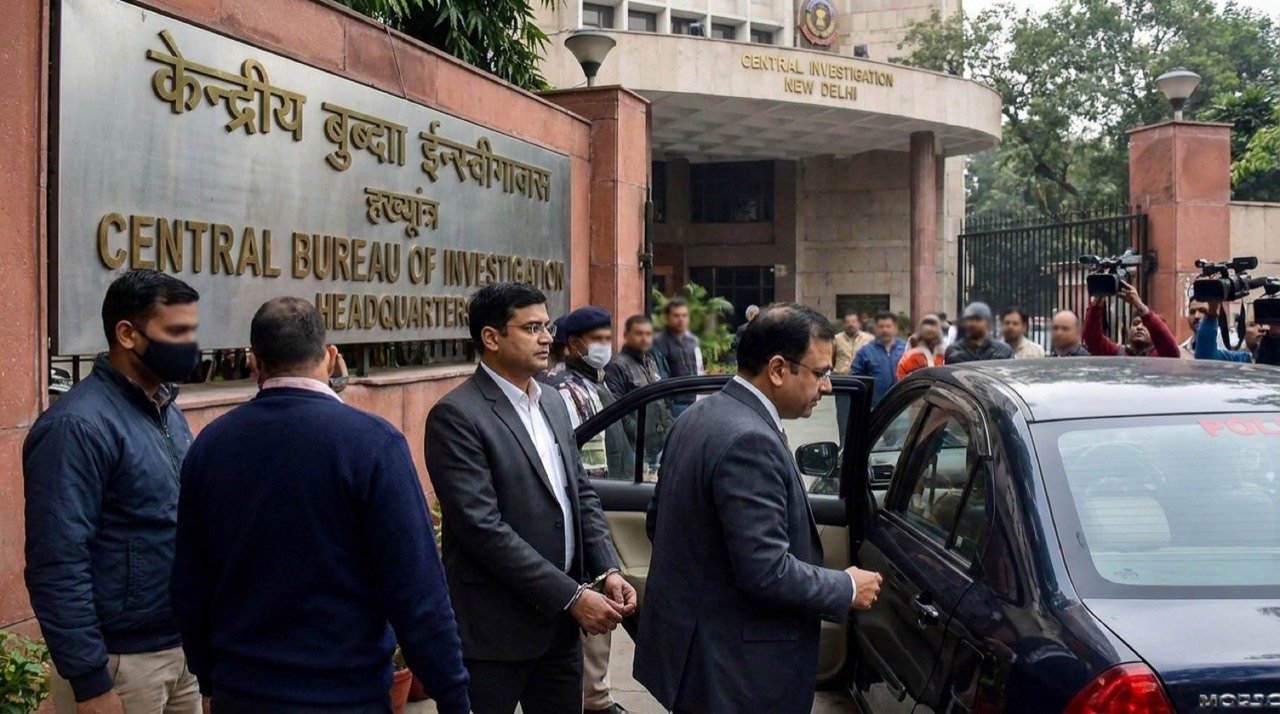
CBI Arrests Two Former Reliance ADAG CEOs in Bank-Loss Loan Probes
The CBI has arrested former chief executives of two Reliance ADAG finance firms over alleged loan irregularities that the agency says caused public sector banks losses running into thousands of crores.

Tata Leads, Reliance Dominates, Adani Expands: Hurun Maps India's New Corporate Order
The Hurun India 500 list released around 24 June 2026 confirmed Tata's grip on the top spot, Reliance's reign as the most valuable company and Adani's relentless expansion across sectors.
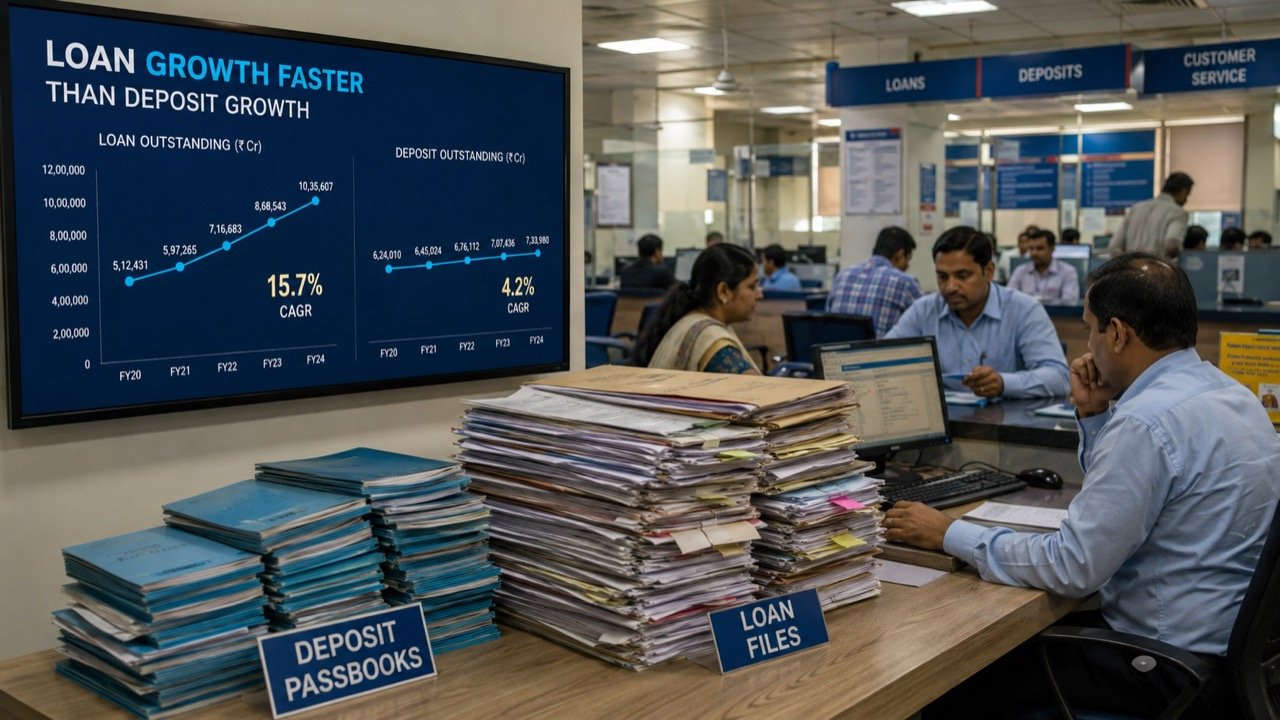
PSU Banks See Loan Growth Outrun Deposits as Credit Demand Holds
Public-sector banks are lending faster than they are gathering deposits, a gap that signals firm credit appetite in the economy but puts funding costs and deposit mobilisation under the spotlight.
More from this section
More
Adani Case: US DOJ Pushes for Permanent Dismissal of Charges
The US Department of Justice has urged a judge to permanently dismiss charges against Gautam Adani, calling the case legally flawed — a reversal with consequences for markets, diplomacy and cross-border enforcement.

Akasa Air Inducts 40th Aircraft in Indian Aviation Scale-Up
Akasa Air's 40th aircraft, ferried to Bengaluru via Seattle, Reykjavik and Cairo, marks a fleet milestone for the young carrier and a fresh signal that India's aviation market remains firmly in expansion mode.

BARC Ratings Suspension Leaves Indian TV Industry Flying Blind
BARC's pause on television ratings has put India's broadcast measurement system under fresh scrutiny, leaving broadcasters, advertisers and media planners without the weekly audience data that anchors the TV economy.