CBI Arrests Two Former Reliance ADAG CEOs in Bank-Loss Loan Probes
The CBI has arrested former chief executives of two Reliance ADAG finance firms over alleged loan irregularities that the agency says caused public sector banks losses running into thousands of crores.
Commentary & Analysis ·
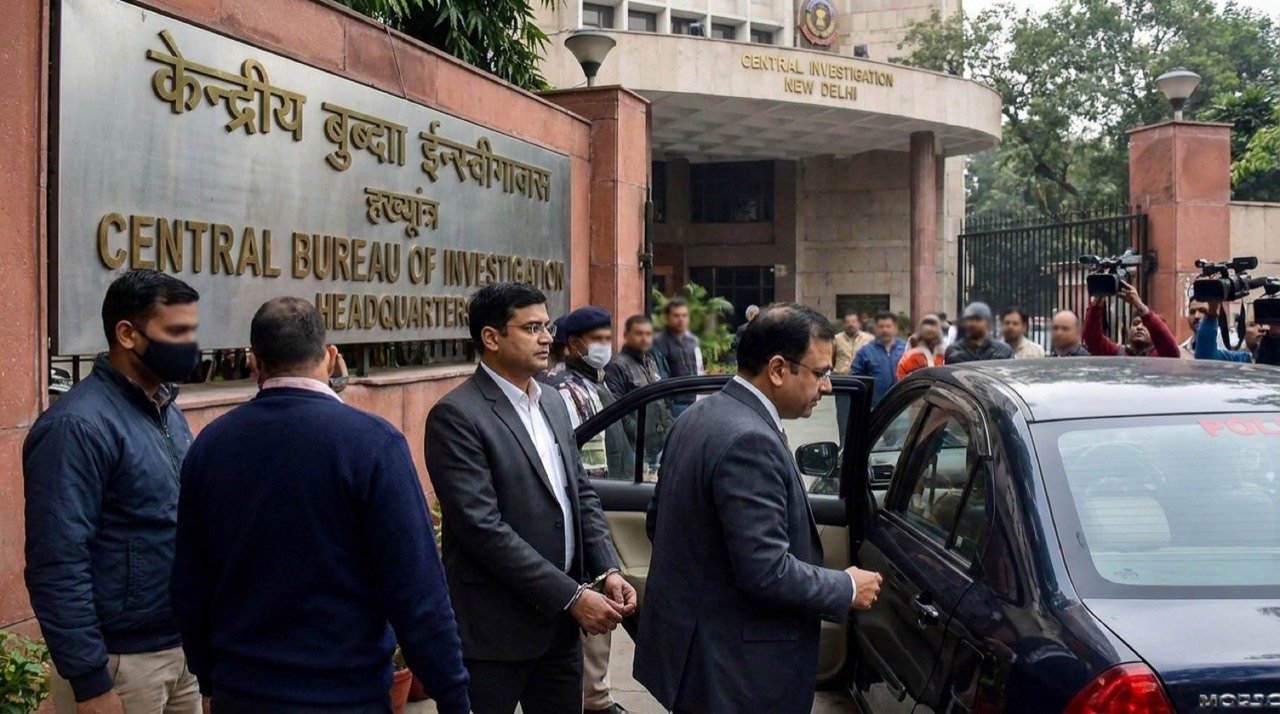
The Central Bureau of Investigation has arrested two former chief executives of Reliance ADAG companies in corruption cases tied to alleged loan irregularities, in a move that turns fresh scrutiny on lending controls inside India's non-bank finance sector. The agency alleges that decisions taken within these firms inflicted heavy losses on public sector banks. The arrests are notable not merely for the names involved but for what they signal about the pace, and the limits, of India's efforts to hold finance executives accountable for lending decisions made nearly a decade ago at the height of the shadow-banking boom.
Who has been arrested
The arrested executives were identified as Devang Mody, former director and CEO of Reliance Commercial Finance Limited, and Ravindra Sudhalkar, former executive director and CEO of Reliance Home Finance Limited. Both headed lending businesses within the Anil Dhirubhai Ambani Group during the periods under examination. The Reliance group had not responded at the time the underlying report was published, and the allegations are yet to be tested in court. That last point matters: an arrest is an investigative step, not a verdict, and the evidentiary case against both men will now have to be built, disclosed and contested through the ordinary machinery of criminal procedure, which in India's corporate fraud cases has historically stretched across years, sometimes decades.
The scale of the alleged losses
According to the CBI, one case involves wrongful losses of Rs 4,097 crore to 13 public sector banks, while a second alleges losses of Rs 3,526 crore to 10 public sector banks. Together, the two cases point to a combined alleged exposure running into thousands of crores of public money, spread across more than twenty separate lending institutions. The agency says the accused approved loans to intermediary and conduit companies despite lending-policy and regulatory concerns, and that funds were subsequently diverted to related group companies. The pattern described, loans routed through layers of intermediaries before reaching related entities, is a familiar one in Indian corporate lending scandals, and it is precisely this kind of structuring that regulators have long struggled to detect in real time, as opposed to years after the fact when forensic audits and investigative agencies reconstruct the money trail.
Why it matters for the financial system
The arrests revive long-running questions about how large loans were sanctioned through non-bank lenders and how rigorously banks conducted due diligence on the end use of funds. Non-bank finance companies occupy a peculiar position in India's credit architecture: they are lightly regulated relative to banks, yet they borrow heavily from the same public sector banks whose depositors ultimately bear the risk when things go wrong. When an NBFC's own credit decisions are alleged to have waved through loans to conduit firms despite internal policy objections, the failure is not confined to one company. It implicates the broader chain of oversight, including the public sector banks that extended credit to these NBFCs in the first place, and the regulatory bodies tasked with monitoring group-company lending and related-party transactions.
These arrests also sharpen the debate over individual accountability for credit decisions taken inside finance companies that later defaulted. For years, the dominant narrative around India's bad-loan crisis has centred on systemic failure: weak underwriting standards, political pressure on public sector bank lending, and regulatory gaps that allowed non-bank lenders to grow rapidly with limited scrutiny. Naming and arresting specific former executives shifts part of that narrative toward personal responsibility, a shift that will be watched closely by other executives who ran similarly structured lending businesses during the same period.
What the evidence trail will need to show
With the cases now moving into the judicial phase, attention will shift to the evidence the agency presents and to whether the probe widens to other decision-makers. Prosecutors will need to demonstrate not just that loans were extended to conduit companies, but that the executives in question knowingly bypassed lending-policy and regulatory safeguards, and that the diversion of funds to related group companies was a deliberate scheme rather than a series of poor but good-faith commercial judgements. That distinction, between fraud and mere business failure, is often where these cases are won or lost in Indian courts, and it typically takes years of forensic accounting, bank statements and internal communications to establish beyond reasonable doubt.
For India's banks and regulators, the episode is a renewed prompt to tighten lending oversight and conduit-monitoring across the non-bank finance space. Public sector banks in particular will face questions about why loan approvals to intermediary companies were not flagged earlier, given that the CBI's own account suggests internal lending-policy concerns existed at the time the loans were sanctioned. If such concerns were documented and overridden, that raises uncomfortable questions not only for the ADAG-linked companies but for the credit committees and risk officers at the lending banks who signed off on the exposure.
The NE Times View
Arrests of executives are easier than recovering the thousands of crores the banks are said to have lost, and that gap is the real story. India's record on prosecuting big-ticket corporate loan defaults is one of headlines that rarely end in convictions or repayment. Cases of this scale routinely take years to reach trial, longer still to reach judgment, and recoveries, when they happen at all, are typically a fraction of the sums originally lost. The public sector banks named in these cases have already absorbed the accounting losses on their books, and taxpayers, through bank recapitalisation and provisioning, ultimately share that burden.
Watch whether this probe produces a recovery roadmap and accountability for the bankers who sanctioned the loans, not just a few perp-walks. A credible investigation should, in time, answer three questions that go beyond the fate of Mody and Sudhalkar: who at the lending banks approved exposure to these NBFCs despite the scale of the group's borrowings, what happened to the diverted funds and whether any of it is recoverable, and whether the regulatory framework governing related-party lending within NBFC groups has been tightened since these loans were sanctioned. Absent answers to those questions, this episode risks becoming another data point in a long list of high-profile arrests that generate headlines without meaningfully deterring the next round of conduit lending.
Key takeaways
- The CBI has arrested Devang Mody, former CEO of Reliance Commercial Finance Limited, and Ravindra Sudhalkar, former CEO of Reliance Home Finance Limited, in separate loan-related corruption cases.
- The two cases together allege wrongful losses of Rs 4,097 crore to 13 public sector banks and Rs 3,526 crore to 10 public sector banks, involving loans to intermediary and conduit companies.
- The CBI alleges funds were diverted to related group companies despite internal lending-policy and regulatory concerns at the time the loans were approved.
- The allegations are untested in court, and Reliance had not responded at the time the underlying report was published.
- The larger test for India's financial system will be whether the probe leads to fund recovery and accountability for bank-side lending decisions, not just arrests of NBFC executives.
You may also like to read

CBI Arrests Former Reliance Finance CEOs in Multi-Crore Bank Fraud Probe
The arrests of ex-RCFL and RHFL chief executives mark a sharp escalation in probes into alleged losses of more than Rs 7,600 crore to public sector banks.

CBI Arrests Former RCFL and RHFL CEOs in Rs 7,623 Crore Bank Fraud Case
The Central Bureau of Investigation has arrested two former Reliance finance executives over alleged loan diversion that investigators say cost public sector banks Rs 7,623 crore.

Reliance Capital Ex-CFO Arrest Puts Corporate Governance on Watch
The CBI's arrest of a former Reliance Capital chief financial officer in a reported Rs 9,280 crore bank-fraud case has renewed scrutiny of corporate disclosures, lender due diligence and the strength of India's financial safeguards.
CBI Arrests Haryana IAS Officer Pankaj Agarwal As Bank-Fraud Probe Widens
The CBI has arrested senior Haryana-cadre IAS officer Pankaj Agarwal in a widening probe into the alleged diversion of crores in public funds through bank accounts and government departments.
More from this section
More
Adani Case: US DOJ Pushes for Permanent Dismissal of Charges
The US Department of Justice has urged a judge to permanently dismiss charges against Gautam Adani, calling the case legally flawed — a reversal with consequences for markets, diplomacy and cross-border enforcement.

Akasa Air Inducts 40th Aircraft in Indian Aviation Scale-Up
Akasa Air's 40th aircraft, ferried to Bengaluru via Seattle, Reykjavik and Cairo, marks a fleet milestone for the young carrier and a fresh signal that India's aviation market remains firmly in expansion mode.

BARC Ratings Suspension Leaves Indian TV Industry Flying Blind
BARC's pause on television ratings has put India's broadcast measurement system under fresh scrutiny, leaving broadcasters, advertisers and media planners without the weekly audience data that anchors the TV economy.