CBI Arrests Haryana IAS Officer Pankaj Agarwal As Bank-Fraud Probe Widens
The CBI has arrested senior Haryana-cadre IAS officer Pankaj Agarwal in a widening probe into the alleged diversion of crores in public funds through bank accounts and government departments.
Commentary & Analysis ·
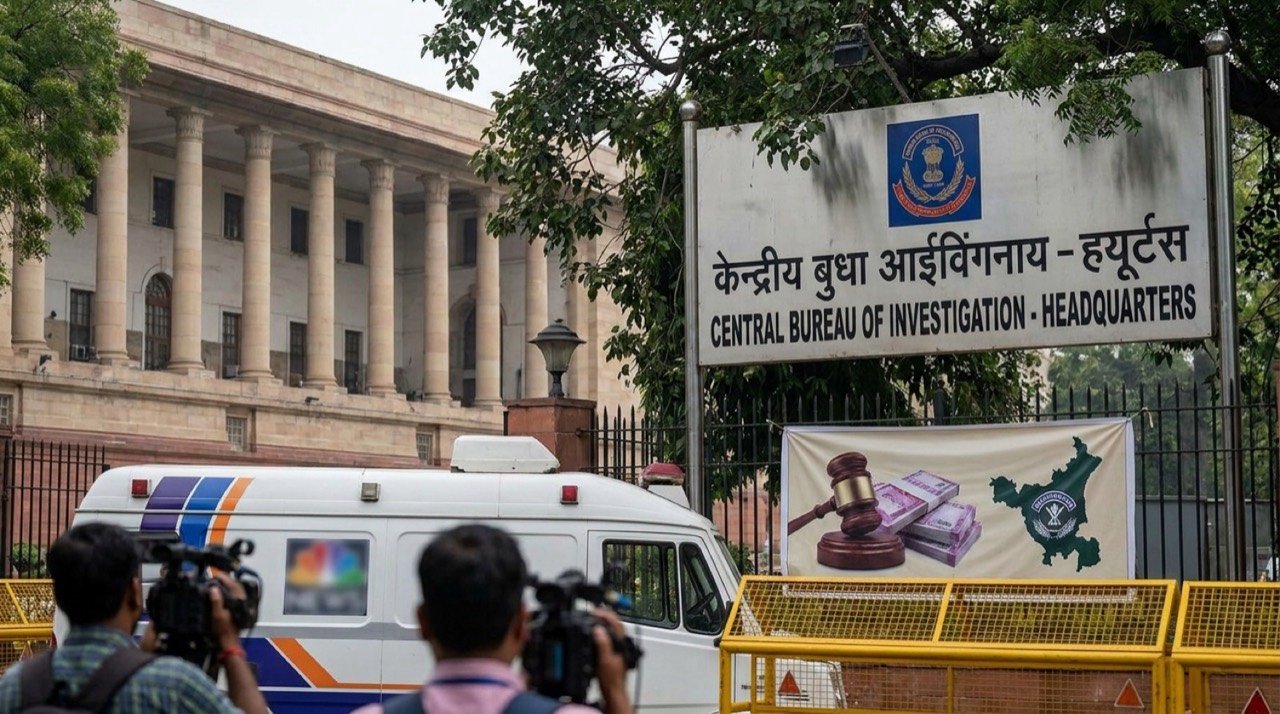
The Central Bureau of Investigation has arrested Haryana-cadre IAS officer Pankaj Agarwal in a case linked to the alleged diversion of government funds through bank accounts. This marks, according to reports, the second arrest of an IAS officer in a probe that has been steadily widening in scope and consequence. That a serving officer of the Indian Administrative Service has now been taken into custody for a second time in the same matter suggests investigators are no longer treating this as an isolated lapse by one individual, but as a pattern that runs deeper into the machinery of government finance.
A widening investigation
The case is reported to involve public money, bank officials and government departments acting in concert, with the IDFC First Bank fund-fraud matter sitting at its centre. The figures under scrutiny are said to run into hundreds of crores of rupees, a scale that immediately elevates the matter beyond routine administrative irregularity into the realm of large-scale financial crime. The arrest of a second senior officer is significant precisely because it signals that investigators believe the alleged scheme reached well beyond a handful of individuals acting alone. In most bank-fraud cases of this magnitude, the involvement of multiple officials across departments points to either a coordinated conspiracy or a systemic failure of oversight that allowed the same loophole to be exploited repeatedly.
Agarwal is a senior administrator, and coverage of the case has noted his oversight of significant official responsibilities within the Haryana state government. That such a figure now finds himself in the custody of the CBI places the spotlight firmly on how public funds moved through official channels, which approvals were sought and granted, and, crucially, where the internal checks that are meant to catch precisely this kind of diversion appear to have failed or been circumvented.
Why the case matters
Beyond the individuals named in the investigation, the case touches something larger: the integrity of state finances and the controls that are meant to safeguard them. When public money is allegedly routed through bank accounts in ways that escape ordinary scrutiny, the question that follows is not only who acted improperly, but how the system permitted such action to occur and persist. A single dishonest official is a personnel problem. A scheme that requires the cooperation, or at least the silence, of bank officials and multiple government departments is a governance problem, and one with implications for every state that shares similar administrative structures.
Cases involving serving IAS officers carry particular weight in the Indian context because they test public confidence in the administrative machinery itself. The IAS is meant to represent the steady, professional backbone of Indian governance, insulated in principle from the pressures that can compromise elected officials. When that insulation appears to fail, and when it fails a second time within the same investigation, the reputational cost extends well beyond the individuals concerned to the credibility of the civil service as an institution. It is little surprise, then, that the outcome of this case will be watched closely by other states grappling with similar vulnerabilities in their own financial controls, particularly where banks, departments and senior officials interact with large volumes of public money.
Allegations still to be tested
It is important to stress, as with any case at this stage, that the allegations against Agarwal remain unproven and will be tested through the ordinary course of the legal process. An arrest is the beginning of that process, not its conclusion, and Indian law affords the accused the presumption of innocence until a court determines otherwise. Several distinct stages now lie ahead, each of which will shape the eventual direction and outcome of the matter.
The CBI's next investigative steps, including the possibility of further arrests, will indicate how far up or across the administrative hierarchy the agency believes the alleged scheme extended. The framing of formal charges against those already in custody will clarify the precise legal basis on which the prosecution intends to proceed. Court proceedings and any bail applications filed by the accused will test the strength of the evidence gathered so far, since bail hearings often reveal, in broad strokes, how solid or circumstantial the case against an accused officer actually is. Examination of the bank accounts and departmental records involved will be the most technically demanding phase, requiring forensic accounting to trace the movement of funds across institutions. And recovery efforts for any diverted public funds will ultimately determine whether the state is made whole, regardless of how the criminal proceedings conclude.
Each of these stages will shape the direction of the matter, and it is the courts, not the headlines, that will ultimately determine culpability once the evidence has been fully examined. Investigation observers have noted that the case is significant because it concerns the protection of state funds and the strength of internal financial controls, a framing that captures why this matter deserves attention well beyond the fate of any single officer.
What a second arrest signals
There is a meaningful difference between a single arrest and a second one within the same probe. A lone arrest can often be explained away, fairly or not, as the isolated failing of one official under pressure or temptation. A second arrest changes the calculus. It suggests to investigators, and to the public, that the alleged diversion of funds was not a one-off act but something closer to a functioning arrangement, one that may have relied on cooperation or acquiescence across more than one office. This is precisely why the CBI's next moves matter so much. If the trail leads to further arrests, or to formal findings against the bank officials allegedly involved, the case will begin to look less like an individual crime and more like a structural failure of the sort that tends to prompt wider administrative reform, audits and tightened protocols across departments that handle public money.
For the Haryana government, the political and administrative cost of this episode will depend heavily on how transparently it is seen to cooperate with the investigation. Governments are often judged not by the misconduct of individual officials, which can occur despite the best safeguards, but by how promptly and openly they respond once wrongdoing is alleged. A slow or defensive response risks compounding reputational damage, while visible cooperation with the CBI's efforts, including support for recovery of diverted funds, can help limit the wider fallout.
The NE Times View
An arrest at the IAS level signals that the probe has cleared a high evidentiary bar, and that in itself is welcome accountability. Investigators do not move against senior civil servants lightly, and a second such arrest within the same case indicates a degree of confidence in the evidence gathered so far. But arrests are not convictions, and India's record on prosecuting senior officials is one of glacial trials and quiet acquittals, where cases can stretch across years and, in some instances, lose momentum long before a verdict is reached.
The real test of this case is whether it ends in a clear verdict or fades into procedural limbo, as so many high-profile financial cases involving officials have done before. The public should watch not merely the drama of the arrests, but the slower, less newsworthy work that follows: the recovery of diverted funds, the tightening of internal controls at the banks and departments involved, and whether the investigation is allowed to run its full course without political interference. The headline detention is the easy part. What follows is harder, and it is there that this case will ultimately be judged.
Key takeaways
- The CBI has arrested Haryana-cadre IAS officer Pankaj Agarwal, the second such arrest of an IAS officer in a widening bank-fraud probe centred on the IDFC First Bank fund-fraud matter, involving figures in the hundreds of crores.
- The case implicates public money, bank officials and government departments, suggesting a systemic failure of financial controls rather than the actions of a single individual.
- Key stages ahead include further possible arrests, formal charges, bail proceedings, forensic examination of bank and departmental records, and efforts to recover diverted public funds.
- The allegations remain unproven, and the outcome will depend on due legal process rather than the arrests alone.
- The lasting significance of the case will rest on whether it leads to genuine recovery of funds and systemic reform, or fades into the prolonged, inconclusive trials that have characterised past cases against senior Indian officials.
You may also like to read
CBI Arrests Haryana IAS Officer Pankaj Aggarwal in IDFC FIRST Bank Fraud Case
The CBI has arrested senior Haryana IAS officer Pankaj Aggarwal in an IDFC FIRST Bank fraud case, reviving scrutiny of governance, accountability and the trail of financial investigations.
CBI Arrest of Haryana IAS Officer Pankaj Agarwal Sharpens Corruption Debate
The CBI's arrest of senior Haryana IAS officer Pankaj Agarwal in a corruption-related case has renewed scrutiny of accountability and transparency in state administration.
CBI Arrests Haryana IAS Officer Dhirendra Khadgata in Rs 60-Crore IDFC First Bank Fund Case
The CBI has arrested Haryana IAS officer Dhirendra Khadgata over alleged diversion of around Rs 60 crore in government funds linked to an IDFC First Bank branch, reviving questions of governance and banking oversight.
Lucknow Fire Probe Widens After Arrests and Suspensions Over Aliganj Tragedy
Fifteen people died in a fire at a Lucknow commercial building as police make arrests, four officials face suspension and scrutiny turns to fire exits, approvals and inspection failures.
More from this section
More
AICTE Industry Fellowship 2026: Rs 1.5 Lakh Scheme Closes July 5
The AICTE Industry Fellowship Programme 2026, which places technical-education faculty inside leading companies on a Rs 1.5 lakh monthly stipend, reached its application deadline on July 5.
Bay of Bengal Low Pressure System Revives Monsoon Over Western India
A low-pressure system over the Bay of Bengal has pushed the monsoon back into an active phase, bringing steady heavy rain to Kerala, coastal Karnataka and Maharashtra, and putting Mumbai and Pune on preparedness watch.
Bishnoi Gang Suspects Injured in Haryana Encounter as Police Tighten Net
A joint Haryana-Delhi Police operation in Bahadurgarh left two suspected Lawrence Bishnoi gang members injured, spotlighting the multi-state coordination now central to India's fight against organised crime networks.