Praggnanandhaa Outclasses Gukesh In All-Indian Norway Chess Duel To Stay In Title Hunt
R Praggnanandhaa dismantled world champion D Gukesh in just 34 moves at Norway Chess 2026, climbing to second and keeping the pressure on leader Wesley So.
Commentary & Analysis ·
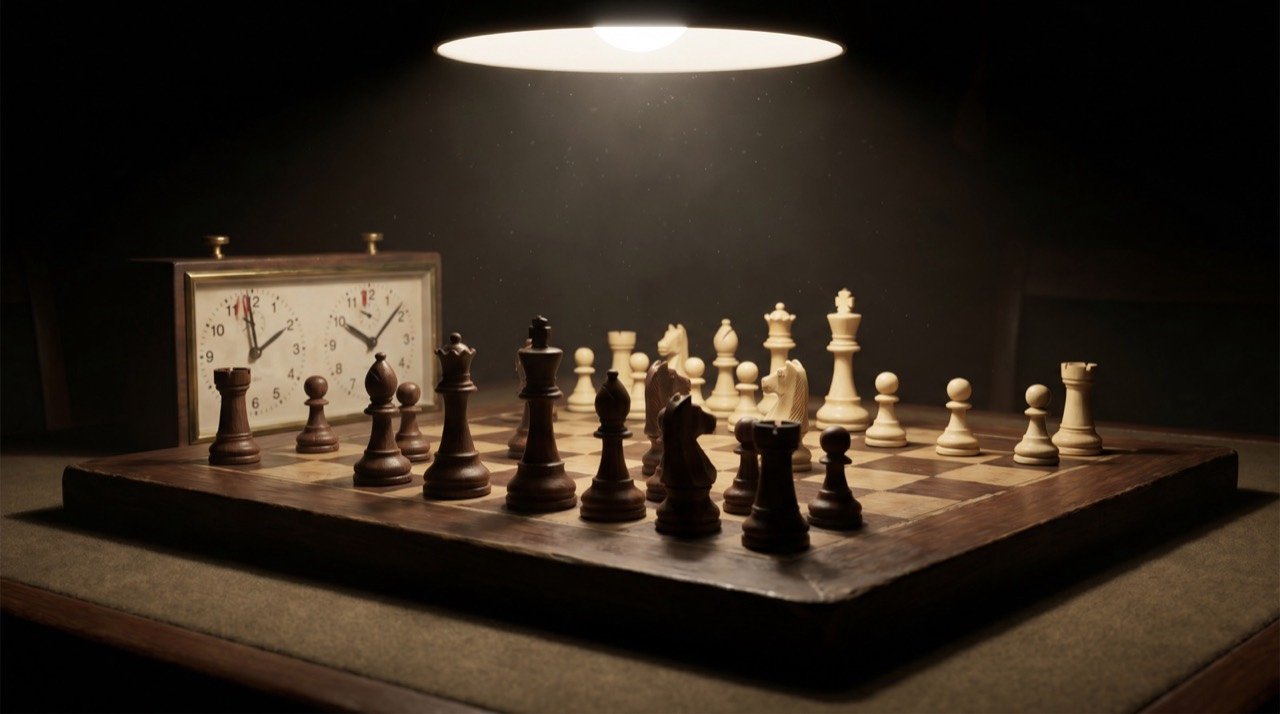
It was billed as a clash of generations and reputations, and R Praggnanandhaa left no doubt about who held the upper hand. The Indian grandmaster outclassed world champion D Gukesh in just 34 moves in an all-Indian battle at Norway Chess 2026, a result that lifted him to second in the standings and kept his title ambitions firmly alive. That such a contest could unfold at all, two Indians deciding the outcome between themselves at the sport's most exacting table, says as much about the current state of Indian chess as it does about either individual's ambitions this year.
A statement win
The victory was as much about authority as it was about points. Facing the reigning world champion, Praggnanandhaa controlled the flow from the middlegame and converted with the kind of clinical efficiency that has come to define his best classical performances. A 34-move decision against the sitting world champion is not a grind-it-out escape or a time-scramble blunder; it is the signature of a player who saw the position more clearly than his opponent for a sustained stretch of the game. For a field as compact and unforgiving as Norway Chess, where every round carries outsized weight on the final table, that kind of clarity under pressure is precisely what separates contenders from also-rans.
For Gukesh, the defeat was a reminder that the crown brings a target on the back, with every rival eager to test the champion in person. Holding the world title changes the psychological framing of every game a player sits down to: opponents no longer arrive hoping merely to hold a draw against a rated peer, they arrive determined to prove they belong at the very top, and a loss to a compatriot in this context will sting more than most. It is also, in a narrower sporting sense, simply part of the territory that comes with being world champion; no titleholder in the history of the game has gone through a calendar year unbeaten, and a single loss in a round-robin of this strength says little on its own about the durability of Gukesh's reign.
Two of a generation, not two isolated stars
The two represent the spearhead of an Indian chess generation that has rewritten expectations over the past few years, turning what were once isolated breakthroughs into a sustained presence at the very top of the world game. A decade ago, an Indian grandmaster reaching an elite invitational like Norway Chess was itself newsworthy. Today, the newsworthy event is two Indians meeting each other in a game that decides the destination of the tournament trophy. That shift, from breakthrough to expectation, is the real substance behind Wednesday's result, and it is worth pausing on rather than treating the game as merely another line in a crosstable.
Praggnanandhaa and Gukesh have, in different ways, spent recent years pushing each other and their peers forward. Their rivalry is not adversarial in the corrosive sense; it is the kind of peer competition that tends to accelerate improvement on both sides, each match forcing sharper preparation, more rigorous opening theory and less margin for the complacency that can creep in when a player has no domestic rival of comparable strength. That dynamic, well documented in other sports and other eras of chess, from the Karpov-Kasparov years to the current era's various national clusters, appears to be repeating itself with this Indian cohort.
The standings race
Wesley So remained at the top of the leaderboard, narrowly ahead of Praggnanandhaa as the tournament moved into its decisive rounds. With the Indian sitting just behind on points, the win over Gukesh did more than settle a personal rivalry; it kept the title within reach heading into the closing stretch. In a tournament of this format, where a handful of games separate first from mid-table, a single decisive result against a direct rival for the honours can be the difference between finishing on the podium and finishing as an also-ran. Praggnanandhaa now goes into the remaining rounds knowing that closing the gap on So is mathematically live, but also that So, an experienced campaigner at this level, is unlikely to give ground easily.
The bare facts of where the tournament stands are straightforward: Praggnanandhaa beat Gukesh in 34 moves in an all-Indian clash; the result lifted Praggnanandhaa to second in the standings; Wesley So held a narrow lead at the top of the leaderboard; and Norway Chess remained one of the strongest closed events of the year. Each of those facts, taken together, frames the closing rounds as a genuine three-cornered contest between American and Indian chess at its highest level, playing out in a Nordic setting that has become one of the calendar's most prestigious classical fixtures.
What it means for Indian chess
Beyond the scoreboard, the meeting underlined how deep the Indian talent pool now runs at the elite level. With Gukesh as world champion and Praggnanandhaa pushing for prestigious titles on the classical circuit, the two are no longer prospects but headline acts, regularly decisive in tournaments that shape the global rankings. That distinction matters. Prospects are watched for potential; headline acts are watched because their games move standings and headlines in real time, as this one did.
Norway Chess, with its compact field of the world's best, offers little margin for error, and a single win can swing the entire standings. For Praggnanandhaa, the closing rounds present a clear opportunity to turn a strong campaign into a marquee triumph. A win of this stature, against the reigning world champion no less, also carries value beyond this single event: it reinforces Praggnanandhaa's own case as a genuine contender for future world championship cycles, not merely a strong supporting player in someone else's era.
Whatever the final result, the takeaway for Indian fans is the sight of two of their own occupying the top of an elite leaderboard, trading blows with the best in the world and, on this occasion, deciding the contest between themselves. For a chess-following public that has watched the national programme mature rapidly, from junior circuit results to Olympiad medals to, now, a world champion and a top-tier title contender sharing a boardroom, this is the kind of moment that will be replayed and dissected well beyond the tournament's closing ceremony.
The NE Times View
An all-Indian duel at the sport's elite table, settled in 34 moves, is the clearest sign yet that India's chess golden generation has truly arrived. Praggnanandhaa's win over a reigning world champion is no upset; it is a peer rivalry that will sharpen both. The deeper story is institutional: India now produces world-beaters at a depth few nations can match. What began as the emergence of a handful of prodigious talents has, over a remarkably short span, hardened into structural strength, a pipeline capable of producing not one dominant player but several capable of contesting the world's biggest events simultaneously. That is the more durable story here, one that will outlast this particular tournament and this particular result, however the remaining rounds at Norway Chess 2026 unfold.
Key takeaways
- Praggnanandhaa defeated world champion Gukesh in 34 moves in an all-Indian clash at Norway Chess 2026, rising to second in the standings.
- Wesley So retained a narrow lead at the top of the leaderboard as the tournament entered its decisive closing rounds.
- The result keeps Praggnanandhaa's title hopes alive while serving as a reminder that a world championship crown invites constant challenge from rivals.
- The game reflects the broader depth of India's current chess generation, with multiple players now capable of shaping outcomes at the sport's most elite events.
- Norway Chess remains one of the strongest closed tournaments on the calendar, where single results can decisively swing the final standings.
You may also like to read
Praggnanandhaa Storms to Maiden Norway Chess Crown After Twin Wins Over Carlsen
R Praggnanandhaa became the first Indian to win Norway Chess, surging from near the bottom of the table to the title on the back of four straight classical wins, including two over Magnus Carlsen.
Gukesh Told to Sharpen Calculation Speed Before Sindarov Title Defence
World champion D Gukesh has been advised to improve his calculation speed and defensive accuracy ahead of his World Championship title defence against Uzbekistan's Javokhir Sindarov.
India Lock In Chess Line-Up for Esports Nations Cup 2026 as Mitrabha Guha Wins Through Qualifier
India have completed their chess contingent for the Esports Nations Cup 2026 in Riyadh, with Grandmaster Mitrabha Guha topping a regional qualifier to join Nihal Sarin in the two-player squad.
BCCI Emerging Men's Tournament to Hunt Test Prospects in Bengaluru
The BCCI's red-ball Emerging Men's Tournament, running at the Centre of Excellence in Bengaluru through July, is designed to give selectors a longer, harder look at India's next generation of Test cricketers.
More from this section
More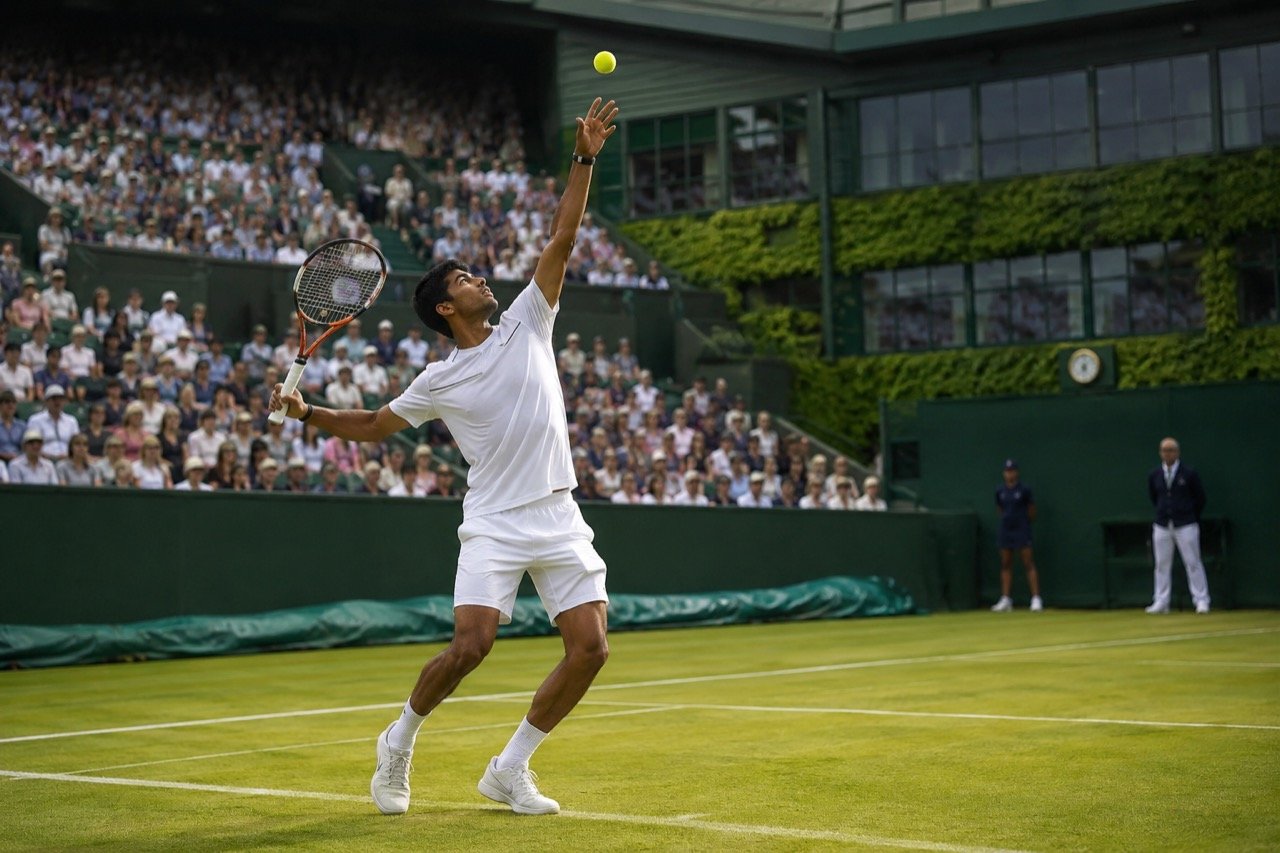
Arnav Paparkar Advances at Wimbledon Boys' Singles in Boost for India
Indian junior Arnav Paparkar has moved into the second round of the Wimbledon boys' singles with a commanding serving display, handing Indian tennis a rare and encouraging grass-court result at the sport's biggest stage.

Axar Patel Becomes First Indian Spinner With 100 T20I Wickets
Axar Patel reached 100 T20 international wickets in the second T20I against England, becoming the first Indian spinner to hit the mark and cementing his standing as one of India's most durable white-ball performers.
BCCI Emerging Men's Tournament to Hunt Test Prospects in Bengaluru
The BCCI's red-ball Emerging Men's Tournament, running at the Centre of Excellence in Bengaluru through July, is designed to give selectors a longer, harder look at India's next generation of Test cricketers.