Gukesh Told to Sharpen Calculation Speed Before Sindarov Title Defence
World champion D Gukesh has been advised to improve his calculation speed and defensive accuracy ahead of his World Championship title defence against Uzbekistan's Javokhir Sindarov.
Commentary & Analysis ·
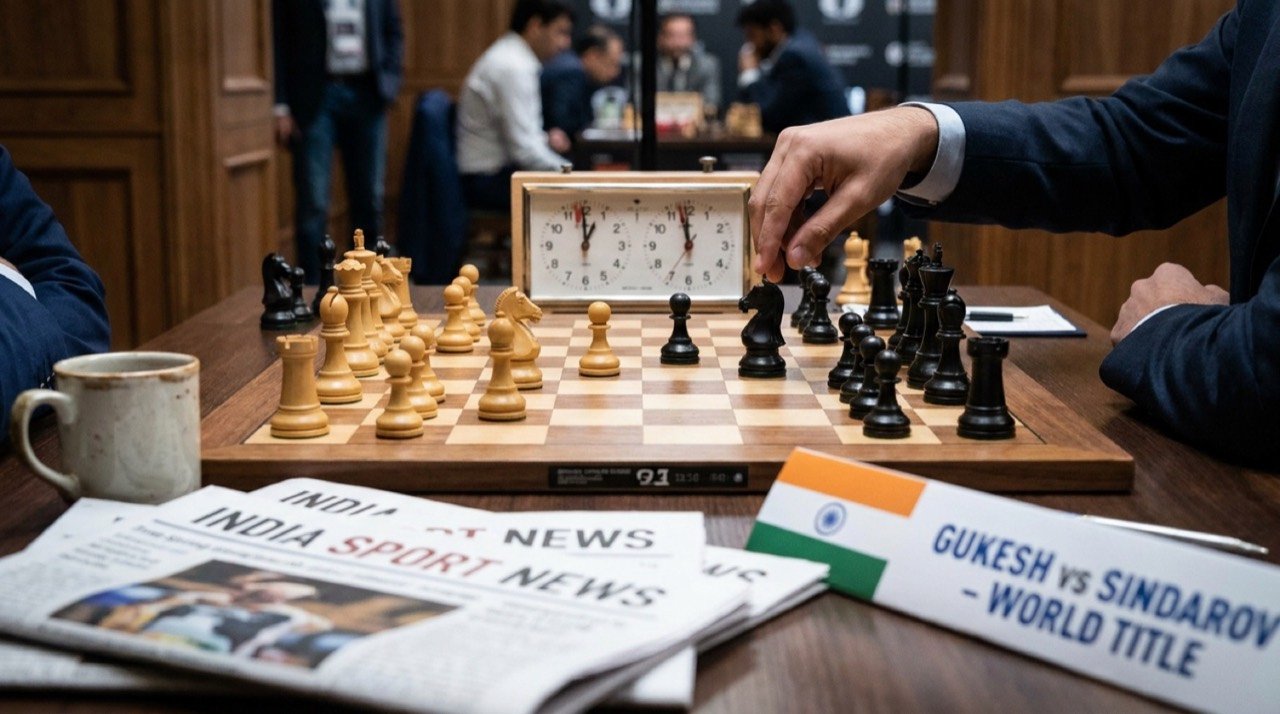
World champion D Gukesh has been advised to sharpen his calculation speed and defensive accuracy before his upcoming World Championship title defence against Uzbekistan's Javokhir Sindarov, according to reports citing veteran Indian Grandmaster Krishnan Sasikiran. It is a small piece of counsel with large implications, and it cuts to the heart of both how the young Indian champion wins his games and where, under the most exacting scrutiny of his career, he may still be caught out.
A style built for complexity, and its price
Gukesh has built his reputation on steering games into rich, complex positions that resist easy resolution and demand precise decisions under the clock. It is an approach that rewards imagination and nerve, and it has been central to his rise to the world title. But that same style carries a cost. Complicated positions are, by definition, harder to compute accurately, and the deeper a game runs into unclear territory, the more it depends on the player's ability to calculate quickly and correctly when time is short. Sasikiran's advice, then, is not a generic call to "improve," but a specific diagnosis: the very quality that has made Gukesh dangerous also raises the stakes whenever the clock becomes a factor, because a single inaccuracy in a razor-sharp position can swing an entire result. In elite chess, where the gap between champion and challenger is measured in fractions of understanding rather than gulfs of ability, this kind of granular observation from a grandmaster of Sasikiran's standing carries real weight.
Why calculation speed and defence matter more in a title match
A World Championship match is a different animal from a single tournament game or even a knockout event. It is a marathon contest in which the same opponent studies the same player, game after game, probing for patterns and weaknesses that can be exploited later in the match. In that context, the qualities Sasikiran is urging Gukesh to sharpen, faster and more reliable calculation, and tighter defensive technique, are not peripheral. They speak directly to the championship format itself, where stamina across a long series of games and the capacity to hold difficult, even inferior, positions can prove just as decisive as attacking flair. A champion who can only win when he is allowed to dictate the terms of a game is vulnerable; a champion who can also defend accurately when pushed onto the back foot is far harder to dislodge. That is the difference Sasikiran appears to be pointing towards.
Sindarov's pedigree, and the pressure of defending rather than chasing
The challenger is no accidental contender. Sindarov of Uzbekistan has earned his shot at the title through the Candidates cycle, the gruelling qualification route designed precisely to produce a legitimate, battle-tested challenger rather than a convenient one. That pedigree matters. It means Gukesh is not facing a passing test or a lightly credentialed opponent, but someone who has already navigated one of the most demanding qualification systems in the sport to arrive at this point. Compounding the challenge is the psychological shift that comes with being the reigning champion rather than the rising challenger. Gukesh now carries a different kind of weight: the burden of exhaustive preparation, the glare of public expectation that follows a young world champion, and the particular pressure of defending a crown rather than chasing one. Challengers have little to lose and everything to gain; champions must protect what they already hold, and that asymmetry shapes the psychology of a title match in ways that pure rating numbers cannot capture.
A milestone moment for Indian chess
Beyond the individual contest, this defence carries significance for Indian chess as a whole. The sport in India has travelled a long arc, from a period of strong but modest participation to the emergence of a new generation that has turned the country into a genuine powerhouse on the global stage. Gukesh's own rise to the world title was itself part of that transformation, and a successful defence against a credentialed challenger like Sindarov would do more than protect one player's title. It would cement India's standing at the very top of the sport, reinforcing the sense that the country's chess ascent is not a single breakthrough but a durable, structural shift. For the wider ecosystem of Indian players, coaches and federations who have invested in this generation, the outcome of this match will be read as a signal of whether that investment has produced not just prodigies, but champions capable of holding their ground.
What the preparation phase will test
Between now and the match itself, the preparation phase will test far more than raw calculating ability. It will test Gukesh's opening repertoire and whether it can be adapted to deny Sindarov the kind of positions he favours, his physical and mental stamina across what promises to be a long and gruelling contest, his composure under the particular nerves that a title defence induces, and the quality of planning from his support team, who will need to anticipate not just Sindarov's strengths but the specific vulnerabilities Sasikiran has flagged. If Gukesh can pair his natural creative ambition, the instinct to seek complicated, fighting positions, with the calculating discipline and defensive solidity that Sasikiran prescribes, he will arrive at the board as a formidable champion rather than a merely gifted one. Indian fans, and the wider chess world, will be watching closely to see whether another chapter of the country's chess ascent unfolds as hoped.
The NE Times View
Gukesh's title win silenced doubters, but champions are ultimately defined by their defences, not by their coronations. The diagnosis offered by Sasikiran is telling precisely because of what it implies about the level Gukesh now competes at: raw talent is, in a sense, a settled question, and it is the marginal gains, in calculation speed, in defensive accuracy, in the small percentages that separate elite players, that now decide matches at this altitude. Sindarov is a serious challenger who has earned his place through a demanding qualification process, and the real risk facing a young champion in this position is not a lack of ability but complacency born of recent success. India's chess depth is now unquestionably world-leading, but the storyline worth watching closely is not whether that depth exists, it plainly does, but whether Gukesh can convert a single breakthrough into a durable reign. That is a different and harder achievement, and it is exactly the question this title defence is set to answer.
Key takeaways
- Gukesh has been advised by GM Krishnan Sasikiran to improve his calculation speed and defensive accuracy ahead of his World Championship title defence.
- His attacking, complexity-seeking style has powered his rise but also raises the risk of costly inaccuracies under time pressure.
- Challenger Javokhir Sindarov of Uzbekistan qualified through the demanding Candidates cycle, making him a credible and battle-tested opponent.
- The championship format will test stamina, nerves, opening preparation and support-team planning over a long match, not just single-game brilliance.
- A successful defence would reinforce India's standing as a leading force in world chess and mark the transition from breakthrough to durable reign.
You may also like to read

Praggnanandhaa Outclasses Gukesh In All-Indian Norway Chess Duel To Stay In Title Hunt
R Praggnanandhaa dismantled world champion D Gukesh in just 34 moves at Norway Chess 2026, climbing to second and keeping the pressure on leader Wesley So.
Praggnanandhaa Storms to Maiden Norway Chess Crown After Twin Wins Over Carlsen
R Praggnanandhaa became the first Indian to win Norway Chess, surging from near the bottom of the table to the title on the back of four straight classical wins, including two over Magnus Carlsen.
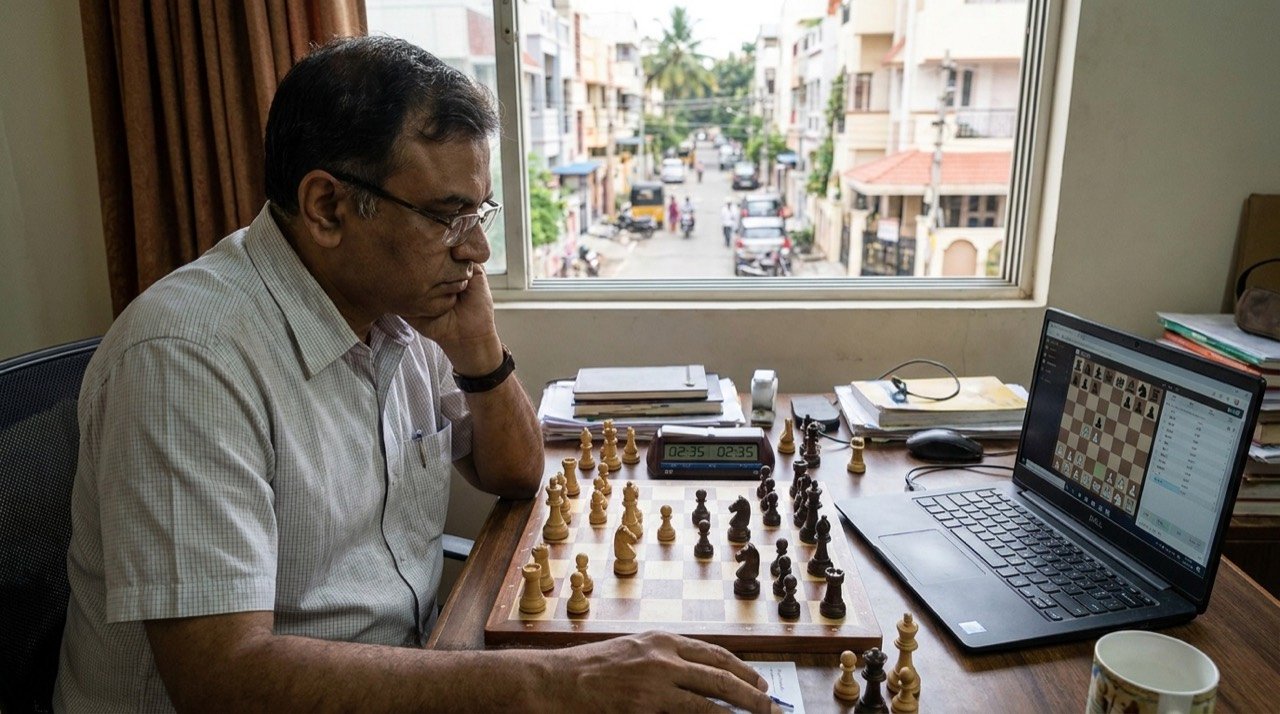
India Lock In Chess Line-Up for Esports Nations Cup 2026 as Mitrabha Guha Wins Through Qualifier
India have completed their chess contingent for the Esports Nations Cup 2026 in Riyadh, with Grandmaster Mitrabha Guha topping a regional qualifier to join Nihal Sarin in the two-player squad.

Indian Athletics' Record Surge Raises Hopes Before Bigger International Tests
A wave of national-record performances across events has lifted Indian athletics, but converting a deeper domestic talent pool into medals on the world stage remains the sport's defining challenge.
More from this section
More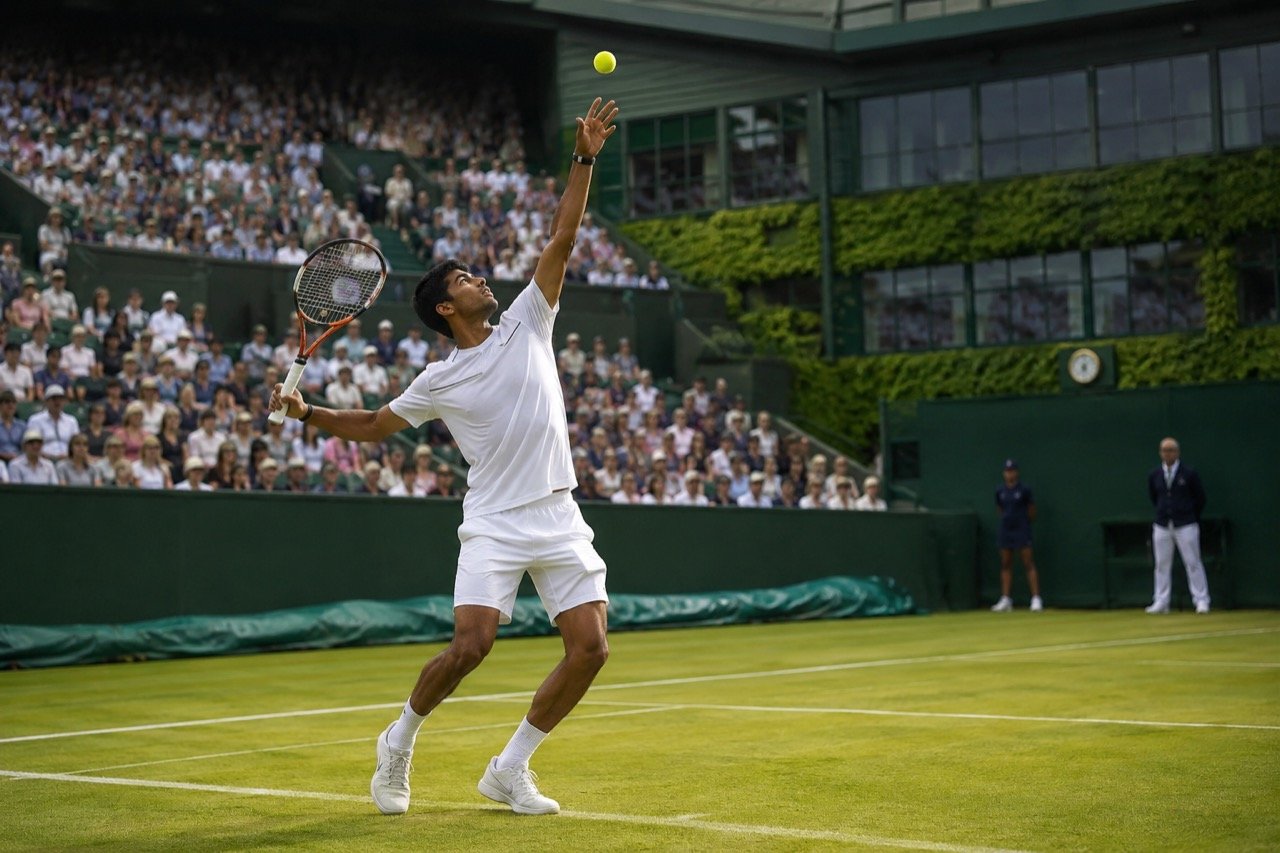
Arnav Paparkar Advances at Wimbledon Boys' Singles in Boost for India
Indian junior Arnav Paparkar has moved into the second round of the Wimbledon boys' singles with a commanding serving display, handing Indian tennis a rare and encouraging grass-court result at the sport's biggest stage.

Axar Patel Becomes First Indian Spinner With 100 T20I Wickets
Axar Patel reached 100 T20 international wickets in the second T20I against England, becoming the first Indian spinner to hit the mark and cementing his standing as one of India's most durable white-ball performers.
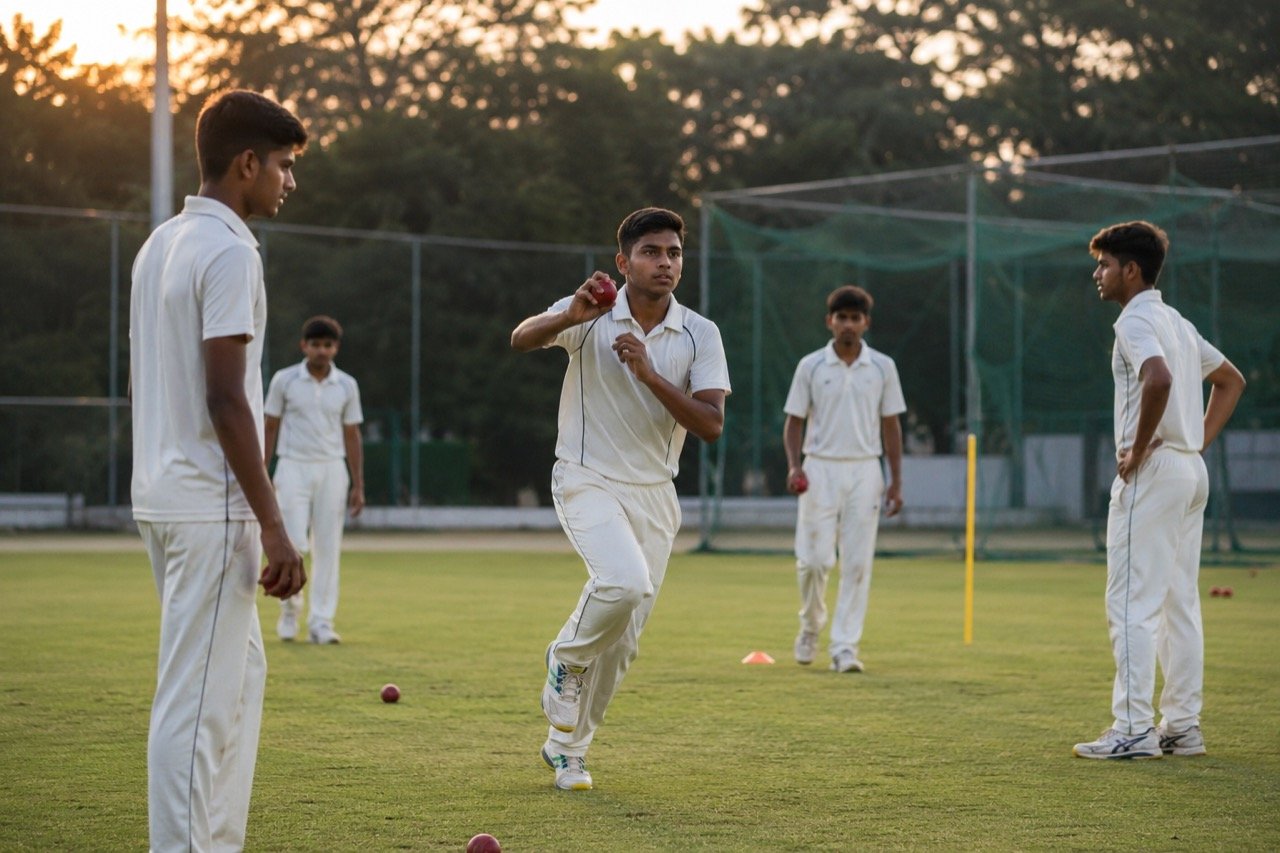
BCCI Emerging Men's Tournament to Hunt Test Prospects in Bengaluru
The BCCI's red-ball Emerging Men's Tournament, running at the Centre of Excellence in Bengaluru through July, is designed to give selectors a longer, harder look at India's next generation of Test cricketers.