Odisha Bank Suspension Puts Spotlight on Compassionate Service Rules
A branch manager has been suspended after a tribal man carried his sister's skeleton to an Odisha Grameen Bank as proof of death, prompting orders for all 28 regional rural banks to improve compassion.
Commentary & Analysis ·
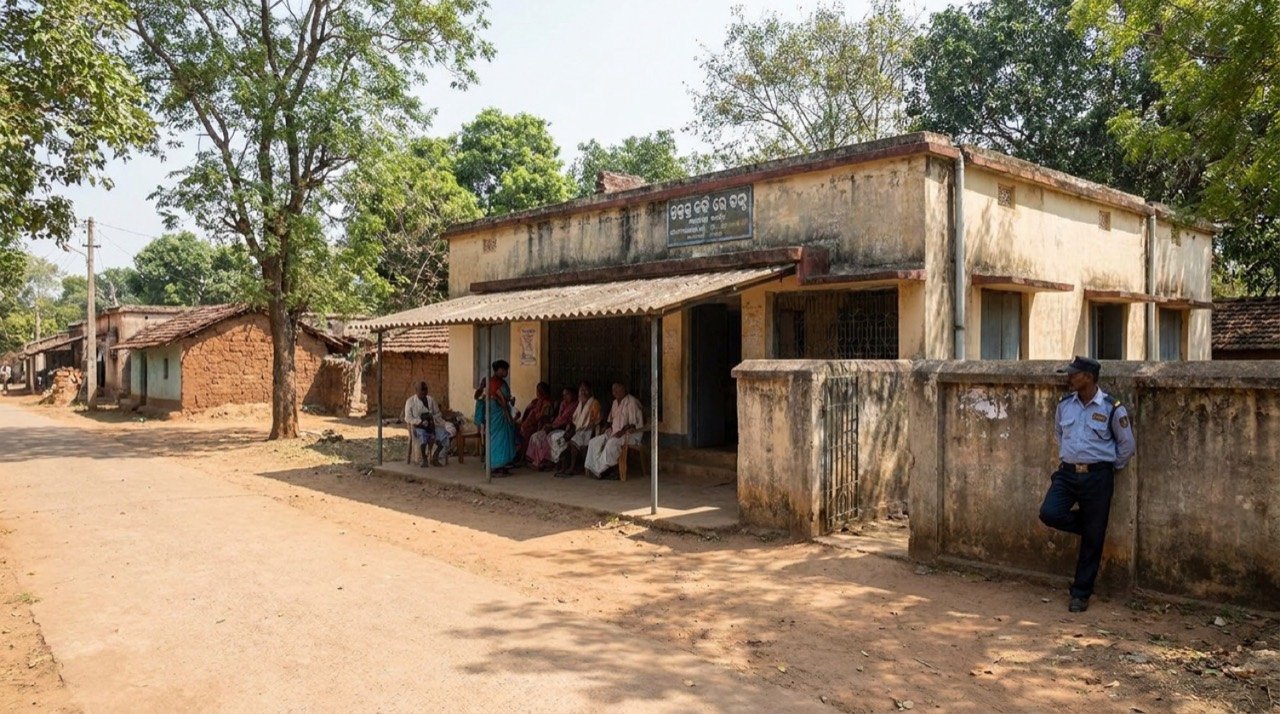
A branch manager at the Odisha Grameen Bank has been suspended following the widely reported case of a tribal man who carried his deceased sister's skeletal remains to a branch as proof of death in order to access her savings. Union minister Pankaj Chaudhary confirmed the action in a letter cited in public reporting, and all 28 Regional Rural Banks have been directed to improve transparency and compassion in customer service. The bare facts of the episode are difficult to read without discomfort, and it is precisely that discomfort that has forced a national conversation about how India's rural banking system treats its most vulnerable customers.
A case that shocked the country
The episode drew national attention precisely because of its grim symbolism. Unable to satisfy documentary requirements to prove his sister's death, the man resorted to an extraordinary act that laid bare how rigid procedure can collide with the lived realities of India's most vulnerable citizens. What should have been a routine claim on a deceased account instead became a public reckoning over whether banking processes are designed with rural and tribal customers in mind. It is worth pausing on why this happened at all. Death claims in Indian banking typically require a death certificate, succession or nomination paperwork, and identity documents linking the claimant to the deceased. In cities, these documents are usually obtainable within days through municipal or panchayat offices with functioning record systems. In remote tribal pockets, however, deaths may go unregistered, certificates may take weeks to issue, and the nearest office capable of producing the required paper may be a considerable distance away. When a system built for documentary certainty meets a life lived largely outside that paper trail, the gap does not resolve itself quietly. It surfaces in exactly the kind of desperate, visible act that occurred at this branch.
The official response
The suspension of the branch manager signals that authorities viewed the handling of the case as a failure of service rather than a defensible application of the rules. By confirming the action, the minister sought to reassure the public that the conduct would not be brushed aside. More significantly, the directive to all 28 Regional Rural Banks pushes the response beyond a single branch, framing the incident as a systemic prompt to re-examine how documentation, death claims and grievance handling work across the rural banking network. This is a meaningful distinction. Had the response stopped at disciplining one employee, it would have implied that the problem was one manager's poor judgement, an isolated lapse in an otherwise sound system. Instead, by extending scrutiny to all 28 institutions, the ministry has implicitly conceded that the underlying rules and training, not merely their execution in one branch, are open to question.
Why compassionate banking matters in rural India
Regional Rural Banks are often the only formal financial institutions within reach of remote and tribal communities, where literacy, paperwork and travel can all be barriers. When procedures are applied without flexibility, the people most dependent on these banks are the ones left stranded. This is the deeper structural point that the case exposes. Regional Rural Banks were created precisely to extend formal credit and savings facilities into areas that commercial banks found unprofitable to serve. Their entire rationale rests on being closer, in every sense, to rural depositors than a metropolitan bank branch could be. If that closeness does not extend to flexibility in moments of genuine hardship, such as a death in the family, then the institution is failing at the very purpose for which it exists. For a tribal household with limited access to alternate banking channels, a frozen account belonging to a deceased relative is not an abstract inconvenience; it can represent the only savings available to a grieving family, held hostage by paperwork the family has no practical means of producing quickly.
Stakeholder perspectives and the road to reform
From the perspective of bank staff, there is a legitimate concern that also deserves acknowledgement: frontline employees operate under audit requirements and fraud-prevention rules designed to protect depositors from false claims on dormant or deceased accounts. Relaxing documentation standards carries its own risk of misuse. The challenge for policymakers, then, is not simply to tell branch staff to be more compassionate, but to design procedures that allow for verified exceptions, such as alternate proof mechanisms involving local administration, village heads, or health workers, in cases where standard certificates are unavailable within a reasonable time. For customers and community advocates, the case will likely be read as confirmation of a long-standing grievance, that formal financial systems have been built around urban, literate, well-documented lives and retrofitted only awkwardly for rural and tribal populations. For the ministry and bank managements, the immediate task is reputational: demonstrating, through the 28-bank directive, that this was treated as a systemic wake-up call rather than a public-relations exercise limited to one suspension.
What to watch next
The lasting lesson is that rules meant to protect accounts must not become instruments of exclusion. Whether the directive translates into simpler death-claim procedures and better-trained frontline staff will determine if this distressing episode produces meaningful reform, or fades as another headline once the outrage subsides. Concrete indicators worth tracking include whether any Regional Rural Bank publishes revised, simplified guidelines for death claims in areas lacking easy access to registration offices; whether frontline staff receive updated training on handling such claims with discretion; and whether grievance-redress mechanisms are strengthened so that a customer facing an impasse has a clear escalation route that does not require an act of desperation to be heard. The presence or absence of such follow-through, more than the suspension itself, will indicate whether this was a turning point or merely a moment of managed embarrassment.
The NE Times View
A man carrying his sister's skeleton to prove a death is an image that should shame an entire system, not just one branch. Suspending a manager treats a symptom; the disease is procedure worshipped over people, especially in tribal districts where paperwork is a wall. Ordering all 28 rural banks to show compassion is right, but compassion cannot be mandated by circular. It needs simpler rules and accountable officers. Real reform would mean rewriting the documentary standards themselves, building in recognised local alternatives to formal certificates, and equipping staff with the authority and training to use judgement without fear of punishment for showing flexibility. Anything short of that risks leaving the next grieving relative in precisely the same position as the one who came before, armed with nothing but desperation and left with no better option than a public spectacle to be believed.
Key takeaways
- An Odisha Grameen Bank branch manager has been suspended after a tribal man brought his deceased sister's skeletal remains as proof of death to access her savings.
- Union minister Pankaj Chaudhary confirmed the disciplinary action, and all 28 Regional Rural Banks have been directed to improve transparency and compassion in customer service.
- The case highlights how rigid documentation requirements for death claims can exclude rural and tribal customers who lack easy access to certificates and paperwork.
- Regional Rural Banks exist specifically to serve remote communities, making procedural inflexibility a failure of their core mandate rather than a minor administrative issue.
- Lasting reform will depend on simplified death-claim procedures, better-trained staff and accountable systems, not just disciplinary action against a single employee.
You may also like to read
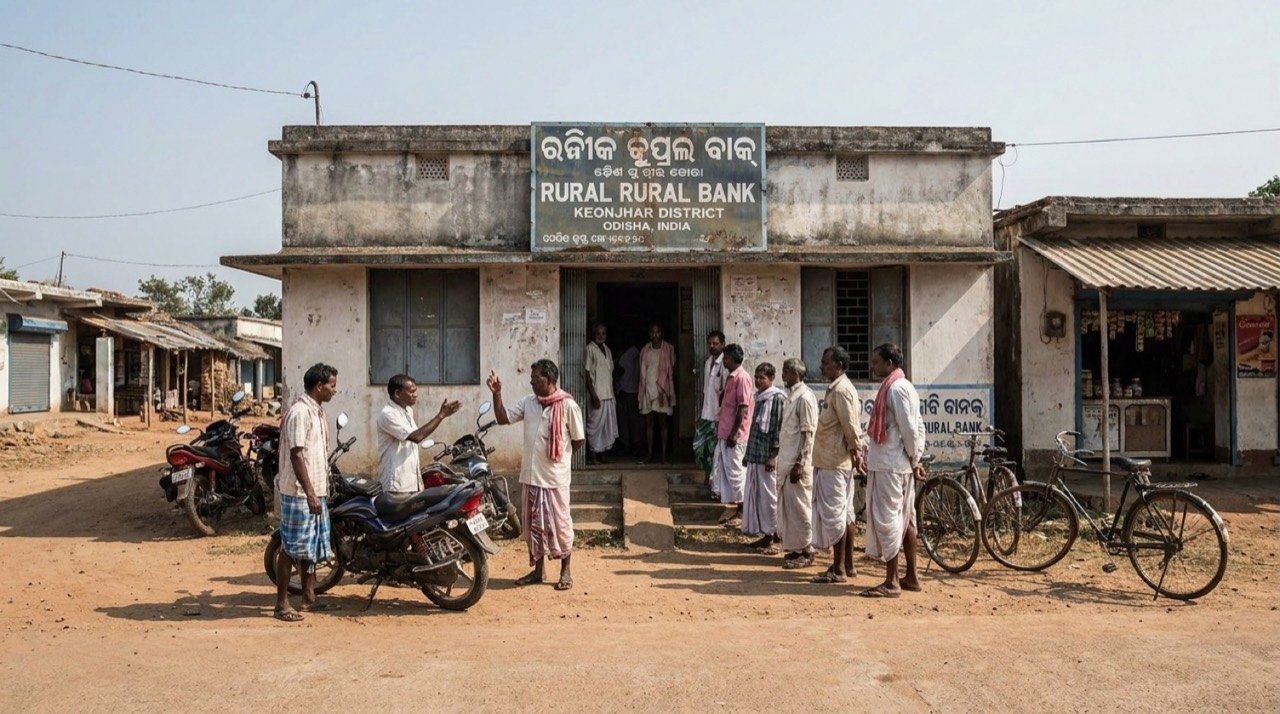
Centre Orders Corrective Measures After Jitu Munda Banking Ordeal in Odisha
After a tribal man in Odisha's Keonjhar district was reportedly forced to exhume his sister's remains over a bank withdrawal dispute, the Centre has ordered corrective action and a branch manager has been suspended.
Expressway Pothole Row Puts Maharashtra Road Upkeep in Spotlight
Chief Minister Devendra Fadnavis' reported claim that the Pune-Mumbai Expressway has only two potholes has escalated a monsoon maintenance complaint into a statewide debate over highway accountability.
Bengaluru KR Puram Triple Murder Puts Spotlight on Domestic Safety
A triple murder in Bengaluru's KR Puram, in which a woman, her husband and their young son were found dead, has shaken the city and reopened questions about domestic-violence risks and police response.
Jaipur UAPA Arrest Puts Online Radicalisation Probe Under the Spotlight
Rajasthan ATS has arrested a Jaipur woman under the UAPA over alleged online anti-national activity and contact with people linked to Jaish-e-Mohammed, with the investigation still at an early stage.
More from this section
More
AICTE Industry Fellowship 2026: Rs 1.5 Lakh Scheme Closes July 5
The AICTE Industry Fellowship Programme 2026, which places technical-education faculty inside leading companies on a Rs 1.5 lakh monthly stipend, reached its application deadline on July 5.
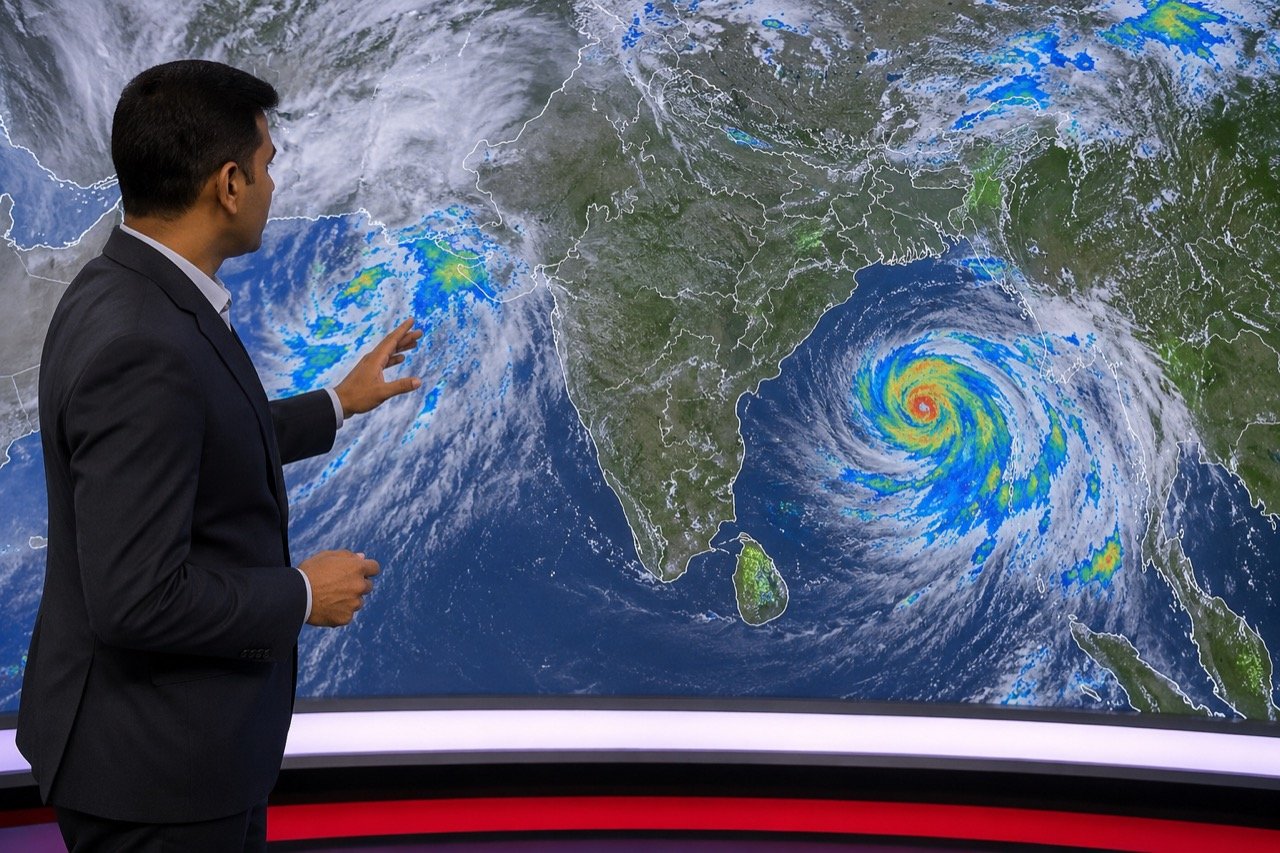
Bay of Bengal Low Pressure System Revives Monsoon Over Western India
A low-pressure system over the Bay of Bengal has pushed the monsoon back into an active phase, bringing steady heavy rain to Kerala, coastal Karnataka and Maharashtra, and putting Mumbai and Pune on preparedness watch.
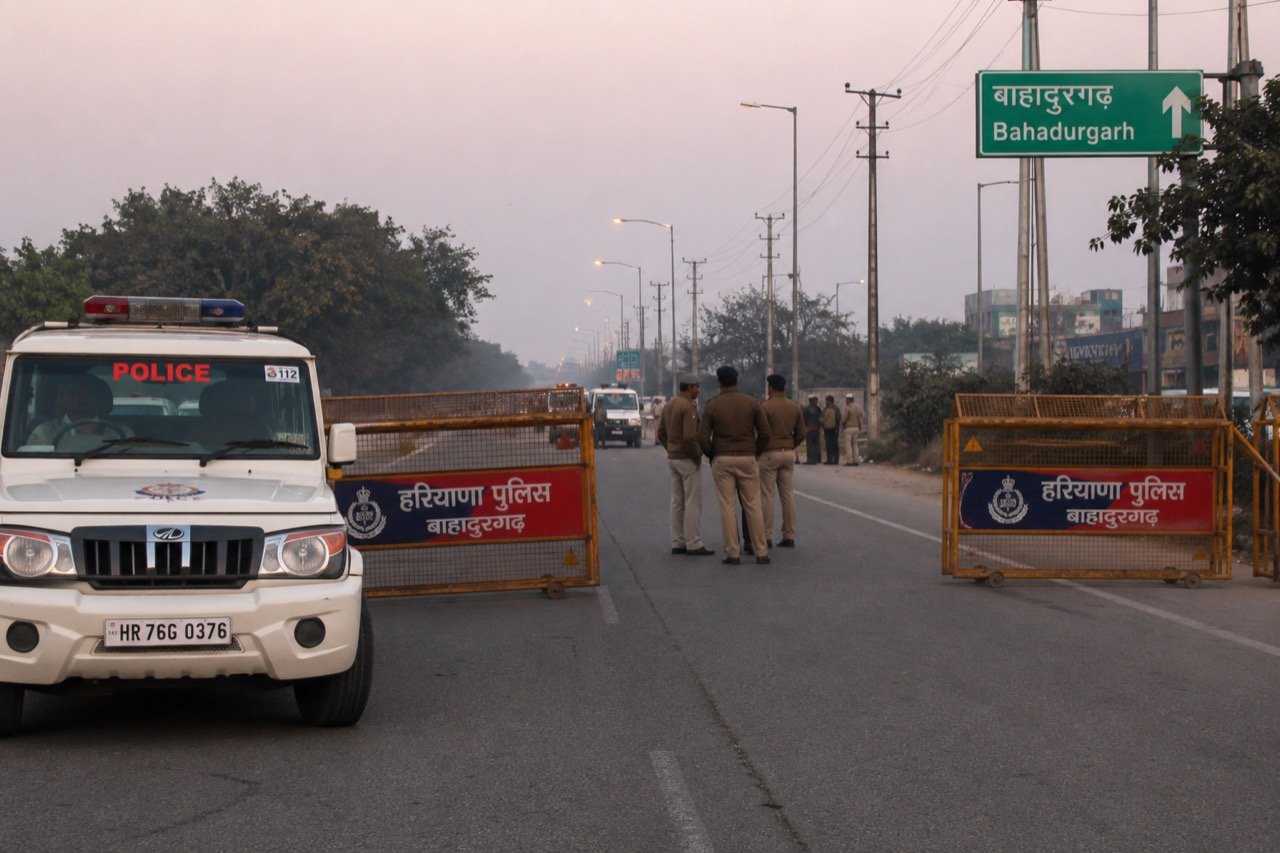
Bishnoi Gang Suspects Injured in Haryana Encounter as Police Tighten Net
A joint Haryana-Delhi Police operation in Bahadurgarh left two suspected Lawrence Bishnoi gang members injured, spotlighting the multi-state coordination now central to India's fight against organised crime networks.