Bengaluru KR Puram Triple Murder Puts Spotlight on Domestic Safety
A triple murder in Bengaluru's KR Puram, in which a woman, her husband and their young son were found dead, has shaken the city and reopened questions about domestic-violence risks and police response.
Commentary & Analysis ·
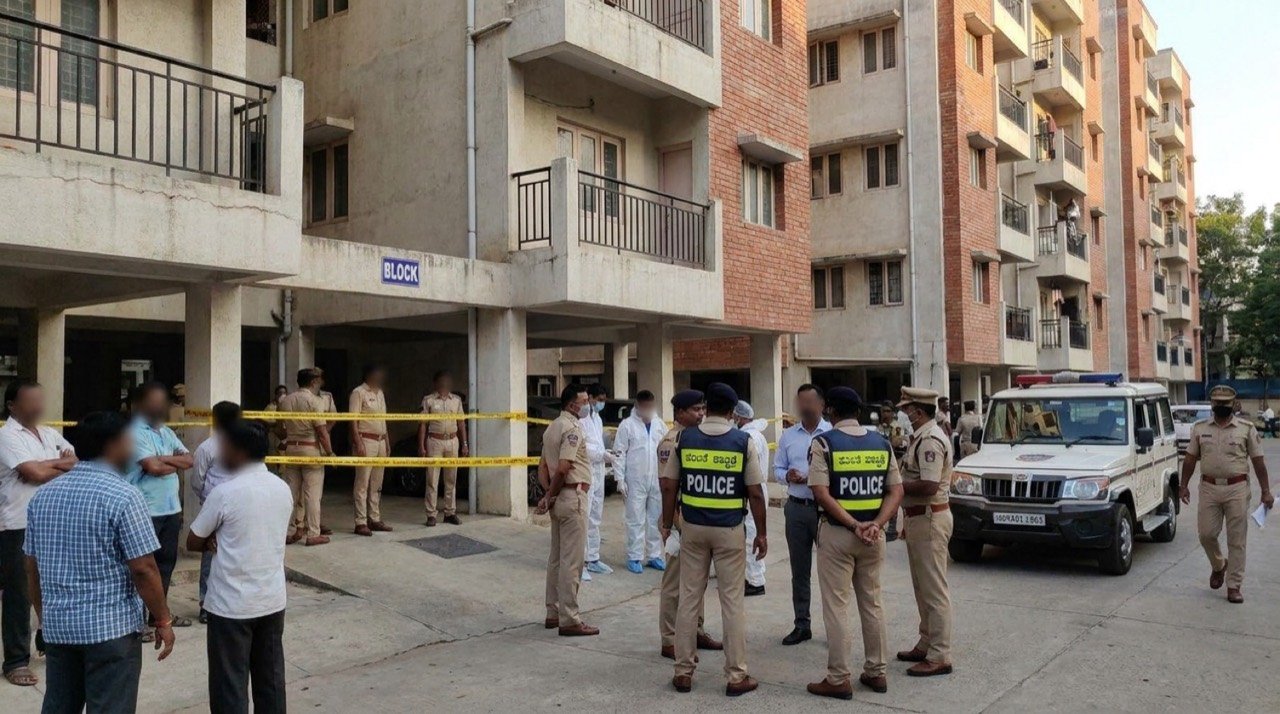
A triple murder investigation in Bengaluru's KR Puram has shaken the city after reports said a woman, her husband and their young son were found dead in their flat. Police were reported to be searching for the woman's daughter and her boyfriend in connection with the case, though the details remain firmly under investigation. Three members of one family, spanning two generations under a single roof, are now the subject of a case that has unsettled residents across a locality more accustomed to the ordinary rhythms of apartment life than to violence of this nature. The scale of the loss, an entire nuclear family wiped out in what should have been the safety of their own home, explains why the case has travelled well beyond the immediate neighbourhood and into the wider public conversation about safety within Bengaluru's residential complexes.
An inquiry in its early stages
Authorities will need forensic evidence, call records and witness accounts before establishing a motive or reconstructing the sequence of events. This is standard procedure in any suspected homicide, but it bears repeating precisely because the temptation to fill an evidentiary vacuum with speculation is strongest in the earliest hours of a case like this. At this stage, investigators have urged caution, stressing that nothing about intent or responsibility can be assumed until the evidence is in. The fact that police are reportedly seeking the woman's daughter and her boyfriend for questioning does not, in itself, establish culpability; it indicates only that investigators consider them relevant to piecing together the timeline and the relationships within the household. Forensic teams will typically need to cross-reference post-mortem findings with entry and exit patterns at the flat, while call detail records can help establish who was in contact with whom in the hours before the deaths were discovered. Witness accounts from neighbours, building staff and relatives will further help corroborate or complicate whatever narrative begins to emerge from the physical evidence.
Responsible coverage matters here too
With a grieving extended family in the picture, officials and commentators alike have warned against speculation that could prejudice the inquiry or sensationalise the victims. This is not a small point. Cases involving domestic violence carry an unusually high risk of premature judgment, partly because the public instinctively looks for a tidy narrative of villain and victim, and partly because family tragedies attract a particular kind of morbid curiosity. When names circulate before facts are confirmed, reputations can be damaged irreversibly, investigations can be compromised by tainted public opinion, and surviving relatives can be forced to relive their grief under a media spotlight that offers them no protection. A careful, fact-based approach protects not only the accuracy of the eventual verdict but also the dignity of everyone connected to the case, including those who may ultimately be found to have had no role in the deaths at all.
A wider question of household safety
Even before the facts are settled, the case has revived broader concerns about domestic conflict, vulnerable households and the warning signs that too often go unread. Family disputes that escalate behind closed doors remain among the hardest crimes to anticipate, precisely because they occur in the one space assumed to be safest and most private. Neighbours, landlords and even extended family members frequently have only fragmentary knowledge of the tensions building within a household, whether financial, marital or generational, until those tensions erupt into something irreversible. Bengaluru's rapid urban growth means many families live in dense apartment clusters where neighbours may barely know one another, and where signs of distress can pass unnoticed until it is too late. The city's transformation over the past two decades, driven by its technology and services economy, has brought with it a transient, high-turnover residential culture in many localities, including KR Puram, where tenants and owners alike may have limited social ties to those living just a few doors away. This anonymity, while often prized for the privacy it affords, also means that the informal community surveillance that once characterised smaller Indian towns and older city neighbourhoods is considerably weaker in newer high-density developments.
Systems under scrutiny
The episode points to gaps in tenant verification, neighbourhood alert systems and the speed of police response, mechanisms that, when they work, can intervene before conflict turns fatal. Strengthening them is now part of the public conversation the case has provoked. Tenant verification, in particular, has long been treated as a bureaucratic formality in many Indian cities rather than a genuine safety mechanism, with landlords and resident welfare associations often filing paperwork without any real follow-up. Neighbourhood alert systems, whether formal policing initiatives or informal WhatsApp groups coordinated by residents, depend heavily on a baseline level of familiarity and trust between neighbours that dense, high-turnover housing markets can erode. And the speed of police response in cases of domestic distress often hinges on whether complaints are lodged early, whether they are treated with urgency when they are, and whether officers responding to a call are equipped to assess risk accurately rather than treating a domestic dispute as a private matter beneath police intervention. Each of these systems, tenant verification, community vigilance and responsive policing, represents a potential point of earlier intervention that this case has thrown into sharper relief.
What the investigation still owes the public
As the investigation proceeds, the immediate public interest lies in a methodical, evidence-led inquiry rather than premature conclusions. Investigators will need to resolve several open questions: the precise timeline of events inside the flat, the nature of the relationships between all parties involved, and whether any prior complaints, disputes or warning signs had been recorded with police or neighbours before the deaths occurred. A police official close to the inquiry was quoted as saying that the priority now is a careful investigation free of speculation, and support for the relatives left behind, a framing that underscores both the evidentiary caution required and the human toll already inflicted on the wider family. The harder, longer task is ensuring that the household risks the case has laid bare are taken seriously across a rapidly expanding city, where the pace of construction and population growth has consistently outstripped the development of the social and institutional infrastructure needed to catch trouble before it becomes tragedy.
The NE Times View
A family of three found dead is a horror that resists easy lessons, and the city is right to be shaken. But the recurring question, why warning signs in domestic settings so often go unanswered, points to a systemic gap in how police treat household disputes before they turn fatal. The investigation should establish facts before the public draws conclusions. The harder work is building responses that intervene earlier, when prevention is still possible. That means treating tenant verification as more than paperwork, taking domestic complaints seriously the first time they are made, and finding ways to rebuild the neighbourly familiarity that dense urban housing has quietly eroded. None of this diminishes the presumption of innocence owed to those now being sought for questioning, nor does it substitute for the forensic and testimonial evidence still to come. But a case of this severity, in a city growing as fast as Bengaluru, ought to prompt more than shock; it should prompt a sober audit of the safeguards meant to prevent exactly this kind of loss.
Key takeaways
- A woman, her husband and their young son were found dead in a KR Puram flat, and police are reportedly searching for the woman's daughter and her boyfriend in connection with the case.
- Motive and the sequence of events remain unconfirmed, pending forensic evidence, call records and witness accounts.
- Officials and commentators have urged against speculation that could prejudice the inquiry or add to the distress of the grieving extended family.
- The case has reopened debate over gaps in tenant verification, neighbourhood alert systems and police response times in Bengaluru's fast-growing residential areas.
- The NE Times View holds that establishing facts must come first, but the episode should also spur earlier, more serious institutional responses to domestic warning signs.
You may also like to read
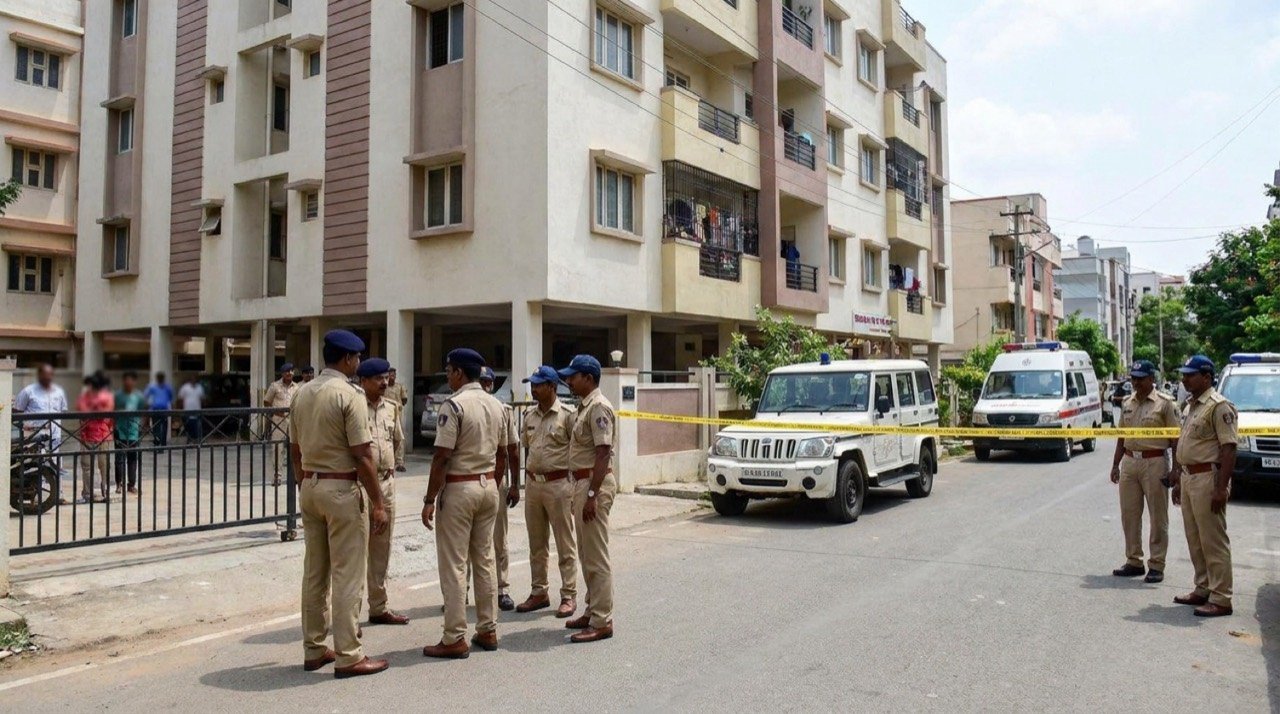
Bengaluru Triple Murder Probe Focuses On Daughter And Her Live-In Partner
Police investigating the killing of an elderly couple and their 19-year-old daughter in Bengaluru are examining whether family opposition to a relationship escalated into extreme violence.
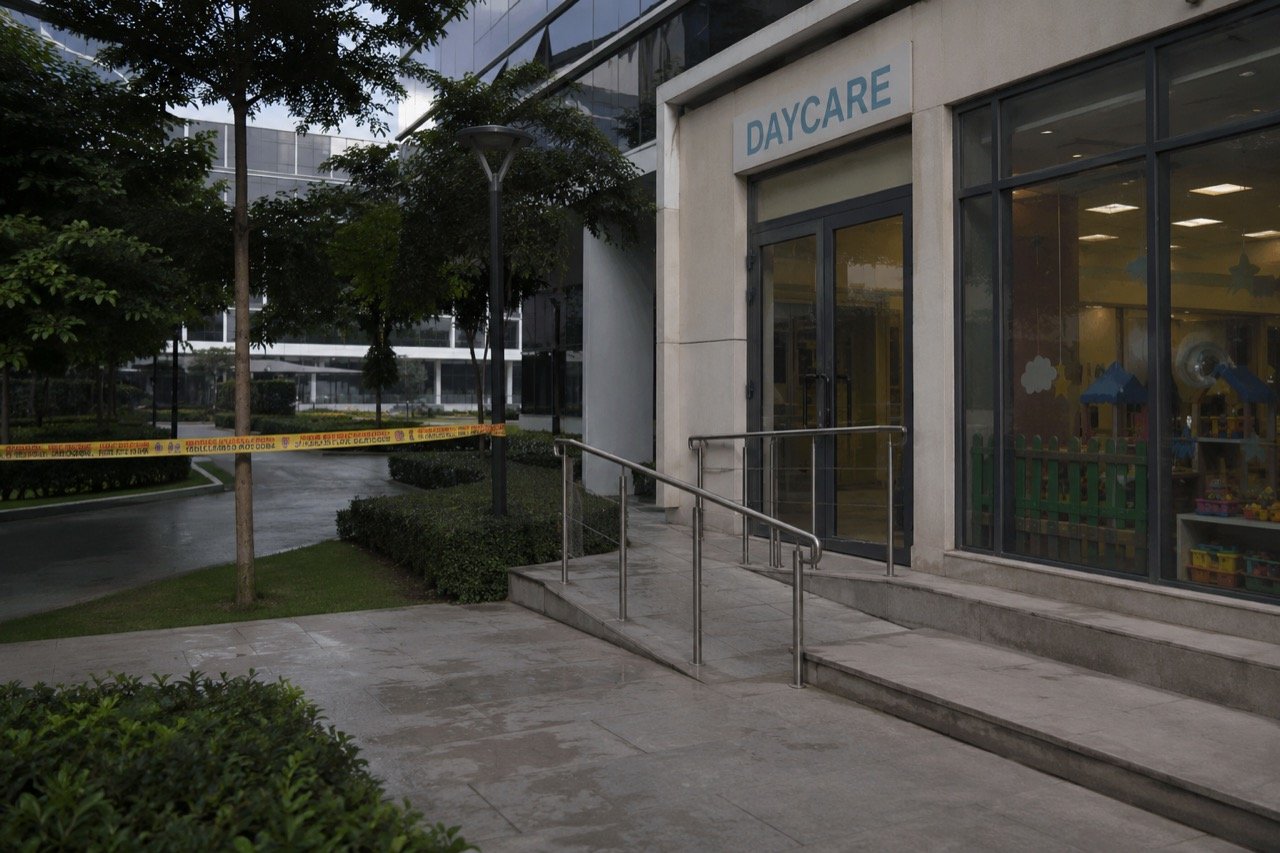
Arrest in Bengaluru Daycare Case Deepens Child Safety Questions
Bengaluru police have arrested a woman connected to the daycare case at a Capgemini campus facility, sharpening scrutiny of caregiver vetting, oversight and accountability at workplace-linked childcare centres.
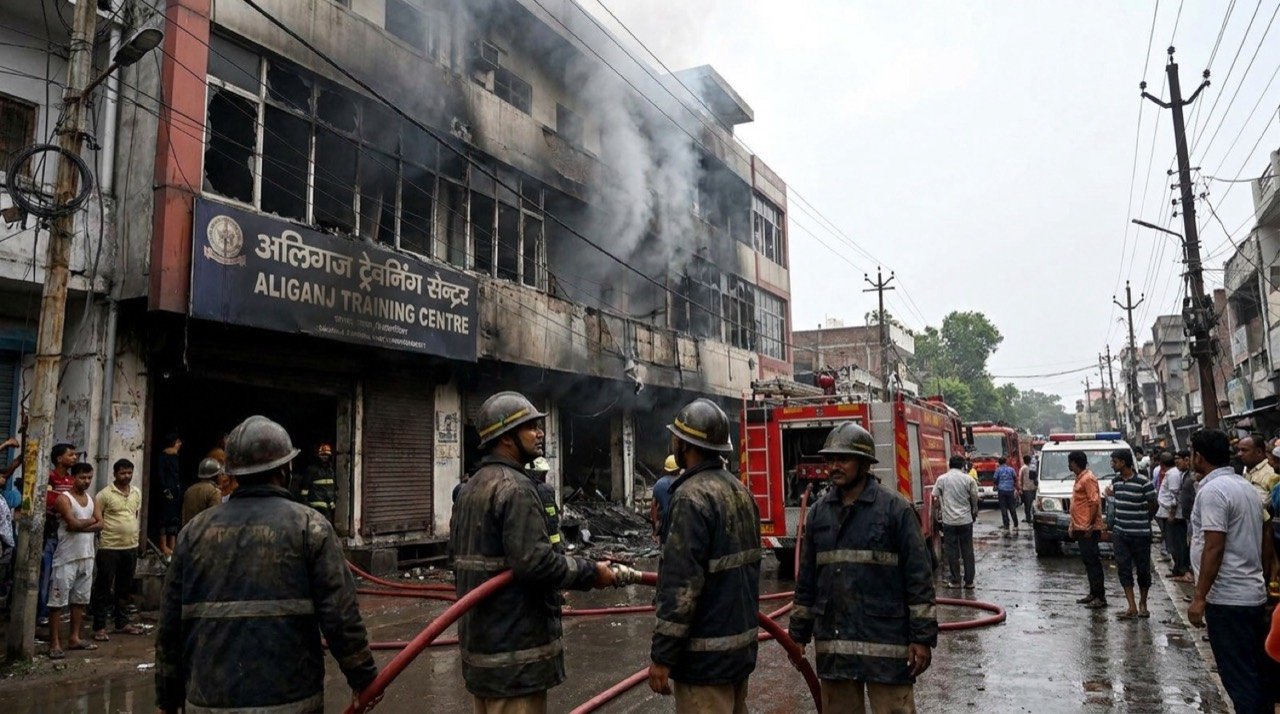
Lucknow Fire Puts Coaching and Training Centre Safety Under Scrutiny
At least 15 people, mostly students and trainees, died in a Lucknow fire, forcing a hard look at fire-safety compliance in coaching centres, gaming studios and training spaces inside commercial buildings.
Delhi Child Murder Case Puts Footpath Safety and Fast Policing Under Scrutiny
The killing of a 10-year-old girl sleeping on a Delhi footpath, with an arrest made within hours, has forced hard questions about pavement dwellers, night-time safety and the speed of missing-child response.
More from this section
More
AICTE Industry Fellowship 2026: Rs 1.5 Lakh Scheme Closes July 5
The AICTE Industry Fellowship Programme 2026, which places technical-education faculty inside leading companies on a Rs 1.5 lakh monthly stipend, reached its application deadline on July 5.

Bay of Bengal Low Pressure System Revives Monsoon Over Western India
A low-pressure system over the Bay of Bengal has pushed the monsoon back into an active phase, bringing steady heavy rain to Kerala, coastal Karnataka and Maharashtra, and putting Mumbai and Pune on preparedness watch.
Bishnoi Gang Suspects Injured in Haryana Encounter as Police Tighten Net
A joint Haryana-Delhi Police operation in Bahadurgarh left two suspected Lawrence Bishnoi gang members injured, spotlighting the multi-state coordination now central to India's fight against organised crime networks.