NMC to Phase Out PG Diploma Medical Courses, Shift Seats to MD and MS
The National Medical Commission says 2026-27 will be the final admission cycle for postgraduate diploma medical courses, with seats set to convert into MD and MS degree programmes from 2027-28.
Commentary & Analysis ·
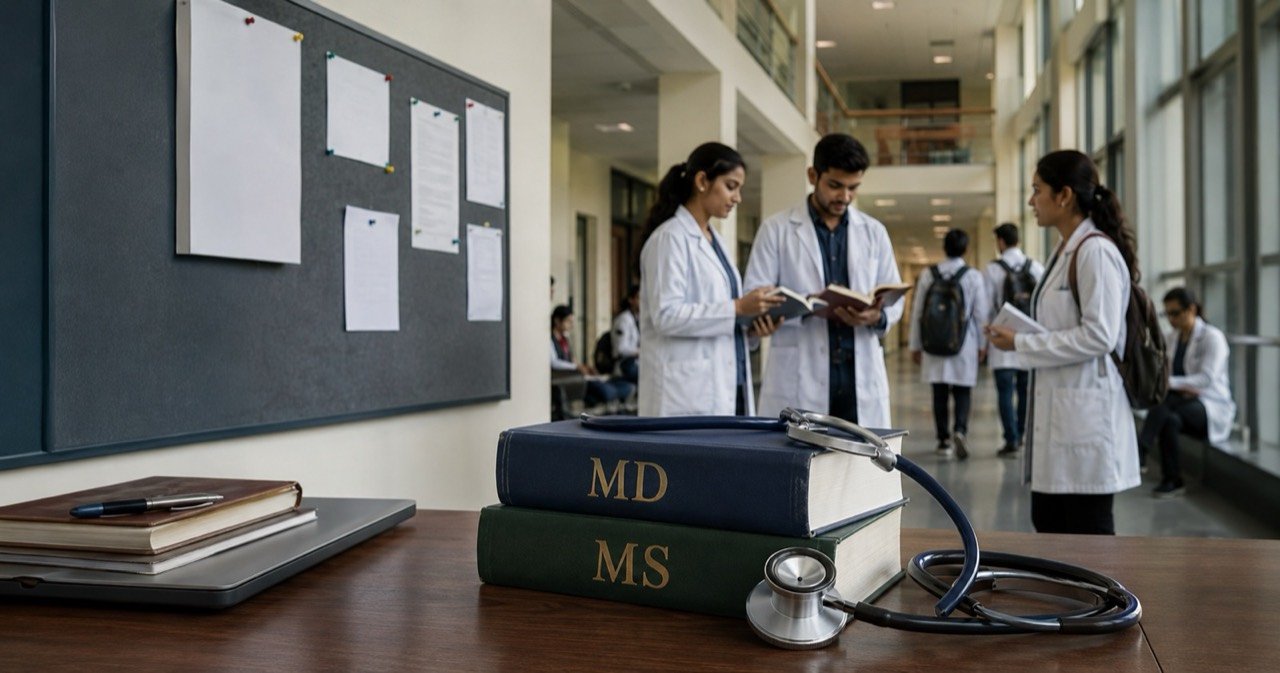
The National Medical Commission (NMC) has announced that the 2026-27 academic year will be the last admission cycle for postgraduate diploma medical courses in India. From 2027-28, fresh admissions to PG diploma programmes will stop, and existing diploma seats are expected to move toward MD and MS degree courses through the approval route of the Medical Assessment and Rating Board (MARB). The announcement, though procedural in tone, touches one of the more consequential pressure points in Indian medical education: how the country trains and distributes its specialist doctors, and whether a decades-old dual system of diplomas and degrees still serves that purpose.
What is changing and when
Under the plan, colleges may admit students to PG diploma programmes one final time in 2026-27. After that, the diploma track closes to new entrants, and institutions will be encouraged to repurpose those seats as degree seats in the same broad specialty. The conversion is not automatic. Colleges that wish to upgrade diploma seats to MD or MS seats will need to apply and demonstrate that they meet the standards MARB sets for degree-level training. This means the transition is not a single switch flipped nationally on one date, but a rolling, college-by-college process that will play out over several admission cycles as institutions apply, get assessed, and either succeed or fall short of the degree-level bar.
That distinction matters because it introduces uncertainty into what might otherwise look like a tidy timeline. A college with a functioning diploma programme today is not guaranteed an equivalent number of MD or MS seats tomorrow. Its faculty strength, clinical caseload, and infrastructure will all be scrutinised afresh under MARB's criteria, and the outcome of that assessment determines how much postgraduate capacity survives the changeover in any given institution.
Why the NMC is doing this
The decision is intended to standardise specialist medical education and reduce the existence of parallel qualifications within the same discipline. A diploma and a degree in the same field can create confusion over scope and equivalence, and the NMC's move is aimed at presenting a cleaner, more uniform pathway to specialisation. Consolidating around MD and MS degrees is also consistent with the broader effort to raise the baseline quality and consistency of postgraduate medical training across institutions.
There is a certain administrative logic to this. Two credentials awarded for training in, say, obstetrics or ophthalmology, one a two-year diploma and the other a three-year degree, have long sat awkwardly side by side, sometimes creating ambiguity for employers, licensing bodies and patients about what each qualification actually certifies a doctor to do. Phasing out the diploma route removes that ambiguity at a stroke, at least on paper. It also gives the NMC a single, more easily regulated pathway to monitor for quality, rather than having to maintain separate accreditation standards for two different kinds of postgraduate training in the same specialty.
What it means for aspirants and colleges
For NEET-PG aspirants, the change makes seat planning more important than usual, because the mix of available seats could shift as diploma capacity is reworked into degree capacity. A student mapping out a specialisation strategy for the next admission cycle or two will need to track not just the total number of postgraduate seats on offer, but how the composition of those seats, degree versus diploma, is evolving at the specific colleges they are targeting.
For colleges and hospitals, the priority becomes meeting the requirements for conversion. Institutions that have built diploma programmes around a leaner faculty and infrastructure footprint may now face a choice: invest to meet MARB's degree-level benchmarks, or risk losing postgraduate seats altogether if they cannot make the case for conversion. This is likely to be a more onerous exercise for smaller and semi-urban colleges than for large, well-resourced teaching hospitals, which may already meet or exceed the thresholds MARB is expected to apply.
2026-27 is the final intake year for PG diploma courses. No fresh diploma admissions will follow from 2027-28 onwards. Existing diploma seats can be converted to MD or MS seats via MARB approval, but that conversion needs adequate faculty, clinical material and infrastructure to be demonstrated. Course planning, seat conversion timelines and admission cycles are therefore set to become the recurring points of reference for NEET-PG candidates over the next few admission years.
The transition risk: capacity versus quality
The transition's success will hinge on how smoothly colleges can convert seats without losing overall postgraduate capacity, and how clearly the NMC communicates timelines to students mapping out their specialisation. This is the crux of the reform, and also its central risk. Raising the bar for postgraduate training is a worthwhile goal in isolation, but if a meaningful share of diploma seats simply disappear because the colleges that held them cannot clear MARB's conversion criteria, India could end up with fewer postgraduate medical seats overall rather than the same or a greater number under a more uniform banner.
That risk is not merely theoretical. Diploma courses have historically been shorter and less resource-intensive to run than MD or MS programmes, which is part of why many smaller colleges and district-level institutions were able to offer them in the first place. Asking those same institutions to now meet degree-level standards in faculty numbers, clinical case volumes and infrastructure is a materially higher bar, and some may simply be unable to clear it in time, or at all.
In the coming year, seat conversion and admission planning will be the phrases that matter most for India's medical aspirants, and also the metrics regulators, colleges and observers alike will need to watch closely to judge whether this reform delivers on its stated intent.
The NE Times View
Standardising postgraduate medical training under MD and MS degrees raises the quality floor, and that is welcome. But diploma courses long served a quiet purpose, producing specialists faster for under-served districts. The reform's success hinges on whether the converted seats genuinely expand specialist numbers and reach smaller towns, or simply rebadge existing capacity. Better credentials mean little if the doctor shortage in rural India deepens.
The deeper question the NMC will eventually have to answer is not whether MD and MS degrees are superior in the abstract, but whether India's healthcare system, and in particular its rural and semi-urban hospitals, can still access enough specialists once the diploma pipeline runs dry. Diploma courses were never simply a lesser substitute for a degree; in many cases they were a faster, more accessible route into specialties that badly needed more hands, precisely in the places large teaching hospitals do not reach. If MARB's conversion process ends up concentrated in colleges that were already well-resourced, and passes over the very institutions that used diplomas to plug gaps in under-served regions, the net effect of this reform could be a smaller, more urban-skewed specialist workforce dressed up in more uniform qualifications.
For now, the burden of proof lies with the NMC and MARB to show that the conversion process is being applied generously enough to preserve capacity, and transparently enough that colleges and students alike can plan with confidence. The next one to two admission cycles, as the 2026-27 diploma intake winds down and colleges begin applying for degree-seat conversions, will make clear which direction this reform is actually heading in.
Key takeaways
- 2026-27 is the final admission cycle for PG diploma medical courses in India; no fresh diploma admissions will be permitted from 2027-28.
- Existing diploma seats may be converted to MD or MS degree seats, but only through a MARB approval process requiring adequate faculty, clinical material and infrastructure.
- The reform aims to eliminate the ambiguity of parallel diploma and degree qualifications in the same specialty and raise the overall standard of postgraduate medical training.
- NEET-PG aspirants will need to track seat composition changes closely as colleges apply for conversions over the coming admission cycles.
- The reform's ultimate value will depend on whether converted seats preserve or expand specialist capacity, particularly in under-served and rural areas, rather than simply consolidating existing capacity in better-resourced urban colleges.
You may also like to read
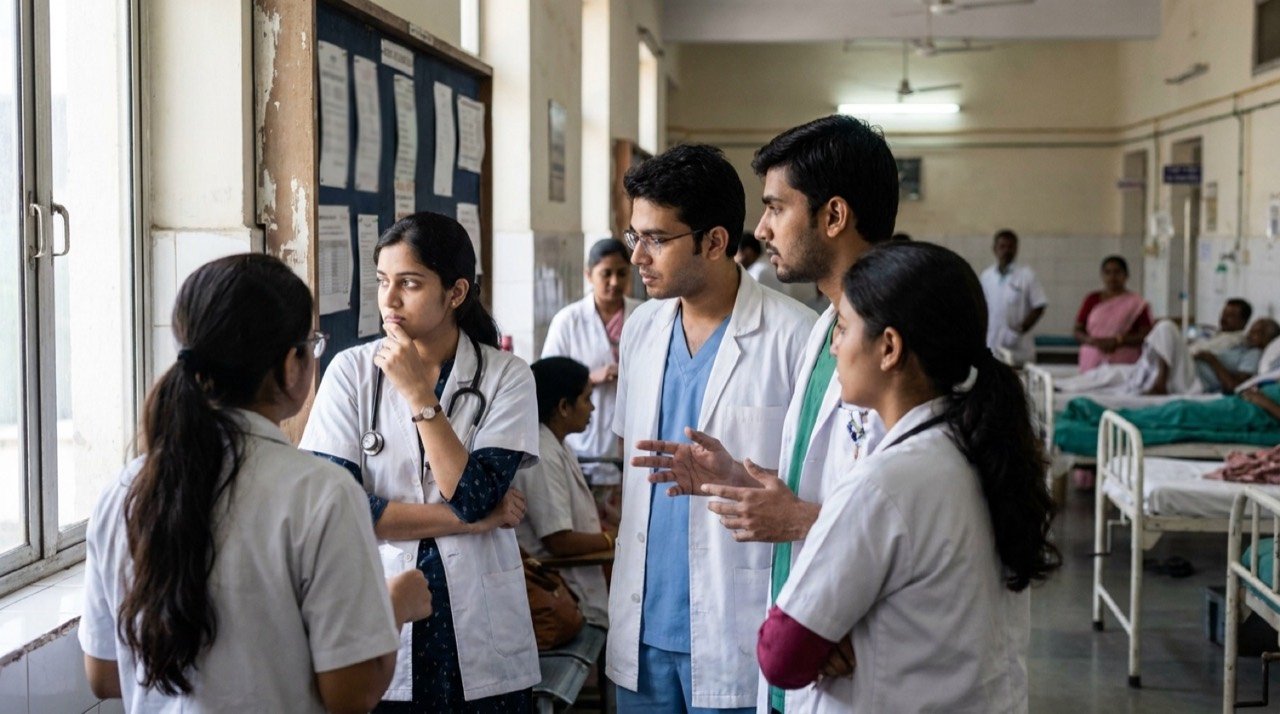
NMC Move to Phase Out PG Medical Diplomas Reshapes Specialist Training Debate
The National Medical Commission's reported plan to discontinue postgraduate medical diplomas and convert eligible seats into MD and MS programmes is stirring debate over India's specialist training and seat availability.

Workplace therapy use jumps across India Inc as younger employees lead a quiet shift
A new corporate mental health report finds counselling sessions rising sharply since 2023, with workers in their early twenties driving the change and finance emerging as an unexpected hotspot.

Jharkhand Teen Dies During Fracture Treatment; CM Orders Probe
The death of a Jharkhand teenager during treatment for a reported fracture has led to family allegations of medical negligence and an official probe ordered by the Chief Minister into what went wrong.
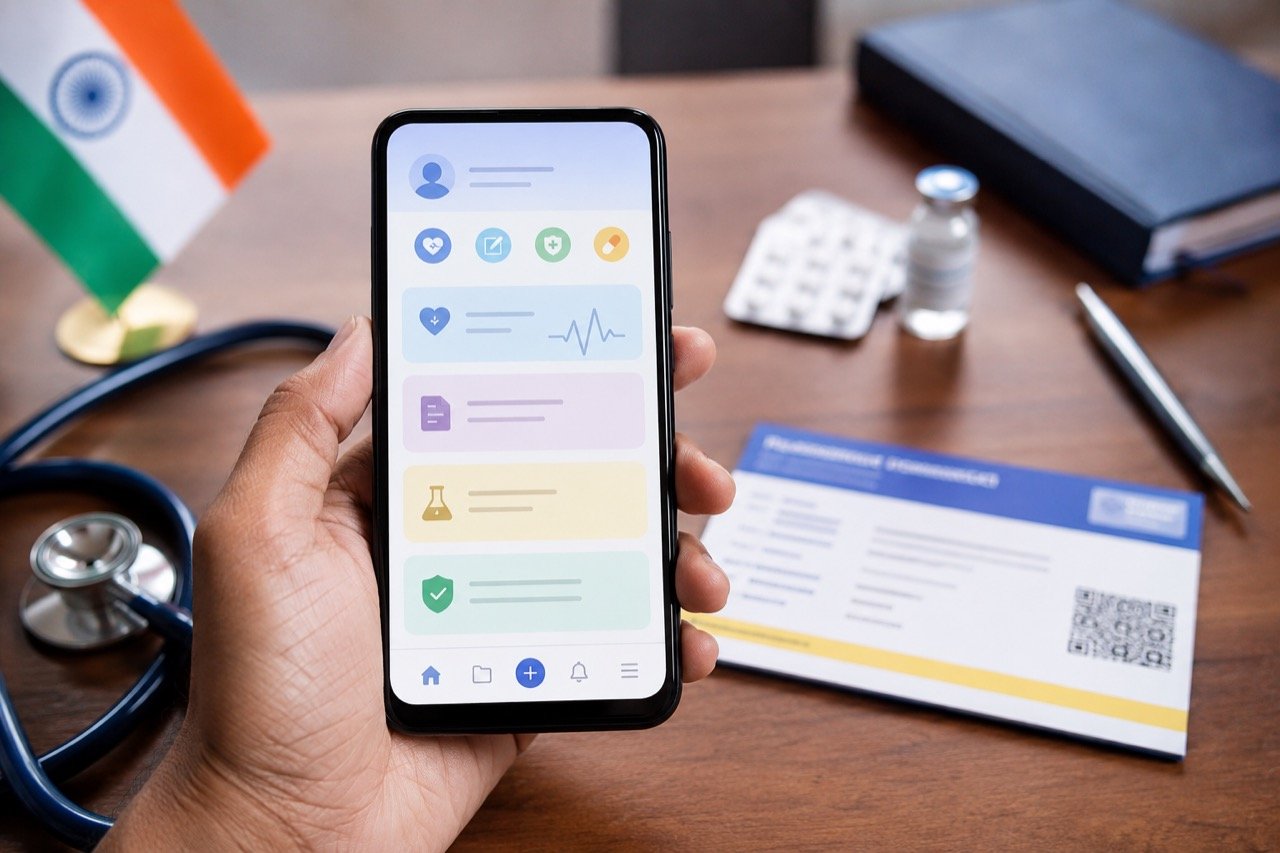
Aarogya Setu 2.0 Returns as India's Personal Health Record App
The pandemic-era contact tracing app has been relaunched as a personal health record platform, betting that portable medical data can find a place in India's growing digital health ecosystem.
More from this section
More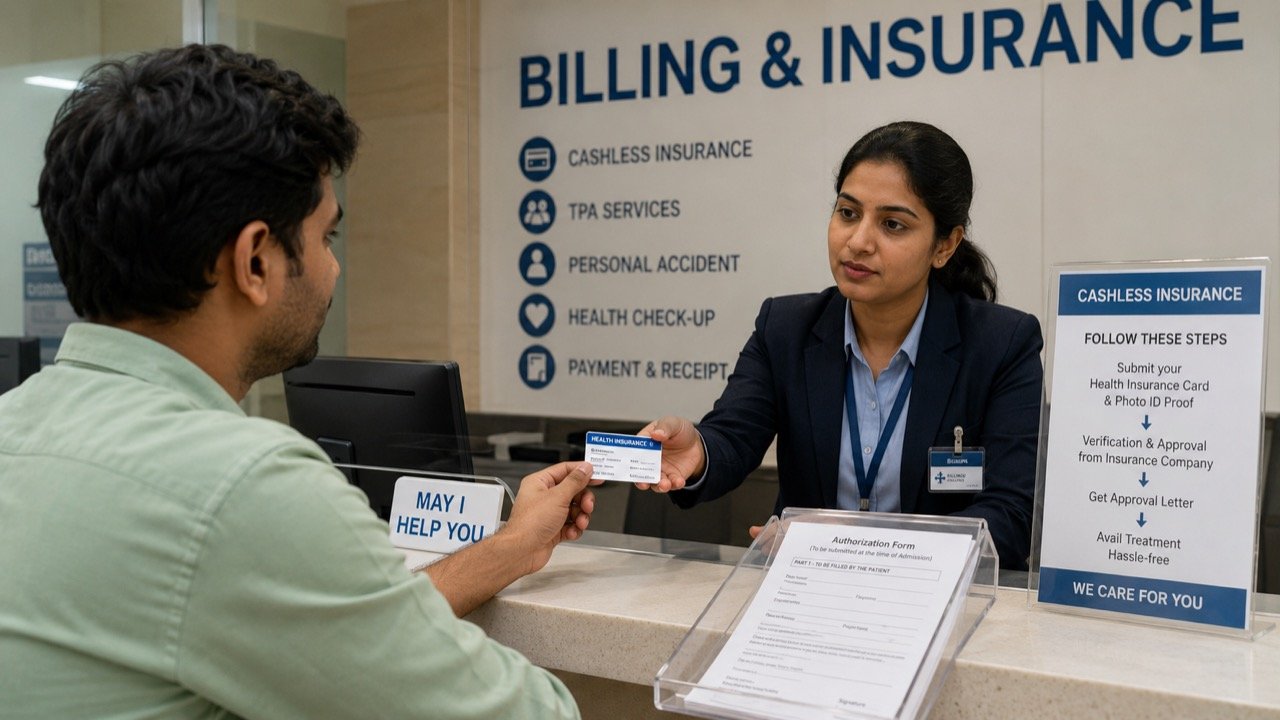
Health Insurance: Why Hospital Cashless Status Matters Before You Buy
Whether a hospital sits inside an insurer's cashless network can decide if a family pays lakhs upfront during an emergency or walks in with paperwork alone, making it a first-order question for policy buyers.
Jharkhand Teen Dies During Fracture Treatment; CM Orders Probe
The death of a Jharkhand teenager during treatment for a reported fracture has led to family allegations of medical negligence and an official probe ordered by the Chief Minister into what went wrong.
Aarogya Setu 2.0 Returns as India's Personal Health Record App
The pandemic-era contact tracing app has been relaunched as a personal health record platform, betting that portable medical data can find a place in India's growing digital health ecosystem.