Nitin Gadkari Backs Isobutanol-Blended Diesel in New Biofuel Push
Union Minister Nitin Gadkari is reportedly pushing for up to 15 percent isobutanol blending in diesel, extending India's biofuel drive beyond E20 petrol into the fuel that powers freight and farming.
Commentary & Analysis ·
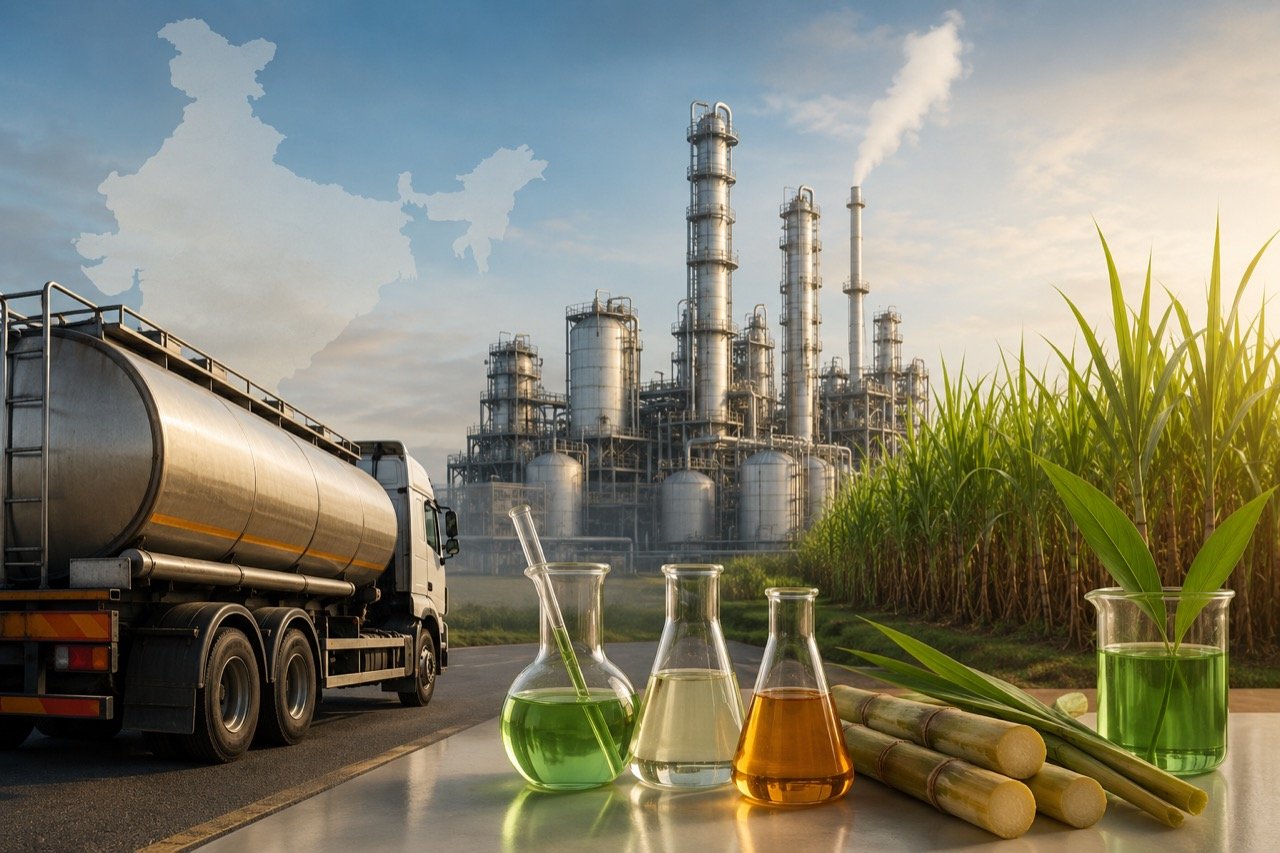
India's biofuel debate has widened beyond petrol. Union Road Transport Minister Nitin Gadkari is pushing for diesel blended with up to 15 percent isobutanol, according to a July 5 report in the Economic Times, signalling that the government's alternative-fuel ambitions now extend to the country's workhorse fuel. The move follows the rollout of E20 petrol, which mixes 20 percent ethanol into the fuel used by most private vehicles. Diesel, however, is a different order of challenge: it powers freight trucks, agricultural machinery, buses and a large share of India's commercial transport, so any blending mandate carries far greater economic weight.
Why diesel is a different kind of policy problem
Petrol-driven mobility in India is dominated by private cars and two-wheelers, where a mileage dip or a maintenance quirk is, for most owners, an inconvenience rather than an existential cost. Diesel is structurally different. It is the fuel of freight corridors, tractors, harvesters, generator sets, buses and long-haul trucking fleets, the machinery on which entire livelihoods depend. A trucker who runs several hundred kilometres a day, or a farmer whose tractor cannot afford downtime during a sowing window, has a far lower tolerance for uncertainty than a private car owner does. This is the essential context for why Gadkari's isobutanol push, however well-intentioned, needs to be read with more caution than the E20 rollout was.
Why isobutanol, and why diesel
Isobutanol is being discussed as a cleaner fuel additive whose chemical properties may make it better suited to diesel blending than ethanol, which does not mix well with diesel. This is a meaningful distinction. Ethanol's success with petrol relied partly on the fact that petrol engines and ethanol's chemistry are reasonably compatible at scale; diesel engines operate on compression ignition rather than spark ignition, and diesel's blending chemistry behaves differently. If isobutanol genuinely blends more cleanly with diesel than ethanol would, it could open a technically viable pathway that ethanol itself could not have offered for this fuel category. The policy goals behind the push are familiar ones already seen in the ethanol story: cut India's crude oil import bill, create sustained domestic demand for alternative fuels, and lower emissions where technically feasible. All three ambitions are legitimate and consistent with the direction Indian energy policy has taken for several years.
The economic stakes of a diesel transition
India's dependence on imported crude has long been a strategic vulnerability, and diesel consumption sits at the heart of that exposure given how much of the country's freight and agricultural economy runs on it. A blending mandate that succeeds could meaningfully dent that import bill over time while building a domestic isobutanol production and supply ecosystem, generating industrial activity that petrol-only ethanol blending did not fully capture. But the flip side of that scale is risk: diesel blending errors would ripple through supply chains, food logistics and construction timelines far more widely than a petrol issue would, because so much of the economy's physical movement depends on diesel-powered vehicles operating without disruption.
The implementation questions that will decide the outcome
The hard part starts after the announcement. Fleet operators will want clarity on engine compatibility, mileage impact, maintenance costs, warranty protection and fuel availability before committing to blended diesel. These are not abstract concerns: an unexpected mileage drop or an unresolved warranty dispute can translate directly into lost income for an owner-operator trucker or a smallholder farmer, groups with little financial cushion to absorb such shocks. Oil marketing companies, for their part, will need to build blending infrastructure and secure reliable isobutanol supply chains at a scale sufficient to serve diesel's much larger consumption base, a logistical undertaking distinct from anything the ethanol-petrol programme required. Regulators, meanwhile, must publish standards that make the transition predictable rather than disruptive, since ambiguity about specifications is itself a cost that manufacturers and fleet operators have to price in. Pilot programme details, industry response and official specifications are the next milestones to watch, and each will offer an early signal of whether this initiative is being sequenced carefully or announced ahead of the groundwork.
Stakeholders who will shape how this unfolds
Vehicle manufacturers will need to confirm whether existing diesel engines, particularly those already on the road, can handle isobutanol blends without modification, since retrofitting an entire commercial fleet would be a far larger undertaking than any petrol-side adjustment. Trucking associations and farmer bodies are likely to be vocal stakeholders in this process, given how directly the policy touches their operating costs and machinery warranties. Isobutanol producers and prospective investors will be watching for demand signals and regulatory certainty before committing capital to new production capacity, a chicken-and-egg dynamic familiar from other biofuel rollouts. And ordinary consumers of freight-dependent goods, from food to construction materials, have an indirect but real stake in whether this transition proceeds smoothly, since diesel cost and reliability feed into prices across the economy.
The NE Times View
Gadkari's isobutanol push fits a consistent pattern: he floats ambitious fuel transitions early and lets industry catch up. That approach has moved India's energy conversation forward, but diesel is where caution matters most, because the vehicles involved are livelihood machines for truckers and farmers, not lifestyle purchases. The lesson of the E20 rollout is that consumer trust erodes quickly when mileage and warranty questions are answered late. If the government wants this transition to succeed, transparent testing data and clear compensation rules should come before any blending mandate. Done right, isobutanol blending could genuinely strengthen energy security; done hastily, it risks becoming another running dispute between policy and the pump.
Key takeaways
- Gadkari is pushing diesel blended with up to 15 percent isobutanol, extending India's biofuel ambitions beyond the E20 petrol programme.
- Isobutanol is seen as chemically better suited to diesel blending than ethanol, which does not mix well with diesel.
- Diesel's role in freight, farming and commercial transport means any blending mandate carries far greater economic and livelihood stakes than petrol blending did.
- Success will depend on engine compatibility data, warranty clarity, blending infrastructure and reliable isobutanol supply chains being resolved before any mandate takes effect.
- The E20 experience suggests transparent testing and clear compensation rules must precede the mandate, not follow it, if consumer and industry trust is to be preserved.
You may also like to read

India Lifts Natural Gas Curbs as Middle East Tensions Ease
The Centre has rolled back emergency natural gas restrictions imposed in March to shield priority sectors, signalling that policymakers judge the immediate supply risk from West Asian instability to have receded.
Modi Opens Pachpadra Refinery: Energy Security and Jobs at Stake
Prime Minister Narendra Modi has inaugurated the HPCL Rajasthan Refinery at Pachpadra, a mega project that puts India's energy security, industrial investment and regional employment squarely in the spotlight.
Telangana's Donald Trump Avenue Plan Spotlights Hyderabad's Branding Push
Telangana is set to unveil a Donald Trump Avenue near Hyderabad's US Consulate, a symbolic naming the state casts as part of its drive to brand the city as a global innovation hub.

Western Ghats Eco-Sensitive Area Plan Advances With Three-State Push
The Centre is preparing to notify Ecologically Sensitive Areas in at least three Western Ghats states, shifting from an all-six approach as it weighs biodiversity protection against local livelihoods and land-use concerns.
More from this section
More
AICTE Industry Fellowship 2026: Rs 1.5 Lakh Scheme Closes July 5
The AICTE Industry Fellowship Programme 2026, which places technical-education faculty inside leading companies on a Rs 1.5 lakh monthly stipend, reached its application deadline on July 5.
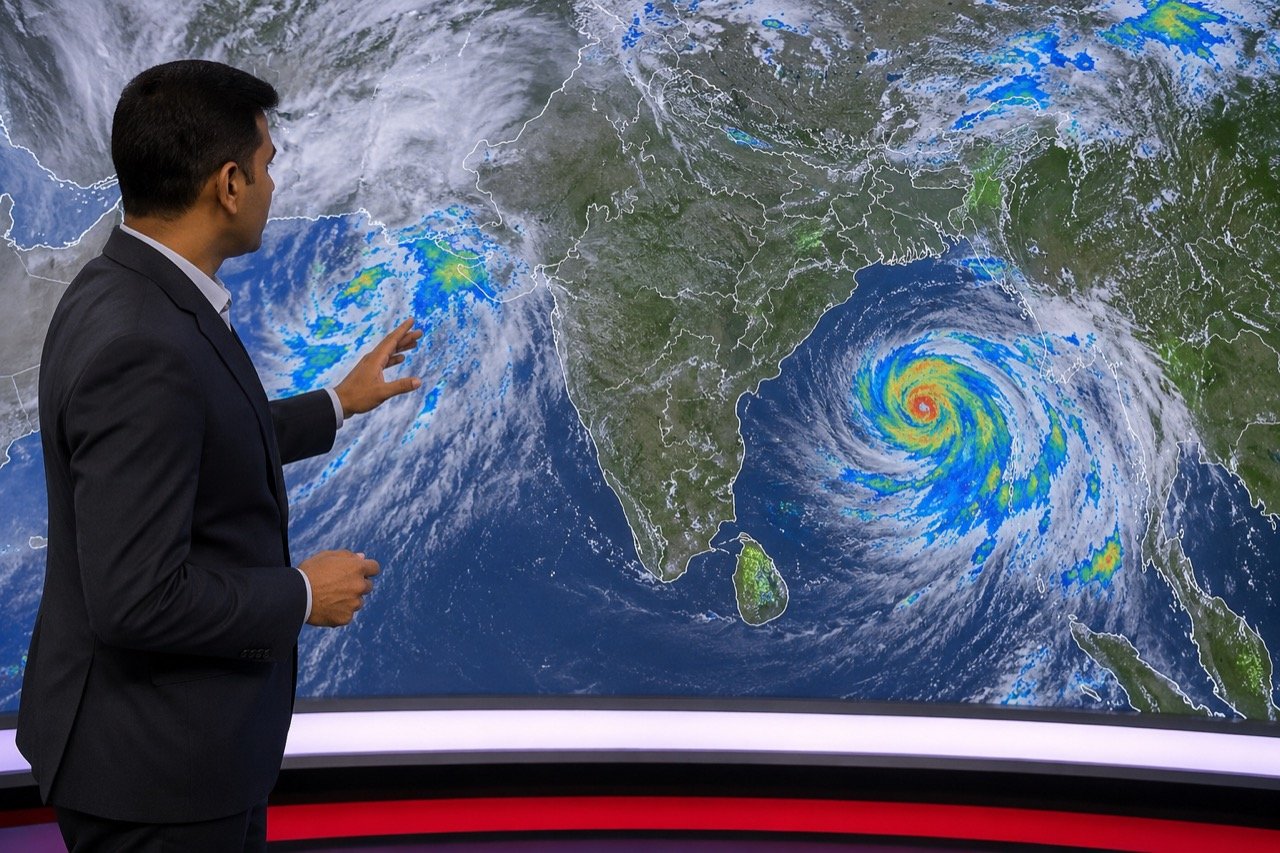
Bay of Bengal Low Pressure System Revives Monsoon Over Western India
A low-pressure system over the Bay of Bengal has pushed the monsoon back into an active phase, bringing steady heavy rain to Kerala, coastal Karnataka and Maharashtra, and putting Mumbai and Pune on preparedness watch.
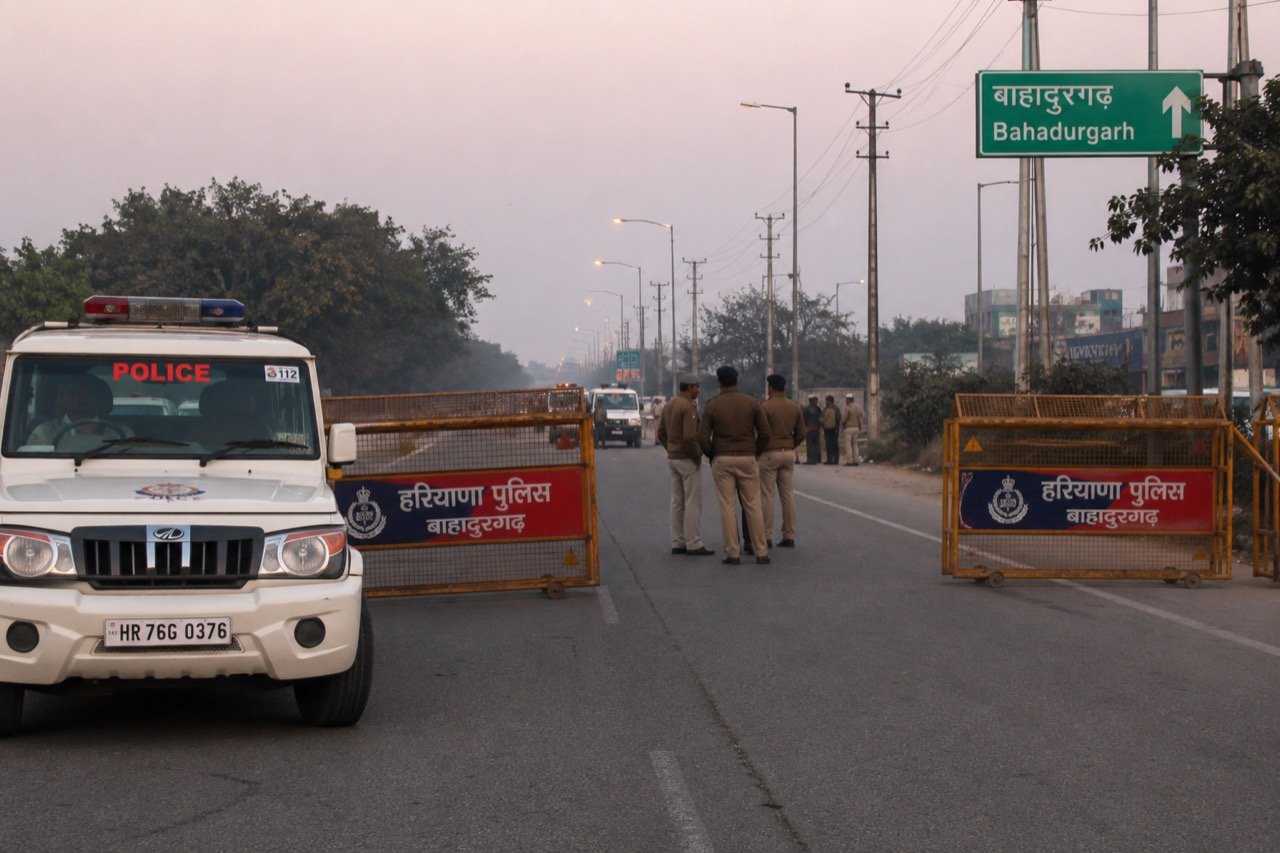
Bishnoi Gang Suspects Injured in Haryana Encounter as Police Tighten Net
A joint Haryana-Delhi Police operation in Bahadurgarh left two suspected Lawrence Bishnoi gang members injured, spotlighting the multi-state coordination now central to India's fight against organised crime networks.