Nalgonda Businessman's Family of Four Found Dead at Home; Police Launch Careful Probe
Four members of a businessman's family were found dead inside their home in Nalgonda, Telangana, leaving the neighbourhood in shock as police begin a methodical investigation into the unexplained deaths.
Commentary & Analysis ·
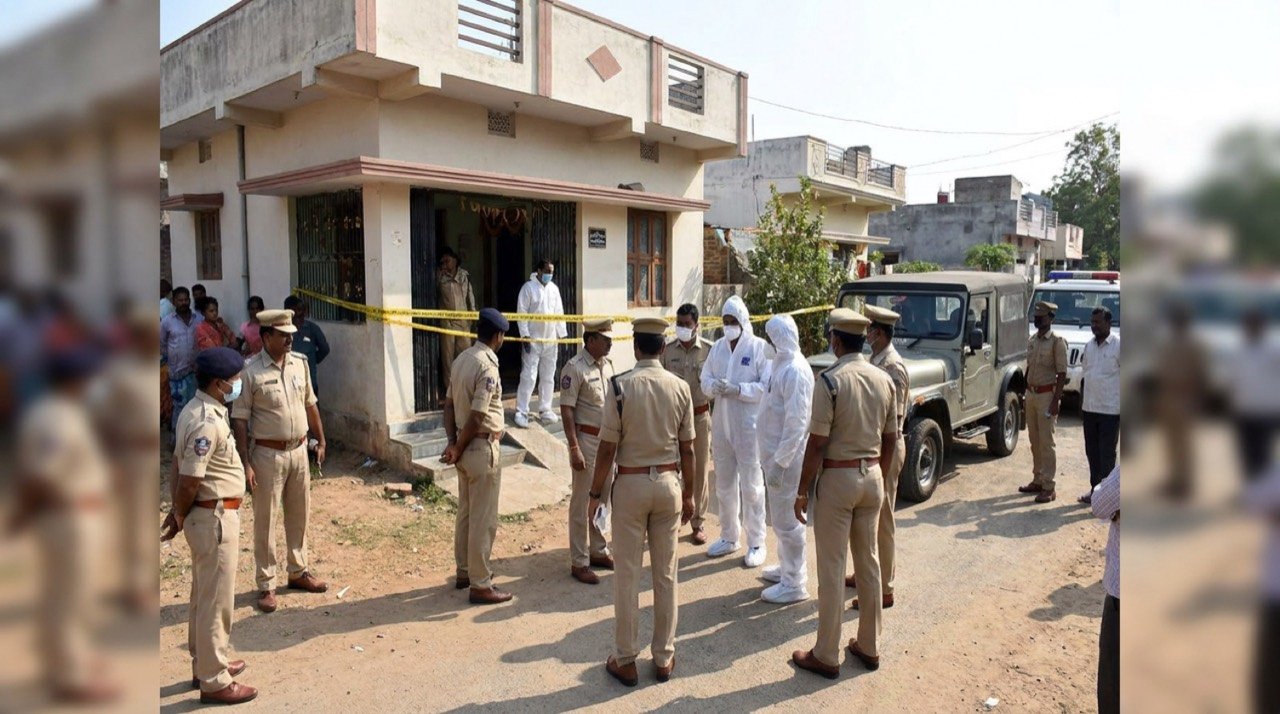
A quiet residential lane in Nalgonda, Telangana, was thrown into shock after four members of a local businessman's family were found dead inside their home. The discovery has alarmed neighbours and prompted police to open an investigation, with officers stressing that the circumstances are not yet clear and that conclusions must wait for forensic findings. In a district town where such incidents are rare and word travels quickly, the news has understandably dominated local conversation, even as the facts remain sparse and provisional.
What is known so far
According to initial reports, the four were discovered within the residence. Beyond that, authorities have been deliberately cautious. The exact sequence of events, the cause of death and any possible motive remain unestablished, and police have refrained from characterising the case until medical and forensic evidence is in hand. That caution is by design. In incidents where an entire household is found dead, premature labelling can mislead an investigation and distress relatives who are already grappling with an unimaginable loss.
Investigators have signalled that all possibilities are being kept open until the evidence narrows them down. This is a notable discipline in itself. In the immediate aftermath of such discoveries, there is often intense pressure, from neighbours, from local media, from social media chatter, to arrive at a quick explanation. Police resisting that pressure and instead committing to a methodical, evidence-first approach is, in itself, a signal of how seriously the case is being treated.
How such investigations proceed
In cases like this, police typically work through a standard checklist designed to reconstruct events. The aim is to determine whether the deaths were linked to a crime, to suicide, to an accident such as poisoning or a gas leak, or to some other cause entirely. Forensic teams examine the scene for signs of forced entry or struggle, while post-mortem examinations establish the medical cause and time of death. Digital and financial trails often prove decisive in piecing together the days leading up to the tragedy.
The broad elements of this process typically include the following.
- Inspection of entry points for any sign of forced entry or intrusion.
- Post-mortem and forensic analysis to establish cause and time of death.
- Review of phone records, messages and any digital trail.
- Examination of financial position, debts or recent business stress.
- Inquiries into recent disputes, family background and any note left behind.
Each of these strands serves a distinct purpose. A scene examination can quickly rule in or rule out external intrusion. Post-mortem findings anchor the timeline and can reveal whether all four individuals died in the same manner and at broadly the same time, a detail that itself narrows the range of plausible explanations. Financial records matter because business distress, debt pressure or sudden reversals of fortune are, in the sad history of such cases nationally, a recurring thread investigators are trained to check for, without prejudging that they are relevant here. Similarly, a review of any note, recent disputes or changes in the family's routine helps investigators understand the emotional and social context without leaping to conclusions the evidence does not yet support.
Why the case demands caution rather than speculation
The involvement of an entire family, described as that of a local businessman, adds a layer of public interest to what is fundamentally a private tragedy still under active investigation. It is precisely this combination, a prominent local figure, a whole household affected, and an absence of confirmed facts, that tends to generate rumour in small towns. Unverified theories can spread faster than verified findings, especially in tightly knit communities where everyone believes they know the family, however distantly.
This is where restraint matters most. Investigators have been explicit that the sequence of events, cause of death and any motive are not yet established. Until forensic teams confirm the facts, any narrative built on assumption, whether of foul play, financial ruin or personal crisis, risks being wrong, and risks compounding the grief of relatives and friends who will read whatever is published. Responsible reporting in a case like this means describing the process being followed rather than filling gaps in the record with conjecture.
A wider conversation on distress and support
Beyond the immediate inquiry, the case has revived broader questions about mental health, family distress and how communities respond when a household suddenly falls silent. Such tragedies often expose missed warning signs and the social isolation that can build up unnoticed even in close-knit neighbourhoods. Businessmen and their families, in particular, can face pressures, financial, social or reputational, that are not always visible to neighbours or even extended family until a crisis has already unfolded.
This is not to suggest that any particular explanation applies in this instance; it does not, at this stage, and nothing in the confirmed facts points definitively in any one direction. Rather, it is to note that whenever such cases arise, they tend to prompt communities to reflect on how well they know the households around them, and how support systems, whether familial, social or professional, might be strengthened before a family reaches a breaking point, whatever form that may take.
An investigating officer, cited in initial reporting, put the underlying principle plainly: until forensic teams confirm the facts, responsible reporting means resisting speculation and respecting the family's privacy. That is a standard worth holding to, both for the press and for the public discourse that inevitably forms around a case of this nature.
What happens next
For now, the priority for police is a thorough, evidence-led probe, and for the community, support for those grieving. The formal steps ahead, completion of post-mortem examinations, forensic analysis of the scene, and scrutiny of financial and digital records, will take time, and their outputs are unlikely to be made public in full detail even once concluded. What can reasonably be expected is periodic confirmation from police of the broad direction the investigation is taking, without compromising the integrity of evidence still being examined.
The NE Times will report verified developments as official findings emerge, and urges readers to avoid spreading unconfirmed claims about the deaths. In cases of this sensitivity, the gap between what is known and what is assumed can be wide, and it is in that gap that harm, to the investigation and to the family, tends to occur.
The NE Times View
A family of four dead at home demands rigour, not speculation. In cases like this, premature theories circulating online can taint both the investigation and the grief of those left behind. Police are right to move methodically, treating the scene, the medical evidence and the financial and digital trail as the foundation for any conclusion, rather than working backwards from assumption. We would only urge transparency about the broad direction of the probe, enough to quell rumour, without compromising the forensic work that any credible conclusion will rest on. That balance, between public accountability and investigative integrity, is one Telangana police will need to strike carefully as this case develops.
Key takeaways
- Four members of a Nalgonda businessman's family were found dead at their home; police have opened an investigation but have not established cause, sequence or motive.
- Investigators are following a standard multi-pronged process covering the scene, post-mortem findings, digital records and financial background, while deliberately avoiding premature conclusions.
- Officials have explicitly cautioned against speculation until forensic evidence is confirmed, citing the risk to both the investigation and the grieving family.
- The case has reopened wider community questions about family distress, business-related pressure and the visibility of warning signs in close-knit neighbourhoods.
- The NE Times will continue to report only verified developments as they emerge from official sources.
You may also like to read
Pankaj Tripathi's Brother Injured in Bihar Attack as Police Launch Raids
Bijendra Nath Tiwari, brother of actor Pankaj Tripathi, was injured in an attack with sharp weapons in Bihar and taken to Patna for treatment as police teams hunt for the accused.
Pune Lohagad Trek Death Turns Into Murder Probe As Fiancée, Friend Arrested
Police arrested a Pune businessman's fiancée and her friend after fresh evidence reframed his fatal fall at Lohagad Fort from an accident into a suspected murder investigation.
Lohagad Fort Death Near Pune Turns Into Murder Probe After Two Arrests
A fall at the popular Lohagad Fort trekking site, first treated as an accident, has become a murder investigation after Pune police arrested the victim's fiancee and an alleged associate.
Bengaluru Triple Murder Probe Focuses On Daughter And Her Live-In Partner
Police investigating the killing of an elderly couple and their 19-year-old daughter in Bengaluru are examining whether family opposition to a relationship escalated into extreme violence.
More from this section
More
AICTE Industry Fellowship 2026: Rs 1.5 Lakh Scheme Closes July 5
The AICTE Industry Fellowship Programme 2026, which places technical-education faculty inside leading companies on a Rs 1.5 lakh monthly stipend, reached its application deadline on July 5.
Bay of Bengal Low Pressure System Revives Monsoon Over Western India
A low-pressure system over the Bay of Bengal has pushed the monsoon back into an active phase, bringing steady heavy rain to Kerala, coastal Karnataka and Maharashtra, and putting Mumbai and Pune on preparedness watch.
Bishnoi Gang Suspects Injured in Haryana Encounter as Police Tighten Net
A joint Haryana-Delhi Police operation in Bahadurgarh left two suspected Lawrence Bishnoi gang members injured, spotlighting the multi-state coordination now central to India's fight against organised crime networks.