Mumbai Floods: Red Alert Rain Disrupts Roads, Trains and Metro
Heavy rain of over 200 mm in about 10 hours triggered a red alert in Mumbai, flooding roads and disrupting local trains and Metro services in a fresh test of the city's monsoon preparedness.
Commentary & Analysis ·
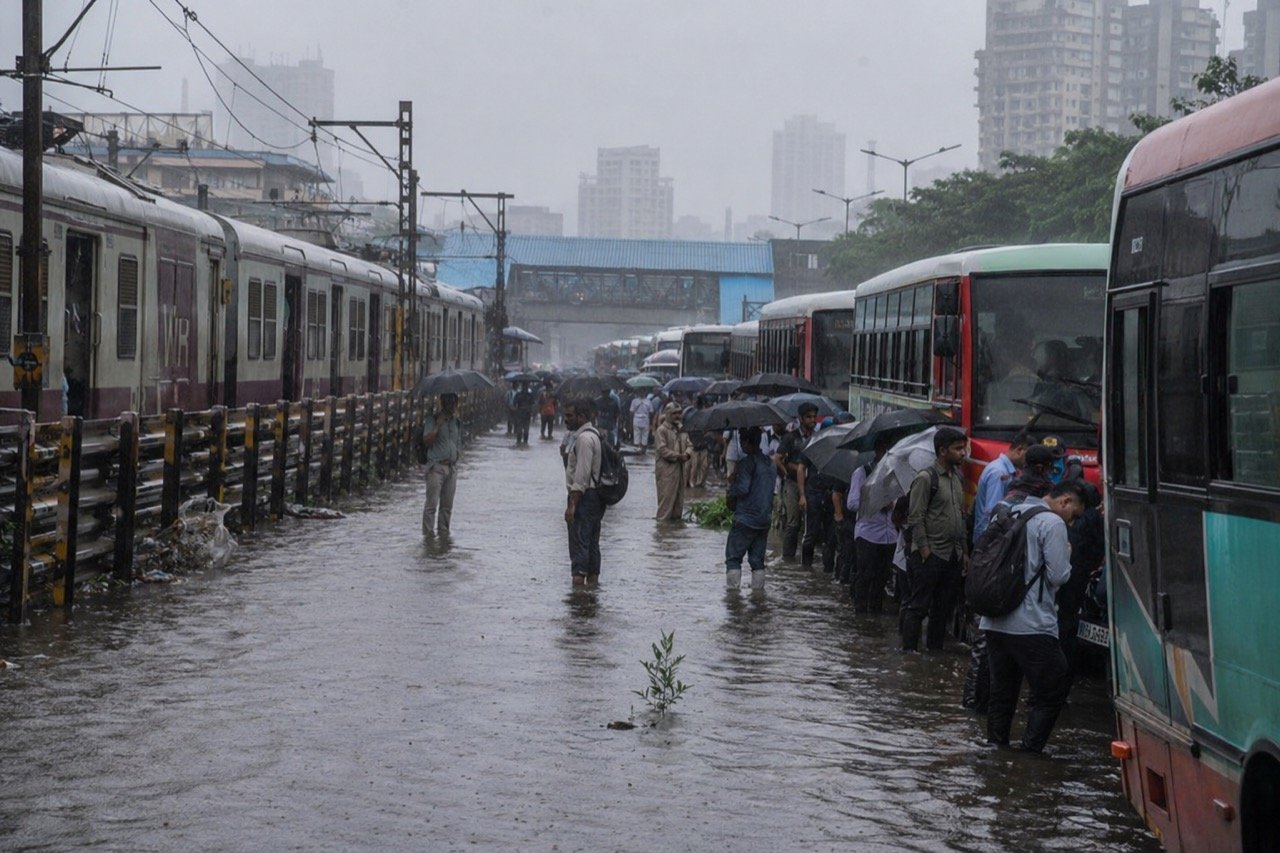
Mumbai's monsoon preparedness came under fresh strain after intense rainfall flooded roads and disrupted local train and Metro services across the city. According to The Indian Express, a red alert was issued as some pockets recorded more than 200 mm of rain in roughly 10 hours, leaving commuters to negotiate waterlogged streets and overflowing drains. The scale of that single spell is worth pausing on: 200 mm in ten hours is not a gentle monsoon shower but a concentrated deluge, the kind that overwhelms drainage systems designed for steadier, more distributed rainfall. That such a volume of water can fall on a single city district within less than half a day illustrates why Mumbai's flood story repeats itself with such regularity.
How one downpour cascades through the city
Mumbai's vulnerability comes from how tightly its transport systems are linked. When roads flood, buses slow to a crawl; when tracks are waterlogged, the suburban rail network that carries millions becomes unreliable; and when traffic locks up, even emergency vehicles struggle to move. A single intense spell, even one concentrated in specific zones, can ripple across the daily lives of a large share of the city's residents. This is the defining feature of Mumbai's monsoon problem: it is not merely a rainfall problem but a systems problem, in which failure in one mode of transport quickly compounds failure in another. A commuter who cannot catch a delayed train has no reliable alternative if the roads are also submerged and the Metro, still expanding its network, cannot yet absorb the diverted load. The interdependence that makes Mumbai's transport network efficient in fair weather is the same interdependence that makes it fragile in a downpour.
This cascading effect also has an economic dimension that rarely gets stated plainly. Every hour that trains run late or roads remain impassable is an hour of lost productivity for a city that functions as one of India's principal commercial and financial hubs. Employees who cannot reach offices, goods that cannot move through congested arteries, and businesses that must shutter early as flooding worsens all represent a quiet, cumulative cost that is rarely tallied alongside the visible images of waterlogged streets.
The infrastructure question beneath the water
The immediate story is rain, but the deeper issue is recovery speed. Drainage capacity, pre-monsoon desilting, traffic management, Metro connectivity and ward-level response together determine whether a heavy spell is an inconvenience or a shutdown. Each flooding episode exposes the limits of infrastructure in a high-density coastal city where reclamation, construction and climate pressures keep raising the stakes. Desilting, in particular, deserves scrutiny: drains and nullahs cleared of silt before the monsoon can carry away far more water than those left clogged from the previous year's accumulation, yet the effectiveness of any given year's desilting drive is only truly tested once the rain actually arrives, and by then it is too late to make adjustments.
Ward-level response matters just as much as citywide planning. Mumbai's civic administration is organised into wards, each responsible for its own stretch of drains, roads and local infrastructure, which means the quality of flood response can vary considerably from one neighbourhood to the next depending on local capacity, equipment and coordination. A red alert issued citywide does not guarantee a uniform citywide response; some pockets will drain within hours, others will remain waterlogged well into the next day.
Information as a frontline necessity
For residents, the practical need during such episodes is timely, accurate information: which routes are affected, whether schools and offices have issued advisories, and how long heavy rain is expected to persist. Official alerts matter most when they are amplified clearly and without exaggeration. In a city where millions must decide within minutes whether to leave home, delay a commute, or turn back midway, the value of a clear, well-timed advisory cannot be overstated. Confusing or delayed communication compounds the disruption caused by the weather itself, as commuters end up stranded partway through journeys they might otherwise have postponed or rerouted.
This is also where the credibility of red alerts is tested. If alerts are issued too often without corresponding severity, residents may grow desensitised and fail to adjust behaviour when a genuinely dangerous spell arrives. Conversely, if alerts consistently match the reality on the ground, they become a trusted tool that shapes commuting decisions, school closures and business operations in real time.
Why this keeps happening despite advance warning
What makes Mumbai's flooding especially notable is that it is rarely a surprise in the meteorological sense. Weather agencies typically forecast heavy spells in advance, giving civic authorities a window to pre-position pumps, alert ward staff and issue public advisories. The gap, then, is not one of prediction but of translating forecasts into resilient, functioning infrastructure on the ground fast enough to blunt the impact when the rain actually falls. That gap is precisely what turns a forecastable weather event into a citywide transport shutdown year after year.
The NE Times View
Mumbai's annual flooding has become so routine that the real scandal is how unsurprising it is. A city that generates a significant share of India's GDP should not be brought to a halt by rainfall its own weather agencies forecast in advance. The test of monsoon resilience is not whether it rains hard — it will, more often, as the climate shifts — but how quickly drains, trains and traffic recover. Until desilting audits, drainage upgrades and coordinated ward-level response are treated as year-round obligations rather than June rituals, every red alert will read like a rerun. Other Indian cities racing to add Metro lines and towers should study Mumbai as a warning, not just a model. Expanding a rail network or adding skyscrapers without first solving the underlying drainage and desilting problem simply builds tomorrow's disruption on top of today's ambition. Resilience, in other words, has to be engineered into a city's foundations before it can be showcased in its skyline.
Key takeaways
- A red alert followed rainfall exceeding 200 mm in roughly 10 hours in parts of Mumbai, flooding roads and disrupting local trains and Metro services.
- The city's transport modes are so interlinked that flooding in one — roads, rail or Metro — quickly degrades the others, leaving commuters with few alternatives.
- Recovery speed, not rainfall intensity alone, is the real measure of monsoon preparedness, and it depends on desilting, drainage capacity and ward-level coordination.
- Clear, accurate, non-exaggerated public advisories are essential for commuters trying to make real-time decisions during red-alert conditions.
- Since such downpours are typically forecast in advance, recurring disruption points to gaps in translating warnings into resilient infrastructure rather than a lack of predictability.
You may also like to read
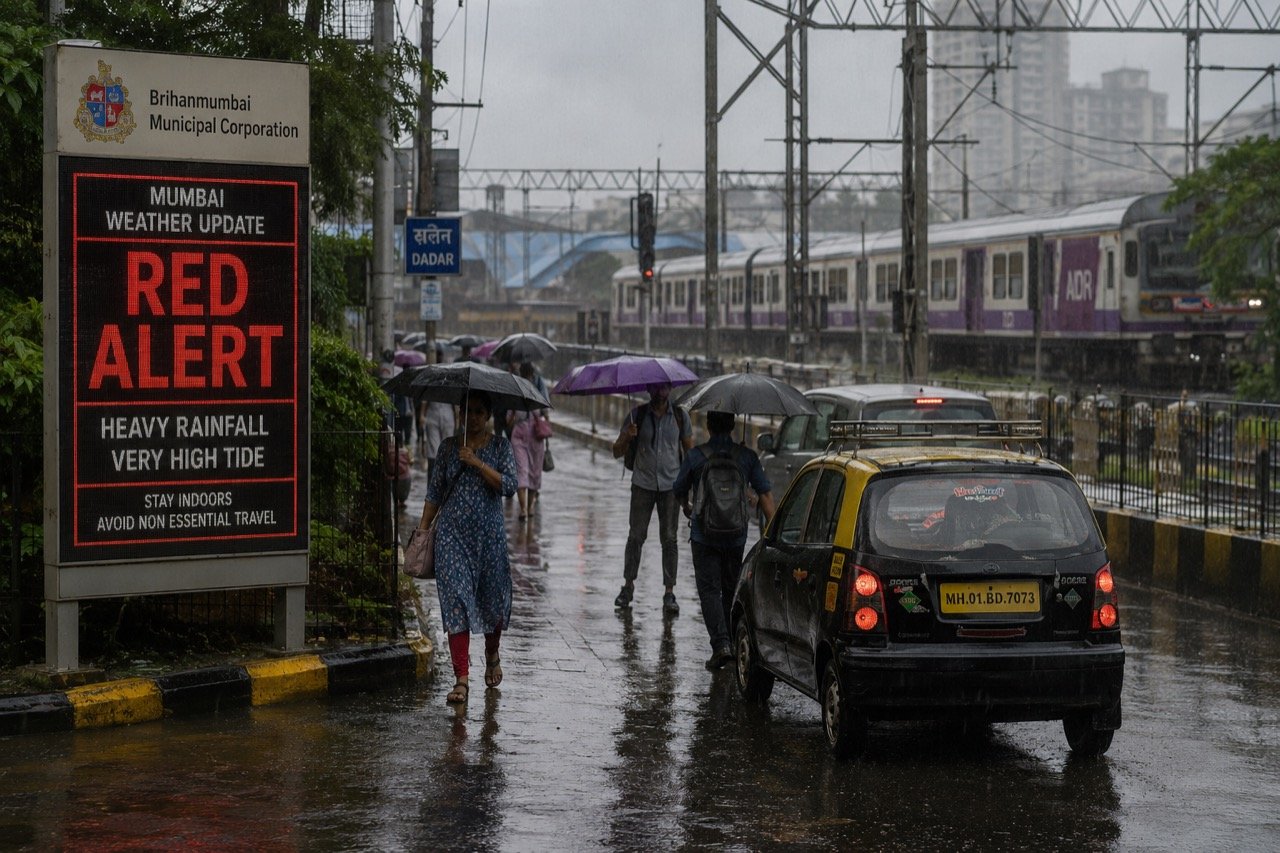
Mumbai Rains: Red Alert and Flight Diversions Test Monsoon Readiness
A red alert for heavy rainfall in Mumbai and reports of flight diversions have renewed scrutiny of the city's monsoon preparedness, from airport operations to local trains and drainage.
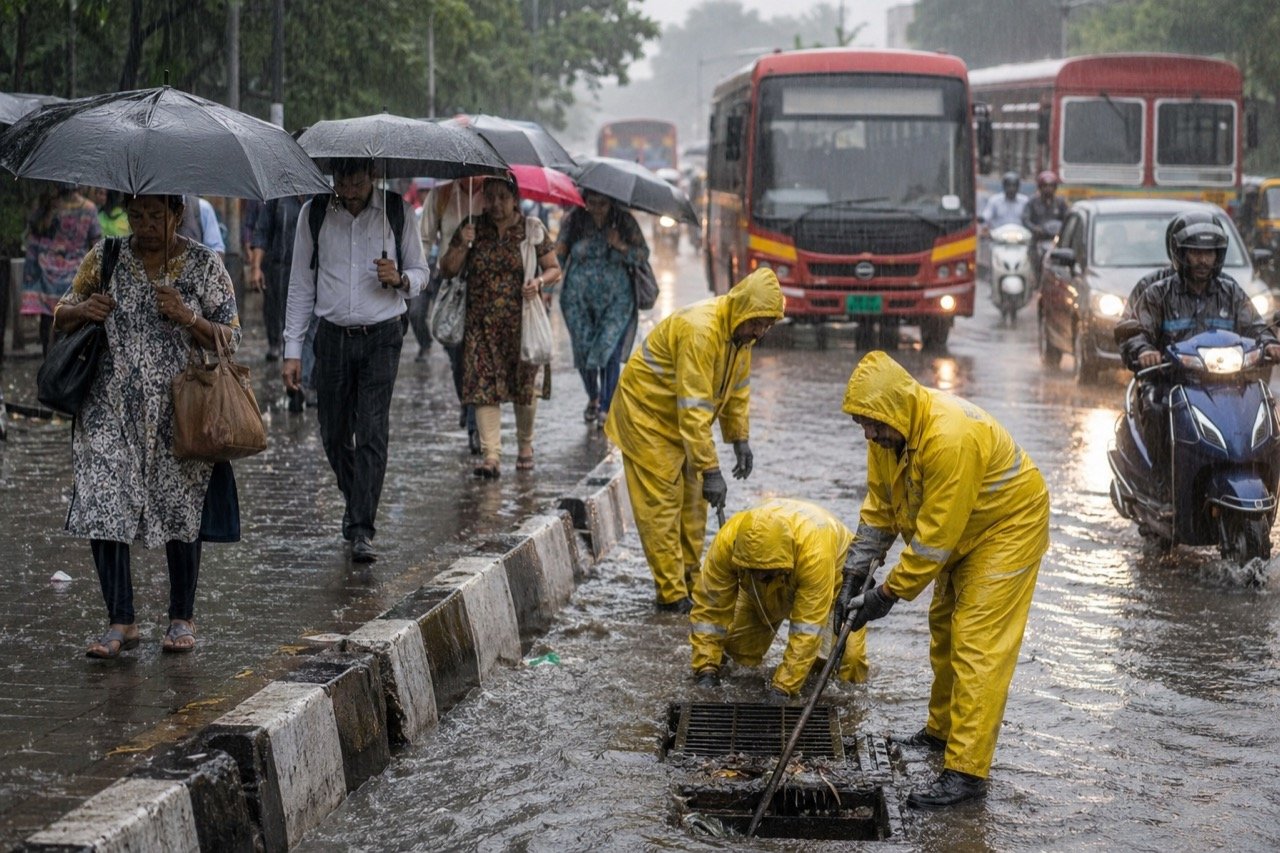
Mumbai and Thane on Alert as IMD Warns of Very Heavy Weekend Rain
The IMD has forecast heavy to very heavy rainfall with isolated extremely heavy spells over Mumbai and Thane on July 4 and 5, putting transport, drainage and emergency systems on weekend watch.
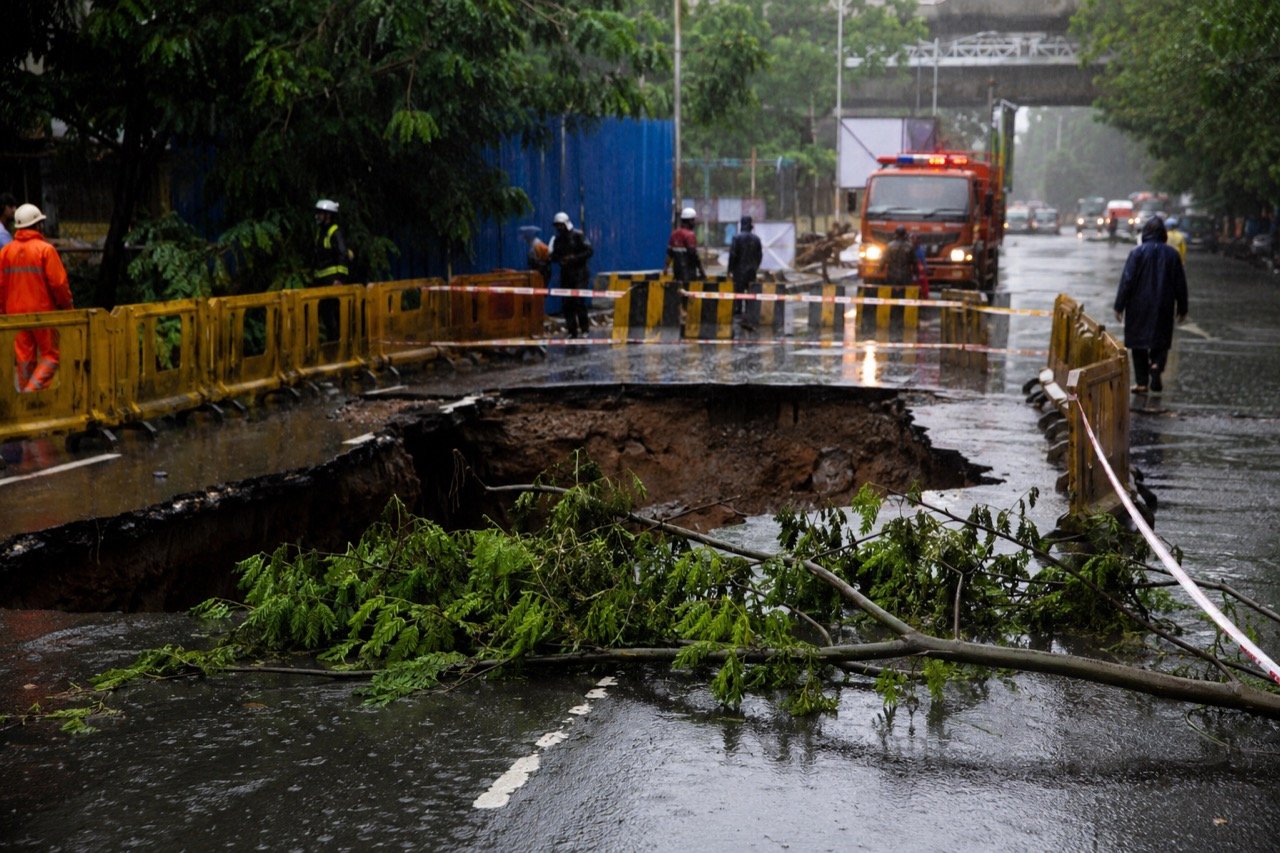
Mumbai Rains: Bhandup Road Cave-In Renews Monsoon Safety Fears
A stretch of LBS Marg in Bhandup West collapsed during intense monsoon rain, sending a vehicle into an excavation pit and reviving hard questions about Mumbai's construction safety and drainage readiness.
Delhi Weather: Warmest July Day in Two Years, Orange Rain Alert Next
Delhi's maximum temperature climbed to 38.6 degrees Celsius on Sunday, its warmest July day in two years, even as the IMD issued an orange alert for moderate rain on Monday.
More from this section
More
AICTE Industry Fellowship 2026: Rs 1.5 Lakh Scheme Closes July 5
The AICTE Industry Fellowship Programme 2026, which places technical-education faculty inside leading companies on a Rs 1.5 lakh monthly stipend, reached its application deadline on July 5.
Bay of Bengal Low Pressure System Revives Monsoon Over Western India
A low-pressure system over the Bay of Bengal has pushed the monsoon back into an active phase, bringing steady heavy rain to Kerala, coastal Karnataka and Maharashtra, and putting Mumbai and Pune on preparedness watch.
Bishnoi Gang Suspects Injured in Haryana Encounter as Police Tighten Net
A joint Haryana-Delhi Police operation in Bahadurgarh left two suspected Lawrence Bishnoi gang members injured, spotlighting the multi-state coordination now central to India's fight against organised crime networks.