Kerala's UDF Government Under Satheesan Beds In as LDF Reckons With Defeat
V. D. Satheesan's Congress-led UDF ministry, formed after a sweeping win that ended a decade of Left rule, is finding its feet even as the LDF and a sidelined Pinarayi Vijayan weigh their next moves.
Commentary & Analysis ·
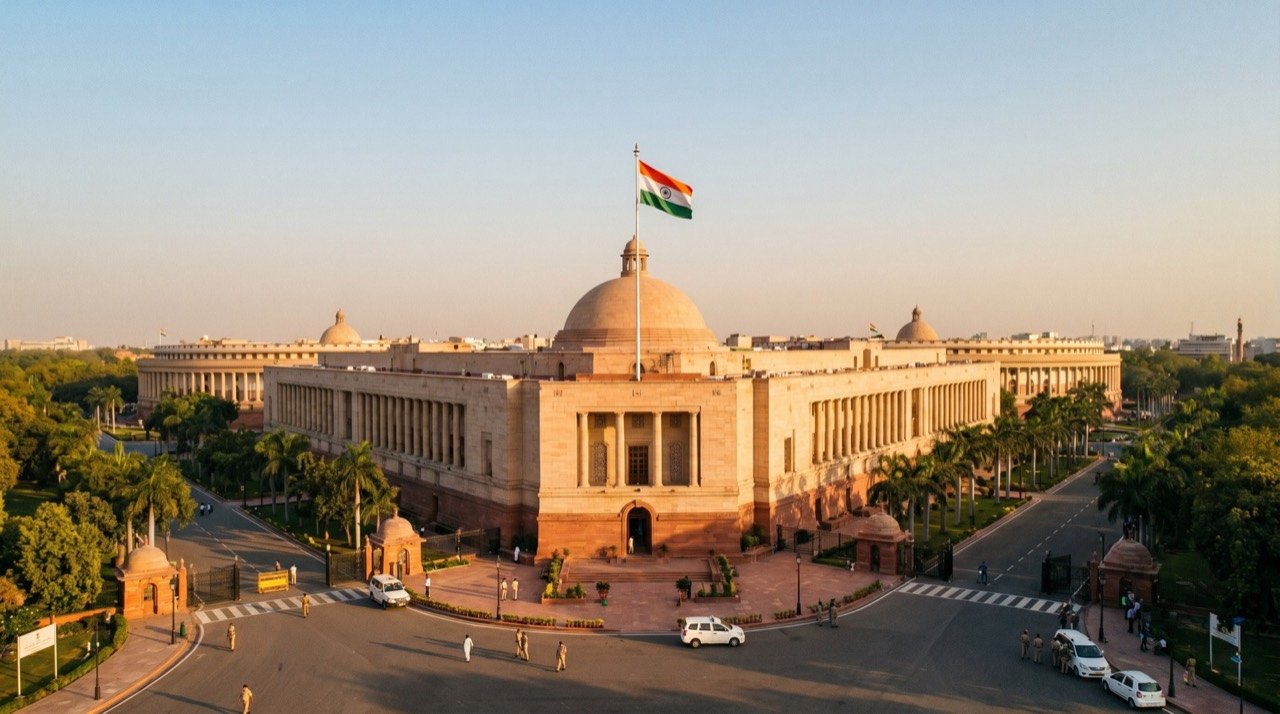
Kerala has returned to its old rhythm of alternating governments, but with a new face at the helm. V. D. Satheesan, long the face of the Congress-led United Democratic Front's opposition campaign, was named chief minister after a sweeping assembly victory that handed the UDF 102 of the 140 seats and ended a decade of Left rule under Pinarayi Vijayan. By mid-June his government had moved past its turbulent formation and into routine administration. For a state whose politics has long prized ideological loyalty, the scale of the swing was itself a statement: a decade of LDF governance, built on a reputation for welfare delivery and disciplined cadre organisation, was set aside comprehensively rather than narrowly.
A leadership tussle resolved
The path to Satheesan's elevation was not smooth. The scale of the win triggered a brief but intense leadership crisis within the Congress, with figures such as K. C. Venugopal and veteran Ramesh Chennithala viewed as contenders before the party's national leadership settled on Satheesan as the chief ministerial choice. That such a decisive mandate could still produce internal contestation says something about the Congress's persistent difficulty in managing success as smoothly as it manages adversity. A landslide of this size ordinarily hands a party an uncontested figurehead; that Kerala's Congress unit instead had to work through competing claims suggests the factional habits that have periodically weakened the party elsewhere in India were present here too, even amid celebration. The eventual choice of Satheesan, who had built his public profile as the sharpest voice of the opposition benches against Vijayan's government, signals a preference for continuity of message over a wholesale changing of the guard. It also places a premium on his ability to now govern with the same discipline he demanded of the outgoing administration from the opposition side.
The cabinet that followed gave the Indian Union Muslim League a substantial share of berths, reflecting its role as the UDF's most important ally, with senior leaders inducted into key portfolios. This is consistent with the coalition's long-standing internal arithmetic, in which the IUML's organisational strength in Malabar has made it an indispensable partner rather than a junior one. A generous allocation of portfolios is as much an acknowledgment of that leverage as it is a reward for electoral performance, and it will be watched closely both by secular critics of the alliance and by the League's own base, which will expect visible returns in the form of policy attention to its core concerns.
The Left takes stock
For the LDF, reduced to 35 seats, the defeat has prompted soul-searching. Pinarayi Vijayan retained his own Dharmadam constituency comfortably even as several of his ministers fell, leaving the Left to debate questions of leadership renewal and the erosion of its traditional base. That the chief minister himself survived while his cabinet colleagues did not is a familiar shape for anti-incumbency waves in India: voters frequently distinguish between a trusted individual figure and the broader government he leads, punishing the latter while sparing the former. For the CPI(M) and its coalition partner the CPI, the scale of the loss raises harder questions than any single defeat would. A decade in office had allowed the party machinery to entrench itself in the state's administrative and welfare apparatus; the challenge now is translating that same organisational depth into an effective opposition, a role the Kerala Left has not had to play in the assembly for ten years. Debates over generational succession, the party's relationship with an increasingly aspirational urban electorate, and whether its traditional planks retain their pull will likely dominate its internal reckoning in the months ahead.
Governing a divided mandate
The Satheesan government inherits a state with strong public services but stretched finances, and an electorate accustomed to high-decibel political contestation. Kerala's social indicators, built up over decades under governments of both persuasions, are not in question; what is in question is whether the state's finances can sustain the welfare commitments that voters across the political spectrum have come to expect. Early priorities are expected to centre on fiscal management, welfare continuity and an audit of the outgoing administration's flagship projects, a familiar ritual whenever power changes hands in the state. Such audits, common in Kerala's transitions, tend to serve two purposes at once: a genuine accounting of public expenditure, and a political opportunity to recast the previous government's record before the electorate that so recently endorsed it.
As one political observer in Thiruvananthapuram put it, the mandate is decisive, but the real challenge for the UDF is governing a state that switches sides every five years and forgives very little. That observation captures the essential paradox facing Satheesan. A 102-seat majority is about as commanding as Kerala's fractured, alliance-based politics permits, yet history offers the new government little comfort: the state's voters have shown no reluctance to eject even well-regarded administrations after a single term, regardless of ideology. Whether Satheesan can use the goodwill of a strong mandate to break Kerala's habit of single-term governments will be among the more closely watched experiments in southern state politics over the coming years. Success would require the UDF to do what neither major front has managed in the recent past: convert an emphatic first-term win into a case for re-election, rather than treating the mandate as a reprieve to be spent freely.
What to watch next
Several threads from this transition merit continued attention. The IUML's role in the cabinet will be tested by how its ministers perform in substantive portfolios rather than merely by the number of berths held. Congress's internal cohesion, strained briefly during the leadership contest, will be tested further as factional actors who did not get the top job settle into their roles or nurse ambitions for the future. On the Left, the pace and direction of the CPI(M)'s introspection, including any signals about leadership renewal beyond Vijayan, will indicate whether the party intends to rebuild around fresh faces or double down on its existing leadership as it adjusts to opposition. And for the government itself, the promised audit of outgoing projects will be an early test of whether the UDF intends a genuine fiscal reckoning or a more theatrical settling of political scores.
The NE Times View
Kerala punishing the Left after a decade is a reminder that no incumbency is permanent, even in a state that prizes ideological loyalty. Satheesan inherits a difficult inheritance: high debt, a demanding electorate and a Congress prone to factional drift. Governing well, not merely winning, is the UDF's challenge. We will judge this government on whether it can break Kerala's boom-bust politics rather than simply reverse it. A mandate of this scale buys time, but Kerala's electorate has repeatedly shown it extends patience sparingly. The test for Satheesan is not the scale of his majority but what he does with it before voters render their next verdict.
Key takeaways
- The UDF won 102 of 140 Kerala assembly seats, ending a decade of LDF government under Pinarayi Vijayan.
- V. D. Satheesan became chief minister after a brief Congress leadership contest involving K. C. Venugopal and Ramesh Chennithala.
- The Indian Union Muslim League received a substantial share of cabinet berths, reflecting its role as the UDF's key coalition partner.
- The LDF fell to 35 seats; Vijayan retained his own Dharmadam seat even as several of his ministers lost theirs, prompting internal debate within the CPI(M) and CPI.
- The new government's early agenda is expected to focus on fiscal management, welfare continuity and a review of the previous administration's flagship projects.
You may also like to read
Kerala's New UDF Government Faces Its First Monsoon Test Under Satheesan
Weeks after ending two terms of LDF rule, Chief Minister V. D. Satheesan's United Democratic Front administration is steering the state through an active southwest monsoon while settling into power.
Suvendu Adhikari's BJP Government Settles In as Bengal Adjusts to Historic Power Shift
Six weeks after ending 15 years of Trinamool rule, West Bengal's first BJP administration under Suvendu Adhikari has completed its cabinet, signalling priorities on law and order, jobs and administrative reset.
CAG Flags Kerala's Debt Burden at Rs 4.85 Lakh Crore in Fiscal Warning
A CAG report pegs Kerala's total debt at Rs 4.85 lakh crore by March 2025, citing missed fiscal targets and heavy borrowing that sharpen the challenge facing the new state government.
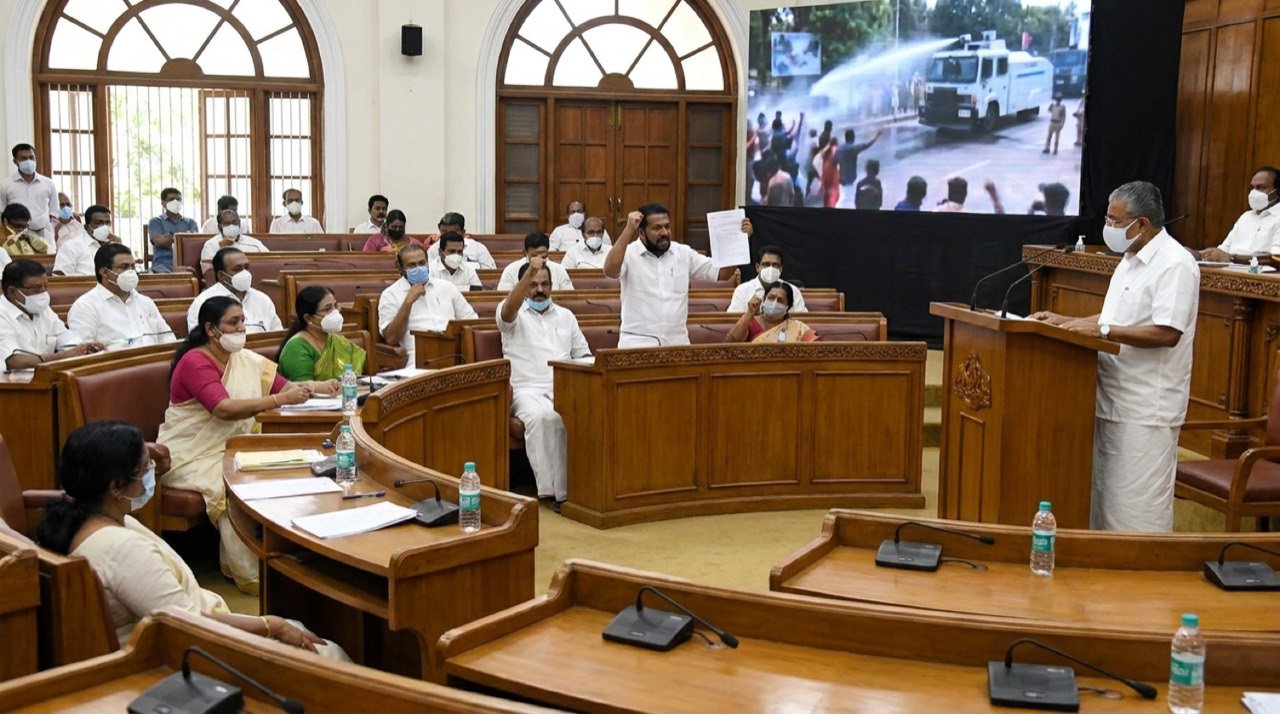
Kerala Water Cannon Row Raises Questions Over Protest Policing and Public Health
A bottle held up inside the Kerala Assembly has turned a student protest into a wider debate over police crowd-control methods, water quality and official accountability.
More from this section
More
K Kavitha Party Denied TRS Name by Election Commission
The Election Commission has refused to register K Kavitha's Telangana Rakshana Sena under the TRS acronym after objections, forcing a branding reset for the new party at a politically sensitive moment in Telangana.
Lalu Prasad Yadav Security Downgrade, Bungalow Order Stir Bihar
A government order downgrading Lalu Prasad Yadav's security cover and asking him to vacate an official bungalow has opened a fresh political flashpoint in Bihar, with the RJD chief's reaction fuelling the row.
Manipur CM's Churachandpur Visit: First Since 2023 Unrest
The Manipur Chief Minister travelled to Churachandpur for a BJP MLA's funeral, his first visit to the district since the 2023 violence, lending the sombre occasion an unmistakable political significance.