Indiaspora 250 at 250: Diaspora Power in America's Milestone Year
Indiaspora's new 250 at 250 list, released ahead of America's 250th anniversary, celebrates Indian-origin achievers across technology, medicine, government and the arts, underscoring the diaspora's deepening footprint in US public life.
Commentary & Analysis ·
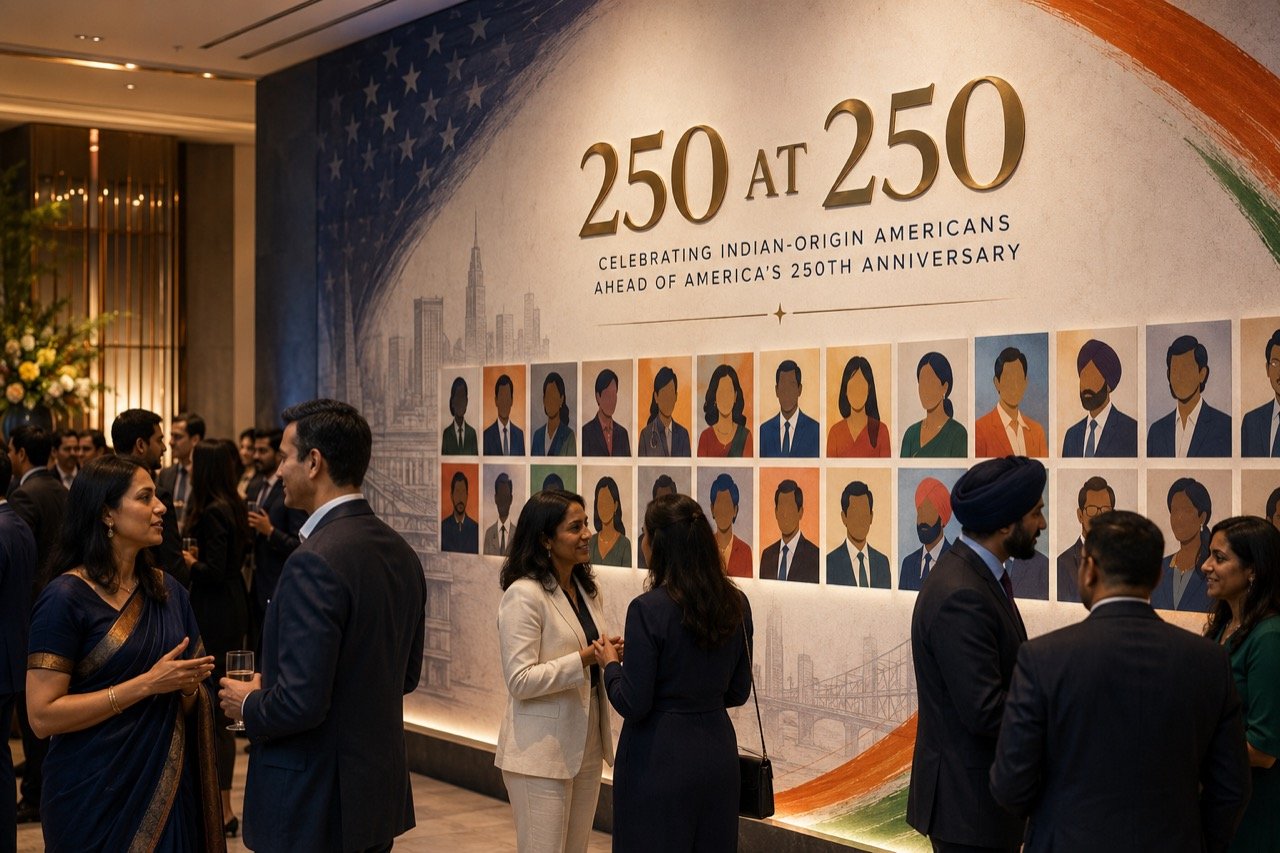
As the United States approaches its 250th anniversary, the advocacy group Indiaspora has released a list recognising 250 Indian-origin Americans for their contributions to the country's civic, business, cultural and scientific life. The compilation has quickly become a talking point in diaspora circles and has drawn national news coverage in India, a reflection of how closely Indian audiences track the fortunes of the roughly five-million-strong community of Indian origin living in the United States. The timing is deliberate. By tying the list to America's semiquincentennial, Indiaspora has framed Indian-origin achievement not as a separate or parallel story but as an integral thread in the American national narrative itself, one that runs alongside the country's own account of its founding and development.
Who makes the list
The honourees span an unusually wide arc of American public life: technology executives and startup founders, physicians and researchers, academics, government officials, philanthropists, journalists and artists. Rather than concentrating on a handful of celebrity names, the list is deliberately built to show representation across sectors. That breadth is the real story. Lists of this kind can be read as simple celebration, but they also document structural change, evidence of how thoroughly a community that has grown over roughly two or three generations has woven itself into American institutions, from Silicon Valley boardrooms and university laboratories to newsrooms, hospitals and government agencies.
The choice to spread recognition across sectors rather than lean on a small set of household names is itself a statement. It signals that Indian-origin success in America is no longer confined to a narrow set of high-visibility fields such as technology or medicine, the areas that first shaped popular perceptions of the diaspora in the late twentieth century. Instead, the list gestures toward a more diffuse and mature presence: people shaping culture through film, journalism and the arts, people influencing public policy from within government, and people quietly building philanthropic and civic institutions that outlast any single career. That diffusion across fields is what distinguishes a milestone-year list from a simple celebrity roll call.
A generational story, not a single moment
It is worth pausing on what "two or three generations" actually implies. The list is not simply honouring individuals who arrived recently and achieved rapid success; it is documenting the compounding effect of decades of migration, education and institution-building. Children and grandchildren of earlier arrivals now occupy positions their parents could not have held, a pattern common to many immigrant communities but rendered more visible here by the scale and coordination of the Indiaspora exercise. Read this way, the list functions less as an award ceremony and more as a kind of informal census of accumulated social capital, capturing what happens when a community sustains multi-generational investment in education, professional networks and civic participation.
This generational framing also explains why the list has resonated so strongly with audiences in India itself. For many Indian readers, the 250 names are not simply a story about individual achievement abroad but a mirror held up to questions closer to home: what does it take to build durable institutional access over time, and what can be learned from a community that has done so within a foreign political and economic system. That curiosity, as much as pride, likely accounts for the scale of coverage the list has received in the Indian press.
Why it matters beyond the diaspora
The recognition carries weight for India-US relations too. People-to-people ties are the ballast of the bilateral relationship, sustaining goodwill through the ups and downs of official diplomacy, which can be buffeted by trade disputes, visa policy shifts or divergent positions on regional security. Diaspora networks channel investment, research collaboration, education links and cultural exchange in ways government agreements alone cannot. A trade communique or a strategic dialogue can be renegotiated or shelved when political winds change; the relationships built between a diaspora scientist and an Indian university, or between a diaspora investor and an Indian startup, tend to persist because they are personal and professional rather than purely governmental.
This is precisely why a list such as 250 at 250 matters to policymakers on both sides, not merely to the individuals named. It offers a legible, if partial, map of where influence and expertise are concentrated within the diaspora, information that Indian ministries, industry bodies and educational institutions can, in principle, use to identify potential collaborators for research partnerships, investment channels or knowledge transfer. American institutions, for their part, gain a similar benefit: a clearer sense of the depth of Indian-origin talent already embedded within their own ranks, which can inform everything from corporate diversity strategy to university recruitment.
The limits of a celebratory list
Any exercise of this kind, however, has natural limits. A list of 250 names, however broad its sectoral spread, cannot capture the full range of experience within a community as large and internally varied as Indian-origin Americans. It risks flattening a genuinely diverse population, differing by religion, region of origin in India, generation, class background and political outlook, into a single triumphant narrative. There is also the structural bias inherent in any such compilation: it necessarily favours those who have achieved visible, credential-based success, and says comparatively little about the far larger number of Indian-origin Americans working in less prominent occupations, or about the obstacles some within the community continue to face.
None of this diminishes the genuine achievements being recognised. But it is a useful caution against treating the list as a complete portrait rather than a curated sample designed for a specific commemorative purpose.
The NE Times View
The 250 at 250 list deserves a balanced reading. It is right to celebrate the extraordinary range of Indian-origin achievement in America, but the community it honours is not a monolith, its members hold varied politics, professions and identities, and reducing them to a single success narrative flatters without illuminating. For India, the practical lesson is to treat the diaspora as a long-term bridge rather than a trophy cabinet: invest in the education, mobility and institutional links that produced this generation of achievers. If New Delhi engages that network with humility rather than ownership, the dividends for trade, technology and soft power will outlast any anniversary. The temptation, especially in an anniversary year, will be to claim the list's honourees as evidence of India's own rising global stature. That instinct should be resisted in favour of a more patient approach, one that recognises the diaspora's achievements as fundamentally American while still nurturing the connective tissue, in research, capital and culture, that benefits both countries over the long run.
Key takeaways
- Indiaspora's 250 at 250 list, timed to America's 250th anniversary, honours Indian-origin Americans across technology, medicine, academia, government, philanthropy, journalism and the arts.
- The list's sectoral breadth, rather than a focus on a few celebrity names, is its most significant feature, documenting multi-generational institutional integration by a community of roughly five million.
- The recognition has drawn heavy coverage in India, underscoring how diaspora networks sustain India-US ties independent of official diplomatic cycles.
- Diaspora people-to-people links channel investment, research and education in ways formal government agreements cannot replicate.
- India's wiser course is to engage the diaspora as a long-term partner built on humility and sustained investment, not as a trophy to be claimed in an anniversary year.
You may also like to read

New York Carriage Bill Renamed Romanch's Law After Indian Teen's Death
A New York City bill to phase out horse-drawn carriages has been renamed Romanch's Law in memory of Romanch Mahajan, an 18-year-old Indian who died after a Central Park accident.

US Citizenship Fee Hike Proposal Could Hit Indian Immigrants Hard
A proposed near-doubling of the US naturalisation fee, alongside the removal of waivers, threatens to reshape citizenship timelines and household budgets for one of America's largest immigrant communities.
India and Canada Push to Seal the Reset, Targeting a Trade Pact by Year-End
Buoyed by personal rapport between Narendra Modi and Mark Carney, New Delhi and Ottawa are working to convert a fragile diplomatic thaw into a comprehensive trade agreement, with implications for students, professionals and the large Indo-Canadian diaspora.

A Year On, the Air India Flight 171 Crash Still Has No Final Report
Investigators have missed the one-year deadline to deliver their conclusions on the Ahmedabad disaster that killed 260 people, blaming an incomplete examination of the Boeing 787's engines in the United States.
More from this section
More
India-New Zealand Ties: Visit Plans Put FTA and Diplomacy in Focus
Reports of a planned high-level India-New Zealand engagement have revived attention on free trade talks, professional mobility and Indo-Pacific cooperation between two partners with clear room to grow.
Modi Greets Trump on US 250th Independence Day, Hails Partnership
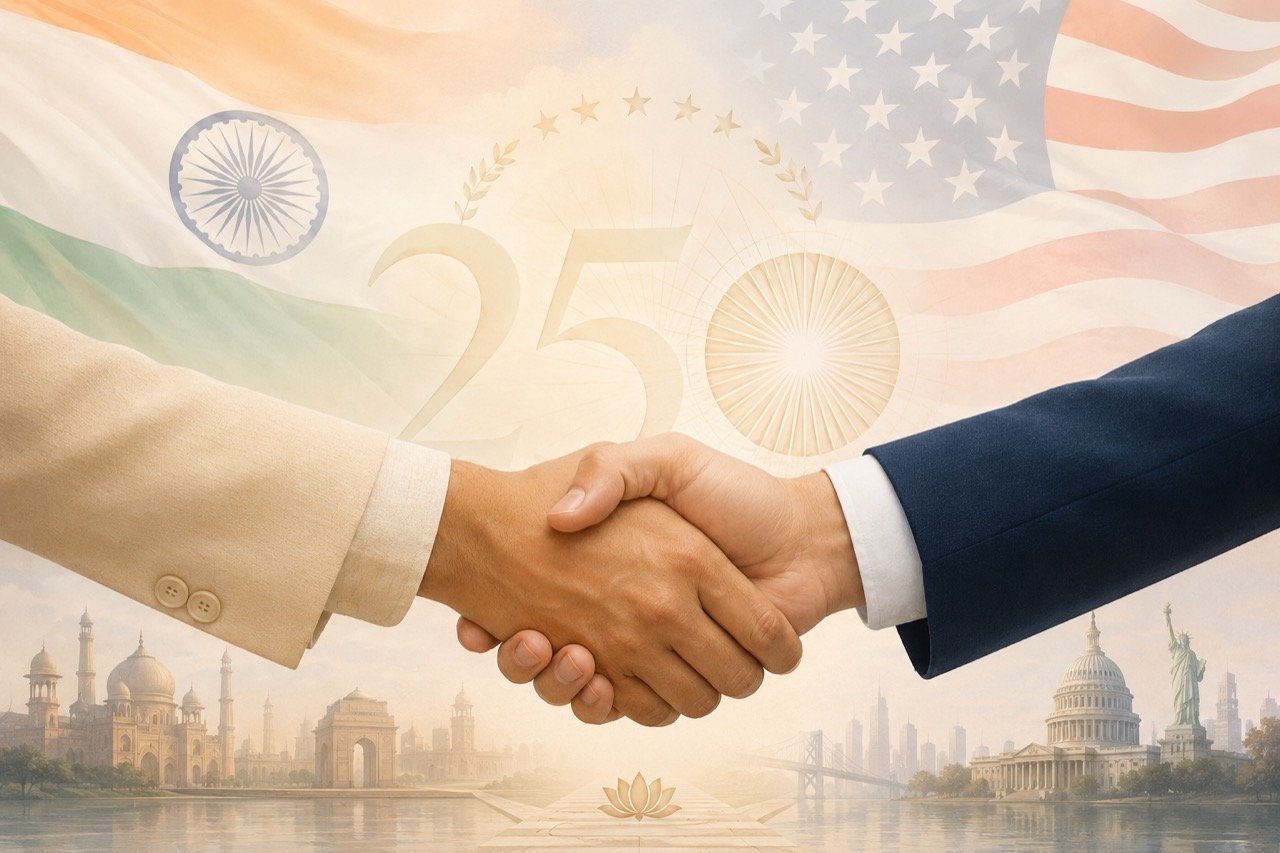
Prime Minister Narendra Modi marked America's 250th Independence Day with a message to President Trump, saying the next 250 years should lift the India-US partnership to new heights.
India Watches Dhaka's China-Backed Teesta Plan as Stakes Rise
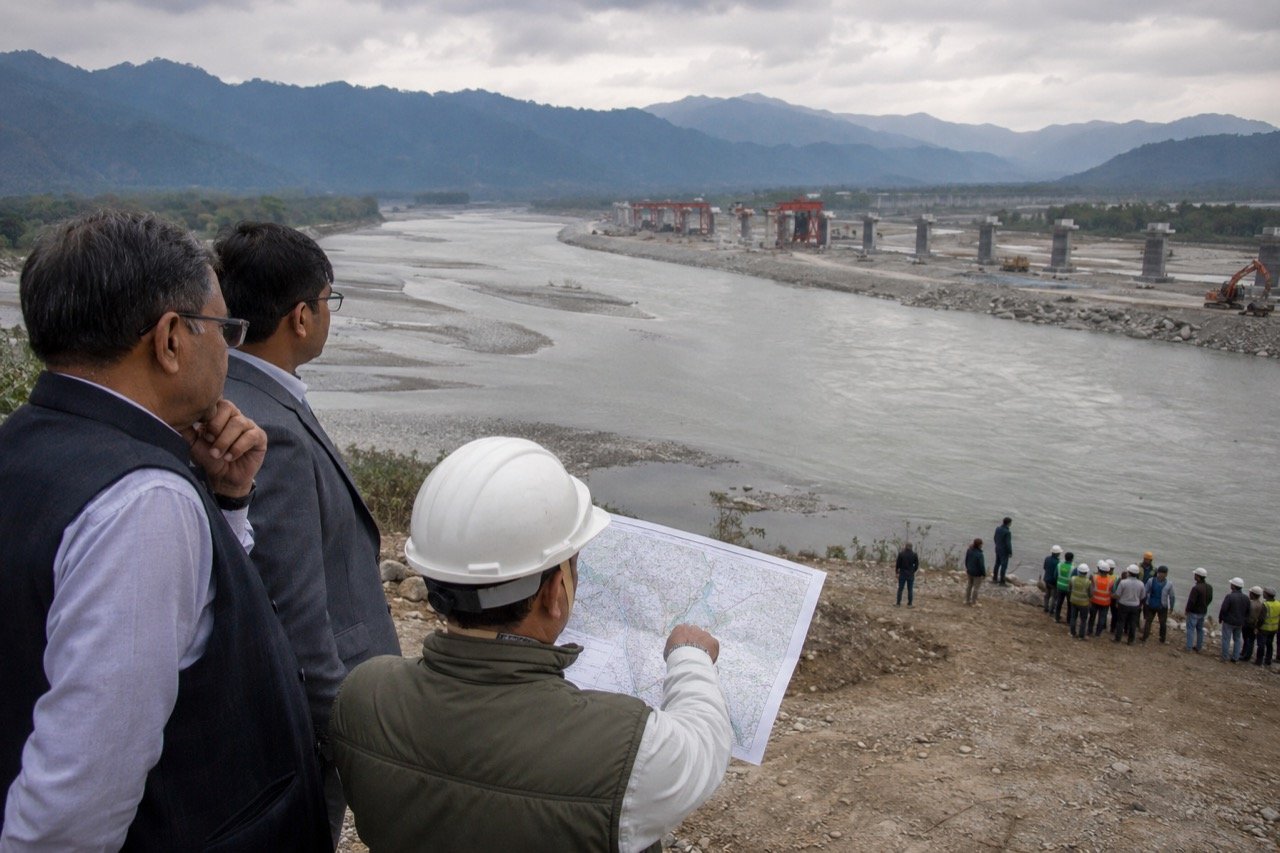
New Delhi is closely tracking Bangladesh's proposal to develop the Teesta river with Chinese assistance, a move that revives one of South Asia's most sensitive water-sharing disputes and tests regional strategic trust.