India's Global IPO Share Slips to Six-Year Low After Mega SpaceX Listing
India raised about $5.3 billion from IPOs in 2026, roughly 4.9 percent of global proceeds and its lowest share since 2020, as a giant SpaceX listing reshaped the worldwide league table.
Commentary & Analysis ·
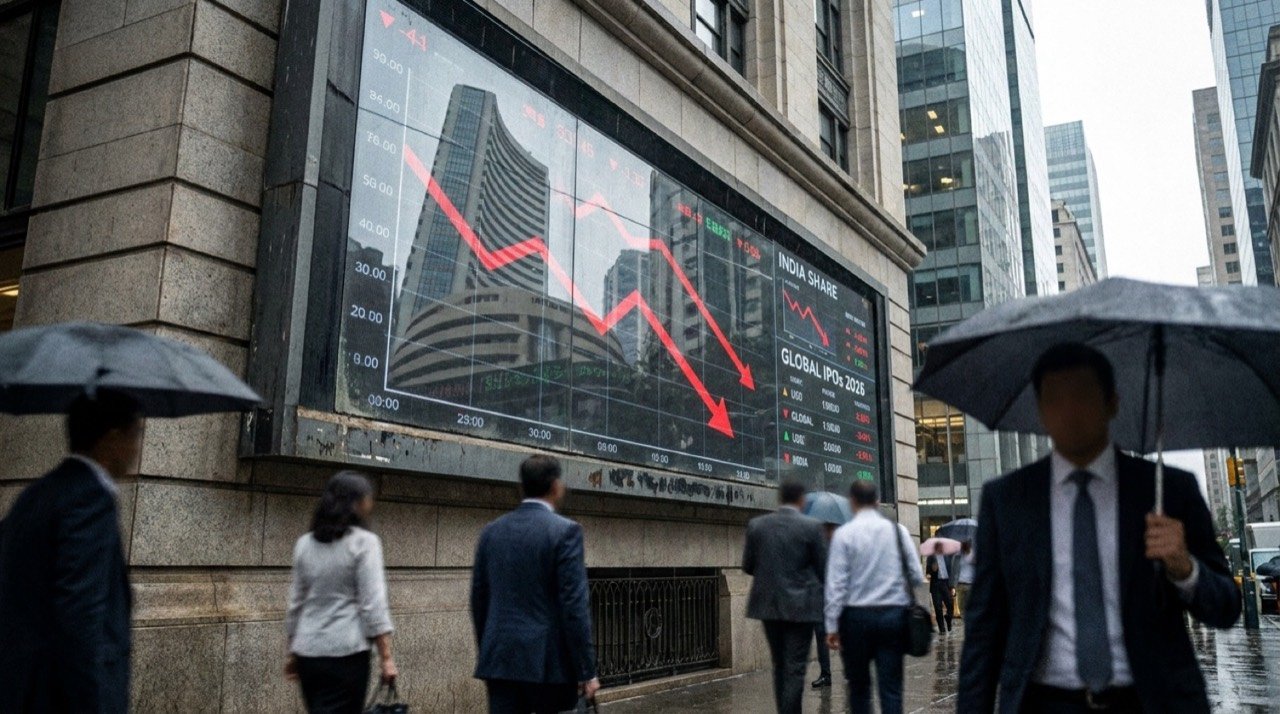
India's share of global initial public offering proceeds has fallen to its lowest level in six years, after an unusually large SpaceX listing reshaped the worldwide IPO league table. On the surface, this is the kind of statistic that invites alarm: a country that has spent recent years near the top of global listing activity charts suddenly finds itself relegated to a six-year low. But the more instructive question is not whether the number has fallen, but why it has fallen, and whether the underlying reasons say anything meaningful about the health of India's capital markets.
The numbers behind the headline
According to Business Standard, India raised about $5.3 billion from IPOs in 2026 so far, representing roughly 4.9 percent of global proceeds. That is the smallest share the country has recorded since 2020, a notable reversal for a market that has repeatedly featured among the world's most active listing venues in recent years. Taken in isolation, a figure like this can look like a warning sign about waning investor appetite or a slowdown in India's corporate fundraising machine.
The reality, however, is more nuanced. The drop is largely relative rather than absolute. A blockbuster SpaceX listing inflated the global denominator against which every other market's share is measured. When one transaction of that scale enters the worldwide total, it mechanically shrinks the percentage share of every other country, even those where domestic listing activity has remained perfectly healthy. In other words, India did not necessarily do less; the rest of the world, propelled by a single extraordinary deal, simply did dramatically more in percentage terms.
Not a market shutdown
Analysts are keen to stress that this decline does not signal that India's primary market has closed for business. Instead, the shift reflects two forces working together: the outsized impact of very large global transactions elsewhere, and a domestic listing environment that has become more selective. Indian investors are increasingly discerning about which offerings they choose to back, favouring quality over quantity.
This selectivity is arguably a sign of a maturing market rather than a weakening one. Early-stage or frothy IPO markets tend to reward volume, with a large number of offerings absorbed regardless of pricing discipline. A market where investors scrutinise governance, valuation and business fundamentals before committing capital is, in many respects, a more resilient one, even if it produces fewer headline-grabbing deals in a given period.
Raising the bar for issuers
For companies contemplating a public listing, this environment raises the bar considerably. Pricing discipline, governance quality and credible post-listing performance now carry far more weight than simply bringing a deal to market. Promoters and investment bankers can no longer assume that strong retail demand alone will carry an offering; the market is asking harder questions about whether valuations are justified and whether the business can sustain performance once the initial listing excitement fades.
This shift in expectations has knock-on effects throughout the IPO pipeline. Companies may need to spend longer preparing for a listing, tightening corporate governance structures and building a track record that can withstand closer investor scrutiny. While this could mean fewer IPOs in the short term, it may also mean the offerings that do reach the market are of higher quality, with stronger prospects of sustained investor confidence after listing.
What it means for investors
For investors, the clearest signal emerging from this episode is that fundamentals matter more than headline issue counts. Valuation discipline, liquidity and genuine sector appetite are increasingly the deciding factors in whether an offering succeeds, rather than simply the volume of deals hitting the market in a given year. This is a healthy recalibration for a market that, in earlier boom periods, sometimes saw enthusiasm outpace scrutiny.
Retail investors in particular should take note. A market that rewards careful analysis over speculative enthusiasm for any new listing is one in which patient, research-driven participation is likely to be better rewarded over time. The temptation to chase every new offering purely because it is new should give way to a more considered approach that weighs governance, pricing and business quality.
Why this matters beyond the headline number
The story carries wider significance because IPO momentum influences capital formation, retail participation and India's broader standing in global equity markets. A thinner share of the global pie can shape perceptions among international observers and institutional allocators, even when the underlying domestic pipeline remains robust. Perception matters in capital markets: if global investors read a declining share as a sign of weakness rather than a statistical artefact of one enormous foreign listing, it could subtly affect how India is positioned in global portfolio allocation decisions, at least in the short term.
At the same time, domestic capital formation depends on more than international rankings. The health of India's IPO market ultimately rests on whether companies can raise the capital they need at fair valuations, and whether retail and institutional investors continue to find opportunities they trust. Those conditions appear, by most accounts, to remain intact even as the percentage share has dipped.
What to watch next
The outlook will depend heavily on how the remainder of the year unfolds. Should domestic listings rebound and the pace of global mega-deals taper off, India's share of global IPO proceeds could recover quickly, underscoring how a single statistic can mask a more resilient market beneath the surface. Conversely, if more outsized global listings materialise, India's percentage share could remain compressed for a while longer, regardless of how domestic activity actually performs in absolute terms.
The figure worth tracking closely is not India's relative slice of the global total, but whether quality issuers continue to find deep, fairly priced demand at home. That is the truer measure of market health, and one far less vulnerable to distortion by a single transaction on the other side of the world.
The NE Times View
A six-year low in global IPO share looks alarming at first glance, but it deserves context: a single mega listing abroad can distort the percentage even in a year when the domestic market is performing well. The number that matters is not India's relative slice of a global total skewed by one extraordinary deal, but whether quality issuers keep finding deep, fairly priced demand at home. By that measure, India's listings market remains structurally strong, with retail participation and the underlying pipeline intact.
The headline ranking, however striking, matters less than sustaining the confidence that has made Indian exchanges a genuine destination for capital. Investors, issuers and policymakers alike would do well to look past the six-year-low headline and focus instead on the quality and durability of the deals actually being done.
Key takeaways
- India raised about $5.3 billion from IPOs in 2026 so far, equal to roughly 4.9 percent of global proceeds, the lowest share since 2020.
- A blockbuster SpaceX listing inflated the global total, mechanically shrinking every other country's percentage share.
- Domestic investors are growing more selective, prioritising valuation discipline and governance quality over sheer deal volume.
- IPO momentum shapes capital formation, retail participation and India's broader standing in global equity markets.
- The figure to watch is not India's relative global share but whether quality issuers continue to find fairly priced demand at home.
You may also like to read
IPO Calendar Brings Six Public Issues for Indian Investors This Week
India's primary market turns busy with six IPOs in play, spanning jewellery, tourism, fintech, textiles and snacks, offering retail and high-ticket investors sharply different risk choices.
CSM Technologies IPO Opens June 24 With Price Band of Rs 107-113
The Odisha-based govtech and IT services firm enters India's busy primary market on June 24, testing investor appetite for e-governance and digital public infrastructure plays.
Turtlemint IPO Enters Final Day: Rs 883-Crore Issue Tests India's Insurtech Appetite
Turtlemint's Rs 883-crore IPO reached its final bidding day on 23 June, with investors weighing subscription levels, profitability and regulatory risk in India's growing insurance-technology market.

Waterways Leisure Tourism IPO Opens As Cruise Operator Seeks Growth Capital
The cruise tourism operator's IPO gives investors rare exposure to India's experience-led travel economy, as capital markets open up to consumer businesses beyond banks, manufacturers and tech firms.
More from this section
More
Adani Case: US DOJ Pushes for Permanent Dismissal of Charges
The US Department of Justice has urged a judge to permanently dismiss charges against Gautam Adani, calling the case legally flawed — a reversal with consequences for markets, diplomacy and cross-border enforcement.

Akasa Air Inducts 40th Aircraft in Indian Aviation Scale-Up
Akasa Air's 40th aircraft, ferried to Bengaluru via Seattle, Reykjavik and Cairo, marks a fleet milestone for the young carrier and a fresh signal that India's aviation market remains firmly in expansion mode.
BARC Ratings Suspension Leaves Indian TV Industry Flying Blind
BARC's pause on television ratings has put India's broadcast measurement system under fresh scrutiny, leaving broadcasters, advertisers and media planners without the weekly audience data that anchors the TV economy.