Most India-Bound Ships Switch Off Trackers in Hormuz Strait
Maritime intelligence data suggests nearly 62 percent of tankers and cargo vessels sailing from the Gulf to India have switched off tracking systems while crossing the Strait of Hormuz, signalling heightened risk perceptions in a vital energy corridor.
Commentary & Analysis ·
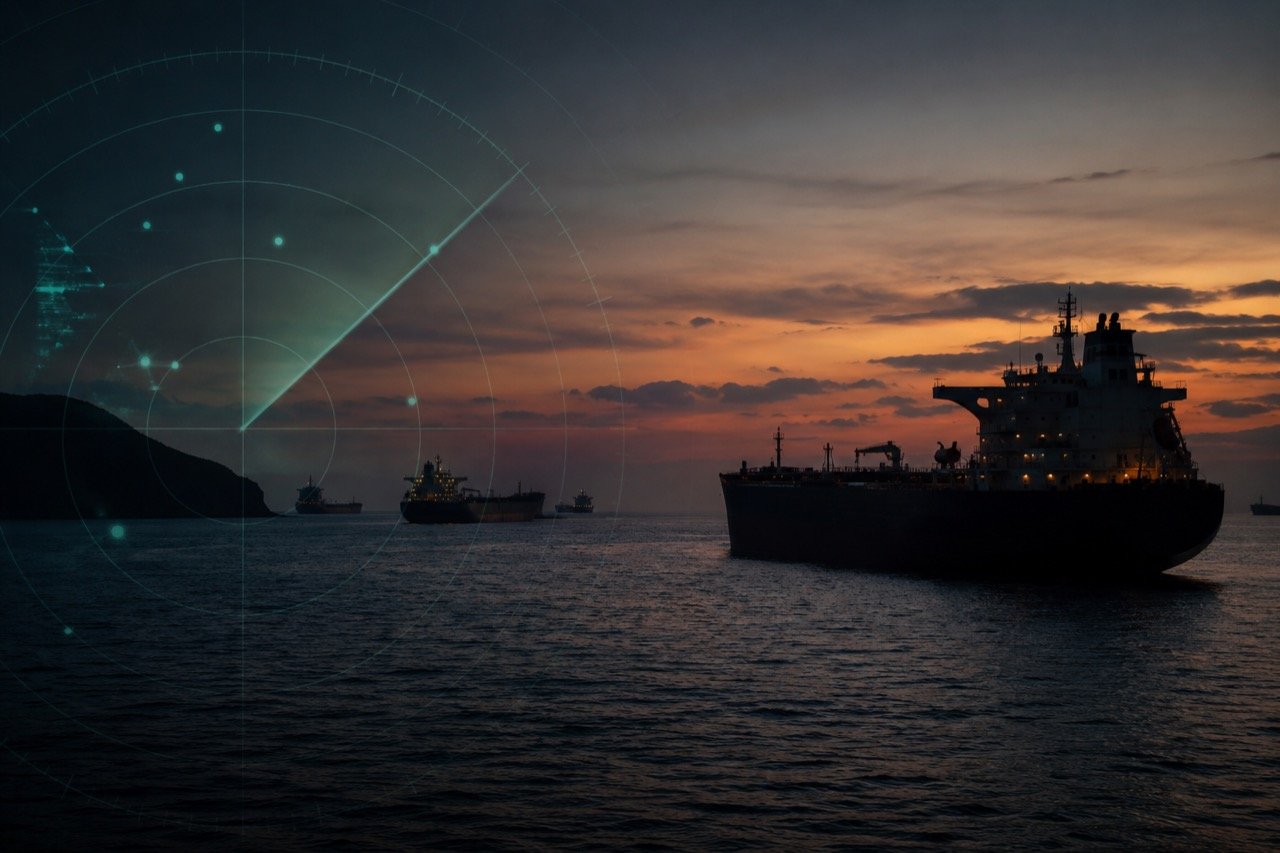
A majority of India-bound commercial vessels passing through the Strait of Hormuz have reportedly switched off their tracking systems, according to maritime intelligence data cited in current coverage. The reported figure — nearly 62 percent of tankers and cargo ships sailing from the Gulf to India — is a striking indicator of how tense one of the world's most important trade corridors has become. Going dark, in shipping parlance, means turning off the transponders that broadcast a vessel's position. Crews typically do this to reduce visibility during periods of security concern. The flip side is that it makes tracking and risk assessment far harder for insurers, port authorities and trade planners who depend on that data.
What "going dark" actually signals
The decision to disable a transponder is rarely made lightly. Automatic Identification System broadcasts exist precisely because they make sea lanes safer and more predictable — they let coast guards, port authorities and other vessels know who is where, at what speed, and on what heading. When a shipowner or captain instructs a crew to switch that signal off, it is an explicit trade-off: sacrificing operational transparency in exchange for a perceived reduction in the risk of being targeted, tracked or harassed. That nearly six in ten India-bound vessels transiting Hormuz have made this trade-off tells us that risk perception on this route has crossed a threshold. It is not simply caution; it is a collective, almost instinctive hedge by an industry that prices risk for a living. Shipping companies and insurers do not act on rumour alone — their commercial incentives are to keep vessels visible whenever it is safe to do so, because transparency lowers insurance costs and smooths port clearances. A mass move in the opposite direction is a meaningful data point in itself, arguably more revealing than any official statement about the security situation in the Gulf.
Why Hormuz matters so much to India
The Strait of Hormuz is critical for India because the bulk of its energy shipments from the Persian Gulf funnel through the narrow waterway. Any disruption — or even the perception of one — reverberates through fuel supply planning, shipping insurance premiums and import schedules. India is among the world's largest importers of crude oil, and a significant share of that crude has historically moved through this single chokepoint. There is no meaningful alternate sea route that avoids Hormuz for Gulf-origin cargo; ships either pass through it or do not sail at all. That geographic reality means India's energy security is bound, in a very literal sense, to the safety and predictability of this one stretch of water. When shipping behaviour around Hormuz changes, it is not a distant geopolitical curiosity for Indian readers — it is a direct input into the price of fuel at the pump, the cost of running factories, and the government's fiscal calculations around subsidies and import bills.
The mechanics of risk without direct disruption
The mass switch-off does not mean every vessel faces immediate danger. What it does show is how quickly geopolitical tension can alter commercial behaviour. Even without a direct disruption — no blockade, no seizure, no attack — elevated risk premiums and rerouting decisions feed into costs, which is why policymakers and companies watch Hormuz closely whenever the region heats up. Insurers who cannot track a vessel's exact position and speed are compelled to price policies more conservatively, spreading the cost of uncertainty across the wider shipping market rather than isolating it to any one voyage. Charterers and traders, meanwhile, must factor in the possibility of delays, diversions or last-minute changes in vessel availability. None of this necessarily shows up as a dramatic supply shock. Instead it tends to arrive as a slow accumulation of extra cost and friction — higher freight rates, wider bid-ask spreads on crude cargoes, and more conservative inventory planning by refiners — that eventually filters through to consumers.
Supply chains as physical systems
The episode is also a reminder that supply chains are physical systems, not just price charts. A tanker route, a chokepoint and a security alert can together move everything from crude availability to market sentiment. It is easy, in an economy increasingly discussed in terms of indices and algorithms, to forget that the oil arriving at Indian refineries first has to travel on an actual ship, crewed by actual people, through an actual strait that is only about 33 kilometres wide at its narrowest point. That physical narrowness is precisely what makes it strategically significant: there is no way to route around a geographic bottleneck through clever logistics alone. When the humans responsible for that physical system — captains, shipowners, insurers — begin behaving differently, it is a signal that the abstraction of "energy markets" rests on a foundation that can be disrupted by events far removed from economic fundamentals.
Stakeholders watching closely
Several groups have a direct stake in how this situation evolves. Indian refiners and oil marketing companies must weigh whether to adjust import schedules or draw down existing stocks rather than risk relying on cargoes moving through elevated-risk waters. Insurers and underwriters are recalibrating premiums for the route in real time, a cost that eventually finds its way into landed fuel prices. The Indian government, which has built strategic petroleum reserves precisely for scenarios of this kind, will be assessing whether current buffers are adequate given the scale of the transponder switch-off. And the broader shipping industry — shipowners, classification societies, maritime insurers — will be watching whether this remains a temporary defensive posture or hardens into a longer-term operating norm for the route.
The NE Times View
When six in ten ships on a route as vital as Gulf-to-India choose invisibility over transparency, the market is telling us something official statements have not. India imports the overwhelming share of its crude, and Hormuz remains the single most consequential stretch of water for its energy security. New Delhi has rightly invested in strategic reserves and supplier diversification, but this moment argues for accelerating both, alongside deeper naval cooperation to protect merchant shipping. The lesson for Indian readers is that energy resilience is not an abstraction — it is measured in tankers that feel safe enough to be seen. A shipping industry that would rather sail blind than sail visible is issuing a warning that deserves more attention than a single data point might initially suggest, precisely because it reflects the pooled judgement of commercial actors with every incentive to stay calm unless the underlying risk genuinely warrants otherwise.
Key takeaways
- Nearly 62 percent of India-bound tankers and cargo ships transiting the Strait of Hormuz have reportedly switched off their tracking transponders, an unusually high figure for the route.
- Hormuz is irreplaceable for India's energy security, as the bulk of its Gulf crude imports must pass through this single narrow chokepoint with no viable alternate sea route.
- Even without an actual blockade or attack, the transponder switch-off raises insurance costs and rerouting risk, costs that eventually pass through to Indian consumers and industry.
- The episode underscores that energy markets rest on physical shipping realities, not just price data, and that commercial behaviour can be a more honest signal of risk than official statements.
- The NE Times View calls for India to accelerate strategic reserve build-up, supplier diversification and naval cooperation to safeguard merchant shipping through this critical corridor.
You may also like to read
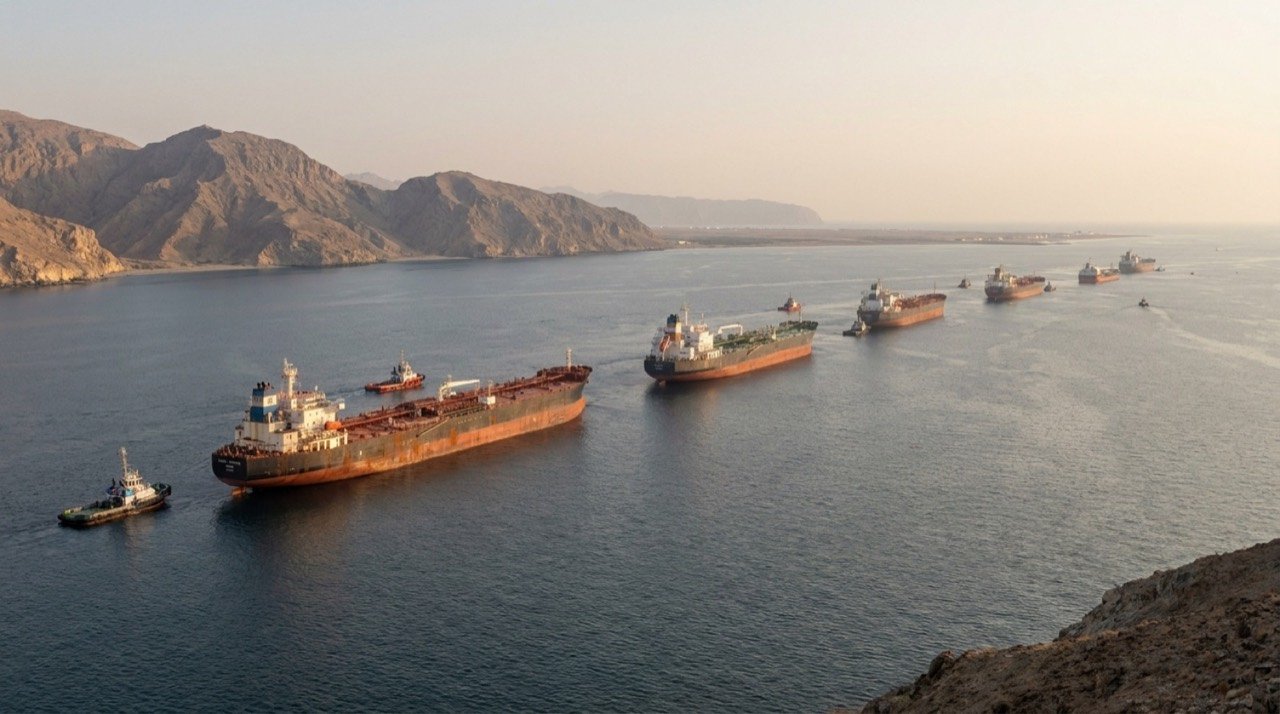
India-Bound Vessels Cross Strait of Hormuz After US-Iran De-escalation
Tankers carrying oil, gas and fertiliser bound for India have crossed the Strait of Hormuz after signs of US-Iran de-escalation, easing immediate fears over a critical energy supply lane.
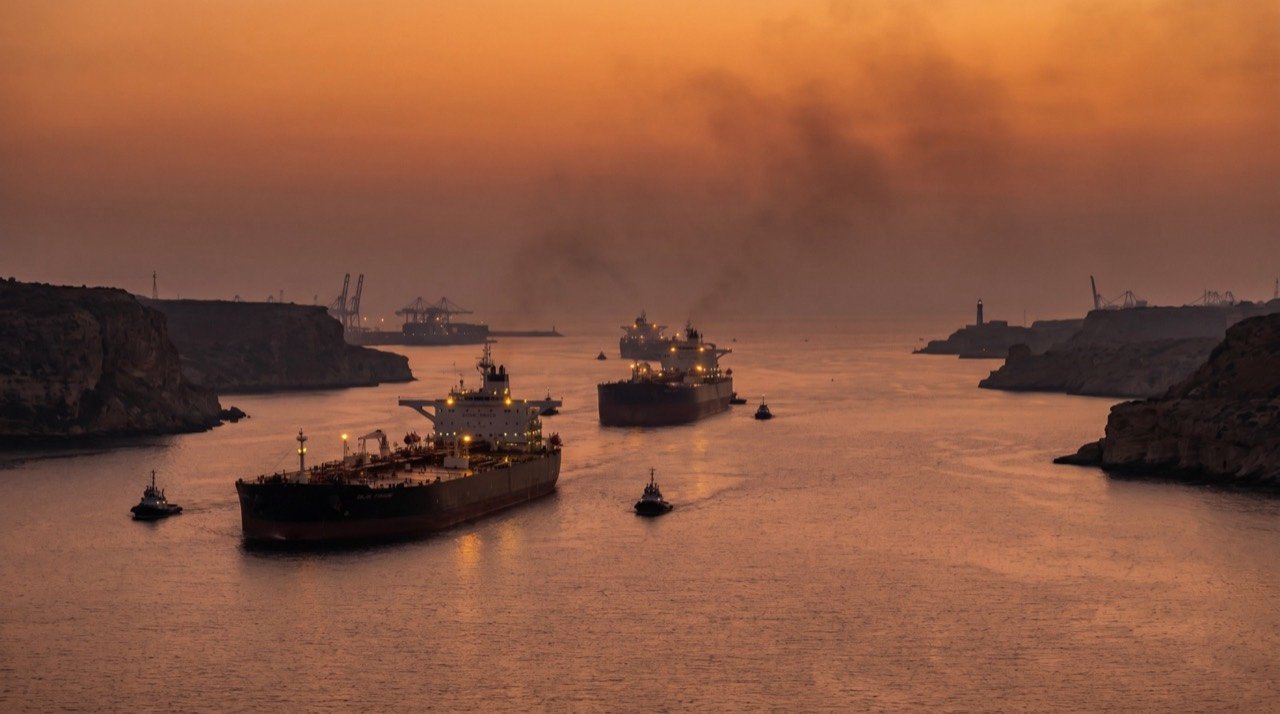
Hopes Rise for US-Iran Deal as Strait of Hormuz Shipping Crisis Eases
Signs of a possible accord to end months of conflict pushed oil prices to a near two-month low, with talks reportedly aimed at reopening the vital Strait of Hormuz to commercial shipping.
EU Leaders Gather In Brussels For Budget, Ukraine And US Trade Showdown
European Union heads meet for a high-stakes two-day summit covering the next long-term budget, Ukraine, Middle East fallout and a fresh vote on the EU-US trade deal.
India and Canada Push to Seal the Reset, Targeting a Trade Pact by Year-End
Buoyed by personal rapport between Narendra Modi and Mark Carney, New Delhi and Ottawa are working to convert a fragile diplomatic thaw into a comprehensive trade agreement, with implications for students, professionals and the large Indo-Canadian diaspora.
More from this section
More
India-New Zealand Ties: Visit Plans Put FTA and Diplomacy in Focus
Reports of a planned high-level India-New Zealand engagement have revived attention on free trade talks, professional mobility and Indo-Pacific cooperation between two partners with clear room to grow.

Modi Greets Trump on US 250th Independence Day, Hails Partnership
Prime Minister Narendra Modi marked America's 250th Independence Day with a message to President Trump, saying the next 250 years should lift the India-US partnership to new heights.
India Watches Dhaka's China-Backed Teesta Plan as Stakes Rise
New Delhi is closely tracking Bangladesh's proposal to develop the Teesta river with Chinese assistance, a move that revives one of South Asia's most sensitive water-sharing disputes and tests regional strategic trust.