IATO Convention 2026: Visakhapatnam to Host Tourism Leaders in September
The Indian Association of Tour Operators will stage its 41st annual convention in Visakhapatnam from September 10 to 13, giving Andhra Pradesh a rare industry-wide platform to pitch its tourism potential.
Commentary & Analysis ·
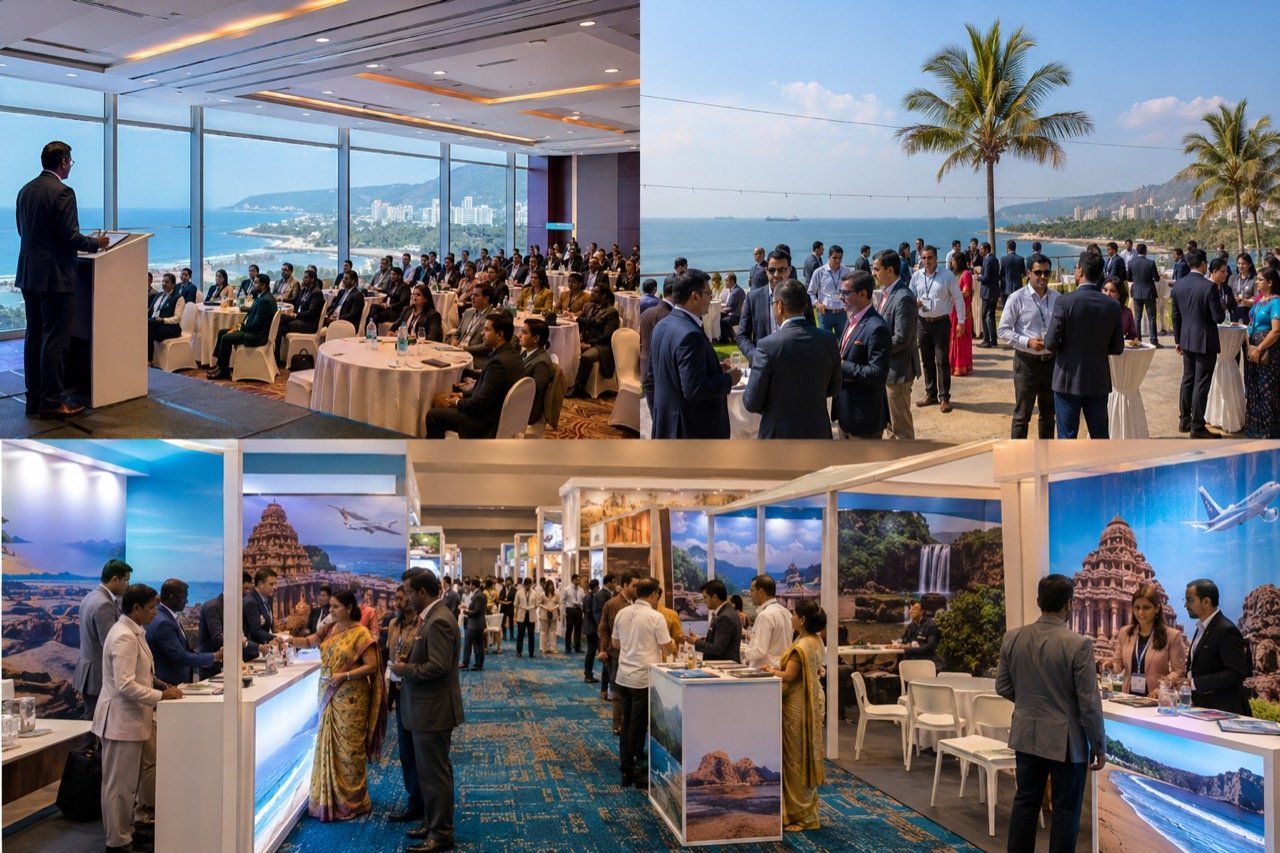
The Indian Association of Tour Operators will hold its 41st annual convention in Visakhapatnam from September 10 to 13, according to ET TravelWorld. The gathering is expected to draw tourism industry leaders, policymakers and stakeholders to Andhra Pradesh for four days of discussion on the travel sector's opportunities. The choice of venue is the real story. Industry conventions have a track record of shaping destination visibility, and Visakhapatnam arrives with genuine raw material: a long coastline, a distinctive port-city identity and access to regional tourism circuits. What it has lacked is sustained attention from the operators who actually build itineraries.
A convention as a test of readiness
An annual gathering of this scale is not merely a diary entry for the tourism calendar. It functions as a working audit. Delegates arriving in Visakhapatnam over those four days will not simply be listening to presentations; many will be assessing, informally and often silently, whether the city's airport connectivity, hotel inventory, conference infrastructure and last-mile transport can support the kind of group travel their businesses depend on. IATO's choice of Visakhapatnam, therefore, puts the city and the wider state under a level of scrutiny that ordinary tourism marketing rarely achieves. A brochure can claim readiness; a room full of tour operators experiencing the destination firsthand will form their own judgment, and that judgment travels back to booking desks across the country and, potentially, abroad.
Why the venue matters
Tourism bodies typically use annual conventions to showcase host-state infrastructure, hospitality capacity and new routes. For Andhra Pradesh, the September window is a chance to pitch itself beyond India's familiar leisure destinations and to convert scenic potential into packaged travel, meetings business and investment. This is a meaningful distinction. India's tourism map has long been dominated by a handful of established circuits, and states seeking to break into that consciousness need more than natural assets; they need operators willing to build and repeat itineraries around those assets. Visakhapatnam's coastline and port-city character give it a point of difference, but a point of difference only becomes commercially useful once tour operators can slot it into saleable, repeatable packages alongside the destinations they already sell.
The timing is also significant for the wider industry. India's travel sector is competing hard for domestic and international growth after years of uneven disruption and recovery, and the operators gathering in Visakhapatnam will be looking for destinations that can deliver reliable circuits rather than one-off attractions. In a sector still rebuilding confidence and margins, operators are unlikely to gamble on markets that cannot guarantee consistent quality across accommodation, transport and guiding. This raises the stakes for what Andhra Pradesh presents during the convention itself, since first impressions formed by industry professionals tend to be sticky.
What a successful convention would actually deliver
If the four days in Visakhapatnam are to translate into more than goodwill, several things would need to be visible to delegates rather than merely promised. Firm commitments on hotel capacity and pricing give operators the confidence to quote group rates without later renegotiation. Reliable connectivity, whether by air or road, allows a destination to be integrated into multi-stop tours instead of remaining a costly detour. And a clear single point of coordination between government tourism departments and private operators reduces the friction that so often stalls partnerships after the applause of a launch event fades. None of this is exotic; it is the operational groundwork that separates destinations that convert conventions into sustained business from those that host a memorable week and then return to relative obscurity.
The regional and economic stakes
Beyond the immediate tourism sector, a successful convention outcome would carry knock-on benefits for Visakhapatnam and Andhra Pradesh more broadly. Increased tour-operator interest tends to support hospitality investment, employment in guiding and transport services, and ancillary business such as retail and dining tied to visitor footfall. It can also strengthen the case for further infrastructure spending, since demonstrated demand from the trade is a more persuasive argument to investors and planners than projected demand alone. Conversely, a convention that generates enthusiasm in the room but no measurable change in bookings or infrastructure commitments a year later would simply reinforce a familiar pattern: a state hosting a flagship event without the follow-through to make it count.
The NE Times View
Hosting a convention is an opportunity, not an outcome. Andhra Pradesh has seen high-profile events come and go without lasting tourism gains, and Visakhapatnam's test will be what exists on the ground twelve months after the delegates leave. The state should treat September as a deadline: firm up hotel and connectivity commitments, package two or three bookable circuits, and put a single coordination window between government and private operators. If that homework is done, this convention could be the moment Andhra tourism moves from potential to product. Delegates at industry conventions are practised at distinguishing genuine readiness from aspiration, and the operators who leave Visakhapatnam unconvinced are unlikely to return with client itineraries in hand. The margin between a well-remembered convention and a commercially transformative one is precisely the operational detail that rarely makes it into the press coverage of the event itself.
Key takeaways
- IATO's 41st annual convention runs in Visakhapatnam from September 10 to 13, bringing tourism industry leaders and policymakers to Andhra Pradesh.
- The state's opportunity lies in converting natural assets, such as its coastline and port-city identity, into packaged, bookable travel circuits rather than one-off attractions.
- Operators attending will be evaluating infrastructure and reliability firsthand, meaning the convention itself functions as a readiness test as much as a showcase.
- Success will depend on concrete commitments made before and during the convention: hotel and connectivity guarantees, packaged circuits, and a single coordination channel between government and private operators.
- The real measure of the convention's value will be visible only twelve months later, in whether Andhra tourism has moved from potential to a sustained, sellable product.
You may also like to read
Waterways Leisure Tourism IPO Opens As Cruise Operator Seeks Growth Capital
The cruise tourism operator's IPO gives investors rare exposure to India's experience-led travel economy, as capital markets open up to consumer businesses beyond banks, manufacturers and tech firms.

India Retail Inflation Rises to 4.38% in June 2026 as Food Prices Push CPI Above RBI’s Target
The first breach of the central bank’s 4% midpoint in 17 months puts household budgets, monsoon conditions and the interest-rate outlook back in focus.

India’s New IIP Base Year 2022-23: Why the Industrial Production Index Has Been Rebuilt
The revised index aims to capture today’s manufacturing structure more accurately, but users must understand what changed before comparing new and old growth numbers.

India Steel Emission Targets: Draft Rules Push Decarbonisation
The Centre's draft emission cut targets for the iron and steel sector move India's climate policy from broad pledges to sector-specific rules, placing one of its hardest-to-abate industries under a defined framework.
More from this section
More
Adani Case: US DOJ Pushes for Permanent Dismissal of Charges
The US Department of Justice has urged a judge to permanently dismiss charges against Gautam Adani, calling the case legally flawed — a reversal with consequences for markets, diplomacy and cross-border enforcement.

Akasa Air Inducts 40th Aircraft in Indian Aviation Scale-Up
Akasa Air's 40th aircraft, ferried to Bengaluru via Seattle, Reykjavik and Cairo, marks a fleet milestone for the young carrier and a fresh signal that India's aviation market remains firmly in expansion mode.

BARC Ratings Suspension Leaves Indian TV Industry Flying Blind
BARC's pause on television ratings has put India's broadcast measurement system under fresh scrutiny, leaving broadcasters, advertisers and media planners without the weekly audience data that anchors the TV economy.