Centre Amends FCRA Rules for Foreign-Funded Organisations
The Home Ministry has tightened FCRA reporting on foreign nationals among key functionaries, raising the compliance bar for NGOs, charities and research bodies that take overseas funds.
Commentary & Analysis ·

The Union Home Ministry has amended the rules under the Foreign Contribution Regulation Act (FCRA), tightening how organisations must report foreign nationals among their key functionaries and reworking compliance details for groups seeking registration or prior permission. The change lands squarely on NGOs, research bodies, charities and civil-society groups that rely on overseas donations to function. On the surface it reads as a technical adjustment to paperwork. In practice, for the tens of thousands of organisations that depend on foreign funding to run schools, clinics, research programmes and advocacy work, it is another recalibration of the rules under which they must operate, arriving in a policy area where the margin between oversight and obstruction has always been contested.
What the amendment changes
At the core of the update is sharper scrutiny of foreign citizenship within an organisation's leadership. Groups will need to disclose more clearly where trustees, board members or senior staff are foreign nationals, and the documentation tied to registration or prior permission has been recalibrated accordingly. For many organisations, the practical effect is procedural: more detailed declarations, tighter reporting and a heavier paper trail around who holds key positions and how foreign contributions are handled. On paper, this is a narrow, targeted change. But narrow changes to reporting requirements rarely stay narrow in practice. Every additional declaration is an additional point at which a filing can be judged incomplete, an additional document that a compliance officer must chase down, and an additional opportunity for a registration or renewal to stall while officials seek clarification. For an organisation with a legal team and a dedicated compliance function, this is manageable, if irritating. For a smaller trust or a grassroots collective run by volunteers, it can be the difference between continuing to operate and losing access to funding altogether.
The specific focus on foreign nationals in leadership positions is notable in itself. It suggests the government's concern is not simply with the flow of money from abroad, but with the question of who, precisely, is directing how that money is used once it arrives. Boards of trustees at research bodies, international charities and grant-making foundations often include overseas academics, technical experts or philanthropic representatives, brought on for their expertise or their standing rather than for any operational control over Indian programmes. Under the amended rules, their presence will need to be documented and justified with a level of specificity that was not previously required.
Transparency versus burden
The government frames the move as a transparency measure, part of a continuing effort to keep close watch over how foreign money flows into Indian civil society. This is a defensible position on its own terms. Supporters of tighter oversight argue that clearer disclosure protects against misuse of overseas funds, and that a state has a legitimate interest in knowing who controls organisations that receive money from outside its borders, particularly where those organisations engage in advocacy, research or public commentary that touches on sensitive subjects.
Critics and administrators counter that each tightening adds to an already substantial compliance load, and that smaller organisations with limited legal capacity may struggle to keep pace with shifting requirements. This is the crux of the debate that has followed nearly every round of FCRA amendments over the past decade: the same rule can be read as reasonable due diligence or as a slow accumulation of friction, depending on who is applying it and to whom. A well-resourced international NGO with dedicated legal counsel will absorb the extra reporting requirements without much disruption. A district-level research collective or a small charity running a single foreign-funded programme may find the incremental cost of compliance disproportionate to the size of its operations, pushing some to quietly wind down foreign-funded activity rather than navigate the paperwork.
Who is affected
The amendment's reach is broad by design. It touches NGOs that depend on foreign contributions for programme funding, research bodies and think tanks with overseas grants, charities and trusts receiving donations from abroad, civil-society groups seeking FCRA registration or prior permission, and organisations whose trustees or senior staff hold foreign citizenship. Taken together, this covers a wide cross-section of India's non-profit and research ecosystem, from large international development agencies to small, single-issue advocacy groups. Because the rule change is procedural rather than sector-specific, it does not single out any particular type of activity. But its effects will not fall evenly. Organisations already operating close to full compliance capacity, or those already under scrutiny for past filings, are likely to feel the impact of new disclosure requirements more acutely than large, established players with established legal infrastructure.
Enforcement will decide the real impact
Lawyers and administrators will be watching the application of the rules closely, especially in cases where trustees, board members or senior staff hold foreign citizenship, where interpretation could prove decisive. This is where the practical weight of the amendment will ultimately be determined. Rules of this kind are rarely self-executing; their impact depends heavily on how strictly registering authorities interpret ambiguous disclosure requirements, how much latitude is given for correcting incomplete filings, and how quickly registrations or renewals move through the system once the new documentation is in place.
As with earlier FCRA changes, the real impact will emerge not from the text alone but from how strictly the provisions are enforced in the months ahead, shaping how foreign-funded organisations operate across India. If enforcement is applied evenly and with reasonable timelines for compliance, the amendment may prove to be exactly what the government describes: a tightening of transparency that adds administrative work without materially disrupting legitimate organisations. If enforcement is applied unevenly, selectively, or with limited tolerance for procedural error, the same rule could function as a filter that disproportionately affects organisations already viewed with suspicion by the authorities, regardless of their actual conduct.
The NE Times View
Tighter disclosure on foreign nationals among key functionaries is defensible on transparency grounds, yet FCRA's history shows compliance rules doubling as a tap to throttle inconvenient organisations. The NE Times View: the line between legitimate oversight and chilling civil society is thin. These rules should be judged by whether they are applied evenly to charities and research bodies, or selectively against critics. The test that matters here is not the wording of the amendment but its administration: whether a research body scrutinised for its findings faces the same processing timelines and evidentiary standards as a charity running relief work, and whether an organisation with foreign nationals on its board is treated as a compliance matter to be resolved rather than a red flag to be exploited. Civil society in India has absorbed successive rounds of FCRA tightening over the years, and each round has been justified in similar terms. The cumulative effect, whatever the intent behind any single amendment, is a steadily rising compliance floor that smaller and more marginal organisations find harder to clear than larger, better-resourced ones. That asymmetry, more than any single rule, is what deserves continued scrutiny as this amendment is rolled out.
Key takeaways
- The Home Ministry has amended FCRA rules to require sharper disclosure of foreign nationals among trustees, board members and senior staff of foreign-funded organisations.
- The change primarily adds procedural burden: more detailed declarations and documentation tied to registration or prior permission, rather than new substantive restrictions.
- NGOs, research bodies, think tanks, charities and trusts reliant on overseas funding are all within scope, with smaller organisations likely to feel the compliance load most acutely.
- The government frames the move as transparency; critics warn it adds to an already heavy compliance burden that could strain organisations with limited legal capacity.
- The real-world impact will hinge on enforcement in the coming months, particularly how strictly authorities interpret disclosure requirements around foreign citizenship in leadership roles.
You may also like to read

Government Revises FCRA Penalties for Foreign-Funded NGOs
The Union government has revised penalties under the Foreign Contribution Regulation Act, tightening compliance rules for organisations receiving foreign funds, including violations such as breaching permitted administrative-expense limits.
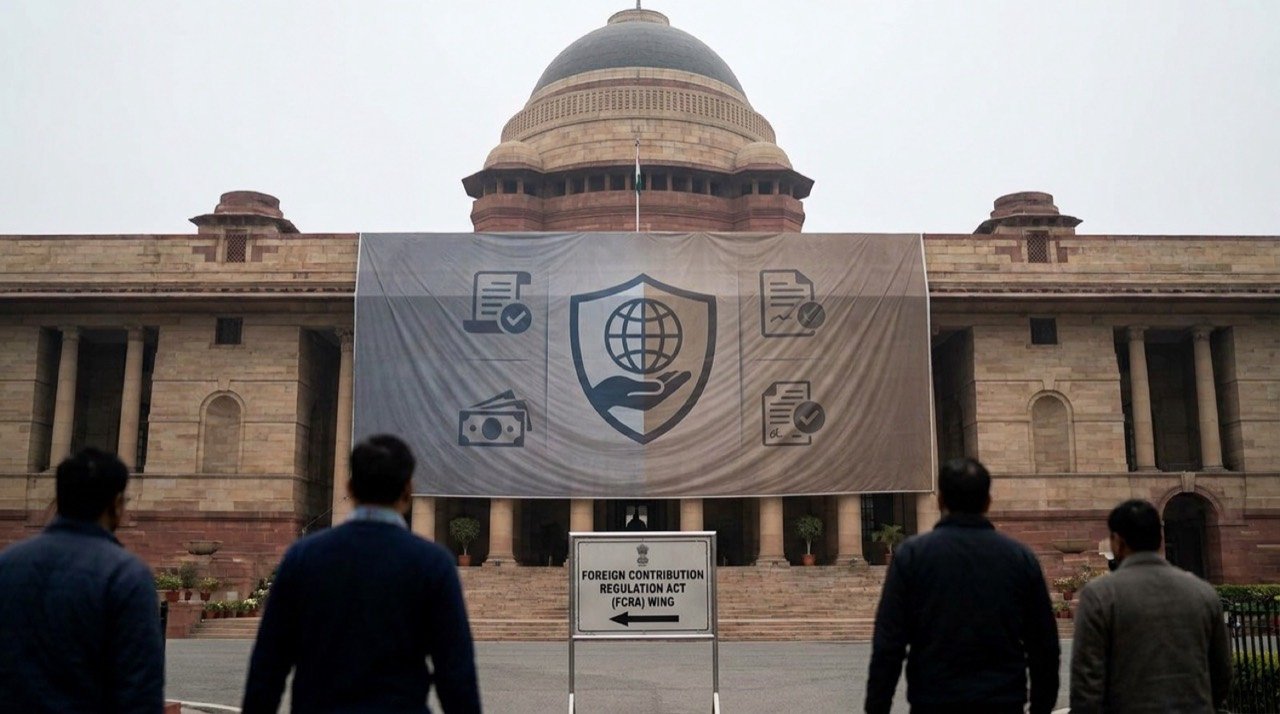
Centre Amends FCRA Rules, Tightening Scrutiny on Foreign-Funded Associations
New government notification bars associations with foreign nationals as key functionaries from FCRA registration and adds field inquiries, raising the compliance bar for non-profits.

Centre Tightens FCRA Rules For NGOs Receiving Foreign Funds
India has amended its Foreign Contribution Regulation Act rules, adding disclosure and compliance demands for NGOs taking overseas donations and excluding proselytisation from permitted faith-based activity.

FCRA Rule Changes Put NGO Foreign Funding Under Sharper Scrutiny
Amended FCRA rules will require NGOs to specify why they seek foreign funds, where they operate and who controls them, while excluding proselytisation from permitted faith-based activities.
More from this section
More
K Kavitha Party Denied TRS Name by Election Commission
The Election Commission has refused to register K Kavitha's Telangana Rakshana Sena under the TRS acronym after objections, forcing a branding reset for the new party at a politically sensitive moment in Telangana.
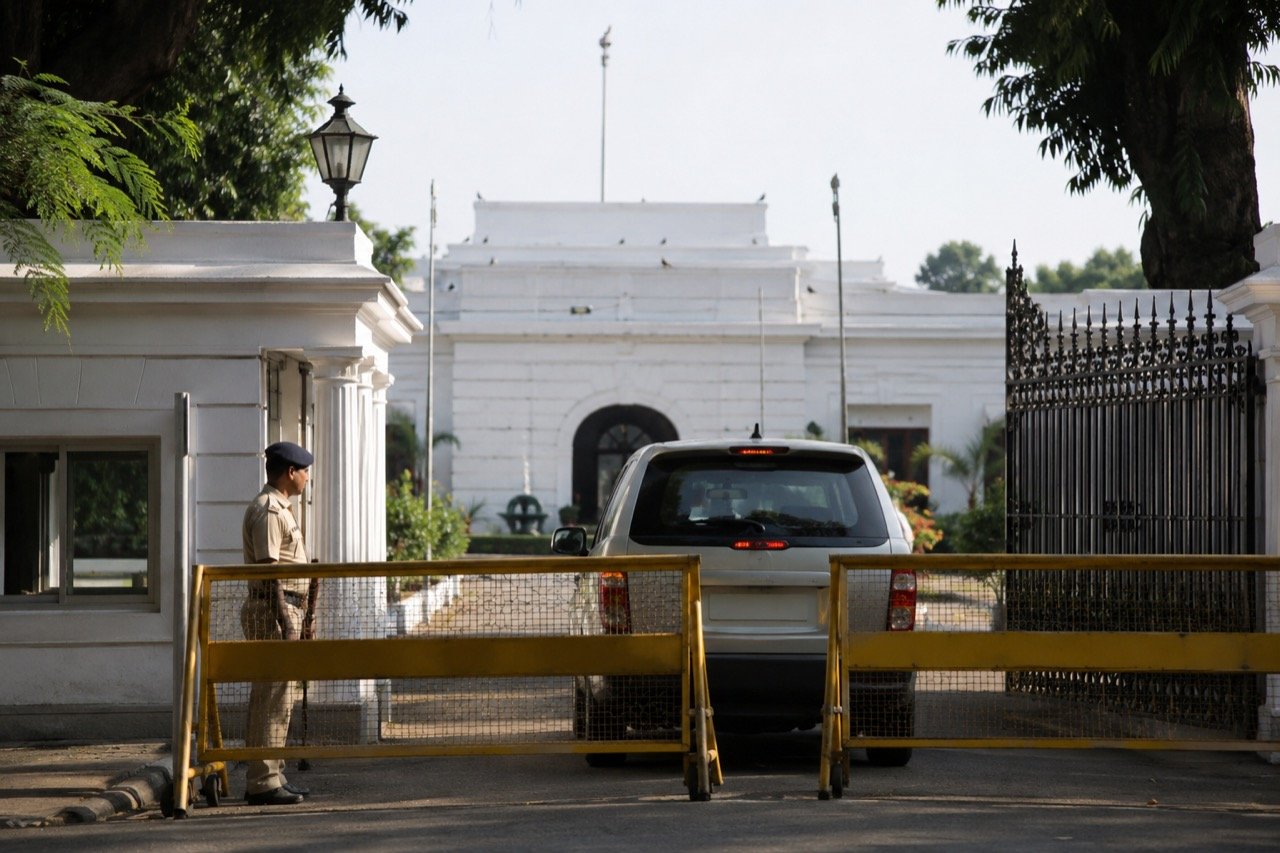
Lalu Prasad Yadav Security Downgrade, Bungalow Order Stir Bihar
A government order downgrading Lalu Prasad Yadav's security cover and asking him to vacate an official bungalow has opened a fresh political flashpoint in Bihar, with the RJD chief's reaction fuelling the row.
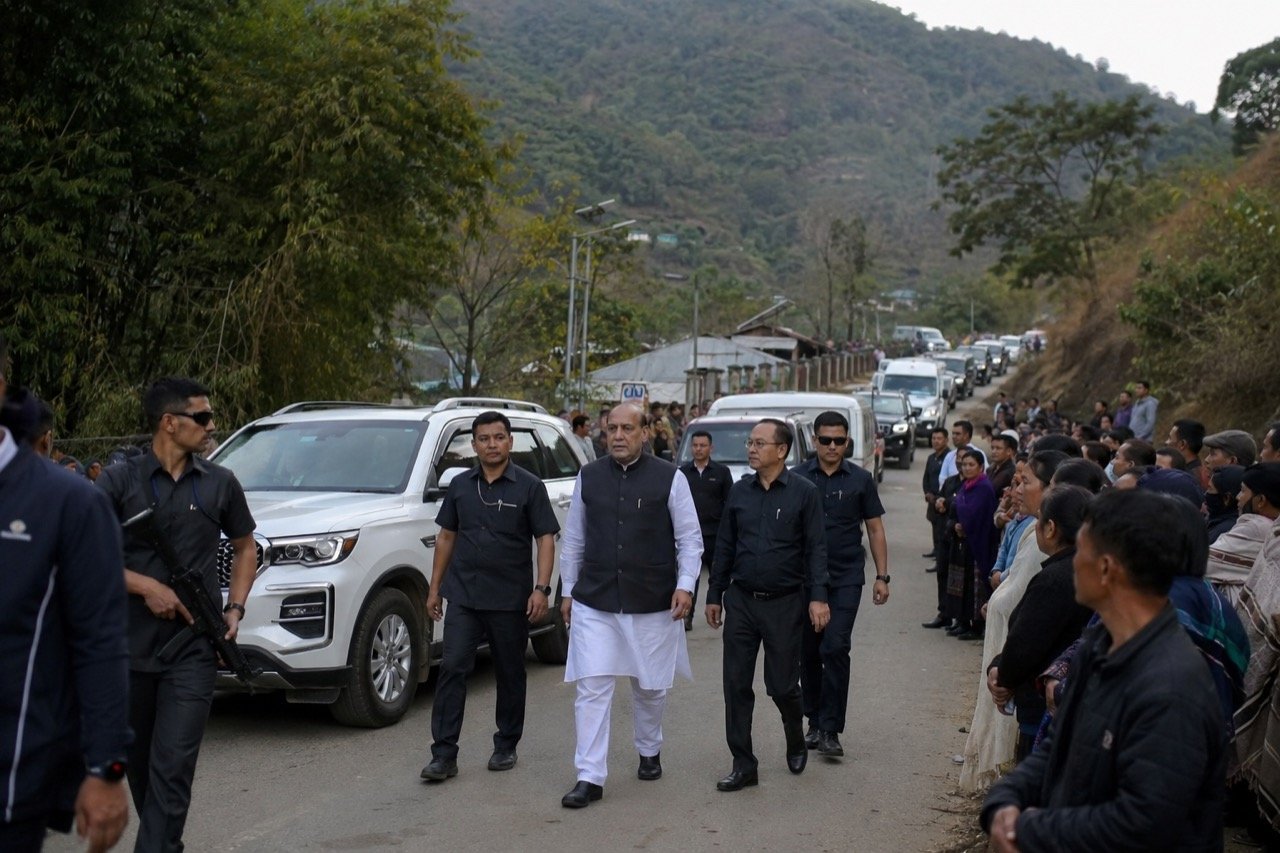
Manipur CM's Churachandpur Visit: First Since 2023 Unrest
The Manipur Chief Minister travelled to Churachandpur for a BJP MLA's funeral, his first visit to the district since the 2023 violence, lending the sombre occasion an unmistakable political significance.