Eetha Title Row Resolved as Laxman Utekar Reassures Vithabai Family
The naming dispute around Laxman Utekar's Marathi film Eetha has reportedly been settled after the filmmaker offered assurances to Vithabai's family, letting attention return to the film itself.
Commentary & Analysis ·
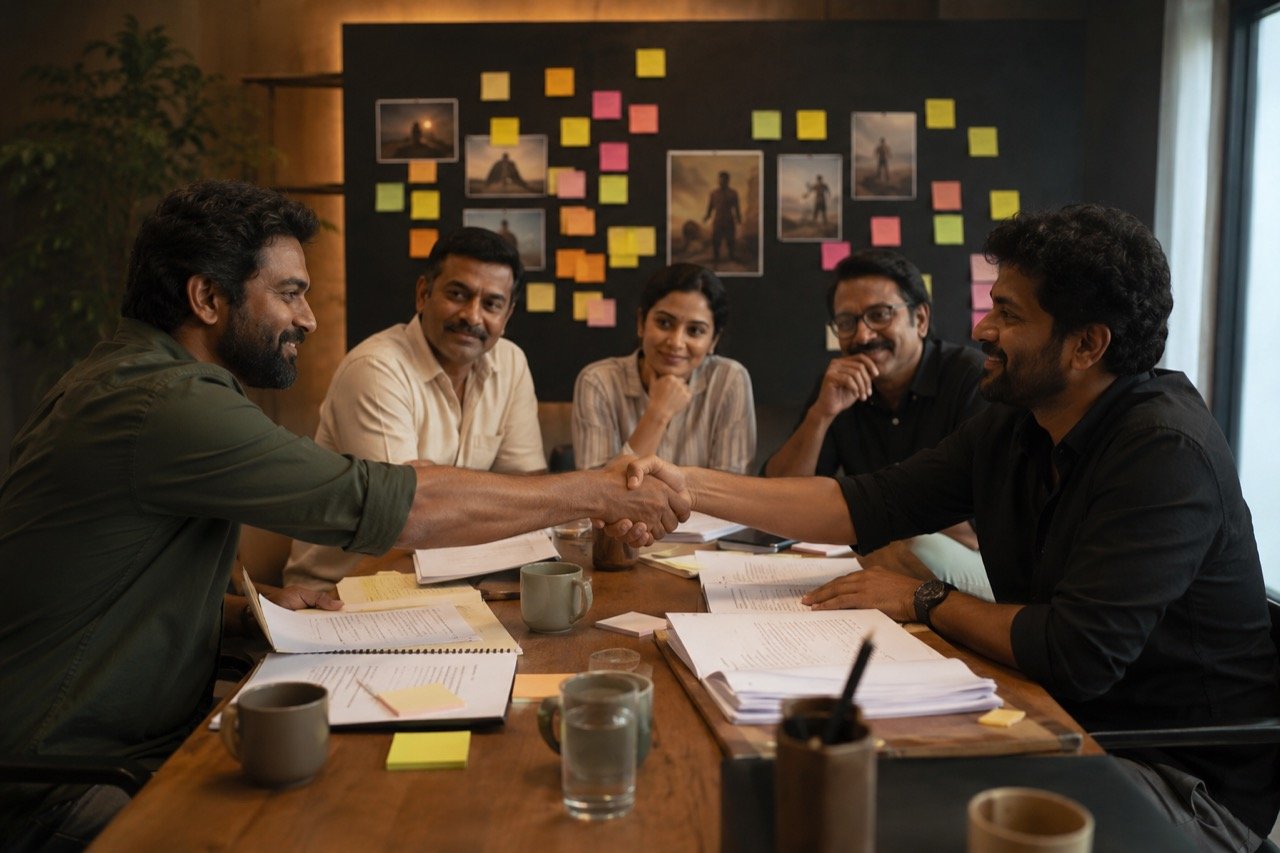
Eetha, the Marathi film from director Laxman Utekar, is back in the entertainment conversation for a welcome reason: the dispute over its title has reportedly been laid to rest. According to a report in the Indian Express, the row was resolved after Utekar personally offered assurances to the family of Vithabai, whose name and legacy sat at the heart of the objection. For a project that had briefly threatened to become known more for its controversy than its content, the resolution restores Eetha to what it should have been all along, a film discussed on the strength of its craft rather than the noise around its name.
How the dispute unfolded
Concerns had been raised over the film's naming, with Vithabai's family worried about how the title connected to her identity and public memory. This is not an unusual flashpoint in Indian cinema, where a name drawn from real life, however loosely, can carry weight far beyond its use as a marketing device. Families who feel a personal or cultural connection to a title are often not objecting to the film itself but to the possibility that a legacy they consider theirs to protect might be used, altered or commercialised without their voice being heard. Rather than allowing the disagreement to escalate into a prolonged standoff or a legal tangle, the filmmaker chose direct conversation, and the family was reportedly satisfied with the assurances they received. That choice, a private conversation rather than a public spat, is itself notable. It suggests a filmmaker willing to treat a community's concern as legitimate from the outset rather than as an inconvenience to be managed through statements and denials.
Why the resolution matters practically
Title disputes have a way of stalling regional releases, consuming promotional oxygen and leaving audiences with the controversy rather than the cinema. Once a naming row breaks into public view, the story tends to take on a life of its own: news cycles fixate on the conflict, social media amplifies both sides, and the film's actual content, its performances, its music, its story, gets pushed to the margins of the conversation. For a Marathi-language production, which does not have the same guaranteed national spotlight as a big-budget Hindi release, that kind of distraction can be especially costly. Marketing budgets and release windows for regional cinema are typically tighter, and there is less room to absorb weeks of controversy-driven coverage that displaces genuine promotional messaging. With the matter apparently no longer blocking the project, Eetha can move ahead on its own creative terms, allowing its eventual release to be judged on merit rather than on the residue of a dispute resolved before the film even reached audiences.
The weight a title can carry
Marathi cinema updates involving established names such as Utekar carry real audience interest, yet they often receive less national coverage than comparable Bollywood rows. This episode also underlines something the industry knows well: film titles are not just marketing labels. They can evoke personal histories, communities and legacies, which is precisely why sensitivity around them runs deep. A title is often the first and, for casual audiences, sometimes the only piece of information they absorb about a film. When that title intersects with a real name or a real family's memory of someone significant to them, the stakes shift from commercial branding to questions of dignity and representation. Filmmakers who fail to recognise this distinction risk turning a straightforward creative decision into a matter of public grievance, while those who do recognise it, as Utekar appears to have done, give themselves the chance to avoid that outcome altogether.
What this signals for stakeholders across the industry
For the family at the centre of this dispute, the resolution offers something more valuable than a headline correction: an acknowledgement that their concern was heard and addressed directly by the person responsible for the film, rather than through intermediaries or legal notices. For producers and studios watching from outside, the episode is a reminder that reputational risk in regional cinema does not always come from box-office performance; it can come from how a project is perceived to have treated the communities whose histories it draws upon, even lightly. For audiences, particularly those in Maharashtra who may have followed the row as it developed, the quiet resolution removes a layer of unease that might otherwise have coloured their reception of the film on release. And for the broader Marathi film industry, an early, dialogue-based resolution to a naming dispute sets an example that other productions facing similar objections, whether about titles, characters or storylines drawn from real events, can look to as a workable precedent.
The NE Times View
The quiet resolution of the Eetha row is a small case study in how the film industry should handle cultural sensitivities. A family raised a legitimate concern about legacy and identity; a filmmaker responded with dialogue instead of defensiveness; and the story ended without courtrooms or boycott hashtags. For Indian cinema, where naming controversies routinely balloon into weeks of hostile headlines, this is the template worth normalising. It also strengthens the case for taking regional film journalism seriously, because these disputes shape how communities see themselves on screen. There is a broader lesson here for an industry that too often treats public relations as a substitute for genuine engagement. Utekar's approach, going directly to the family rather than issuing a press statement defending the title, suggests an understanding that some disputes cannot be managed away with messaging; they require an actual conversation with the people affected. That the matter appears to have closed without rancour is precisely the outcome that should be unremarkable, and the fact that it stands out as notable says something about how rarely such disputes are handled this way.
Key takeaways
- The title dispute over Eetha, involving concerns from Vithabai's family, has reportedly been resolved after director Laxman Utekar offered personal assurances, as per an Indian Express report.
- The resolution came through direct dialogue rather than legal action, allowing the family's concerns to be addressed without a prolonged public standoff.
- With the naming row settled, Eetha can proceed toward release without the controversy overshadowing its promotion and reception.
- The episode highlights how titles tied to real names carry personal and cultural weight, particularly in regional cinema, where sensitivity to legacy and identity matters deeply.
- The NE Times regards this dialogue-first resolution as a template worth normalising across an industry where similar disputes often escalate unnecessarily.
You may also like to read

Eetha Title Row Settled: Shraddha Kapoor Film Gets a Clearer Runway
The dispute over the title of Shraddha Kapoor's film Eetha appears resolved after director Laxman Utekar reportedly reassured Vithabai Narayangaonkar's family, shifting attention back to the movie itself.
Akshara Singh Boards Eetha, Widening Shraddha Kapoor Film's Canvas
Bhojpuri star Akshara Singh's casting in Eetha, the Shraddha Kapoor film linked to lavani icon Vithabai Narayangaonkar, signals a cross-industry approach that could broaden the project's reach and deepen its cultural texture.
Anshula Kapoor's Mehendi Turns Kapoor Wedding Into a Family Affair
Glimpses of Anshula Kapoor and Rohan Thakkar's mehendi, shared by Sonam Kapoor ahead of the July 6 wedding, have drawn wide attention to how Bollywood's best-known family stages an intimate milestone.
Diljit Dosanjh's Satluj: No Cuts Despite Punjab 95 Title Change
Diljit Dosanjh says Satluj reaches audiences without cuts despite its renaming from Punjab 95, as reported support from Jaswant Khalra's wife keeps the film's release debate in the headlines.
More from this section
More
72nd National Film Awards: Fans Back Mammootty, Allu Arjun, Sai Pallavi
Speculation around the 72nd National Film Awards is intensifying as fan communities across India's language film industries champion favourites including Mammootty, Allu Arjun and Sai Pallavi ahead of any official announcement.

Aamir Khan Marries Gauri Spratt in Private Pali Hill Ceremony
Aamir Khan and Gauri Spratt tied the knot at the actor's Pali Hill home in Mumbai on July 5, turning a deliberately small family ceremony into Bollywood's biggest story of the day.
Akanksha Chamola's Lock Upp 2 Confession Sets Reality TV Abuzz
A personal revelation by Akanksha Chamola ahead of Lock Upp 2 has handed the reality show a viral talking point, underlining how confession-driven formats continue to dominate Indian television conversation.