Eetha Title Row Settled: Shraddha Kapoor Film Gets a Clearer Runway
The dispute over the title of Shraddha Kapoor's film Eetha appears resolved after director Laxman Utekar reportedly reassured Vithabai Narayangaonkar's family, shifting attention back to the movie itself.
Commentary & Analysis ·
The row over the title of Eetha, the upcoming film starring Shraddha Kapoor, appears to have found a quiet resolution. The Indian Express reported that concerns raised by the family of Vithabai Narayangaonkar were addressed after assurances from filmmaker Laxman Utekar, moving the story from conflict to routine release management. The dispute was never merely celebrity gossip. It touched on how contemporary Hindi cinema borrows names and references linked to real artistic legacies, and what producers owe the families and cultural custodians who guard those histories.
How the dispute took shape
Details of the original disagreement remain only partially in the public domain, and that is worth stating plainly rather than glossing over. What is known is that the family of Vithabai Narayangaonkar raised concerns connected to the title Eetha, and that those concerns were significant enough to require a direct response from the filmmaker. Laxman Utekar's assurances appear to have been the turning point that moved the matter away from a public standoff and towards a settled understanding. Because so much of the back-and-forth happened away from cameras and press conferences, audiences are left to judge the outcome rather than the process. That is not unusual in the entertainment industry, where sensitive negotiations involving family legacies are often conducted quietly by design, precisely to avoid the kind of public spectacle that can harden positions on both sides.
What can be said with confidence is that the resolution, whatever its precise terms, was reached through conversation rather than confrontation. That single fact carries more weight than it might initially seem, given how often similar disputes in Indian cinema follow a very different trajectory.
Why film titles carry more than marketing weight
A title can hold cultural memory, family legacy and commercial stakes all at once. For a production house, a title is a branding asset chosen for its resonance, its distinctiveness and its ability to travel across posters, trailers and word of mouth. But for the descendants of a real cultural figure, that same title can be something else entirely: a marker of inheritance, a name tied to reputation built over generations, and a signal of how their family's contribution to art and performance will be remembered by a new audience that may never encounter the original context.
When custodians of that memory object, filmmakers face a choice between explanation, credit or alteration, and how they choose shapes public goodwill long before a trailer drops. Explanation involves clarifying intent and scope; credit involves formally acknowledging the connection to the real legacy in question; alteration involves changing the title, the framing or the content itself. Each path carries different costs. Explanation is the cheapest but can feel dismissive if not paired with genuine engagement. Credit requires humility and a willingness to share narrative ownership. Alteration is the most expensive in terms of marketing sunk costs, since campaigns, posters and trailers may already be built around a specific name. The fact that this situation appears to have resolved without a title change or a public falling-out suggests that some combination of explanation and reassurance was enough to satisfy the family's concerns.
Dialogue over escalation
In this case, dialogue seems to have worked. Rather than a cycle of escalating public statements, the matter reportedly moved toward assurance and acceptance. That is a meaningfully different pattern from what Bollywood has seen in numerous other instances, where an initial objection is met with a defensive public statement, which in turn provokes a sharper response from the aggrieved party, and the whole affair spirals into a media event that outlasts the film's own promotional cycle.
For a film still building its audience relationship, that is a commercially valuable outcome as much as a graceful one. Films depend on a runway of positive or at least neutral coverage in the weeks before release, when trailers, posters and cast interviews are meant to build anticipation. A prolonged title dispute consumes that runway with a different kind of story altogether, one that has nothing to do with the film's actual content, performances or craft. By resolving the matter early and quietly, Eetha's team has preserved that runway for the conversations that actually help sell tickets.
What this means for the film going forward
With the row easing, the film's makers can redirect attention to what actually sells a movie: its creative identity, its cast and its release strategy. Shraddha Kapoor's presence in the cast already gives the project a built-in audience base, and Laxman Utekar's direction brings its own expectations given his recent work in Hindi cinema. Neither of those assets can do their job, however, if the conversation around the film keeps returning to a legacy dispute rather than to the story being told or the performances on screen.
The precise details of the family's original objection remain only partially public, so the scope of the dispute should not be overstated. It would be a mistake to read this as either a minor footnote or a major scandal narrowly averted; the honest position is that it was a real concern, raised by people with a legitimate stake in how a name tied to their family is used, and it was addressed through assurances rather than public conflict. That middle-ground description is less dramatic than either extreme, but it is the one supported by what has actually been reported.
The NE Times View
This episode is a small but instructive win for how Bollywood can handle cultural sensitivity. Too many title and portrayal disputes in Indian cinema escalate into court petitions, boycott hashtags and release delays that serve no one. Here, a conversation appears to have achieved what controversy could not, and the film emerges without a bruised reputation.
The lesson for producers is to treat cultural custodians as stakeholders early, not as obstacles late. Engaging families and communities connected to a title or a story before a film's marketing machinery is fully in motion costs relatively little, and it avoids the far greater cost of a public dispute that can taint a release regardless of how it is eventually resolved. The lesson for audiences is that resolution rarely trends the way outrage does, even when it is the better story. A quietly settled dispute generates none of the headlines, hashtags or heated debate that a public row would, which means the industry's better instincts often go unnoticed and unrewarded in the same way its worst instincts get amplified. That asymmetry is worth bearing in mind whenever a story like this passes with minimal fanfare: the absence of noise is not the absence of significance.
Key takeaways
- The Eetha title dispute involving Shraddha Kapoor's upcoming film appears resolved after assurances from filmmaker Laxman Utekar to the family of Vithabai Narayangaonkar.
- The full scope of the family's original objection remains only partially public, and the episode should not be overstated in either direction.
- Resolution through dialogue rather than public conflict preserved the film's promotional runway ahead of release.
- The case illustrates the layered stakes film titles carry: cultural memory and family legacy alongside commercial branding.
- Early engagement with cultural custodians, rather than late reaction to objections, remains the clearer path for producers navigating similar sensitivities.
You may also like to read

Akshara Singh Boards Eetha, Widening Shraddha Kapoor Film's Canvas
Bhojpuri star Akshara Singh's casting in Eetha, the Shraddha Kapoor film linked to lavani icon Vithabai Narayangaonkar, signals a cross-industry approach that could broaden the project's reach and deepen its cultural texture.
Eetha Title Row Resolved as Laxman Utekar Reassures Vithabai Family
The naming dispute around Laxman Utekar's Marathi film Eetha has reportedly been settled after the filmmaker offered assurances to Vithabai's family, letting attention return to the film itself.

Main Vaapas Aaunga Box Office: Diljit Film Crosses Rs 40 Crore
Diljit Dosanjh's Main Vaapas Aaunga has reportedly crossed Rs 40 crore worldwide after a weekend jump, keeping the Hindi release alive in trade conversation well beyond its opening frame.
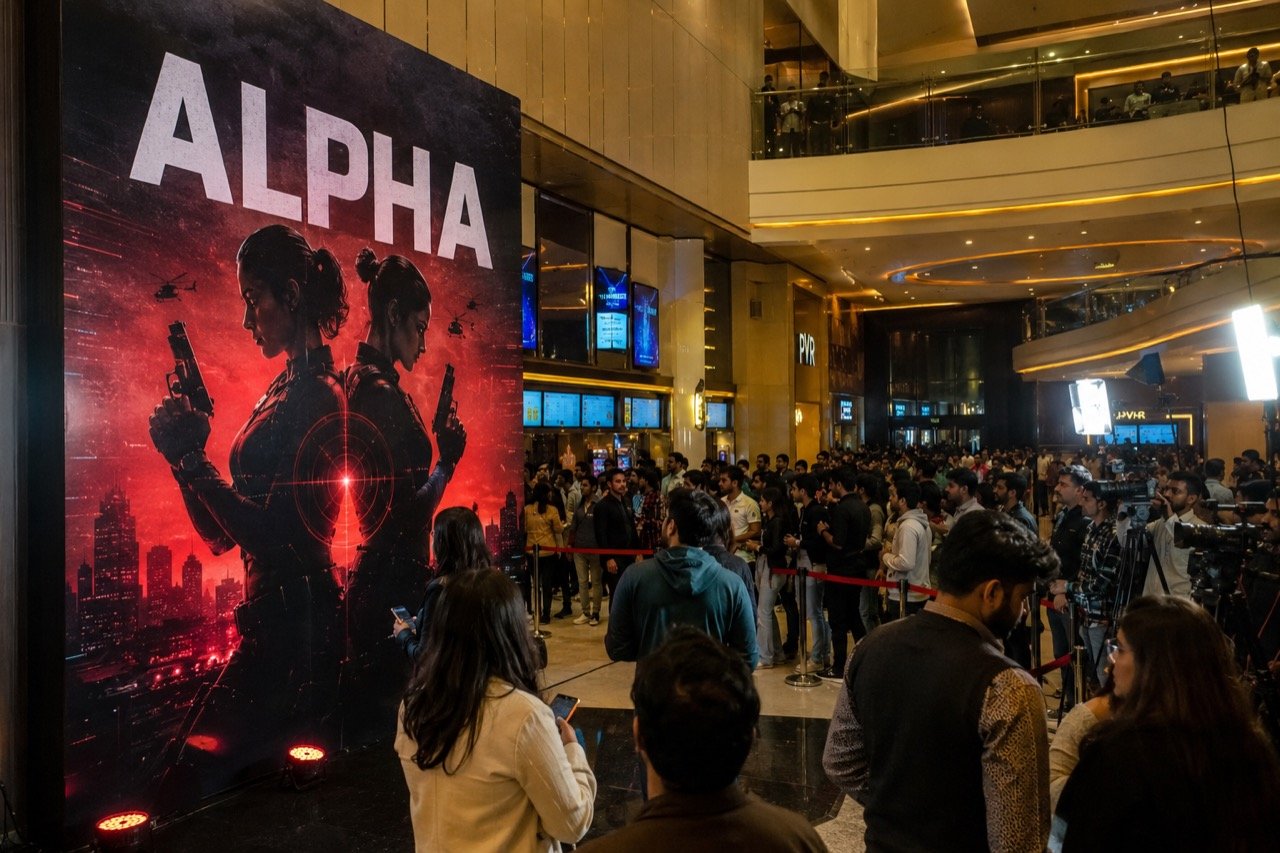
Alpha Box Office: Alia Bhatt's YRF Spy Film Opens Amid Loud Debate
Alia Bhatt and Sharvari's Alpha, the first female-fronted entry in the YRF Spy Universe, opened to better-than-expected numbers even as online trolling and industry pushback made it the weekend's noisiest Hindi cinema story.
More from this section
More
72nd National Film Awards: Fans Back Mammootty, Allu Arjun, Sai Pallavi
Speculation around the 72nd National Film Awards is intensifying as fan communities across India's language film industries champion favourites including Mammootty, Allu Arjun and Sai Pallavi ahead of any official announcement.

Aamir Khan Marries Gauri Spratt in Private Pali Hill Ceremony
Aamir Khan and Gauri Spratt tied the knot at the actor's Pali Hill home in Mumbai on July 5, turning a deliberately small family ceremony into Bollywood's biggest story of the day.
Akanksha Chamola's Lock Upp 2 Confession Sets Reality TV Abuzz
A personal revelation by Akanksha Chamola ahead of Lock Upp 2 has handed the reality show a viral talking point, underlining how confession-driven formats continue to dominate Indian television conversation.