Delhi's New Tree-Cutting SOP Adds Video Evidence and Arrest Warning
Delhi is preparing a tougher standard operating procedure for illegal tree felling, with video recording of enforcement and arrest warnings, as the capital battles heat, pollution and shrinking green cover.
Commentary & Analysis ·
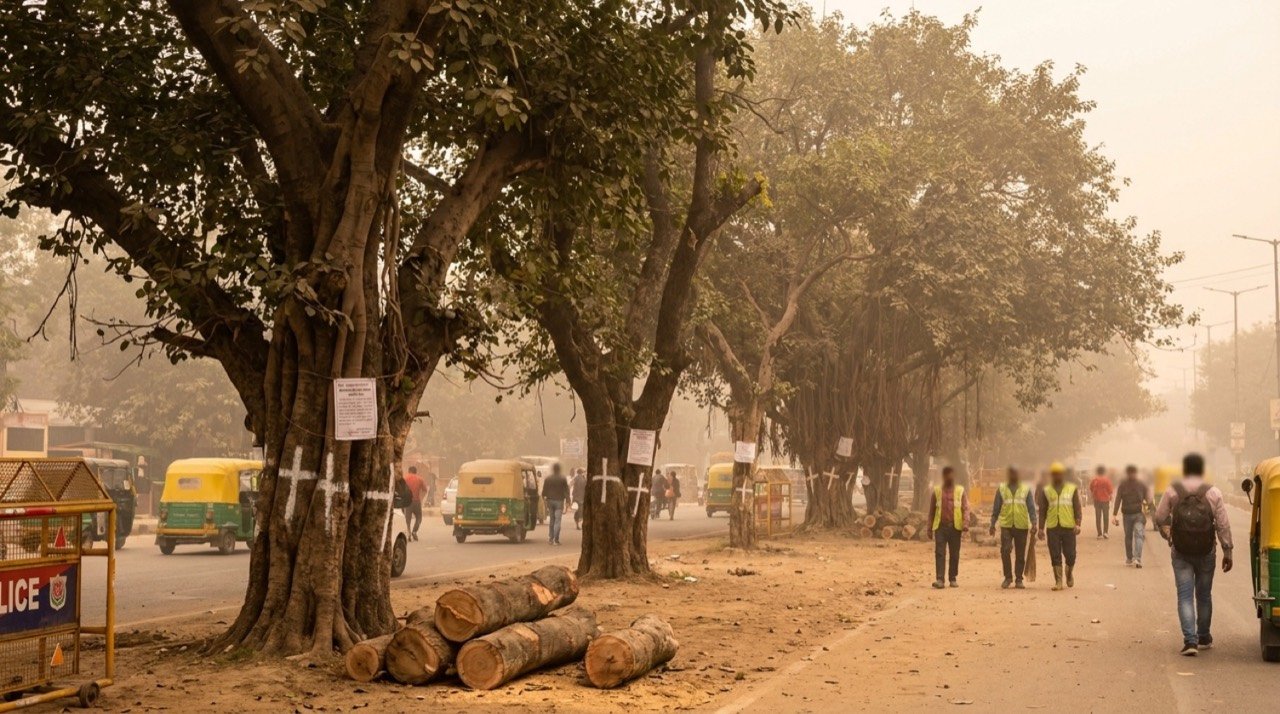
Delhi authorities are preparing a tougher standard operating procedure to curb illegal tree cutting, with reports indicating that officials may be required to make video recordings of enforcement action and that those found guilty could face arrest. The move responds to mounting public anger over repeated loss of urban trees and to court scrutiny of damage linked to construction. Coming from a capital that has watched its green cover thin out year after year, the proposal reads less like a bureaucratic tweak and more like an admission that existing safeguards have failed to keep pace with the pressures of a fast-building city.
Why tree protection is now a public-health issue
In a city contending with extreme heat, dangerous air pollution and steadily shrinking green cover, tree protection has moved well beyond a niche environmental concern. Mature trees lower neighbourhood temperatures, aid drainage, shade pedestrians and filter pollutants, making their loss a matter of everyday public health and liveability. This is not an abstract ecological debate confined to conservationists; it is a lived reality for residents who step out into summer afternoons made hotter by the absence of canopy cover, or who watch stormwater pool in streets that once had root systems to absorb it. Every mature tree removed represents years, sometimes decades, of growth that cannot be replaced by a sapling planted as an afterthought.
Residents frequently complain that trees vanish overnight, often around construction sites, while accountability arrives slowly if at all. This pattern has become almost predictable: a plot is cleared under cover of darkness or during a holiday weekend, and by the time a complaint is lodged, an inspection is scheduled and a case is registered, the tree is already gone and the construction has often advanced far enough that reversal is impractical. A clearer enforcement framework is meant to close that gap, but it also implicitly acknowledges how badly the current system has lagged behind the pace at which felling actually happens on the ground.
What the SOP is reported to include
The strength of any new procedure lies in assigning clear responsibility at every stage, from permission to penalty. According to reports, the draft approach leans on documentation and deterrence, combining stronger evidentiary requirements with the threat of criminal consequence. The reported elements include mandatory video recording of enforcement and inspection action, warnings of arrest where an offence is clearly established, clearer lines on who grants permission to fell a tree, defined responsibility for verifying and recording damage, and stricter penalties intended to deter illegal felling.
Each of these elements addresses a distinct failure point in the existing process. Video recording responds to the problem of disputed facts, where enforcement teams and violators often give conflicting accounts of what actually happened at a site. Arrest warnings respond to the perception that illegal felling has, in practice, carried little real risk beyond a modest fine that developers can treat as a cost of doing business. Clarity on permission-granting authority responds to the confusion that has allowed responsibility to be passed between departments whenever a controversial felling comes to light. And a defined verification-and-recording duty responds to the fact that, without someone formally tasked with documenting damage, cases can quietly wither for lack of evidence.
Implementation will be the real test
A stronger SOP can make a difference if it establishes an unbroken chain of accountability, identifying who authorises felling, who verifies damage, who records the evidence and who ultimately faces punishment. Without that clarity, tougher rules risk becoming another document that is difficult to enforce on the ground. Delhi's civic and environmental governance has no shortage of well-drafted rules; its recurring weakness has been in translating paperwork into consistent, on-the-ground practice. A camera mandate is only as useful as the willingness of enforcement staff to actually switch it on, upload the footage, and use it as the basis for action rather than as a box-ticking exercise.
As a civic environment observer put it, trees disappear overnight and accountability arrives late; video records and strict penalties may finally narrow that gap. That observation captures both the promise and the limits of the proposed SOP. Video evidence can settle factual disputes that once dragged on inconclusively, and the prospect of arrest changes the risk calculation for anyone tempted to fell a protected tree without authorisation. But documentation and deterrence only work if the institutions responsible for reviewing footage, pursuing cases and imposing penalties actually follow through with consistency, rather than applying the rules selectively depending on who is involved.
The coming weeks will show whether the SOP is finalised and how rigorously it is applied. For a capital under growing environmental stress, the credibility of the new rules will depend less on their wording and more on whether enforcement teams actually use the cameras and the courts as intended. Court scrutiny of construction-linked tree damage has already put pressure on civic agencies to demonstrate that they are serious about enforcement, and a finalised SOP would give judges, activists and residents a concrete benchmark against which to measure future compliance or failure.
Stakeholder perspectives and what to watch next
For residents and environmental groups, the proposed SOP will likely be judged not by its text but by early test cases. If the first few instances of video-documented illegal felling result in visible penalties or arrests, that would signal a genuine shift. If, instead, prominent cases are quietly settled or delayed, the SOP will be read as more of the same. For enforcement officials, the new procedure adds both a tool and a burden: video documentation offers protection against accusations of selective or arbitrary action, but it also means their conduct is now recorded and reviewable, raising the stakes for any officer tempted to look the other way.
For developers and contractors, the reported changes signal that the calculus around illegal felling may be shifting from a manageable financial risk to a more serious legal exposure. Much will depend on whether penalties are applied uniformly to companies and institutional actors, not only to individual workers or lower-level staff who are easiest to identify on camera. Observers will also be watching whether the SOP, once finalised, is accompanied by public reporting on enforcement outcomes, since transparency about how many cases are opened, prosecuted and resolved would itself be a meaningful indicator of whether the new framework is more than symbolic.
The NE Times View
Tougher rules are welcome only if Delhi finally enforces the ones it has; the capital's green cover has shrunk under official permits as much as illegal axes. Video evidence and arrest warnings help, but the deeper rot is the ease with which development projects win felling clearances. A credible SOP must bind agencies and contractors, not just lone offenders, and pair every cut with audited replanting. Anything less risks treating the symptom, unauthorised felling by individuals, while leaving untouched the larger and more consequential channel through which trees are lost: officially sanctioned clearances granted with insufficient scrutiny. A genuinely credible framework would apply the same standard of documentation and accountability to permitted felling as it does to illegal felling, and would ensure that replanting commitments attached to approvals are actually verified rather than assumed.
Key takeaways
- Delhi's draft SOP reportedly adds mandatory video recording of enforcement action and warnings of arrest for clearly established offences of illegal tree felling.
- The proposal aims to fix a long-standing accountability gap in which trees vanish overnight, often near construction sites, while enforcement and evidence-gathering lag behind.
- Success will hinge on implementation: clear lines on who grants permission, who verifies damage, who records evidence and who is penalised.
- Tree loss in Delhi is a public-health issue tied to urban heat, drainage and air pollution, not merely an environmental side concern.
- The NE Times View holds that any credible SOP must also address officially permitted felling and enforce audited replanting, not just punish unauthorised offenders.
You may also like to read
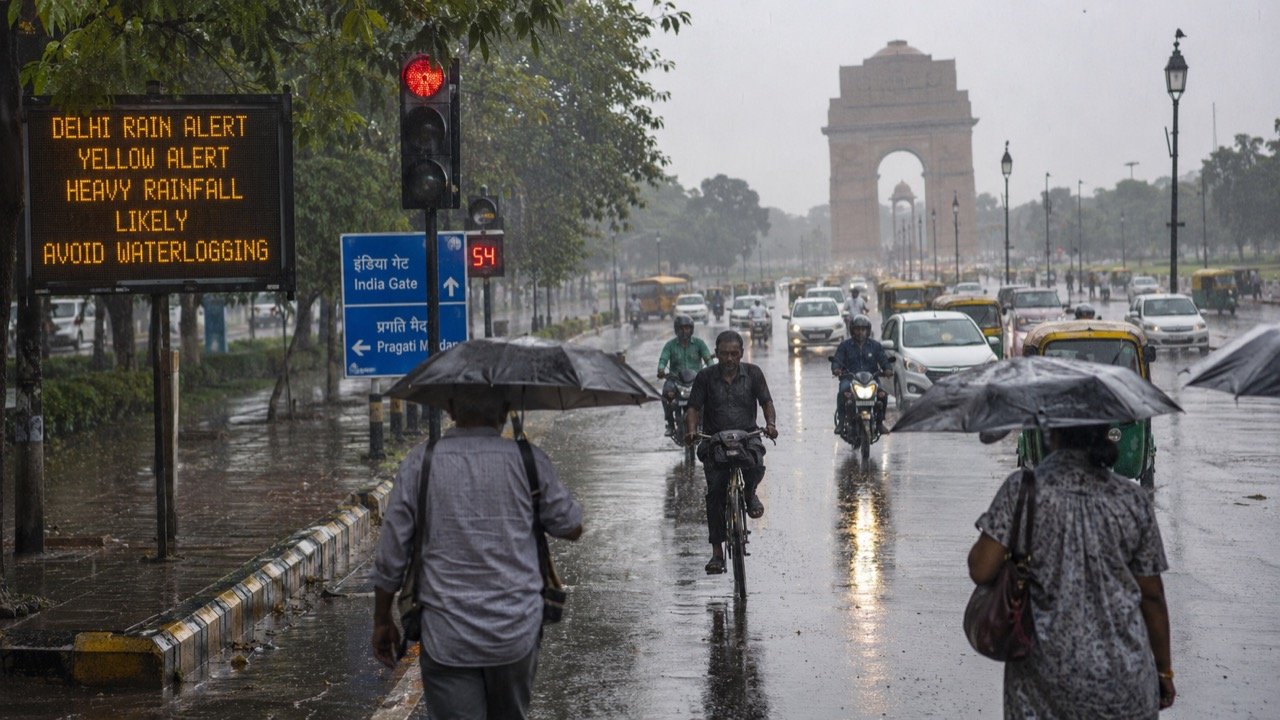
Delhi Rain Alert: Monsoon Travel and Civic Readiness Under Watch
Delhi's monsoon rain watch has residents tracking weather alerts and traffic advisories, as even moderate showers test the capital's drainage, underpasses and last-mile travel networks.
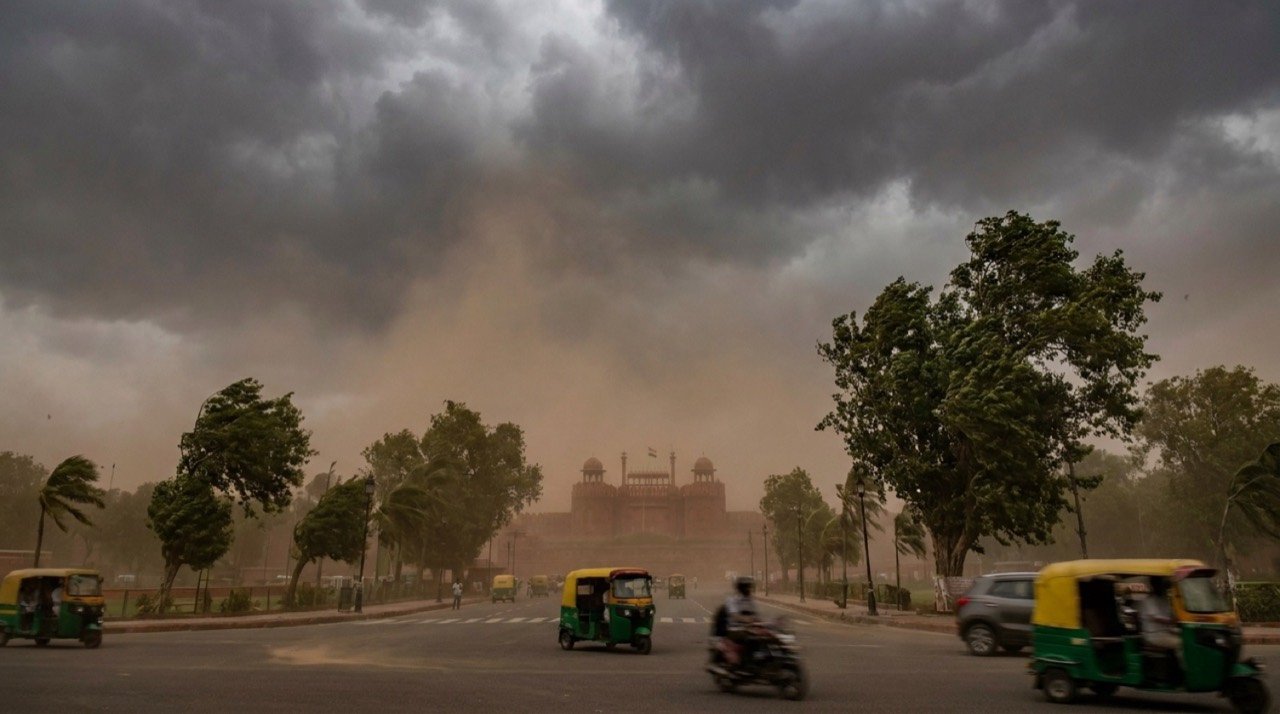
Delhi Red Alert: Dust Storms, Lightning and Rain Sweep the National Capital Region
Delhi moved under a short-term red weather alert on June 23 as dust storms, strong winds and severe thunderstorms threatened traffic, flights, power supply and outdoor safety across the National Capital Region.
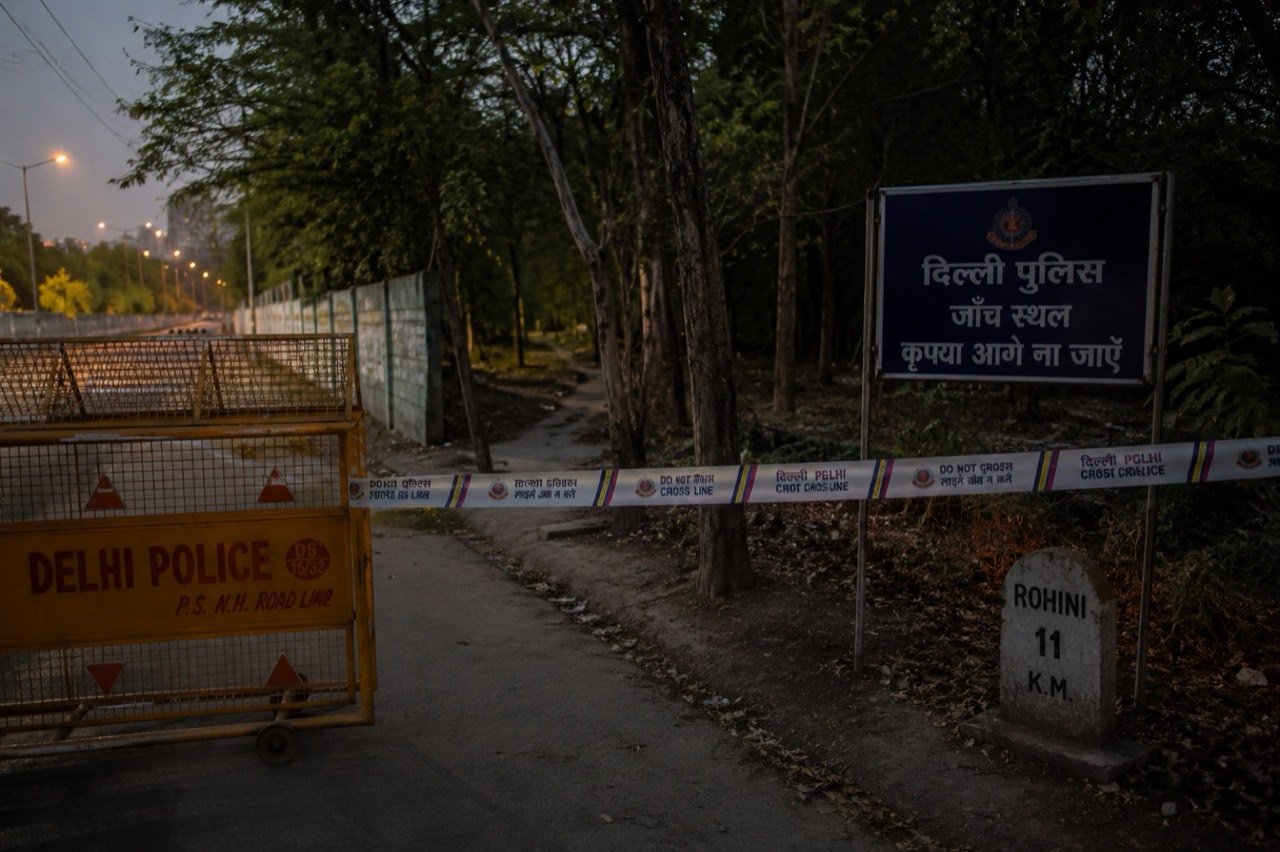
Delhi Child Murder Case Puts Footpath Safety and Fast Policing Under Scrutiny
The killing of a 10-year-old girl sleeping on a Delhi footpath, with an arrest made within hours, has forced hard questions about pavement dwellers, night-time safety and the speed of missing-child response.
Delhi High Court Clears Way for Proposed CAG Audit of BSES Discoms
The Delhi High Court has dismissed BSES petitions against a proposed CAG audit, calling the June 6 notice a show-cause communication and keeping scrutiny of power distribution finances alive.
More from this section
More
AICTE Industry Fellowship 2026: Rs 1.5 Lakh Scheme Closes July 5
The AICTE Industry Fellowship Programme 2026, which places technical-education faculty inside leading companies on a Rs 1.5 lakh monthly stipend, reached its application deadline on July 5.

Bay of Bengal Low Pressure System Revives Monsoon Over Western India
A low-pressure system over the Bay of Bengal has pushed the monsoon back into an active phase, bringing steady heavy rain to Kerala, coastal Karnataka and Maharashtra, and putting Mumbai and Pune on preparedness watch.
Bishnoi Gang Suspects Injured in Haryana Encounter as Police Tighten Net
A joint Haryana-Delhi Police operation in Bahadurgarh left two suspected Lawrence Bishnoi gang members injured, spotlighting the multi-state coordination now central to India's fight against organised crime networks.