CUET UG 2026 Results: 3,214 Candidates Score Perfect 100 Percentile in a Subject
The NTA has declared CUET UG 2026 results, with 3,214 candidates hitting a 100 percentile in one subject as the exam's reach across cities, languages and universities continues to widen.
Commentary & Analysis ·

The National Testing Agency (NTA) has declared the CUET UG 2026 results, with 3,214 candidates scoring a 100 percentile in one subject. The outcome caps a vast nationwide admissions exercise and underlines how central the Common University Entrance Test has become to undergraduate admissions across India. What might once have been treated as a routine results announcement now carries weight far beyond the students directly involved, because CUET has steadily become the single gateway through which a very large share of India's university-bound population must pass.
The headline numbers
Public reporting said one candidate scored a 100 percentile in four of the five subjects they had chosen, an exceptional result. Twenty-two candidates achieved the perfect percentile in three subjects, and 180 did so in two, while 3,214 reached it in at least one subject. The spread shows both the breadth of strong performances and the rarity of topping multiple papers. Read together, these figures form a pyramid: a broad base of single-subject toppers, a narrower band of two-subject toppers, a still narrower band of three-subject toppers, and a solitary candidate at the apex who topped four of five subjects. That shape is itself informative, since it suggests that consistent excellence across multiple, differently structured papers remains genuinely rare even among a very large and highly motivated applicant pool.
It is worth restating what a 100 percentile actually represents, because the term is often misread as a perfect raw score. A 100 percentile indicates a candidate scored at the very top relative to all others who attempted that subject, rather than a perfect raw mark, reflecting the normalisation method used across multiple sessions. In other words, it is a statement about rank, not about flawlessness on the paper itself. Because CUET UG is conducted across many sessions with different question sets, normalisation is the mechanism that allows scores from, say, a morning slot and an afternoon slot to be compared on equal footing. That mechanism is sound in principle, but it also means that the number of "perfect" scorers is sensitive to how forgiving or difficult each session turns out to be, and to how the normalisation formula handles clustering at the top end.
The scale of the exam
More than 15.68 lakh unique candidates registered for CUET UG 2026, and over 11.64 lakh appeared. The gap between registration and appearance, roughly four lakh candidates, is itself a detail worth noting, since it points to the ordinary attrition that accompanies any exam of this size, whether from candidates sitting for multiple parallel options, changing plans, or simply not showing up on the day. The test was conducted in 13 languages across 321 cities, including 13 centres outside India, reflecting the exam's growing international footprint for overseas Indian students and applicants. That reach, spanning more than three hundred cities and more than a dozen languages, is a logistical undertaking on a scale few other countries attempt for a single undergraduate entrance test, and it speaks to the NTA's determination to make CUET accessible regardless of a candidate's regional language background or geographic location.
The number of participating universities rose to 244, widening the pool of institutions that rely on a single common test rather than separate entrance exams. Each year that this number grows, the practical value of CUET to an individual student rises correspondingly, since a single set of scores now unlocks admission conversations with a much larger and more varied set of institutions than would have been possible under the older system of university-specific entrance tests.
What it means for admissions
The figures underline CUET's expanding role in undergraduate admissions, consolidating a once-fragmented landscape into a centralised assessment. For students, a single test now opens doors to a large network of central, state and private universities, easing the burden of multiple application cycles. Before CUET's introduction, a student aiming to keep multiple options open often had to prepare for and sit several distinct entrance examinations, each with its own syllabus emphasis, format and calendar. Consolidating that into one common test lowers the preparation burden and, in theory, allows merit to be assessed on a more consistent basis across institutions.
That consolidation, however, also concentrates enormous consequence into a single testing event. With 244 universities now drawing on the same pool of scores, any flaw in how those scores are calculated or compared, whether from session-to-session variation, normalisation quirks, or the sheer clustering of high performers, has a much wider ripple effect than it would have had under a fragmented system, where a single university's test issue would affect only its own applicant pool. Attention now turns to the counselling and admission rounds, where universities will use these percentiles to fill undergraduate seats. It is in this counselling phase that the practical stakes of the percentile system will become concrete, as institutions rank applicants and allocate seats across a widening range of courses and campuses. As CUET's scale and acceptance grow, its results increasingly set the rhythm of the entire undergraduate admissions calendar in India, effectively becoming the fixed point around which university admission offices, coaching institutes and applicant families plan their year.
Reading the cluster of perfect scores
A number like 3,214 candidates reaching 100 percentile in at least one subject can be read in more than one way. On one hand, it can be seen simply as a reflection of scale: with more than 11.64 lakh candidates appearing across numerous subjects, even a very small proportion scoring at the top of any given subject's distribution will produce an absolute figure that looks large. On the other hand, when so many candidates land at the very top of the normalised scale within a single subject, it invites a more searching question about how finely that subject's paper and normalisation process actually distinguish between very strong candidates. If a paper is comparatively easier in a particular session, or if the normalisation formula compresses top-end differences, more candidates can end up sharing the ceiling score even though their underlying command of the subject may have differed meaningfully.
None of this is unique to CUET, and multi-session standardised tests everywhere face the same tension between fairness across sessions and precision at the very top of the distribution. But the tension matters more here precisely because of the scale described above: a system serving 244 universities and well over a million candidates has less room for ambiguity at the margins than a smaller, single-institution test would.
The NE Times View
The widening reach of a common entrance test is a real democratising gain, but the cluster of perfect scores deserves scrutiny rather than celebration. When thousands hit 100 percentile in a subject, it raises questions about normalisation, paper difficulty and whether the test still discriminates fairly between candidates. A fair admissions system needs more than scale; it needs scoring that universities can actually trust to rank merit. Growth in reach, whether measured in the number of cities, languages, or participating universities, is not in itself proof that the underlying measurement is getting better. As CUET continues to expand its footprint, the NTA and the wider higher education establishment would do well to treat the size and clustering of perfect scores as a standing invitation to review methodology, not as a statistic to be quietly filed away alongside the more celebratory registration numbers.
Key takeaways
- 3,214 candidates scored a 100 percentile in at least one subject in CUET UG 2026, with one candidate achieving it in four of five subjects, 22 in three subjects, and 180 in two subjects.
- A 100 percentile reflects top relative rank after normalisation across sessions, not a perfect raw score, which explains why so many candidates can share the ceiling figure.
- More than 15.68 lakh candidates registered and over 11.64 lakh appeared, across 13 languages and 321 cities, including 13 centres outside India.
- The number of participating universities rose to 244, deepening CUET's role as the central gateway for undergraduate admissions in India.
- The concentration of perfect scores warrants scrutiny of normalisation and paper difficulty, since trustworthy ranking of merit matters as much as the exam's expanding scale.
You may also like to read

CUET UG 2026 Results Declared After Final Answer Key Drops Seven Questions
The NTA has declared CUET UG 2026 results, letting lakhs of candidates download scorecards as central and participating universities prepare to run their own admission and cut-off processes.

CUET UG 2026 Final Answer Key Nears as Students Begin Scorecard Watch
With the NTA's CUET UG 2026 process entering its final answer-key and result phase, lakhs of candidates are tracking the official portal for scorecards that will shape undergraduate admissions nationwide.

CUET-UG Results Awaited As Delhi University Admissions Wait On The Clock
Lakhs of students are awaiting their CUET-UG 2026 scorecards, expected late in June, with a re-evaluation backlog pushing Delhi University's admission registrations toward the month's end.

CUET UG 2026 Results Out: Admissions Race Begins Across 250+ Universities
The NTA has declared CUET UG 2026 results, with 3,214 candidates scoring a 100 percentile in at least one subject, kicking off cut-offs and counselling at more than 250 universities nationwide.
More from this section
More
AICTE Industry Fellowship 2026: Rs 1.5 Lakh Scheme Closes July 5
The AICTE Industry Fellowship Programme 2026, which places technical-education faculty inside leading companies on a Rs 1.5 lakh monthly stipend, reached its application deadline on July 5.

Bay of Bengal Low Pressure System Revives Monsoon Over Western India
A low-pressure system over the Bay of Bengal has pushed the monsoon back into an active phase, bringing steady heavy rain to Kerala, coastal Karnataka and Maharashtra, and putting Mumbai and Pune on preparedness watch.
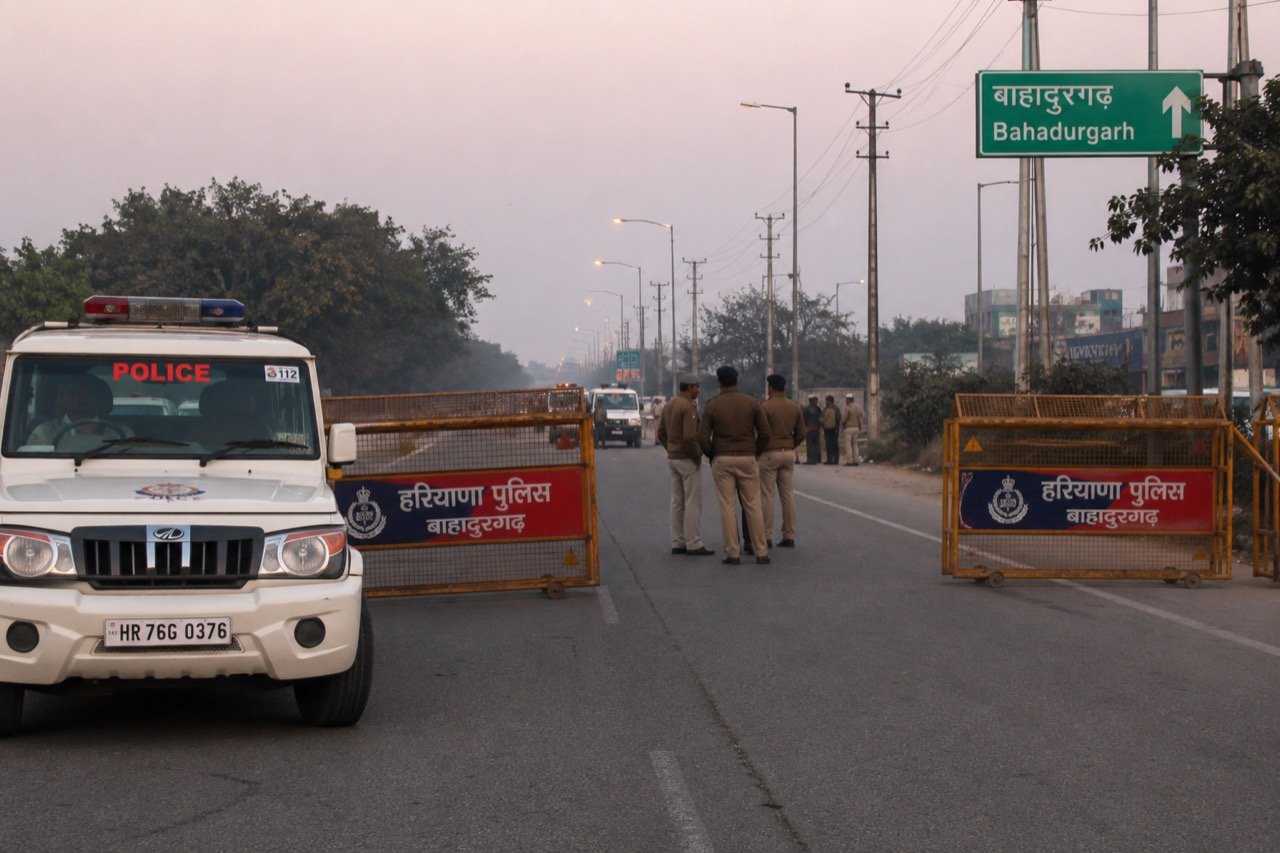
Bishnoi Gang Suspects Injured in Haryana Encounter as Police Tighten Net
A joint Haryana-Delhi Police operation in Bahadurgarh left two suspected Lawrence Bishnoi gang members injured, spotlighting the multi-state coordination now central to India's fight against organised crime networks.