BWF World Championships Return to India After 17 Years as New Delhi Prepares to Host Badminton's Elite
India will stage the BWF World Championships for the first time since 2009, with New Delhi's Indira Gandhi Arena hosting the showpiece from 17 to 23 August and tickets starting at just Rs 499.
Commentary & Analysis ·
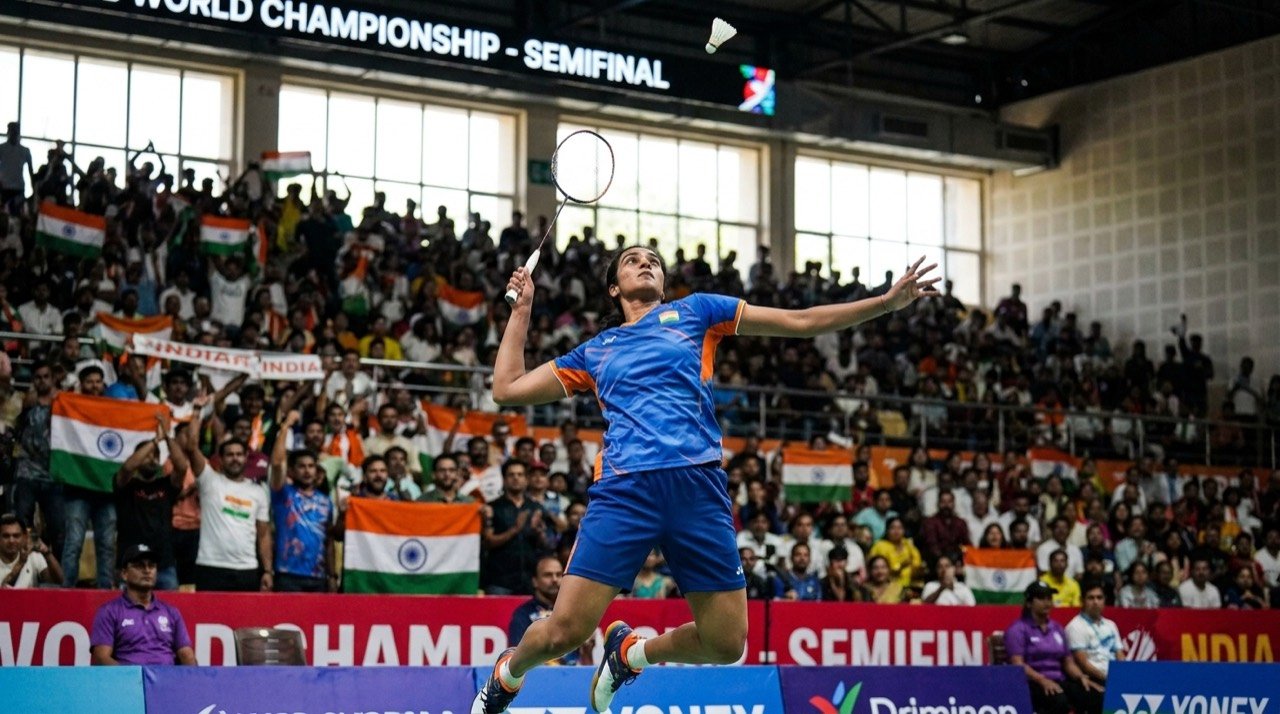
Indian badminton is bracing for a marquee summer as the country prepares to host the BWF World Championships for the first time in 17 years. The prestigious event returns to New Delhi's Indira Gandhi Arena from 17 to 23 August, a homecoming for the sport that has produced a generation of Indian world-beaters since the championships were last staged in the capital in 2009. The gap between hostings is itself telling: badminton has changed considerably in India over these seventeen years, moving from a sport with occasional flashes of individual brilliance to one with sustained depth across singles and doubles. That evolution is precisely why the return of the World Championships carries weight well beyond the week of competition itself.
A historic return to the capital
The Indira Gandhi Arena, one of Asia's largest multi-purpose indoor venues with a seating capacity of around 15,000, will be the centrepiece of the week-long competition. The Badminton Association of India has positioned the championships as both a sporting spectacle and a statement of the country's growing stature in the global game. Located in Indraprastha Estate near Rajghat and well connected by the Delhi Metro's Blue Line, the venue is expected to draw capacity crowds across the seven days of competition, with organisers banking on India's deepening badminton fan base.
The choice of venue is not incidental. A large-capacity, well-connected arena in the heart of the capital signals ambition: this is meant to be an event accessible to ordinary fans, not a closed-door affair for a narrow band of enthusiasts. Metro connectivity in particular matters for a multi-day tournament, where sustained footfall across morning sessions, evening finals and everything in between depends on people being able to get to and from the venue without friction. For a federation keen to demonstrate that India can stage global-standard events reliably, logistics of this kind are as much a part of the pitch as the on-court action.
Tickets and access
Tickets have been priced to encourage mass attendance, ranging from Rs 499 to Rs 5,500 across six seating categories, with around 6,000 seats made available to the public. An early-bird offer opened sales at the lowest tier, with a limited-period discount across the remaining categories. BookMyShow has been named the official ticketing partner, streamlining access for fans hoping to watch the world's best shuttlers in person. Premium matchday experiences have been pegged at the top end of the price band.
The pricing structure deserves attention in its own right. An entry point of Rs 499 is a deliberate attempt to widen the base of who can walk through the doors, rather than restricting the event to a moneyed few who can afford premium hospitality packages. This is a familiar tension in the staging of global sporting events everywhere: organisers need premium categories to generate the revenue that underwrites a tournament of this scale, while also needing affordable tiers to build the kind of raucous, full-house atmosphere that television broadcasts thrive on and that players themselves feed off. The six-category structure and the early-bird discount suggest the Badminton Association of India and its partners are alive to both imperatives at once.
Choosing BookMyShow as the official ticketing partner is also a pragmatic move. It plugs the championships into a platform already familiar to millions of Indian consumers, lowering the friction of purchase for casual fans who might not otherwise seek out a standalone sports-ticketing portal. That kind of accessibility often matters more to eventual attendance figures than the marketing budget behind an event.
Home hopes and global stars
With India's top names expected to lead the home challenge against a star-studded international field, the championships represent a rare opportunity for domestic fans to witness world-class badminton on home soil. The home challenge features PV Sindhu, Lakshya Sen, Satwiksairaj Rankireddy and Chirag Shetty, a lineup that spans the country's strongest singles and doubles credentials. Ranged against them will be an international draw including An Se-young, Shi Yu Qi, Li Shi Feng and the Fajar-Fikri pair, all established forces in the world game.
For a country chasing its first World Championships gold, the stage could hardly be more fitting. As one voice close to the preparations put it, hosting the World Championships at home is a chance to inspire the next generation, and the players will draw enormous energy from the New Delhi crowd. That sentiment captures something real about elite sport: crowd support is not merely decorative but can materially affect performance, particularly in tightly poised matches where momentum swings on small margins. A partisan, capacity crowd at the Indira Gandhi Arena could plausibly be the difference in a close semi-final or final, especially for players who have grown up idolising the very stars now representing the country.
Why the seventeen-year gap matters
It is worth dwelling on why a seventeen-year wait between hostings is significant rather than simply a piece of scheduling trivia. World Championships hosting rights are awarded competitively, reflecting a federation's organisational capacity, its commercial ecosystem, and the strength of its playing base. That India last hosted in 2009 and is only now returning to the top table underscores how hosting rights track the sport's broader growth curve in the country. The years in between have seen Indian shuttlers accumulate Olympic medals, world ranking milestones and marquee tournament wins, gradually building the case that India could again be trusted with an event of this scale.
Seen this way, the 2026 championships are less a standalone event than a culmination point, a moment where the investment of the intervening years, in coaching, in domestic tournament infrastructure, in broadcast reach, is being tested against the world's best on home turf. It also creates a natural benchmark: how India performs and how well it stages the event will likely shape conversations about future hosting bids, whether for badminton or other sports altogether.
The NE Times View
Hosting badminton's worlds after seventeen years is a genuine statement of India's rise in the sport, and Rs 499 tickets are a smart bet on filling seats and building a live audience. The opportunity is to convert a marquee event into lasting grassroots interest rather than a one-week spectacle. Success should be measured not by attendance alone but by whether it inspires the next generation beyond the established stars. A packed Indira Gandhi Arena roaring for Sindhu, Sen or the Satwik-Chirag pair will make for compelling television, but the truer test lies well past 23 August: in whether children who watched from the stands or on screens pick up a racquet in the weeks that follow, and whether the infrastructure exists to catch and nurture that interest. Federations across sports have learned, sometimes painfully, that a single successful event does not automatically translate into structural growth. The championships offer India a platform; what is built on that platform will be the more meaningful story.
Key takeaways
- India hosts the BWF World Championships for the first time in 17 years, returning to New Delhi's Indira Gandhi Arena from 17 to 23 August 2026.
- Tickets range from Rs 499 to Rs 5,500 across six categories, with around 6,000 seats for the public and BookMyShow as official ticketing partner, reflecting a deliberate push for mass, affordable attendance.
- India's home challenge, led by PV Sindhu, Lakshya Sen, Satwiksairaj Rankireddy and Chirag Shetty, faces a strong international field including An Se-young, Shi Yu Qi, Li Shi Feng and the Fajar-Fikri pair.
- The event is as much a test of India's organisational and commercial readiness as of its players, with implications for future global hosting bids.
- The lasting value of the championships will depend on whether they seed grassroots interest in badminton, not merely on medal counts or ticket sales during the week itself.
You may also like to read

Early Exits At Indonesia Open Sharpen Questions Over India's Singles Rebuild
Lakshya Sen's first-round loss and PV Sindhu's defeat to An Se-young at the Indonesia Open underline the work ahead as India's singles stars eye the Asian Games.
PV Sindhu in Focus on World Badminton Day as India Eyes New First
World Badminton Day turned the spotlight on PV Sindhu, with fresh coverage placing the two-time Olympic medallist on the brink of another historic first and underlining how far Indian badminton has travelled.
An Se-young defends Indonesia Open crown to claim ninth Super 1000 title
The Olympic champion and world No. 1 saw off Japan's Akane Yamaguchi in straight games in Jakarta, while home favourite Victor Lai stunned Jonatan Christie in the men's final.
Shoulder Injury Forces Satwik-Chirag Out of Indonesia Open in Seven Minutes
India's top men's doubles pair Satwiksairaj Rankireddy and Chirag Shetty retired from their opening match at the Indonesia Open after Satwik aggravated a shoulder problem.
More from this section
More
Arnav Paparkar Advances at Wimbledon Boys' Singles in Boost for India
Indian junior Arnav Paparkar has moved into the second round of the Wimbledon boys' singles with a commanding serving display, handing Indian tennis a rare and encouraging grass-court result at the sport's biggest stage.

Axar Patel Becomes First Indian Spinner With 100 T20I Wickets
Axar Patel reached 100 T20 international wickets in the second T20I against England, becoming the first Indian spinner to hit the mark and cementing his standing as one of India's most durable white-ball performers.
BCCI Emerging Men's Tournament to Hunt Test Prospects in Bengaluru
The BCCI's red-ball Emerging Men's Tournament, running at the Centre of Excellence in Bengaluru through July, is designed to give selectors a longer, harder look at India's next generation of Test cricketers.