BSE Among Stocks to Watch in AMFI's July 2026 Reclassification
AMFI's July 2026 market-cap reclassification could shift several stocks across large, mid and small-cap baskets, with BSE and other midcaps tipped to enter large-cap status and reshape mutual fund flows.
Commentary & Analysis ·
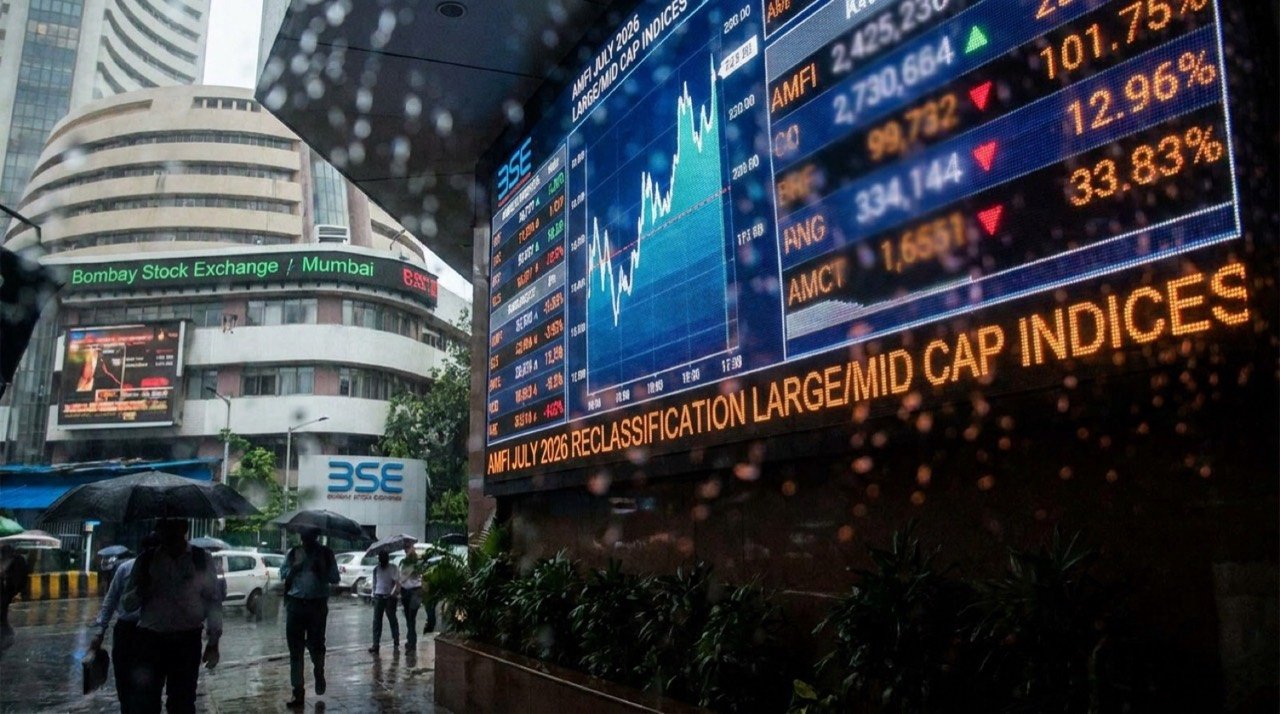
The Association of Mutual Funds in India is preparing its July 2026 market-capitalisation reclassification, a routine but closely tracked exercise that can quietly redraw the boundaries between large-cap, mid-cap and small-cap stocks. This time, exchange operator BSE and a clutch of other midcaps are widely tipped to graduate into the large-cap basket, a change that could ripple through mutual fund portfolios in the months ahead. On the surface, the exercise reads as a piece of financial housekeeping, a periodic sorting of listed companies into tidy buckets. In practice, because so much of India's mutual fund industry is built around these very labels, the reshuffle has the capacity to shift real capital, even when nothing about the underlying businesses has changed.
How the AMFI exercise works
Twice a year, AMFI ranks listed companies by average market capitalisation and slots them into defined buckets. The top 100 by market value are classified as large-caps, the next 150 as mid-caps, and the remainder as small-caps. This is not a discretionary call by a committee weighing qualitative factors; it is a mechanical sorting exercise based on averaged market value over a defined period. That mechanical nature is precisely what makes it powerful. Mutual fund schemes are bound by category rules tied to these labels, so when a stock crosses a threshold, funds may be required to adjust their holdings accordingly. A large-cap fund, by mandate, must hold predominantly large-cap names; a mid-cap fund must do likewise for its own category. The moment a company's label changes, the pool of funds that are permitted, or in some cases required, to hold it changes as well. It is this link between an administrative classification and binding investment mandates that transforms a routine list into a market-moving event.
Why BSE is in the spotlight
Reports suggest BSE, alongside several other midcaps, has gained enough in market value to qualify for large-cap status in the upcoming reshuffle. For a company that has spent time in the mid-cap bracket, crossing into the top 100 by market capitalisation is a milestone that extends well beyond prestige. It is a marker of sustained value creation, since the AMFI ranking is based on averaged data rather than a single day's price spike, meaning a stock typically has to hold elevated valuations over a period of months to qualify. A move up the ladder can broaden the pool of funds eligible to hold a stock, potentially attracting fresh institutional interest from large-cap and flexi-cap schemes that track the official classification. For a company such as BSE, which sits at the heart of India's capital markets infrastructure, being counted among the country's largest listed firms also carries a certain symbolic weight, reflecting how far exchange-linked and market-infrastructure businesses have travelled in investor esteem over recent years. For investors, such transitions are watched not as guarantees of future returns but as signals of which names may see shifts in fund ownership patterns.
The flows that follow
Reclassification rarely triggers immediate, dramatic buying or selling, because funds are typically given time to align with the new categories. Fund managers are not forced to liquidate or acquire positions overnight; the transition windows built into the process allow for orderly rebalancing rather than a scramble. Even so, the direction of travel matters. Stocks moving into the large-cap tier may benefit from steadier institutional demand, as a broader universe of large-cap and flexi-cap schemes becomes free to accumulate the stock over time. Those slipping down can face the opposite pressure, as category-constrained funds rebalance away from names that no longer fit their mandate. This asymmetry, gradual accumulation on the way up, gradual attrition on the way down, is part of why market participants pay close attention to the reclassification calendar rather than treating it as a footnote to the results season.
What the industry will be watching
AMFI's reclassification is due in July 2026 and is conducted twice a year, a rhythm that market participants have come to treat as a fixture on the calendar alongside quarterly earnings and index reviews. Stocks are sorted into large-cap, mid-cap and small-cap baskets by market value, with BSE and several other midcaps tipped to move into the large-cap category this round. Mutual fund schemes follow category rules that can drive portfolio adjustments, and upgrades can widen the set of funds eligible to hold a stock. As the July list approaches, fund managers and retail investors alike will be parsing the rankings for confirmation of the expected changes, aware that even a well-anticipated move can still generate incremental demand once it is formally confirmed. Analysts and portfolio strategists will also be watching second-order effects, such as which existing large-cap names might see reduced weightings within index-linked products as the roster is refreshed, and whether the cohort of midcaps expected to move up reflects a broader trend of market infrastructure and financial-services companies gaining scale. Whatever the final composition, the exercise is a reminder that in India's mutual fund market, a stock's label can be almost as consequential as its fundamentals.
The NE Times View
Reclassification sounds technical, but it moves real money, as index and mutual funds adjust holdings to match new market-cap labels. A stock entering the large-cap basket can attract fresh institutional flows largely on definition rather than fundamentals. That is worth sitting with for a moment: the same company, with the same balance sheet and the same earnings trajectory the day before and the day after the reclassification, can suddenly become accessible to a different, and often larger, pool of capital purely because of where it sits in a ranking table. For investors, that is the caution worth heeding: a reshuffle is a change of category, not of a company's underlying worth, and chasing the label is no substitute for judging the business. The more durable lesson for retail investors following the BSE story, and the wider cohort of midcaps tipped for promotion, is to treat the reclassification as context rather than a trigger. It explains why flows might shift and why a stock might see incremental demand from a new set of institutional buyers, but it says nothing about valuation, earnings quality or governance, the fundamentals that ultimately determine whether an investment thesis holds up once the initial flow-driven interest has passed.
Key takeaways
- AMFI's July 2026 reclassification, conducted twice yearly, sorts stocks into large-cap (top 100 by market value), mid-cap (next 150) and small-cap baskets.
- BSE, along with several other midcaps, is widely tipped to move up into the large-cap category in this round.
- Mutual fund schemes are bound by category-specific mandates, so a reclassification can compel or enable portfolio adjustments among large-cap and flexi-cap funds.
- Flows tend to be gradual rather than immediate, as funds are given time to align with new classifications, but the directional pressure on ownership patterns is real.
- Investors should treat the reshuffle as a signal about potential fund flows, not as a verdict on a company's underlying fundamentals or future performance.
You may also like to read
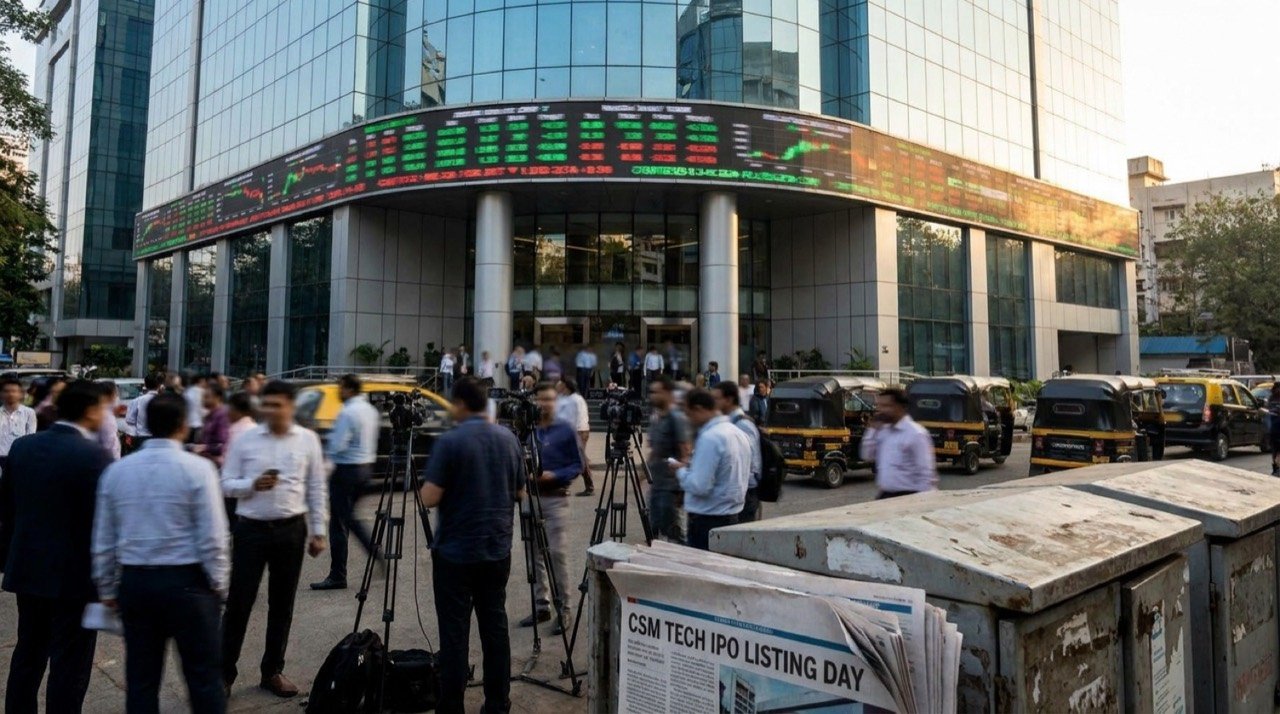
CSM Technologies IPO Opens June 24 With Price Band of Rs 107-113
The Odisha-based govtech and IT services firm enters India's busy primary market on June 24, testing investor appetite for e-governance and digital public infrastructure plays.
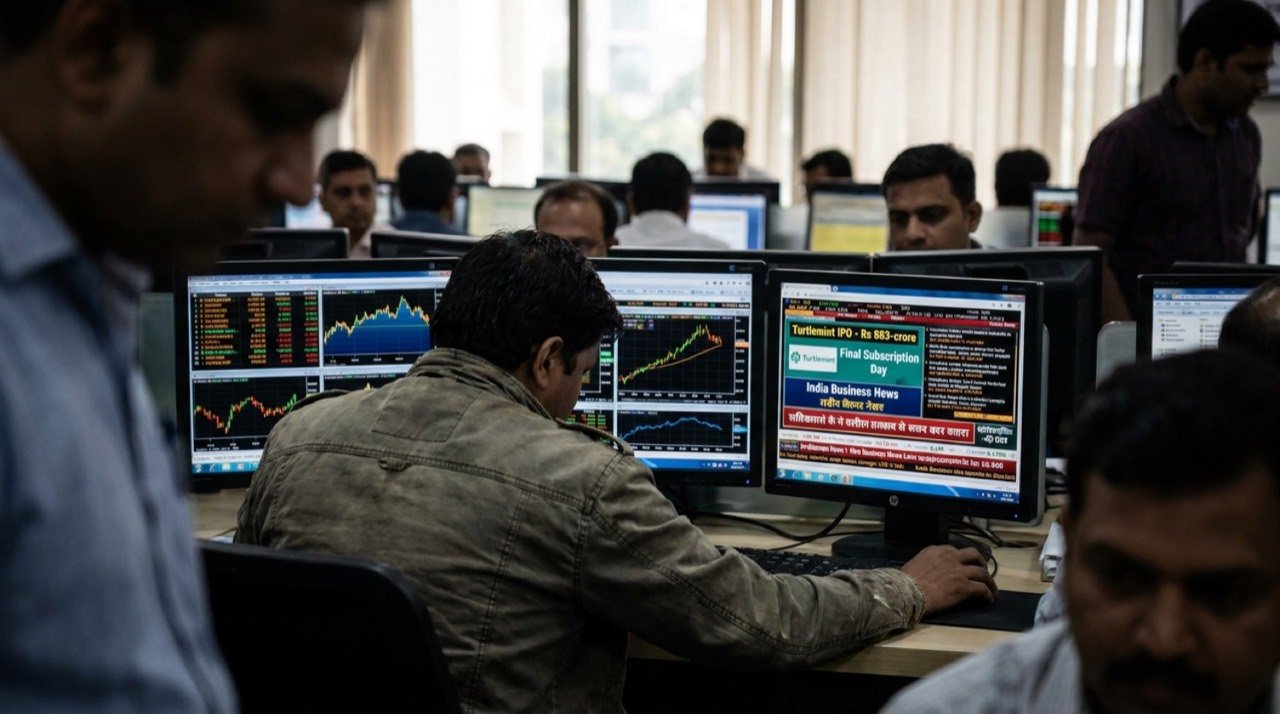
Turtlemint IPO Enters Final Day: Rs 883-Crore Issue Tests India's Insurtech Appetite
Turtlemint's Rs 883-crore IPO reached its final bidding day on 23 June, with investors weighing subscription levels, profitability and regulatory risk in India's growing insurance-technology market.

Waterways Leisure Tourism IPO Opens As Cruise Operator Seeks Growth Capital
The cruise tourism operator's IPO gives investors rare exposure to India's experience-led travel economy, as capital markets open up to consumer businesses beyond banks, manufacturers and tech firms.
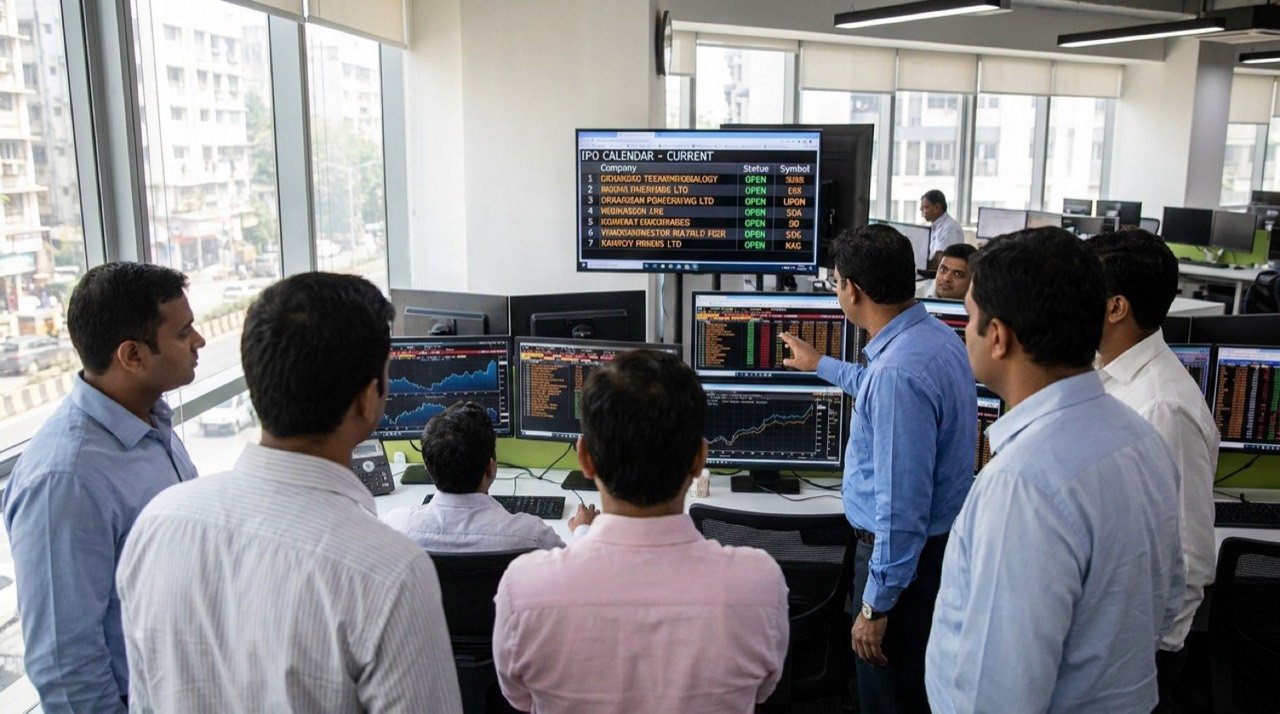
IPO Calendar Brings Six Public Issues for Indian Investors This Week
India's primary market turns busy with six IPOs in play, spanning jewellery, tourism, fintech, textiles and snacks, offering retail and high-ticket investors sharply different risk choices.
More from this section
More
Adani Case: US DOJ Pushes for Permanent Dismissal of Charges
The US Department of Justice has urged a judge to permanently dismiss charges against Gautam Adani, calling the case legally flawed — a reversal with consequences for markets, diplomacy and cross-border enforcement.

Akasa Air Inducts 40th Aircraft in Indian Aviation Scale-Up
Akasa Air's 40th aircraft, ferried to Bengaluru via Seattle, Reykjavik and Cairo, marks a fleet milestone for the young carrier and a fresh signal that India's aviation market remains firmly in expansion mode.
BARC Ratings Suspension Leaves Indian TV Industry Flying Blind
BARC's pause on television ratings has put India's broadcast measurement system under fresh scrutiny, leaving broadcasters, advertisers and media planners without the weekly audience data that anchors the TV economy.