Vijay's First Detailed Assembly Speech Sets the Tamil Nadu Agenda
In his first detailed Assembly speech, Tamil Nadu CM Vijay framed welfare, governance, state rights and Centre-state relations as the benchmarks his new government wants to be judged on.
Commentary & Analysis ·
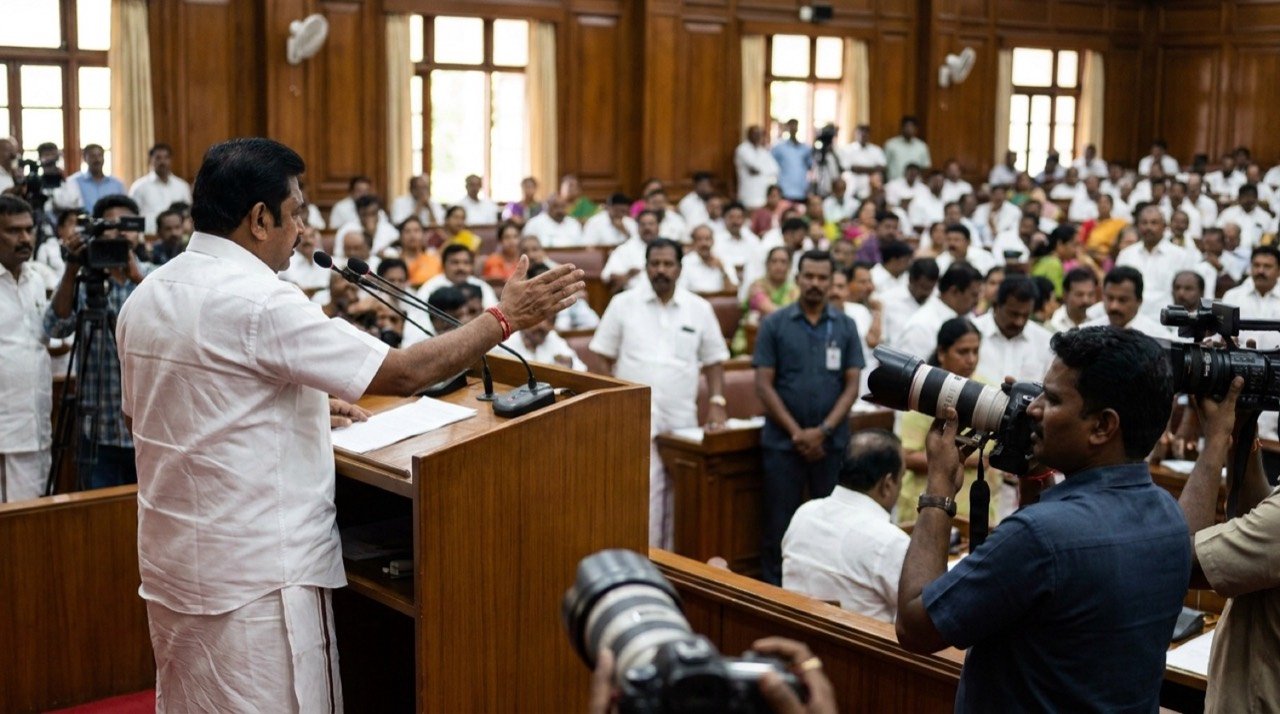
Tamil Nadu Chief Minister Vijay used his first detailed speech in the Assembly to frame his government's priorities, drawing attention to welfare, governance, state rights and the broader political direction of the new administration. The address offered the clearest early signal yet of how the government intends to present itself within the legislature following a high-profile political transition. For an administration that arrived in office carrying the momentum of a personality-driven campaign, this was the moment to demonstrate that momentum could be converted into the more mundane, exacting language of legislative business.
A speech read as a statement of intent
NDTV coverage said the address was watched closely because it set out, in detail, the tone and substance of the administration's approach. Where campaign rhetoric is broad and aspirational, an Assembly speech is expected to be specific, and this one was read as a deliberate effort to translate political energy into a programme of governance. The distinction matters. Campaigns traffic in promise and sentiment; legislatures deal in budgets, timelines and mechanisms. By choosing to be detailed rather than merely symbolic in his first substantive Assembly outing, Vijay signalled an awareness that the political capital built during the campaign has a shelf life, and that it needs to be spent converting slogans into administrative commitments before scrutiny sets in.
The speech matters beyond party politics. Assembly interventions help shape the policy calendar, set the terms for opposition strategy and frame public expectations for the months ahead. Once a government has placed its priorities on the record in the House, those priorities become the reference points against which every subsequent question, walkout and no-confidence motion will be measured. The opposition now has a text to quote back at the treasury benches; the bureaucracy has a set of stated commitments to translate into files and orders; and the press has a checklist against which to track delivery. In that sense, the speech was as much an act of self-binding as it was an act of communication.
The priorities he set out
Vijay foregrounded welfare delivery and the defence of state rights, themes with deep resonance in Tamil Nadu, while also signalling attention to administrative effectiveness. The choice of emphasis is telling. Welfare delivery has long been the currency of Tamil Nadu politics, a state where successive governments have competed on the reach and efficiency of social schemes rather than on ideology alone. By placing welfare at the centre of his first detailed address, Vijay situated his government within that established political tradition rather than attempting to redefine it. At the same time, the invocation of state rights taps into a longer-running Tamil Nadu grievance about the balance of power between the Centre and the states, a theme that has animated the state's politics across multiple decades and multiple ruling parties.
The emphasis suggested a government keen to be seen as both protective of the state's interests and capable of execution. This is a delicate balancing act. A government that speaks only in the language of rights and grievance risks being seen as combative without being constructive; a government that speaks only in the language of administrative process risks being seen as technocratic and disconnected from popular sentiment. By pairing the two, the speech appears designed to reassure two different audiences simultaneously, the electorate that wants visible protection of the state's interests, and the administrative and investor class that wants confidence in the government's capacity to execute.
How the government will be measured
With the agenda now on record, voters and the opposition alike have a set of yardsticks against which to assess performance. Delivery on welfare and campaign promises will be the most immediately visible measure, since welfare schemes tend to be tracked closely by both beneficiaries and rival parties eager to expose gaps between promise and disbursal. Management of state finances and fiscal discipline forms a second yardstick, one that will test whether ambitious welfare commitments can be reconciled with the state's fiscal space, particularly at a time when many state governments face constraints on borrowing and revenue. Progress on education and health priorities offers a third measure, areas where outcomes are slower to show and harder to dramatise, but where failures are eventually felt widely across the electorate.
The investment climate and job creation constitute a fourth benchmark, one that will be watched closely by industry bodies and by younger voters for whom employment prospects are often the deciding factor in political loyalty. Finally, the handling of Centre-state relations will be scrutinised both by political rivals looking for signs of confrontation or capitulation, and by a broader public accustomed to viewing Tamil Nadu's assertiveness towards the Centre as an important marker of the state's political identity. Taken together, these five yardsticks form a fairly comprehensive scorecard, one the government itself has effectively volunteered by setting out its priorities in such explicit terms.
From campaign trail to legislative accountability
"The address marks the shift from campaign language to legislative accountability," according to The NE Times analysis. For Tamil Nadu politics, the speech represents a turning point: the move from the language of the campaign trail to the accountability of the legislature. This transition is one every new government must navigate, but it carries particular weight here given the scale of attention that accompanied Vijay's entry into electoral politics and the subsequent transition to office. Campaign narratives can be revised, softened or reframed as circumstances change; an Assembly speech, recorded in the House and reported widely, is a harder commitment to walk back without political cost.
Whether the government can meet the benchmarks it has set will define not only this session but the public's longer-term verdict on Vijay's leadership. Early Assembly sessions often set the tone for how a government's language is subsequently interpreted, whether its promises are treated as credible commitments or discounted as rhetorical flourish. Given the scrutiny already surrounding this administration, the coming sessions and budget cycles are likely to be read closely for evidence of consistency between what was said in this address and what follows in policy and expenditure.
The NE Times View
Setting your own benchmarks is a confident opening gambit, and Vijay has wisely chosen Centre-state relations and governance as the terrain to be judged on. Both are areas where Tamil Nadu's political culture already has a strong appetite for assertive rhetoric, meaning the political cost of raising these themes is comparatively low even as the administrative cost of delivering on them can be considerable. The risk is that ambitious framing creates a yardstick his administration may struggle to meet, particularly once the harder trade-offs between welfare spending, fiscal discipline and investment promotion begin to surface in budget documents rather than speeches.
Tamil Nadu voters are demanding and politically literate; they will measure the speech against the spending. This is a state with a long institutional memory of welfare politics and a public accustomed to comparing manifesto commitments against actual disbursal figures, audit reports and visible outcomes. For now this is a statement of intent, and intent is the cheapest part of governing. The real test begins when the state's budget, its administrative orders and its handling of disputes with the Centre start to either validate or contradict the priorities laid out in this address.
Key takeaways
- Vijay's first detailed Assembly speech set out welfare delivery, state rights and administrative effectiveness as his government's core priorities.
- The address was widely read as a deliberate shift from broad campaign rhetoric to the specificity expected of legislative governance.
- Observers now have five clear yardsticks to track: welfare delivery, fiscal discipline, education and health outcomes, investment and jobs, and Centre-state relations.
- The NE Times frames the speech as marking the transition from campaign language to legislative accountability, a shift with real political stakes.
- The government's credibility will ultimately rest on whether spending and policy outcomes match the priorities it has now placed on the public record.
You may also like to read
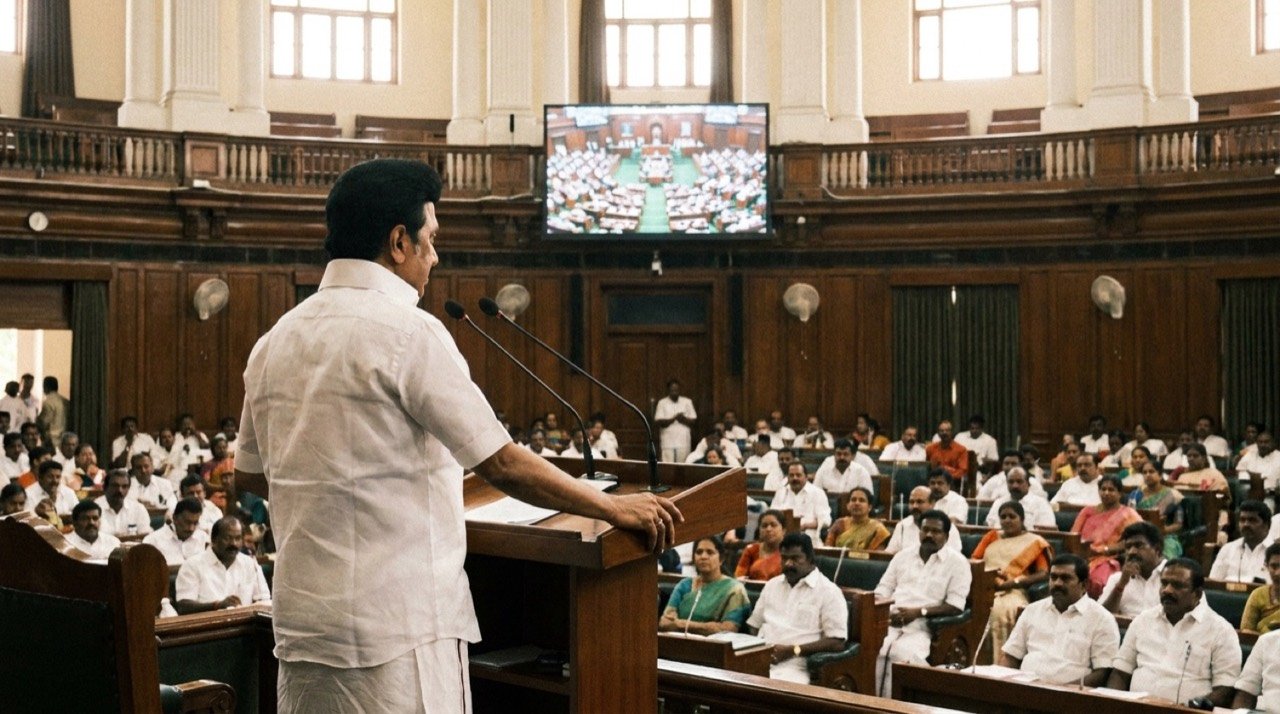
Vijay Uses Tamil Nadu Assembly Debut to Sharpen His Political Pitch
Tamil Nadu Chief Minister Vijay's first major Assembly appearance framed welfare, state rights and administrative delivery as his government's priorities, marking his shift from cinema to formal governance.
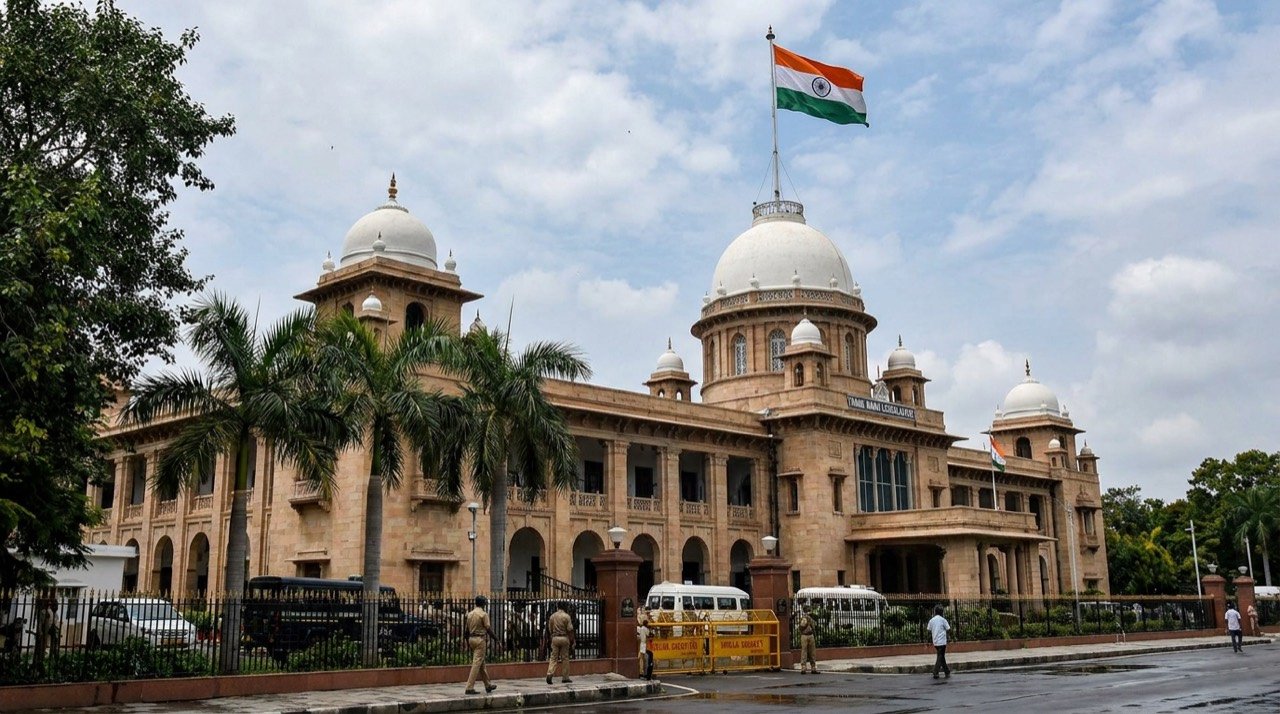
Vijay's TVK Government Faces Six By-Polls as AIADMK MLAs Defect in Tamil Nadu
Six Tamil Nadu assembly seats have fallen vacant after AIADMK legislators jumped to the ruling TVK, setting up early by-elections that will test Chief Minister Vijay's grip after a historic Dravidian-era upset.
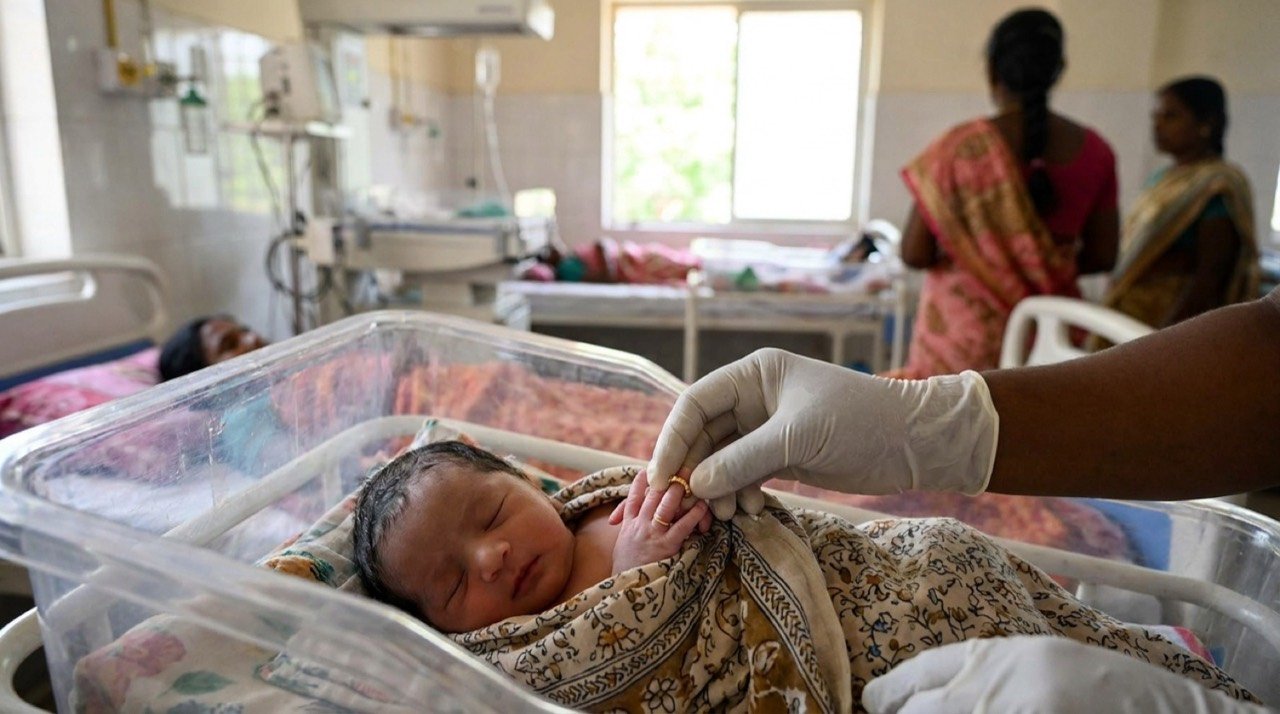
Tamil Nadu's Thai Maman Gold Ring Scheme: One-Gram Gold For Newborns in Government Hospitals
Chief Minister Vijay's Thai Maman Gold Ring Scheme will give every baby born in a Tamil Nadu government hospital a one-gram gold ring, reviving the welfare-versus-cost debate.

Vijay's TVK Government Pushes Welfare Agenda as DMK Settles Into Opposition
Actor-turned-politician Vijay's Tamilaga Vettri Kazhagam, now in power in Tamil Nadu, has rolled out free-power and women's-safety measures as Udhayanidhi Stalin leads a chastened DMK from the opposition benches.
More from this section
More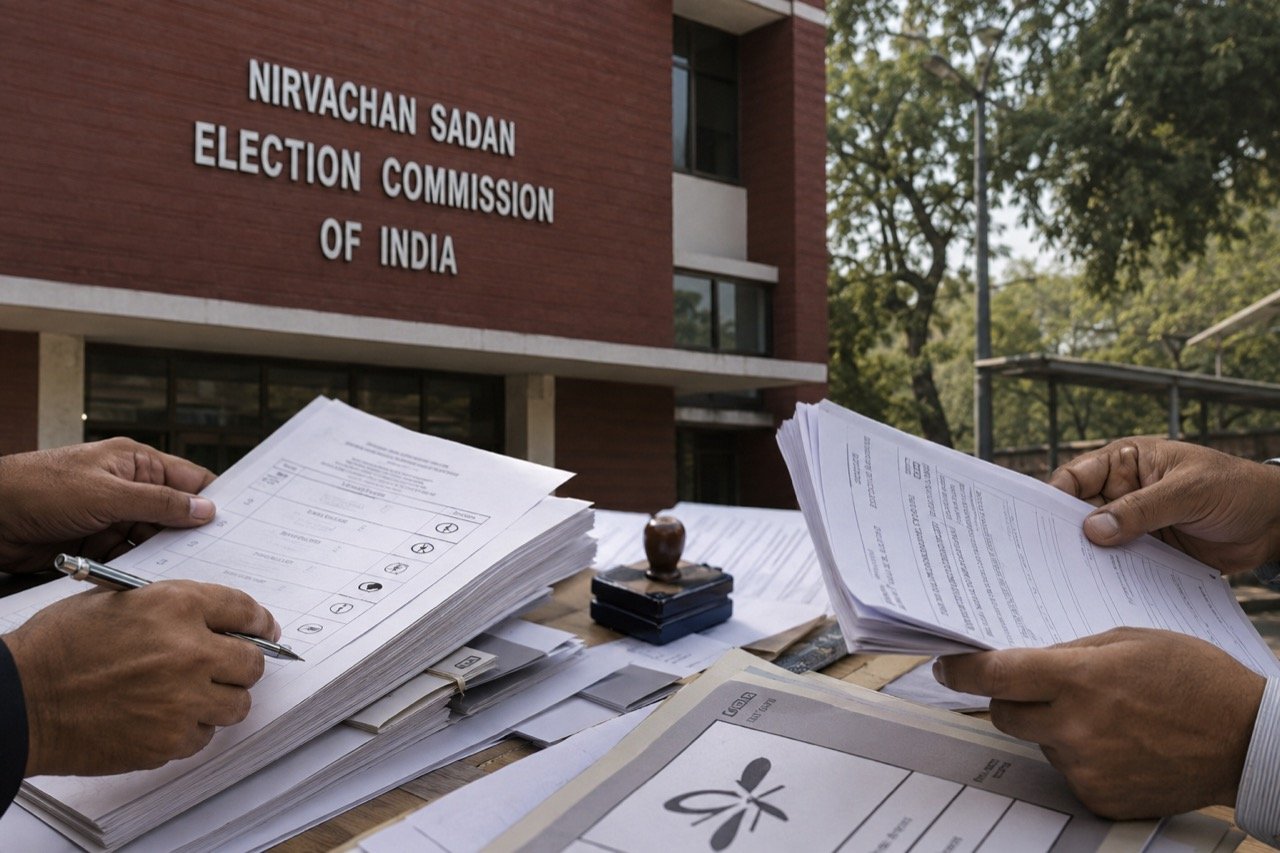
K Kavitha Party Denied TRS Name by Election Commission
The Election Commission has refused to register K Kavitha's Telangana Rakshana Sena under the TRS acronym after objections, forcing a branding reset for the new party at a politically sensitive moment in Telangana.
Lalu Prasad Yadav Security Downgrade, Bungalow Order Stir Bihar
A government order downgrading Lalu Prasad Yadav's security cover and asking him to vacate an official bungalow has opened a fresh political flashpoint in Bihar, with the RJD chief's reaction fuelling the row.
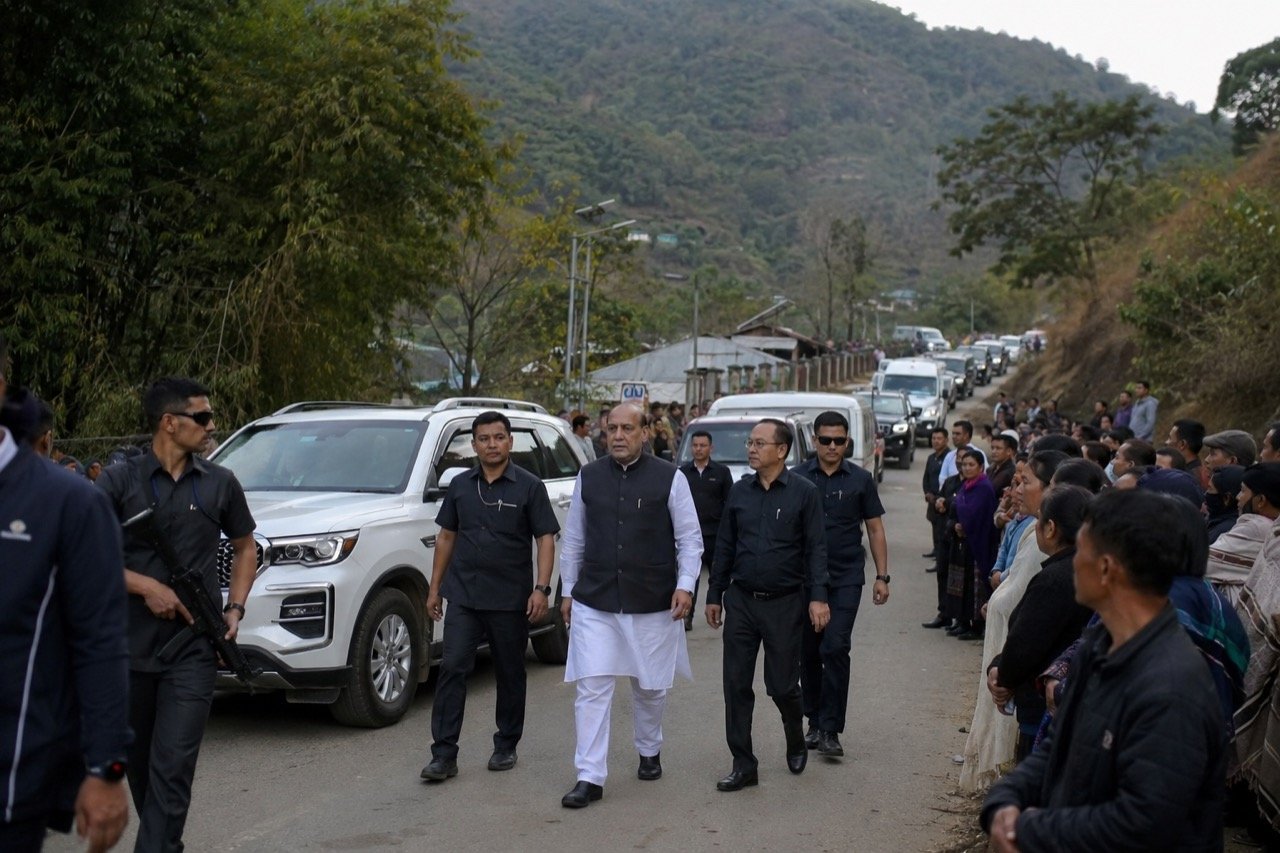
Manipur CM's Churachandpur Visit: First Since 2023 Unrest
The Manipur Chief Minister travelled to Churachandpur for a BJP MLA's funeral, his first visit to the district since the 2023 violence, lending the sombre occasion an unmistakable political significance.